“I am not a country anymore. I am a suitcase.”
— Darling reflects on her displacement from Zimbabwe to America.

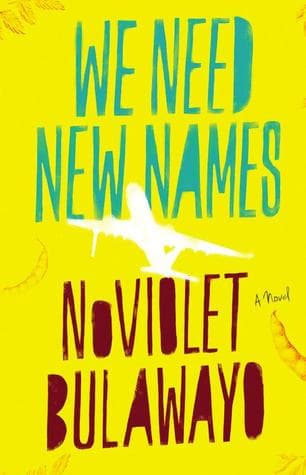
NoViolet Bulawayo (2013)
Genre
Literary Fiction / Historical Fiction
Reading Time
360 min
Key Themes
See below
Sign in to track this book
A young Zimbabwean girl, Darling, navigates her collapsing homeland, then journeys to America, finding that the promised land brings its own struggles.
The story begins in Paradise, a shantytown in Zimbabwe. Ten-year-old Darling and her friends—Bastard, Chipo, Godknows, and Stina—spend their days stealing guavas from the wealthy white neighborhood, Budapest. Their lives have poverty, absent fathers working abroad, and trauma from political violence that destroyed their first homes. They play make-believe, imitating adults and dreaming of better lives. Darling's mother struggles to provide, and the children see the realities of their environment, including HIV/AIDS and constant hunger.
Chipo, one of Darling's friends, is pregnant at a young age and tries to hide it. The other children, not understanding, believe they can 'get the baby out' with crude methods like jumping on her stomach and using traditional remedies. This shows their innocence and lack of guidance, as well as the issues of sexual abuse and poverty in their community. The children's attempts are useless and dangerous, showing the harshness of their lives and the desperate situations they face without adult support.
Many fathers from Paradise have gone to 'Bhamu' (America) or other countries to find work, sending money home. Darling's father is in South Africa, and her Aunt Fostalina is in America. The children often talk about 'Bhamu' as a land of plenty and opportunity, a sharp contrast to their poor reality. Letters and occasional packages from these absent parents fuel their dreams and offer hope that they might escape Paradise's hardships. This distant land becomes a symbol of the community's hopes and worries.
The Paradise community lives under political instability and government oppression. The children remember the traumatic 'Before,' when paramilitary police destroyed their original homes during 'Operation Murambatsvina' (Operation Drive Out Rubbish), forcing them into shantytowns. This event is a constant, unspoken trauma for adults and shapes the children's understanding of authority and injustice. The fear of more displacement and violence is clear, showing how uncertain their lives are and their constant struggle against a powerful, uncaring government.
Darling gets a life-changing opportunity when her Aunt Fostalina, living in America, sends for her. Getting a visa is full of anxiety, paperwork, and interviews, a complex process Darling's mother handles with difficulty. The community supports Darling, offering advice, as her departure represents a shared hope. This time has mixed emotions for Darling—excitement for America's unknown future, but also sadness at leaving her friends and the only home she has known, despite its difficulties.
Darling gets her visa and travels to America. Her goodbye from Zimbabwe is emotional, a bittersweet farewell to friends and family. When she arrives in Detroit, Michigan, she is immediately struck by the big differences in culture, environment, and lifestyle. The abundance of food, clean water, and modern conveniences contrasts sharply with Paradise. However, she also experiences culture shock, struggling with American customs, language, and the colder climate. The initial wonder slowly gives way to a more complex understanding of her new reality.
Darling lives with her Aunt Fostalina and Uncle Kojo in a modest Detroit house. She quickly realizes that America, while offering more material comforts, is not the idealized 'Bhamu' she imagined. Her aunt and uncle have their own struggles as immigrants, working demanding jobs, dealing with financial pressures, and navigating their undocumented status. Darling attends school, where she struggles to fit in and often feels like an outsider. She sees the subtle and obvious racism, economic differences, and cultural clashes that define her new life, slowly losing her childhood innocence.
As Darling gets older, America's initial wonder fades, replaced by growing disappointment. She sees her aunt and uncle's constant fear of deportation, their hard work with little reward, and their sacrifices. She realizes that the 'American Dream' is not easy to get, especially for undocumented immigrants. Darling struggles with her identity, feeling caught between her Zimbabwean heritage and her American present. She feels lonely and displaced, as she struggles to find her place in a society that often sees her as an outsider.
Darling tries to keep in touch with her friends in Paradise through phone calls and letters. However, the vast distance and different experiences make true connection hard. Their lives have become very different, and they struggle to understand each other's realities. Darling feels guilty for having 'escaped,' while her friends still face Zimbabwe's hardships. Memories of her childhood in Paradise continue to affect her, shaping her view and reminding her of the life she left. She carries the weight of her past, even as she tries to build a future.
Years later, as a young adult, Darling gets a phone call from her mother in Zimbabwe. The conversation shows that life in Paradise has not improved much; her friends still struggle, some have died, and the political and economic situation remains bad. This call brings back many memories and reinforces Darling's feeling of being a stranger in both worlds. She feels disconnected from her roots, yet also knows she doesn't fully belong in America. The novel ends with Darling dealing with her dual identity, the bittersweet reality of her journey, and her past's lasting impact on her present and future.
The Protagonist
Darling transforms from a naive, playful child in Zimbabwe to a thoughtful, often melancholic young woman in America, constantly questioning her identity and belonging.
The Supporting
She remains a figure of enduring struggle, constantly working and worrying, representing the often-unseen sacrifices of immigrant life.
The Supporting
He remains in Zimbabwe, representing the path Darling left behind, his fate mirroring the continued struggles of those in Paradise.
The Supporting
Her story is a tragic arc of early motherhood and continued struggle in Zimbabwe.
The Supporting
His arc remains tied to the ongoing, difficult reality of life in Zimbabwe.
The Supporting
Her story, like Godknows', reflects the static and challenging life in Paradise.
The Supporting
She remains in Zimbabwe, a symbol of the enduring struggles and hopes of those left behind.
The Supporting
His life in America is one of quiet struggle and constant effort to survive.
The Mentioned
His arc is defined by his absence and the economic imperative that keeps him away from his family.
The novel explores Darling's struggle to build an identity as she moves between two different cultures: her Zimbabwean homeland and her American home. In Paradise, she is part of a shared identity from poverty and common experience. In America, she feels like an outsider, an immigrant, and 'other.' She constantly questions where she belongs, caught between memories of her past and realities of her present. This is clear as she struggles with language, cultural norms, and feeling disconnected from both old friends and her new environment.
“We are like trees, they say, we are rooted, and to change countries is like being uprooted, and it takes time for the roots to find the dirt again.”
The idealized image of 'Bhamu' (America) as a place of endless opportunity and wealth is a main theme. The children in Paradise dream of escaping there. However, when Darling arrives in Detroit, she quickly sees the realities of immigrant life: fear of deportation, money problems, racism, and the constant hard work needed to survive. The abundance she sees often contrasts with her aunt and uncle's sacrifices and hidden suffering. The novel breaks down the romantic view of America, showing the often-difficult truth of the immigrant experience.
“It was not the America we had been told about in Paradise. It was not the America of golden opportunities, the America of easy money.”
The novel shows Darling's childhood in Paradise, a time with playful innocence and exposure to harsh realities like poverty, political violence, and sexual abuse (Chipo's pregnancy). The children's games and imaginary worlds offer a temporary escape from their bad circumstances. However, Darling's journey to America ends this childhood. She loses her innocence as she sees the complexities of adult immigrant life and the disappointment of her dreams. The difference between her carefree past and her burdened present shows how displacement affects her growth.
“We were not like the children in the TV shows, children who were driven to school in buses and had lunch boxes and whose biggest problem was a lost pet.”
Poverty is everywhere in the novel, shaping every part of life in Paradise. The children's hunger, their makeshift homes, and their parents' desperation to find work abroad are constant reminders of their economic hardship. This reality contrasts with the material abundance Darling finds in America, yet even there, she sees her immigrant family's economic struggles. The novel shows the large global differences in wealth and opportunity, and how these inequalities drive migration and create cycles of hardship for those caught between worlds.
“We were children of Paradise, children of hunger, children of the until-we-die.”
Political violence and 'Operation Murambatsvina' in Zimbabwe are a foundational trauma for Darling and her community. Their displacement from their original homes to the shantytown of Paradise is a direct result of government actions. This instability forces fathers to seek work abroad and leads to Darling's migration. Even in America, the characters carry the psychological scars of political unrest, and news from home continues to show ongoing struggles. The novel illustrates how political decisions have deep, lasting human costs, driving people from their homes and shaping their destinies.
“It was the time of the Before, when our homes were still there, before the bulldozers came, before the Green Bombers.”
Provides an innocent yet sharp perspective on complex social issues.
The novel is narrated by Darling, initially as a ten-year-old child and later as a young adult. This perspective allows for a unique blend of innocence, sharp observation, and unvarnished honesty. As a child, Darling interprets the harsh realities of her world through a lens of play and imagination, making the atrocities she witnesses even more poignant. Her voice evolves as she matures, reflecting her growing understanding and disillusionment, but always retaining a distinct, insightful tone. This device effectively highlights the contrast between childhood perceptions and adult realities, particularly regarding the immigrant experience.
Represents both a mythical escape and a harsh reality.
'Bhamu,' the children's colloquial term for America, functions as a powerful symbol throughout the novel. Initially, it represents an idealized, almost mythical land of abundance, opportunity, and escape from the poverty and violence of Zimbabwe. It is the collective dream of Paradise. However, as Darling experiences life in America, 'Bhamu' transforms into a symbol of the complex, often disappointing realities of immigration – a place of hard work, struggle, and cultural alienation. This evolving symbolism underscores the novel's central theme of the illusion versus the reality of the American Dream.
A poignant symbol of lost hope and resilient community.
The setting of Paradise is deeply symbolic. Its ironic name highlights the stark contrast between the children's hopeful, imaginative world and the grim reality of their poverty-stricken shantytown. Paradise represents a place of forced displacement, economic hardship, and political neglect, yet it is also a place of strong community bonds, shared experiences, and childhood resilience. It symbolizes the lost 'Before' and the enduring spirit of those left behind. For Darling, it becomes a haunting memory, a tether to her past identity, and a constant reminder of the life she both escaped and yearns for.
Prefigures future struggles and the loss of innocence.
The children's games in Paradise often foreshadow the darker realities they face or will face. For example, their game of 'destroying Bin Laden' reflects the global political awareness even in their remote village, while their attempts to 'get the baby out' of Chipo tragically highlight the issues of sexual abuse and lack of healthcare. These games, initially innocent, subtly introduce themes of violence, despair, and the loss of innocence, preparing the reader for the more mature themes that emerge as Darling grows up and moves to America, connecting her past and future struggles.
Reflects cultural identity and the challenges of assimilation.
The novel effectively uses language and code-switching, particularly in the dialogue. The children in Paradise speak in a vibrant, often ungrammatical, and expressive English infused with local idioms. This reflects their authentic voices and cultural context. Upon moving to America, Darling experiences the challenges of adapting her language, both in terms of accent and idiom, to fit in. This linguistic shift symbolizes her broader struggle with assimilation and identity, highlighting the ways in which language is intertwined with cultural belonging and the feeling of being an outsider.
“I am not a country anymore. I am a suitcase.”
— Darling reflects on her displacement from Zimbabwe to America.
“We are all just waiting for something to happen, and when it does, we will know what to do.”
— Darling and her friends in Zimbabwe discuss their uncertain futures.
“The problem with English is this: You can't use it to say how you really feel.”
— Darling struggles with language barriers in America.
“In America, you can be anything you want, but you have to want it first.”
— Darling observes the American dream and its complexities.
“We are the children of the land, and the land is our mother.”
— Reflection on the connection to Zimbabwe and its soil.
“Sometimes I think we left our souls in Paradise, and our bodies are just walking around in America.”
— Darling feels a spiritual disconnect after emigrating.
“Hunger is a silent language that everyone understands.”
— Describing the poverty and struggles in Zimbabwe.
“The past is a heavy suitcase that you carry everywhere.”
— Darling reflects on the burden of memories from home.
“We are like birds without nests, flying but never landing.”
— Metaphor for the immigrant experience of rootlessness.
“In America, they have everything, but they don't have us.”
— Darling notes the cultural and personal gaps in her new life.
“The sky in Zimbabwe is a different blue, a blue that knows your name.”
— Nostalgic memory of the homeland's landscape.
“We are all just stories waiting to be told.”
— Reflection on the importance of personal narratives.
“Freedom is not just about leaving; it's about what you take with you.”
— Darling contemplates the meaning of freedom after emigration.
“The world is a big place, but it feels small when you are alone in it.”
— Darling expresses loneliness in her new environment.
Ready to see how well you understood this book? Take our interactive quiz with 10 questions.

Biography coming soon.







