“We hunt the flame, the light in the darkness, the hope in the despair. We are the hunters, and we will not stop until we find what we seek.”
— A foundational statement about the Zafira's role as the Hunter, capturing the essence of the quest.

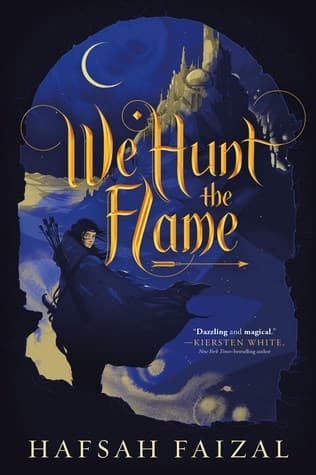
Hafsah Faizal (2019)
Genre
Fantasy / Young Adult / Romance
Reading Time
520 min
Key Themes
See below
Sign in to track this book
Inspired by ancient Arabia, a disguised huntress and a reluctant assassin go on a dangerous quest for a lost artifact. They do not know their intertwined fates could either save their kingdom from a growing darkness or unleash a greater evil.
Zafira, known as 'the Hunter,' is the only one who provides for her poor village of Saramot. She goes daily into the dangerous, magic-draining Arz forest, disguised as a man to hide who she is. Her village suffers from the spreading Arz and the lack of magic in Arawiya. Meanwhile, in the grand but harsh capital of Sharr, Prince Nasir, the King of Demenhur's son, kills those who defy his father's cruel rule, earning him the name 'Prince of Death.' He struggles internally with his father's cruelty and his own forced harshness. The King, fearing the return of magic and old powers, gives Nasir a secret task: to find a lost artifact and kill a legendary figure, the Hunter.
The King of Demenhur calls Nasir, revealing he knows about the legendary Jawhar, an artifact said to bring back magic. He orders Nasir to find it, get it, and kill the Hunter, believing the Hunter threatens his power. At the same time, in Saramot, Zafira is approached by Altair, the King's General, and a mysterious woman named Benyamin. Benyamin reveals that Zafira is chosen to find the Jawhar and bring magic back to Arawiya, believing it is the only way to stop the Arz. Zafira, despite her fears and the danger of revealing her true identity, agrees for her people.
Zafira, still disguised as a man, joins Altair and Benyamin on their quest to the ancient, isolated island of Sharr, where the Jawhar is thought to be hidden. The journey is full of danger and the constant threat of the Arz. Unknown to them, Prince Nasir, with his loyal bodyguard Kifah, is also going to Sharr, following his father's orders to stop the Hunter and get the artifact. Nasir deals with his mixed feelings about his mission, especially the order to kill the Hunter, whose legend he secretly admires.
The two groups eventually meet on the mysterious island of Sharr. Sharr is a place where magic still slightly exists, appearing in ancient trials and illusions designed to test those seeking the Jawhar. Zafira's team, guided by Benyamin's knowledge of old stories, faces a series of riddles and magic traps. Nasir's group, using his father's information and Kifah's fighting skills, also moves forward. During these trials, the two main characters meet, first as enemies, with Nasir trying to complete his mission to kill the Hunter, leading to tense, charged conflicts.
During a dangerous trial within Sharr, Zafira's disguise as a man breaks, showing her true identity to Nasir. This revelation complicates Nasir's mission, as he struggles with killing a woman, especially one who shows such strength and courage. The discovery happens as an older, more dangerous evil stirs within Sharr, threatening both their quests and Arawiya itself. Facing this greater danger, Zafira and Nasir, along with their companions, form a hesitant and fragile alliance, realizing they must work together to survive and perhaps reach their goals.
Forced to work together, Zafira and Nasir spend more time together, navigating Sharr's increasingly dangerous challenges. Their initial dislike slowly turns into respect, then a deeper understanding. Zafira sees past Nasir's 'Prince of Death' appearance to the tormented person beneath, while Nasir sees Zafira's strong will and compassion. Shared moments of vulnerability and near-death experiences create a powerful, unspoken connection between them. This growing attraction complicates their individual missions and loyalties, especially given Nasir's original order to kill her.
As the group gets closer to their goal, Benyamin's true motives become clearer, hinting at a darker plan behind her guidance. The Jawhar, when finally found, is not just a powerful artifact but a container for ancient, dangerous magic that requires a terrible sacrifice. The group learns that bringing magic back to Arawiya through the Jawhar has a devastating cost, one that Benyamin seems willing to pay, no matter the consequences for others. This revelation forces Zafira and Nasir to rethink everything they thought they knew about their quest and their allies.
A major fight happens as the group battles Benyamin, who reveals herself to be more than a guide—she is an ancient being, a sharr, with her own plan for the Jawhar and Arawiya. The ancient evil that had been stirring within Sharr fully awakens, adding another strong threat. Zafira and Nasir, now united by their trust and growing feelings, fight alongside Altair and Kifah against Benyamin and the awakened darkness. They must decide who will use the Jawhar and what sacrifice is truly acceptable to save their world.
After the battle, a deep sacrifice is made to either contain or activate the Jawhar, though its full power and meaning remain unclear. The immediate threat is gone, but the long-term effects of their actions, and the partial return of magic, are uncertain. Zafira and Nasir are changed by their journey and the bond they have formed. With the King of Demenhur still a threat and the world on the edge of war, they realize their fight is far from over. They must now navigate their complicated relationship and Arawiya's political situation, having both defied their original roles and found who they truly are.
Zafira and Nasir, along with Altair and Kifah, leave Sharr, carrying the weight of their experiences and the Jawhar's power. They return to an Arawiya that is subtly, yet significantly, changed by the stirring of magic and the spreading Arz. The King of Demenhur remains a strong and dangerous power, and Nasir's defiance of his father's orders has serious consequences. Zafira faces the challenge of her revealed identity and her people's expectations. Their individual journeys have become linked, and they must now face the political chaos and lingering threats in Arawiya, knowing their bond will be tested further.
The Protagonist
From a burdened, solitary provider hiding her true self, Zafira grows into a leader who embraces her power and identity, finding strength in vulnerability and connection.
The Protagonist/Anti-hero
Nasir transforms from a conflicted, obedient assassin to a defiant individual who embraces his own morality and power, finding purpose and love beyond his father's shadow.
The Supporting
Altair maintains his outward charm but deepens his commitment to justice and his friends, revealing his underlying seriousness and loyalty.
The Antagonist/Supporting
Benyamin's arc is one of revelation, transforming from a seemingly benevolent mentor into a powerful, self-serving antagonist.
The Supporting
Kifah's loyalty remains steadfast, but her understanding of true leadership and morality deepens through her experiences with Nasir and Zafira.
The Antagonist
The King's arc is one of sustained tyranny, his power challenged but not yet broken, setting him up as a continuing threat.
The Mentioned/Supporting
Lana's arc is largely off-page, representing Zafira's enduring motivation and the hope for a restored Arawiya.
The Antagonist
The Sharr's arc is revealed as a re-emergence of ancient power and influence, complicating the quest for the Jawhar.
Zafira and Nasir both struggle with their forced identities and the expectations placed on them. Zafira hides her gender to be the Hunter, fearing rejection, while Nasir is the 'Prince of Death' against his true compassionate nature. Their journey to Sharr forces them to face these pretenses, showing their true selves to each other and, more importantly, to themselves. Zafira learns to embrace her femininity as a strength, and Nasir finds the courage to defy his father and embrace his own morals. This theme is central to their character arcs, ending in their acceptance of who they truly are, not who they are told to be.
“People lived because she killed. People died because he lived.”
The novel shows how power can corrupt and oppress. The King of Demenhur shows this, using his authority to create fear, commit cruel acts, and suppress magic, all to keep his cruel rule. His fear of losing control drives his brutal actions and his desire to control the Jawhar. Even the good goal of bringing back magic has a dark side, with Benyamin's manipulative actions showing how even good intentions can be twisted by the desire for ultimate control. This highlights that power, once gained, often tempts its users toward self-interest and domination.
“Power was a cage, and the King had built it around them all.”
The quest for the Jawhar requires big sacrifices, both personal and potentially world-changing. Zafira sacrifices her true identity and personal desires for her village, while Nasir sacrifices his own conscience daily by doing his father's bidding. The ultimate sacrifice required by the Jawhar itself, and the difficult choices about its use, emphasize this theme. For Nasir, the journey becomes a path to redemption, as he chooses to defy his father and protect Zafira, beginning to make up for the acts he was forced to commit. This theme explores the cost of salvation and the chance to find forgiveness through selfless acts.
“Some choices were made to save others, even if they broke you in the process.”
Despite the spreading Arz, the lack of magic, and the King's cruelty, hope runs through the story. Zafira's strong dedication to her people, the belief in the Jawhar's power to bring back magic, and the growing connection between Zafira and Nasir all serve as guiding lights. The chance of magic returning and the idea of a future free from oppression keep the characters going. This hope is not naive but hard-earned, constantly tested by the dangers they face, yet it remains a driving force that pushes them forward, suggesting that even in the darkest times, the wish for a better world can inspire action.
“Hope was a dangerous thing. It was also the only thing that kept them alive.”
The novel blurs the lines between good and evil, especially through characters like Nasir and Benyamin. Nasir, called the 'Prince of Death,' has deep compassion, while Benyamin, initially a kind guide, reveals a manipulative, self-serving plan. The King's evil is clear, but the reasons behind the ancient evil in Sharr are complex. This theme challenges simple ideas, suggesting that actions and intentions are more complex than labels imply, and that true morality often lies in the choices made in hard situations rather than inherent character.
“There was no good or evil, only shades of gray.”
A cursed, encroaching forest that drains magic and life from Arawiya.
The Arz functions as a pervasive environmental threat and a symbol of the world's decay. It is a constantly expanding, magic-draining forest that consumes land and life, representing the consequence of magic's absence. Its encroaching nature creates urgency for the quest and highlights the suffering of the people. It also serves as a dangerous setting for Zafira's hunts, establishing her skills and the perilous world she inhabits, constantly reminding characters and readers of the stakes involved.
A lost magical artifact believed to restore magic to Arawiya.
The Jawhar is the primary MacGuffin of the story, driving both Zafira's and Nasir's quests. Its legendary status and promise of restoring magic motivate the characters and provide a clear objective. However, it also serves as a twist, revealing a greater, more dangerous power than initially understood. Its true nature and the sacrifices it demands complicate the heroes' mission, turning a straightforward retrieval into a moral dilemma and a test of their resolve, making it more than just a simple goal.
Zafira's adoption of a male persona to hunt in the Arz and gain respect.
Zafira's disguise as a man, 'the Hunter,' is a central plot device that creates immediate conflict and thematic depth. It allows her to operate in a patriarchal society and survive the dangers of the Arz, but also forces her to suppress her true self. This device creates tension around her potential unmasking and fuels her internal struggle with identity. When revealed to Nasir, it significantly alters their dynamic, forcing him to confront his preconceptions and adding a layer of personal vulnerability to their interactions.
The suppressed magical abilities within certain characters, particularly Nasir.
Latent magic, particularly in Nasir, serves as a source of internal conflict and external threat. His father's fear of magic and his attempts to suppress Nasir's abilities highlight the King's tyrannical nature and Nasir's hidden potential. It foreshadows the return of magic and provides Nasir with a unique, powerful, yet dangerous connection to the world's ancient forces. This device sets up his personal growth as he learns to control and utilize his powers, becoming a formidable force against the true antagonists.
“We hunt the flame, the light in the darkness, the hope in the despair. We are the hunters, and we will not stop until we find what we seek.”
— A foundational statement about the Zafira's role as the Hunter, capturing the essence of the quest.
“Some choices are not choices at all, but necessities hidden in the guise of free will.”
— Zafira reflecting on her predetermined path and the burdens of her destiny.
“There's a difference between being brave and being foolish, and sometimes that line is so fine it's invisible.”
— Nasir contemplating the risks he takes and the nature of courage.
“Monsters are not born; they are made. And sometimes, we are the ones who make them.”
— Nasir's internal struggle with his father's cruelty and his own capacity for violence.
“To be truly free, you must first be truly yourself, even if that self is something the world fears.”
— Zafira's journey of self-discovery and embracing her power.
“Love is not a weakness, but a strength, a fire that burns brighter than any other.”
— A reflection on the growing romantic tension and emotional connection between characters.
“The greatest battles are often fought within the confines of one's own mind.”
— Characters grappling with their inner demons and moral dilemmas.
“Secrets are like shadows; they grow longer and darker the longer they are kept.”
— The consequences of hidden truths and deception coming to light.
“Hope is a dangerous thing, a fragile spark that can ignite a wildfire or be snuffed out by a single breath.”
— Characters facing overwhelming odds and the precariousness of their aspirations.
“Sometimes, the only way to save yourself is to lose yourself entirely.”
— Zafira's willingness to sacrifice her identity for the greater good.
“Fear is a weapon, and like all weapons, it can be turned against its wielder.”
— Nasir learning to control his fear and use it to his advantage.
“There is a kind of magic in stories, a way they can transport you to other worlds, make you believe in the impossible.”
— A character reflecting on the power of storytelling and legends within their world.
“Even in the deepest darkness, there is always a flicker of light, if you only know where to look.”
— A message of perseverance and finding hope amidst despair during their arduous journey.
Ready to see how well you understood this book? Take our interactive quiz with 10 questions.

Biography coming soon.







