“Perhaps all living things are like a tree, and it is only when we have touched the earth with our roots that we can come alive.”
— Early reflections by Annie about feeling rooted.

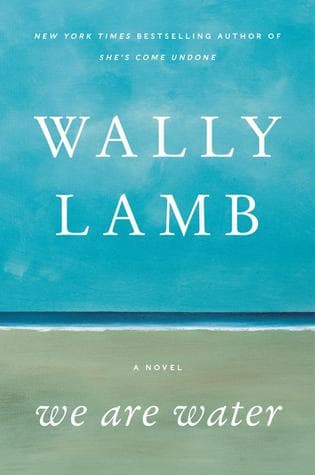
Wally Lamb (2013)
Genre
Literary Fiction
Reading Time
15-20 hours
Key Themes
See below
Sign in to track this book
In a New England town grappling with changing social mores, an artist's decision to marry her female lover after decades of marriage unleashes a torrent of long-buried family secrets and forces her children and ex-husband to confront their own fractured lives.
Annie Oh, a fifty-year-old artist and mother of three adult children, tells her husband, Orion, a psychologist, that she is leaving him after twenty-seven years of marriage. Her announcement is not only for a divorce but also for her plan to marry Viveca, a wealthy and sophisticated Manhattan art dealer with whom Annie has fallen deeply in love. This revelation sends shockwaves through the Oh family, particularly affecting Orion, who feels betrayed and blindsided. Their children—Ariane, Andrew, and Marissa—react with varying degrees of confusion, anger, and attempts to understand their mother's sudden and drastic life change. The wedding is set to take place in their hometown of Three Rivers, Connecticut, where same-sex marriage has recently been legalized, adding another layer of societal scrutiny to their already fractured family dynamics.
Orion, reeling from Annie's departure, seeks therapy to cope with the emotional fallout. During his sessions, he reflects on his past, his childhood, his relationship with his own mother, and the early days of his marriage to Annie. He struggles with feelings of inadequacy, betrayal, and loss, questioning what went wrong and how he could have missed the signs of Annie's growing discontent. His narrative reveals his analytical nature and his attempts to intellectualize his pain, even as he experiences deep emotional distress. These therapy sessions are an outlet for him to process his grief and begin to understand the complexities of his family's history and his own role within it.
Ariane, the eldest Oh twin, is a social worker dedicated to helping others. She works with troubled youth and families, often bringing her professional stresses home. Her narrative highlights her struggles to balance her demanding career with her personal life, particularly her relationship with her partner, an aspiring musician. She becomes involved with a challenging client, a young woman named C.J. who is pregnant and experiencing homelessness, which further complicates Ariane's emotional state. Ariane’s strong moral compass and desire to fix things are tested by the complexities of human suffering and her family's own unraveling, leading her to question her effectiveness and her ability to maintain her own emotional well-being amidst the chaos.
Andrew, Ariane's twin, is the most troubled of the Oh children. His narrative reveals a history of addiction, anger, and a deep-seated resentment towards his family, particularly his father. He struggles with his sexuality and a traumatic experience from his past involving a childhood friend, which he has suppressed for years. Andrew's rebellion manifests in his choice of friends, his substance abuse, and his general cynicism. He feels like an outsider within his own family and struggles to find his place in the world. His story explores the lasting impact of trauma and the difficulty of confronting one's past, as he navigates a path fraught with self-destruction and a desperate search for acceptance and understanding.
Marissa, the youngest Oh daughter, is a free-spirited and artistic soul. She uses photography as a means of expression and a way to understand the world around her, including her family's dramatic changes. Initially, she is the most accepting of Annie's decision, perhaps due to her more open-minded perspective and her own artistic sensibilities. However, as the wedding approaches and family tensions escalate, Marissa begins to research the family's history, inadvertently uncovering long-buried secrets through conversations and observations. Her photographs often capture the raw emotions and unspoken truths within the family, serving as both a personal coping mechanism and a subtle form of investigation into the complex dynamics at play.
Annie's narrative provides insight into her life before and during her relationship with Viveca. She recounts her early struggles as an artist, her feelings of being stifled in her marriage to Orion, and the sense of liberation and understanding she found with Viveca. Viveca, a sophisticated art dealer, not only recognized Annie's talent but also offered her a love and acceptance that Annie felt was missing from her previous life. Annie's chapters reveal her artistic process, her deep emotional connection to her work, and her desire for authenticity and self-expression, even if it meant disrupting her established family life. She grapples with guilt over hurting her family but remains firm in her pursuit of happiness and genuine love.
The narrative frequently explores the history of the Three Rivers Art Colony, a significant part of Annie's past and the town's identity. This includes the tragic story of a devastating fire that occurred years ago, which claimed lives and left a lasting scar on the community. The fire is not just a historical event but a symbolic one, representing destruction, loss, and the hidden traumas that continue to affect the characters. The mystery surrounding the fire and its true origins slowly unravels, revealing connections to various characters and their families, particularly Andrew and his childhood friend, and hinting at deeper societal issues of racism and injustice that have been swept under the rug.
As the family prepares for the wedding, the simmering tensions and individual struggles begin to expose long-buried secrets from Three Rivers' past. It is revealed that the fire at the art colony was not an accident but an act of arson, fueled by racial prejudice and a hate crime against an African American family, the Hendersons, who were artists residing there. This revelation is linked to Andrew's repressed memories and a traumatic event from his childhood involving his friend, Anthony Henderson. The town's complicity in covering up this injustice, and the lasting impact on the survivors, becomes a central focus, forcing the Oh family and the community to confront a dark chapter of their history.
The day of Annie and Viveca's wedding is fraught with tension and emotional confrontations. Despite the joyous occasion, the weight of the family's recent upheavals and the resurfacing of the town's dark past create a charged atmosphere. Family members struggle to reconcile their feelings towards Annie's new life and the shocking truths that have come to light. Andrew, particularly, is deeply affected by the memories of the fire and the injustice done to the Henderson family, leading to emotional outbursts and a desperate need for recognition and healing. The wedding itself becomes a crucible, forcing characters to confront their own biases, pain, and the complex bonds that tie them together, even as they witness Annie's commitment to her new partner.
After the wedding and the revelations, the Oh family members begin to process the changes and difficult truths. Orion continues his therapy, seeking to understand his past and rebuild his life. Ariane finds renewed purpose in her social work, particularly with C.J., and confronts her own relationship issues. Andrew, having finally confronted his suppressed memories and shared his truth, begins a painful but necessary journey towards recovery and self-acceptance. Marissa continues to document her family's story through her art, finding her voice and a deeper understanding of human resilience. Annie and Viveca embark on their new life together, facing the challenges of blending families and navigating their complex relationships with the Oh children. The family, though irrevocably changed, begins to find tentative paths toward healing and a more authentic connection.
The Protagonist
Annie transforms from a seemingly content wife and mother into a woman who bravely redefines her identity and relationships, finding profound love and artistic fulfillment.
The Protagonist/Narrator
Orion moves from denial and self-pity to a deeper understanding of himself and his family's history, slowly finding a path towards acceptance and healing.
The Supporting/Narrator
Ariane learns to accept that she cannot control or fix everything, finding strength in her own resilience and allowing herself to be vulnerable.
The Supporting/Narrator
Andrew slowly confronts his repressed trauma and addiction, moving from self-destruction towards a difficult but necessary path of healing and self-acceptance.
The Supporting/Narrator
Marissa develops her artistic voice and gains a deeper understanding of her family's complexities, finding her role as an empathetic observer and storyteller.
The Supporting
Viveca remains a consistent source of support and love for Annie, integrating into the complex Oh family dynamics with grace.
The Supporting
C.J. grows from a vulnerable, distrustful client to someone cautiously accepting help, finding a path towards stability and hope with Ariane's support.
The Mentioned/Flashback
Anthony's story, revealed through flashbacks, serves as a catalyst for Andrew's healing and the family's confrontation with historical injustice.
The novel explores the complex, often messy, and ever-evolving nature of family bonds and love. Annie's decision to leave Orion for Viveca shatters the traditional family unit, forcing each member to redefine what family means. Orion grapples with the loss of his marriage, while the children navigate their loyalty and understanding. The narrative suggests that love can manifest in many forms—romantic, familial, platonic—and that its pursuit often comes with unforeseen consequences and demands radical honesty. The Ohs' journey illustrates that family is not just about blood, but about shared history, trauma, and the arduous path towards acceptance and connection, even in the face of profound change. The wedding itself, while a celebration of new love, becomes a crucible for the family's fractured dynamics.
““We are water, you and I. We are oceans, rivers, glaciers, ponds, puddles. We are all of it, and we are nothing at all.””
A central theme is the enduring impact of past trauma and the process of memory retrieval and healing. Andrew's repressed memories of the Three Rivers fire and the racial violence against the Henderson family are a prime example. His journey to confront these suppressed events is painful but essential for his recovery. Similarly, Orion's therapy sessions explore his own past wounds, and Annie's artistic expression is a way for her to process her life experiences. The novel suggests that unresolved trauma can fester and impact generations, and that true healing requires courageously facing the past, acknowledging pain, and seeking truth, even when it's uncomfortable. The collective trauma of the town's racial injustice also highlights this theme.
““The past is never dead. It’s not even past.””
Art serves as a vital conduit for expression, understanding, and revealing truth throughout the novel. Annie's painting is not merely a hobby but her life's blood, a way for her to articulate emotions and experiences that words cannot capture. Her art is intrinsically linked to her identity and her journey of self-discovery. Marissa uses photography as a means to observe, document, and process her family's unraveling, capturing raw emotions and unspoken truths. The Three Rivers Art Colony itself is a significant setting, a place where creativity flourished but also where deep societal prejudices were tragically exposed. Art allows characters to communicate, heal, and connect with deeper realities, both personal and collective.
““Art is not what you see, but what you make others see.””
The novel examines issues of social justice and racial inequality, particularly through the historical narrative of the Three Rivers fire. The revelation that the fire was a hate crime against an African American family, deliberately covered up by the community, exposes the insidious nature of racism and systemic injustice. Ariane's work as a social worker, advocating for marginalized individuals like C.J., further reinforces this theme, highlighting contemporary struggles with poverty and systemic disadvantages. The book challenges readers to confront uncomfortable truths about America's past and present, demonstrating how historical injustices continue to reverberate through generations and communities, demanding accountability and reconciliation.
““Some things, once broken, can never be repaired. Only rebuilt, differently.””
Each of the Oh family members embarks on a journey of identity and self-discovery. Annie redefines herself as an artist and a woman in a same-sex relationship, shedding the confines of her previous life. Orion grapples with his identity as a divorced man and re-evaluates his life choices. Andrew struggles to come to terms with his sexuality and his traumatic past, seeking to understand who he truly is beneath his layers of anger and addiction. Ariane questions her role as a caregiver and her own personal desires, while Marissa finds her voice and perspective through her art. The novel portrays identity as fluid and constantly evolving, often shaped by profound life changes and the courage to confront one's authentic self.
““We are all just trying to figure out who we are, and who we want to be, in a world that keeps trying to tell us otherwise.””
The story is told through the alternating perspectives of five Oh family members.
This device allows the reader to experience the story from various, often conflicting, viewpoints. Each narrator (Annie, Orion, Ariane, Andrew, Marissa) provides their unique interpretation of events, personal history, and emotional reactions. This creates a rich, complex tapestry of the family's dynamics, revealing how individual truths can differ and how a single event can be perceived in multiple ways. It deepens character development by giving direct access to their inner thoughts and motivations, and slowly pieces together the full scope of the family's secrets and the town's history, as each narrator contributes a piece of the puzzle.
The story jumps between past and present, revealing key historical events.
The narrative frequently shifts between the present-day events surrounding Annie's wedding and significant moments from the past, particularly through the characters' memories and reflections. These flashbacks are crucial for gradually revealing the deep-seated traumas, family secrets, and historical injustices (like the Three Rivers fire and the racial violence) that underpin the characters' current struggles. This device builds suspense, provides context for present behaviors and conflicts, and highlights the lasting impact of the past on the present, demonstrating how unresolved issues continue to shape individual and collective lives.
Water represents fluidity, change, connection, and the destructive/healing power of emotions.
The recurring motif of water serves as a powerful symbol throughout the novel, reflecting the fluidity of identity, relationships, and life itself. It represents change and the unstoppable current of life that carries characters through tumultuous events. Water can be destructive (the fire that required water to extinguish, the overwhelming force of emotions) but also cleansing and healing. The title itself, 'We Are Water,' suggests the interconnectedness of all beings, the way emotions flow and merge, and the idea that individuals, like water, can change form yet remain essentially the same, adaptable and resilient.
Orion's narrative is presented as transcripts from his therapy sessions.
Orion's chapters are structured as transcripts of his sessions with his therapist, Dr. Fish. This epistolary element provides a unique, introspective lens into his character. It allows for a more direct and unfiltered exploration of his psychological state, his attempts to intellectualize his pain, and his gradual emotional breakthroughs. The therapy setting provides a safe space for him to articulate his grief, anger, and confusion, offering a detailed account of his inner world and his process of coping with the divorce and the family's revelations. It also subtly comments on the nature of therapy itself and the human need for understanding.
“Perhaps all living things are like a tree, and it is only when we have touched the earth with our roots that we can come alive.”
— Early reflections by Annie about feeling rooted.
“Grief is a house that has no doors or windows. You think you're trapped inside, but the truth is, you're the one holding the key.”
— Annie reflecting on her past traumas and inability to move on.
“We are water, you and I. We are two waves on the same sea.”
— Annie's internal monologue about her connection to her family, particularly her children, despite the chaos.
“The past is a stubborn ghost. It doesn't just haunt you; it lives inside you.”
— Annie grappling with memories of her first marriage and its impact.
“Love isn't a state of perfect harmony. It's a constant negotiation, a willingness to keep showing up even when you want to run away.”
— Annie observing the complexities of her relationships, especially with Orion.
“Sometimes the greatest act of love is to let go of the person you think they should be and love the person they actually are.”
— Annie's realization about her children and their individual paths.
“Art is not a mirror held up to reality, but a hammer with which to shape it.”
— Annie, as an artist, contemplating the power and purpose of her work.
“You can spend your whole life trying to outrun your fears, but they're always going to be a step ahead until you turn around and face them.”
— Annie's internal struggle with confronting difficult truths about her past and present.
“The human heart is an ocean. It can hold so much, and sometimes it feels like it's going to drown you.”
— Annie feeling overwhelmed by the emotional demands of her family and personal life.
“Forgiveness is not about forgetting; it's about choosing to remember differently.”
— Annie's journey towards reconciling with her own past actions and the actions of others.
“Every family has its secrets, like an attic full of forgotten things that still cast long shadows.”
— Annie reflecting on the hidden histories and unspoken truths within her family.
“To truly see someone, you have to look beyond the surface, beyond the roles they play, to the trembling, messy truth underneath.”
— Annie's evolving understanding of her children and her new husband, Orion.
“Sometimes the most beautiful things grow out of the deepest cracks.”
— Annie finding resilience and unexpected beauty amidst the breakdown of her family structure.
“Silence can be a kind of violence, a way of erasing someone, or yourself.”
— Annie reflecting on the impact of unspoken feelings and suppressed truths in relationships.
Ready to see how well you understood this book? Take our interactive quiz with 10 questions.

Biography coming soon.







