““I’m not sure what to do with a girl who wants to be friends with a boy who thinks he’s a girl.””
— Stewart's internal thoughts about Ashley and the new girl.

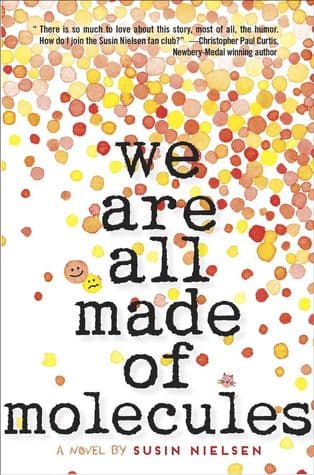
Susin Nielsen (2015)
Genre
Children's / Young Adult
Reading Time
240 min
Key Themes
See below
Sign in to track this book
When a socially awkward genius and a popularity-focused girl are forced to live together, they find that beneath their differences, they are both just trying to figure out adolescence.
Thirteen-year-old Stewart and his father, Leonard, prepare to move into the home of Caroline, Leonard's new girlfriend, and her fourteen-year-old daughter, Ashley. Stewart is smart but struggles socially, seeing the world scientifically. He is cautiously optimistic, calculating his happiness at 89.9 percent. Ashley, a popular and image-conscious girl, is horrified, especially since her 'perfect' life recently broke apart with her parents' separation. She fears Stewart's social awkwardness will further hurt her standing at school and expose the truth about her father's departure. Their first meeting is tense, showing their different personalities and views, setting up an uncomfortable living situation.
Stewart's first day at Northmount Elementary (which goes up to grade 8, making him an anomaly as a grade 8 student) is a disaster. He accidentally embarrasses Ashley by correcting her in front of her friends and talking openly about science. Ashley, desperate to stay popular and hide that her dad is gay, is mortified by Stewart's lack of social skills and his connection to her. She tries to avoid him at school, even denying she knows him. Stewart tries to make friends, but his literal interpretations and intellectual conversations do not connect with his new classmates, especially Ashley's popular group.
Ashley struggles with her father coming out as gay and moving out of their home. She keeps this a secret from her friends, especially her best friend Lauren, fearing it will ruin her perfect image and social status. Her grades are also dropping, adding to her stress. She blames Stewart for her unhappiness, seeing him as a constant reminder of her life's changes. Her interactions with her father, who is building a new life with his partner, are strained, as she struggles to accept his new identity and the changes it brings to her life.
Stewart, while still an outsider among the popular kids, starts an unexpected friendship with Maybelle, an elderly woman next door. He finds comfort in her company and enjoys their talks. He also connects with Ashley's father, Robert, who appreciates Stewart's intelligence and genuine nature. These interactions show Stewart's ability to form meaningful relationships outside typical peer groups, demonstrating his kindness and curiosity, even if he struggles with normal social cues. His scientific observations often lead to surprisingly insightful, though blunt, comments about human behavior.
To Ashley's dismay, she and Stewart are assigned to work together on a big school project about the environment. This forces them closer than ever, leading to arguments over their different approaches. Stewart wants to focus on scientific facts, while Ashley cares more about presentation. Their collaboration is tense, but it also gives them chances to see different sides of each other. Stewart's directness sometimes breaks through Ashley's defenses, while Ashley's understanding of social dynamics occasionally helps Stewart navigate school life.
The truth about Ashley's father being gay is accidentally revealed at school, causing a big change in Ashley's social standing. This revelation, along with her lower grades and her connection with Stewart, makes her fall from favor among her popular friends. She faces ridicule and exclusion, especially from Lauren, who feels betrayed. This event shatters Ashley's carefully built image and forces her to face her situation without the protection of popularity. Stewart, seeing the results, tries to understand the complex social dynamics.
After the revelation, Ashley experiences social rejection. Her 'friends' leave her, and she feels isolated and lonely. This period is a major turning point for her, making her rethink her priorities and the superficiality of her past friendships. She starts to see the world differently, where popularity is no longer her main concern. This vulnerability, though painful, opens her to the possibility of real connection, something she had ignored in her pursuit of social status.
As Ashley deals with her social downfall, she finds unexpected support from Stewart. He does not judge her and, in his own way, tries to offer comfort and understanding. Their shared experience of being outsiders, for different reasons, creates a bond between them. They begin to see past each other's first impressions, with Ashley recognizing Stewart's kindness and intelligence, and Stewart beginning to understand Ashley's insecurities. Their collaboration on the school project becomes less difficult and more cooperative, building a fragile but growing friendship.
The school dance is a big event. Ashley, no longer focused on being popular, attends with a new sense of self. Stewart, encouraged by Maybelle and his father, also attends, though reluctantly. They end up spending time together, and Ashley defends Stewart against bullies, showing her changing character. This public display of mutual support strengthens their friendship. Ashley begins to accept her father's new life and starts to build a more authentic identity for herself, free from social pressures. Stewart also gains a better understanding of social nuances and friendship.
By the end of the story, Stewart and Ashley, along with Leonard and Caroline, form a true blended family. Ashley has accepted her father's sexuality and her changed social standing, finding strength in being herself. Stewart has learned to navigate social situations with more confidence and has found a real friend in Ashley. The household, initially full of tension, now functions with more acceptance and mutual respect. They realize that despite their differences, they are all made of molecules, connected by shared experiences and a growing family bond.
The Protagonist
Stewart learns to better understand social dynamics and the complexities of human emotion, while retaining his unique perspective.
The Protagonist
Ashley evolves from a superficial, popularity-obsessed girl to a more authentic, empathetic individual who values genuine connection over social status.
The Supporting
Leonard successfully navigates the challenges of blending families and helps both Stewart and Ashley find their footing.
The Supporting
Caroline successfully fosters a loving and accepting environment for her new blended family.
The Supporting
Robert finds happiness in his new life while working to mend his relationship with Ashley.
The Supporting
Maybelle provides consistent wisdom and friendship, helping Stewart to grow and understand the world beyond science.
The Supporting
Lauren remains largely unchanged, serving as a foil to Ashley's character development.
The Mentioned
Carl provides a stable presence for Robert, allowing him to move forward.
Both Stewart and Ashley deal with their identities throughout the novel. Stewart struggles to fit into normal social norms, while Ashley struggles to match her 'perfect' image with her family life's reality. The revelation of Ashley's father's sexuality and her subsequent social exclusion forces her to drop her superficial identity and embrace a more authentic self. Stewart, meanwhile, learns to accept his unique way of seeing the world and finds value in his real connections. The story shows that true happiness comes from accepting who you are, rather than trying to meet external expectations, as seen when Ashley finds peace after her secret is out.
“We are all made of molecules. And some molecules are just arranged in a different order.”
The novel explores what makes a family and how it changes. The blending of Stewart and Leonard with Ashley and Caroline, along with Robert's new family with Carl, challenges typical ideas of family. At first, the household is divided, but through shared experiences, misunderstandings, and eventual acceptance, they form a unified group. The theme highlights that family is not just defined by blood or traditional structure, but by love, support, and the willingness to face challenges together, as shown by the final scene where all four begin to function as a unit.
“Maybe families aren't like atoms, all neatly arranged. Maybe they're more like molecules, sometimes messy, but still connected.”
This theme is central to Ashley's journey. She first prioritizes social acceptance and popularity, creating a false image to keep her status. Her fear of being judged for her father's sexuality drives her to great lengths to keep it secret. However, when the truth comes out, she experiences the pain of social rejection, forcing her to confront how superficial her friendships were. Stewart, conversely, never seeks social acceptance in the same way, but his journey teaches him to handle social situations more effectively without losing who he is. The book suggests that authenticity, while sometimes hard, leads to more meaningful connections than superficial popularity.
“I used to think being popular was everything. Now I know it's just... molecules of air.”
A key theme is the growth of empathy between characters, especially between Stewart and Ashley. At first, they cannot understand each other's views, leading to conflict. Stewart struggles with social cues and emotional understanding, while Ashley is too focused on her own world to see beyond Stewart's awkwardness. As they are forced to interact and see each other's vulnerabilities, they begin to develop empathy. Stewart learns to appreciate the nuances of human emotion, and Ashley learns to look past superficial differences to see the person beneath. This mutual understanding is vital for their eventual friendship and the success of their blended family.
“It’s hard to understand someone else’s universe when you’re only looking at your own.”
The story is told from the alternating perspectives of Stewart and Ashley.
The novel employs a dual narration structure, with alternating chapters from Stewart's and Ashley's first-person perspectives. This device is crucial for showcasing their contrasting worldviews, internal struggles, and their often-misaligned interpretations of shared events. Stewart's chapters are characterized by his logical, scientific observations and precise, often literal, language, while Ashley's chapters reflect her preoccupation with social dynamics, popularity, and emotional turmoil. This allows the reader to deeply understand both protagonists, highlighting their individual journeys and the gradual shift in their perceptions of each other.
The metaphor of molecules represents connection, difference, and the fundamental shared humanity.
The central metaphor of 'molecules' is woven throughout the narrative. Stewart, with his scientific mind, often uses molecular analogies to understand human relationships and the world. Initially, it highlights his perception of people as distinct and separate entities. However, as the story progresses, the idea that 'we are all made of molecules' evolves to symbolize the fundamental interconnectedness of all people, despite their differences in arrangement or personality. It becomes a unifying concept, suggesting that beneath the surface, everyone shares a common humanity and the potential for connection, even when they seem like opposites.
The school's social structure mirrors broader societal pressures and judgments.
The social hierarchy within Northmount Elementary, particularly the 'popular' group led by Ashley and Lauren, serves as a microcosm of broader societal pressures, judgments, and the desire for belonging. Ashley's desperate attempts to maintain her 'It' girl status and her fear of social ostracization reflect the anxieties many young people face regarding acceptance. Stewart's exclusion from this hierarchy highlights the challenges faced by those who don't conform. The eventual collapse of Ashley's social standing and her subsequent re-evaluation of what truly matters underscores the superficiality of such structures and the importance of genuine connection over perceived status.
““I’m not sure what to do with a girl who wants to be friends with a boy who thinks he’s a girl.””
— Stewart's internal thoughts about Ashley and the new girl.
““It’s like when you have a really good idea, and you write it down, and it looks so smart on paper, but then you say it out loud and it just sounds stupid.””
— Stewart reflecting on his social awkwardness.
““Sometimes I think being a grown-up means you have to pretend you know everything, even when you don’t.””
— Ashley's observation about adults.
““We are all made of molecules. And sometimes, those molecules just click.””
— Stewart's scientific explanation for connection.
““It’s hard to tell if someone’s being mean on purpose or if they’re just being stupid.””
— Ashley's perspective on social interactions.
““I think maybe the world isn’t just about being popular or unpopular. Maybe it’s about finding your people.””
— Ashley's evolving understanding of social status.
““My mom says that sometimes when people are really quiet, it’s because they’re thinking really loud.””
— Stewart's mother's insight into his personality.
““You can’t just ignore things you don’t like. They don’t go away.””
— Ashley's realization about facing problems.
““It’s like my brain has too many tabs open at once.””
— Stewart describing his often-overwhelmed mind.
““Sometimes you have to break a few rules to figure out which ones actually matter.””
— Ashley's rebellious streak.
““Being different isn’t a bad thing. It’s just… different.””
— A simple but profound statement about uniqueness.
““If you don’t try, you’ll never know.””
— A common encouragement that resonates with both protagonists.
““It turns out, being a good person is more complicated than just being nice.””
— Ashley's developing moral compass.
““You can’t control what other people think of you, but you can control how you react to it.””
— A lesson learned about self-perception and external judgment.
Ready to see how well you understood this book? Take our interactive quiz with 10 questions.

Biography coming soon.

Dan Gemeinhart
4.5

Kate O'Hearn
4.4

Jeanne Birdsall
4.4

Jen Wang
4.4

Wendelin Van Draanen
4.3

John Marsden
4.3

Chris Van Allsburg
4.3

Jennifer A. Nielsen
4.2