“The wind was a mischievous prankster, always trying to steal her hat or whisper secrets in her ear.”
— Early description of the setting and protagonist's perception.

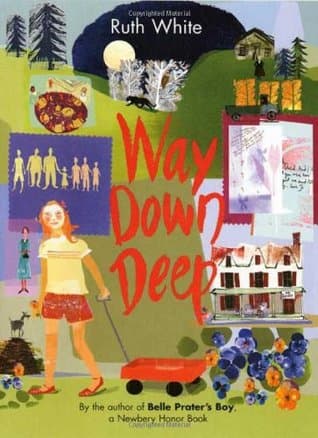
Ruth White (2007)
Genre
Fantasy / Children's / Historical Fiction / Mystery / Young Adult
Reading Time
180 min
Key Themes
See below
Sign in to track this book
An orphaned girl in 1940s West Virginia uncovers the mystery of her origins, only to discover that the truest family ties are forged not by blood, but by the unwavering love of the quirky town that raised her.
On the first day of summer in 1944, a small toddler named Ruby is found on the steps of the courthouse in the isolated West Virginia town of Way Down Deep. She appears with no note or explanation. The townspeople, known for their practical and communal nature, quickly accept her. Miss Arbutus, the kind proprietor of The Roost boardinghouse, takes Ruby in. Ruby is raised with love and care by Miss Arbutus and the residents of The Roost, becoming a cherished part of the community. Despite her unknown origins, Ruby's early childhood in Way Down Deep is happy, and she never feels the lack of a traditional family.
Ruby spends her childhood living at The Roost, a busy boardinghouse run by Miss Arbutus. The residents, including Miss Mattie, Mrs. Judy, and Mr. Ben, become her family. Ruby's days are filled with the simple joys of childhood in a small town: playing with friends, attending school, and being cared for by the community. She develops a strong connection to Way Down Deep and its people. While she occasionally wonders about her birth parents, the love and stability she experiences keep her from dwelling on her past, and her life is carefree and secure.
When Ruby is twelve, a new family, the Prillmans, moves into a house in Way Down Deep. They are outsiders. The family includes Mr. and Mrs. Prillman, their son Junior, and their daughter Pearl. Pearl is Ruby's age, and the two girls become friends. During their talks, Pearl shares details about her family's previous life and a lost child that makes Ruby curious. These conversations make Ruby wonder about her true origins, stirring a desire to uncover her past.
As Ruby spends more time with Pearl Prillman, she learns that Pearl's family once lived on Yonder Mountain and had a younger sister who went missing years ago. The details Pearl shares — the age of the lost child, the time she disappeared, and a family heirloom like a locket — resonate with Ruby. She realizes that the Prillmans' lost sister might be her. Ruby confides in Miss Arbutus and other trusted adults at The Roost, who are supportive but also concerned about the emotional impact. This marks a turning point, shifting Ruby's focus from her present happiness to a quest for her identity.
Armed with the clues, Ruby and Miss Arbutus decide to approach the Prillman family. They present the information and the coincidences, focusing on the timing of Ruby's discovery and the Prillmans' lost daughter. The Prillmans, initially hesitant, are eventually convinced by the evidence and the sincerity of Ruby and Miss Arbutus. Shock and emotion wash over the family as they realize the possibility that Ruby could be their long-lost child. This confrontation is a delicate and emotional moment, bridging the gap between Ruby's adopted life and her potential birth family.
With the Prillmans convinced, arrangements are made for Ruby to travel with them to Yonder Mountain, where her extended birth family lives. This journey is both exciting and nerve-wracking for Ruby. She is leaving the only home and family she has known in Way Down Deep to meet strangers who are supposedly her blood relatives. The trip up the mountain is symbolic, representing her entry into a new, unknown chapter of her life. Miss Arbutus offers her support, but Ruby must embark on this personal quest for identity largely on her own, facing the emotional complexities of her past and future.
Upon arriving on Yonder Mountain, Ruby is introduced to the Prillman family, including her grandparents, aunts, uncles, and cousins. The initial meetings are a mix of wonder, awkwardness, and emotion. She observes their customs, their way of life, and tries to find common ground. While there is a natural curiosity and a sense of shared history, Ruby also feels a difference between herself and her birth family. Life on Yonder Mountain is different from the nurturing environment of Way Down Deep, and Ruby begins to question if this new family is truly where she belongs.
Ruby spends time living with the Prillmans on Yonder Mountain, attempting to bond with her birth family and understand her heritage. She learns about their history, their struggles, and the circumstances surrounding her disappearance. While she receives affection, she finds the family's dynamics and their way of life to be less open and loving than what she experienced in Way Down Deep. The realities of their mountain existence and the emotional distance within the family create a growing sense of unease in Ruby. She realizes that blood ties alone do not guarantee a sense of belonging or happiness.
Despite having found her birth family and learning her true origins, Ruby feels a longing for Way Down Deep. The love, warmth, and acceptance she experienced at The Roost and from the townspeople are absent on Yonder Mountain. She recognizes that her true family is not defined by blood, but by the emotional connections and loving relationships she formed in Way Down Deep. The simplicity and genuine affection of her adopted home call to her, making her realize that her identity is linked to the place and people who raised her.
After reflection and emotional struggle, Ruby makes the decision to return to Way Down Deep. She understands that while she has a birth family, her home and her heart belong with Miss Arbutus and the residents of The Roost. The Prillmans, though saddened, understand her choice. Ruby's journey back down Yonder Mountain is filled with relief and renewed purpose. She returns to Way Down Deep, not as a lost child, but as a young woman who has discovered that love and belonging are stronger than any biological ties, affirming her chosen family and home.
The Protagonist
Ruby transforms from a contented child with an unknown past to a self-aware young woman who chooses her true family based on love, not blood.
The Supporting
Her character remains a steadfast pillar of love and wisdom, demonstrating the power of chosen family.
The Supporting
Pearl goes from a new neighbor to an unwitting provider of crucial information, helping Ruby find her truth.
The Supporting
Her character consistently provides comic relief and unwavering support for Ruby.
The Supporting
His quiet support for Ruby remains constant, embodying the subtle strength of the Way Down Deep community.
The Supporting
Miss Mattie consistently offers gentle care and affection, representing the nurturing side of Ruby's chosen family.
The Supporting
He moves from a man burdened by loss to one who acknowledges his past, but ultimately accepts Ruby's choice of home.
The Supporting
She struggles with the return of her lost daughter, eventually accepting Ruby's decision to return to Way Down Deep.
The novel explores the idea that family is defined by love, care, and connection, rather than solely by biological ties. Ruby, despite being an orphan, is raised in a loving environment at The Roost, where the residents become her true family. Her journey to Yonder Mountain to find her biological parents ultimately reinforces her understanding that the bonds formed through shared life and affection are stronger than blood. This theme is clear when Ruby chooses to return to Way Down Deep, recognizing where her heart truly belongs, as seen in her bond with Miss Arbutus.
“''Family ain't always blood. Sometimes it's the people who love you and stick by you, no matter what.''”
Ruby's central quest is to understand who she is and where she comes from. Her unknown origins create a curiosity that drives the plot. While finding her biological family on Yonder Mountain provides answers about her past, it doesn't automatically give her a sense of belonging. Instead, her journey clarifies that her identity is deeply intertwined with the community of Way Down Deep and the love she received there. The contrast between the two 'families' helps Ruby define her own sense of self and where she truly belongs, ultimately choosing the place that nurtured her.
“'She knew with a certainty that settled deep in her bones that she was a Way Down Deep girl, through and through.'”
The town of Way Down Deep itself is a character, showing strong communal values and compassion. From the moment Ruby is found, the townspeople, led by Miss Arbutus, embrace her without question, providing a safe environment. This theme highlights the power of collective care and the generosity of spirit within a close-knit community. The residents of The Roost exemplify this, creating a diverse and loving 'family' for Ruby, showing that true wealth is in human connection and mutual support, especially in a time of war and hardship.
“'In Way Down Deep, folks looked out for each other, and a lost child was just another soul to gather in.'”
The novel explores 'home' as a place of emotional security and unconditional love, rather than just a physical dwelling. For Ruby, Way Down Deep and The Roost represent her true home, filled with warmth, acceptance, and a deep sense of belonging. Even after discovering her biological family and the place of her birth on Yonder Mountain, Ruby realizes that Yonder Mountain is not her home. Her return to Way Down Deep signifies her understanding that home is where her heart feels most at ease and where her chosen family resides, reinforcing that home is built on love and memory.
“'Home wasn't a place you were born; it was a place where you were loved.'”
Ruby's mysterious origin as a child found on the courthouse steps.
The 'foundling' device immediately establishes Ruby's central mystery and her quest for identity. It creates a compelling hook, setting her apart from others and driving the narrative forward as she seeks to uncover her past. This device allows the author to explore themes of chosen family versus biological family, as Ruby's lack of known origins forces her to build her own sense of belonging within the Way Down Deep community. It also highlights the compassion of the town, willing to take in a child without question.
Ruby's physical travel from Way Down Deep to Yonder Mountain and back.
Ruby's journey from the valley of Way Down Deep to the peak of Yonder Mountain, and her subsequent return, serves as a powerful symbolic arc. The ascent to Yonder Mountain represents her quest for truth and her biological roots, a climb into the unknown. The descent back to Way Down Deep signifies her realization of where her true home and family lie, symbolizing her acceptance of her chosen identity and the profound connection to the community that raised her. It underscores her emotional and psychological growth.
A central setting that functions as a microcosm of Ruby's chosen family.
The Roost isn't just a setting; it's a character in itself, functioning as a nurturing haven and a symbol of chosen family. As a boardinghouse, it naturally gathers a diverse group of individuals, forming an unconventional but deeply loving family for Ruby. Its warm, communal atmosphere contrasts sharply with the more distant and burdened environment of the Prillman home on Yonder Mountain. The Roost embodies the values of Way Down Deep and serves as the emotional anchor for Ruby throughout her journey.
A specific object that serves as a crucial piece of evidence in Ruby's past.
While not explicitly detailed as a 'locket' in the prompt, the mention of 'a specific family heirloom' or similar item often functions as a key plot device in foundling narratives. This tangible object acts as irrefutable proof, connecting Ruby to her biological family. It provides the concrete evidence needed to move the plot from suspicion to confirmation, bridging the gap between Ruby's adopted life and her biological past. It represents the physical link to her origins that she initially lacks.
“The wind was a mischievous prankster, always trying to steal her hat or whisper secrets in her ear.”
— Early description of the setting and protagonist's perception.
“Some secrets are like heavy stones; they weigh you down until you let them go.”
— Aunt Mae offering wisdom to Ruby about her hidden past.
“The past is never really gone, Ruby. It just waits for you to find it.”
— Aunt Mae hinting at Ruby's mysterious origins.
“Hope was a tiny spark, but it was enough to keep the darkness at bay.”
— Ruby facing a difficult situation, trying to maintain optimism.
“Sometimes the bravest thing you can do is ask for help.”
— A character encouraging Ruby to confide in others.
“The mountains held their breath, watching everything, knowing everything.”
— Ruby's perception of the watchful Appalachian landscape.
“Truth has a way of bubbling up, no matter how deep you try to bury it.”
— A reflection on the inevitability of discovering the truth.
“A good story is like a warm blanket on a cold night.”
— A character appreciating the comfort and escape of storytelling.
“Fear can make you do strange things, but courage can make you do even stranger, better things.”
— Ruby contemplating her actions and motivations.
“The world was full of magic, if you only knew where to look.”
— Ruby's developing sense of wonder and the hidden aspects of her world.
“Family isn't just about blood; it's about who loves you and who you love back.”
— A profound statement about the true meaning of family.
“Every whisper in the wind carried a piece of the past, if you listened closely enough.”
— Ruby's connection to the history embedded in her surroundings.
“Sometimes, finding your way home means going a long way around.”
— Ruby's journey of self-discovery and finding her place.
Ready to see how well you understood this book? Take our interactive quiz with 10 questions.
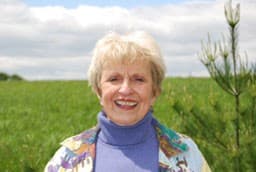
Biography coming soon.







