BookBrief
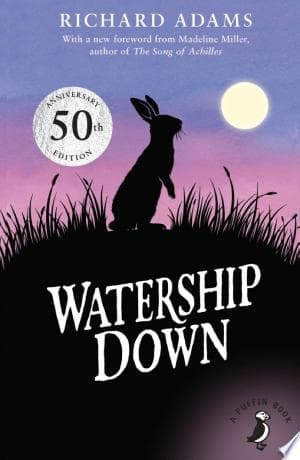
Watership Down cover
Archivist's Choice

Watership Down

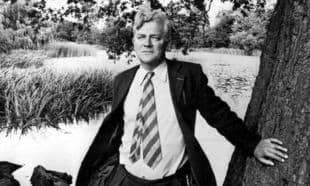
Richard Adams (2023)

Genre

Fantasy / Children's / Young Adult

Reading Time

11-14 hours (based on 333 pages and average reading speed)

Key Themes

See below

Track Your Reading

Sign in to track this book

A group of rabbits, led by a visionary and his brother, travels across the English countryside to escape a doomed warren and build a new home at Watership Down, fighting predators, rival colonies, and their own fears.

Synopsis

Fiver, a young rabbit with visions, senses a disaster coming to his warren. His brother Hazel believes him, even though the Chief Rabbit is doubtful. Together, they lead a small group of rabbits on a dangerous journey to find a new home. They face many threats, including predators, hostile rabbits, and the wild. Their search leads them to Watership Down, a safe hill. However, their new warren has no female rabbits, which endangers its future. Hazel, now their leader, plans missions to find females, first trying to rescue rabbits from Nuthanger Farm and then facing the strict warren of Efrafa, led by General Woundwort. With courage, cleverness, and sacrifice, they free a group of females from Efrafa. This act causes a violent fight, ending in a battle at Watership Down where Hazel's trick, using a dog, wins them the fight and secures their new warren's survival, bringing peace for years until Hazel's peaceful death.
Reading time
11-14 hours (based on 333 pages and average reading speed)
Difficulty
Medium
Pacing
Variable
Mood
Epic, Adventurous, Suspenseful, Philosophical, Melancholy
✓ Read this if...
You enjoy epic adventure stories, allegories, or tales of survival and leadership against overwhelming odds, with a deep dive into animal societies and folklore.
✗ Skip this if...
You dislike anthropomorphic animal stories, long descriptive passages, or scenes of animal violence and struggle.

Plot Summary

The Vision and the Warning

In the Sandleford warren, Fiver, a small rabbit, has a vivid and scary vision of his home being destroyed by a mysterious, bloody force. He tells his older brother, Hazel, a clever but ordinary rabbit. Though Hazel is at first doubtful, Fiver's seriousness and past accuracy convince him the danger is real. Hazel tries to warn the Chief Rabbit, Threarah, but the Owsla, the warren's military leaders, especially Captain Holly, dismiss his concerns and see Hazel as a troublemaker. Hazel decides to gather a small group of rabbits to escape the coming disaster, trusting Fiver's unsettling prediction.

The Escape from Sandleford

Hazel, Fiver, and a small group of rabbits – including Bigwig, a strong but rebellious former Owsla officer; the loyal Blackberry; the smart Dandelion; and the clever Pipkin – begin their dangerous journey. Their escape is risky, as they are not used to life outside the warren's burrows. They face predators like a dog and a fox, and the constant threat of hunger and exposure. Conflicts also arise, especially between Bigwig, who struggles with leaving his Owsla past, and Hazel, who is still finding his leadership style. Fiver's ability to sense danger often guides them, proving very helpful as they travel through the unfamiliar and hostile world.

The Warren of the Snares

The traveling rabbits find a seemingly perfect warren, full of food, led by the charming Chief Rabbit Cowslip. The Sandleford rabbits are at first relieved by the easy life, but Fiver quickly senses a deep unease and an unnatural quiet. He warns Hazel that something is wrong, but the others are drawn to the comfort. Bigwig is almost caught by a wire trap, a discovery that confirms Fiver's fears. Cowslip's rabbits are well-fed because humans regularly set snares and provide food, sacrificing a few individuals for the safety of the rest. Horrified by this grim agreement, Hazel's group decides to leave, barely escaping the same fate.

Arrival at Watership Down

After more travel and hardships, Fiver has another vision, leading the tired group towards a high, open hill. They eventually arrive at Watership Down, a beautiful, isolated hill with good natural defenses, lush grass, and many burrows. The rabbits are overjoyed, seeing it as the safe home Fiver had promised. They begin to build their new warren, digging and settling in. Hazel, now their clear leader, organizes the group, assigning tasks and ensuring the safety and well-being of his followers. The future looks good, but the lack of does (female rabbits) quickly becomes a serious problem for their new warren's survival.

The Search for Does

With their new warren established on Watership Down, the rabbits face a critical problem: their group is all male. Without females, their warren cannot reproduce and will eventually die out. Hazel recognizes this threat and organizes trips to find female rabbits. Captain Holly, who survived the destruction of Sandleford warren and joined them, brings news of nearby human-kept hutches with females. Hazel plans to free them, showing his growing strategic mind and dedication to his warren's future. This quest shows their cleverness and determination, as well as the dangers of dealing with the human world.

The Raid on Nuthanger Farm

Hazel, Bigwig, Blackberry, and other rabbits carry out a daring raid on Nuthanger Farm, where they believe females are kept in hutches. The plan is dangerous, involving moving through human territory and outsmarting a cat and a dog. Bigwig, with his strength, helps open the hutch. They manage to free three females – Thethuthinnang, Hyzenthlay, and Vilthuril – but the escape is chaotic. Hazel is shot and badly wounded by the farmer, seeming to die. Fiver, however, refuses to believe his brother is dead and eventually finds him, showing his deep bond and connection with Hazel. The females are brought back to Watership Down, securing the warren's immediate future, though Hazel's injury is serious.

The Discovery of Efrafa

While searching for more females, Bigwig and other rabbits find Efrafa, a large warren ruled by the harsh General Woundwort. Efrafa is a highly organized, military society where rabbits are treated like prisoners, constantly watched by the Owslafa (their Owsla). Bigwig, disgusted by their oppressive ways, volunteers to go into Efrafa to rescue females. He pretends to be an aspiring Owslafa officer, enduring tough training and surveillance. His bravery and cleverness are tested as he navigates Woundwort's brutal system, befriending a few sympathetic Efrafan females, especially Hyzenthlay, who also wants freedom. This mission is very risky, with the constant threat of being discovered and killed.

The Escape from Efrafa

Bigwig, with help from Hyzenthlay and other brave Efrafan females, carefully plans their escape. He communicates with Hazel and the Watership Down rabbits using the clever seagull, Kehaar, who acts as a scout and messenger. The escape is a tense, nighttime operation, involving a carefully timed breakout from Efrafa. Bigwig uses his strength and courage to fight off pursuing Owslafa, while the females, guided by him, make a desperate run for freedom. The escape is difficult, with several close calls, but Bigwig's leadership and the females' determination lead to a successful, though costly, exit from Woundwort's control.

The Battle of Watership Down

Angry about the escape of the females and Bigwig's defiance, General Woundwort leads his entire Efrafan Owsla in a brutal attack on Watership Down. The Watership Down rabbits, though outnumbered, prepare their defenses under Hazel's command. They use their knowledge of the land, their burrows, and their cleverness to resist the Efrafans. Bigwig faces Woundwort in a fierce, personal fight inside a burrow, a desperate struggle for survival. The battle is savage and long, with both sides losing rabbits. The Watership Down rabbits, fighting for their freedom and home, show great courage and strength against Woundwort's relentless attack.

The Trick with the Dog

As the battle continues and the Watership Down rabbits are pushed to their limits, Hazel creates a desperate, brilliant plan. He races to Nuthanger Farm, where he knows a fierce dog is kept. He lures the dog back to Watership Down, leading it directly into the battle. The dog, unleashed and confused, attacks both Efrafan and Watership Down rabbits, causing chaos. Woundwort, unable to understand or control this new, terrifying enemy, is last seen charging the dog, a final act of suicidal defiance. The dog's intervention breaks the Efrafan attack, scattering their forces and allowing the Watership Down rabbits to win and secure their future.

Peace and Prosperity

With Woundwort defeated and the Efrafan threat gone, Watership Down enters a time of peace and growth. The females from Efrafa join the warren, and new kits are born, ensuring the community's survival and expansion. Hazel, now a respected Chief Rabbit, rules with wisdom and kindness, building a society based on cooperation and individual freedom, a stark contrast to Efrafa. The warren becomes a symbol of hope and a testament to the courage and strength of its founders. The rabbits live out their lives, telling stories of their journey and the challenges they overcame, cementing their history.

Hazel's Final Journey

Many years pass, and Hazel grows old and weak. One peaceful evening, as he rests outside his burrow, he is visited by the Black Rabbit of Inlé, the rabbit version of the grim reaper, who appears as a kind, shining figure. The Black Rabbit invites Hazel to join his Owsla, to leave his body and join the spirit world, where he will no longer suffer. Hazel, having lived a long and full life, accepts his fate calmly. He dies peacefully, his spirit leaving his body to join the Black Rabbit, leaving behind a thriving warren and a history of brave leadership.

Principal Figures

Hazel

The Protagonist

Hazel transforms from an ordinary rabbit into a wise and revered Chief Rabbit, leading his warren to safety and prosperity through courage, cunning, and compassion.

Fiver

The Protagonist/Visionary

Fiver starts as a frightened visionary but grows in confidence, consistently proving the accuracy of his visions and becoming the spiritual compass of the warren.

Bigwig

The Supporting/Protector

Bigwig transforms from a rebellious Owsla member into Hazel's most loyal and courageous champion, learning to temper his strength with strategic thinking and unwavering loyalty.

General Woundwort

The Antagonist

Woundwort's arc is one of unyielding tyranny, culminating in his self-destructive pursuit of control and ultimately, his demise.

Blackberry

The Supporting/Intellectual

Blackberry consistently applies his intelligence to help the warren, solidifying his role as a vital strategic advisor.

Holly

The Supporting/Messenger

Holly transforms from a dismissive Owsla captain into a loyal and wise member of Watership Down, scarred but strengthened by his experiences.

Kehaar

The Supporting/Ally

Kehaar forms an unlikely but strong bond with the rabbits, using his unique abilities to aid them before returning to his migratory life.

Cowslip

The Mentioned/Antagonist

Cowslip remains static in his corrupt leadership, serving as a warning of the dangers of complacency and false security.

Hyzenthlay

The Supporting/Doe

Hyzenthlay transitions from a subjugated doe in Efrafa to a free and respected member of the Watership Down warren, finding a voice for herself and her fellow does.

Themes & Insights

The Nature of Leadership

The novel explores different kinds of leadership through Hazel and General Woundwort. Hazel shows democratic, caring leadership, valuing everyone's input, adapting to problems, and putting his warren's well-being first. He leads by example, inspiring loyalty through trust and courage. Woundwort, in contrast, represents harsh, autocratic rule, maintaining control through fear, brutal force, and strict order. The clear difference between their styles ultimately decides their warrens' fates, showing that real leadership means service and wisdom, not just power. This is clear in Hazel's willingness to risk his life for the females at Nuthanger Farm, versus Woundwort's willingness to sacrifice his own rabbits for control.

All he'd ever done was to use his strength and cunning to survive. And, for the first time, he felt that he had a purpose, a reason for being alive. He would lead them.

Narrator, about Hazel

Survival and Adaptation

The rabbits' journey is a constant fight for survival against natural predators, human threats, and harsh environments. They must always change their plans, learn new skills, and overcome huge difficulties. From understanding human objects like roads and snares to creating new ways of defense and social organization, their ability to adapt is vital. Their success at Watership Down shows their strength and cleverness. The contrast with the Sandleford rabbits, who failed to adapt to change, and the Efrafan rabbits, who adapted to a rigid, unsustainable system, highlights how important flexible thinking and resourcefulness are.

Rabbits are not like other creatures. They are resourceful. They are brave. They will find a way.

Hazel

Freedom vs. Security

This theme is central to the novel, especially in the contrast between Watership Down and Efrafa, and the Warren of the Snares. The Warren of the Snares offers safety and food but at the cost of individual freedom and life, a grim deal with humans. Efrafa, under Woundwort, provides a kind of 'security' through extreme order and military discipline, but at the expense of all personal freedom, joy, and natural rabbit behavior. The Watership Down rabbits, in contrast, choose the difficult path to freedom, prioritizing self-determination and a natural way of life, even if it means more danger. Their eventual success proves their choice was right, showing that true security comes from freedom and self-reliance.

A rabbit has to be quick and bright and ready to make a dash for it. But not in Efrafa. In Efrafa, a rabbit has to be slow and dull and ready to wait for orders.

Bigwig, describing Efrafa

The Power of Myth and Storytelling

The rabbits' culture is rich with myths and legends, especially those of El-ahrairah, the Prince with a Thousand Enemies. These stories are not just for entertainment but also serve as moral lessons, guides for behavior, and sources of inspiration and hope. They provide a way to understand their world, their place in it, and the problems they face. Dandelion and Bluebell often tell these tales, boosting morale and teaching important lessons about cleverness, courage, and survival. The stories strengthen their identity and heritage, uniting them as a community and giving them strength in hard times, such as during the siege of Watership Down.

It was the stories, of course, that made them feel they belonged. The stories of El-ahrairah, their folk hero, who always outwitted his enemies.

Narrator

The Interconnectedness of Nature

The novel emphasizes the complex connections within the natural world. The rabbits constantly interact with their environment and other species, from predators like stoats and foxes to allies like the seagull Kehaar. The health of their warren is directly linked to the health of the ecosystem around them. Fiver's visions often show this interconnectedness, sensing imbalances or dangers. The rabbits' understanding of nature's cycles, the behavior of other animals, and the lay of the land is essential for their survival. This theme highlights the delicate balance of ecosystems and the importance of living in harmony with the natural world.

The whole world was in the sky. All the birds, all the leaves, all the grass and the flowers, all the earth and the water. It was all one, and it was all going to change.

Fiver, describing his vision

Plot Devices & Literary Techniques

Fiver's Visions

Precognitive dreams and feelings that warn of danger and guide the rabbits' journey.

Fiver's psychic abilities serve as a crucial plot device, driving the initial exodus from Sandleford and guiding the rabbits throughout their journey. His visions, though often vague and disturbing, consistently prove accurate, forcing the other rabbits, particularly Hazel, to trust his intuition. This device creates suspense, foreshadows impending dangers (like the Warren of the Snares or the destruction of Sandleford), and provides a mystical element to the narrative, emphasizing the rabbits' deep connection to their world and an unseen spiritual dimension.

The Journey/Quest

The physical and spiritual journey of the rabbits to find a new, safe home.

The entire novel is structured as a quest narrative. The rabbits' journey from Sandleford to Watership Down, and then the subsequent quests for does, serve as the primary engine of the plot. This device allows for episodic encounters with various dangers and different rabbit societies, providing opportunities for character development, moral dilemmas, and the exploration of different themes (e.g., leadership, freedom, survival). The journey is both literal and metaphorical, representing the search for belonging, purpose, and a sustainable way of life.

Storytelling and Mythology (El-ahrairah Tales)

The embedded folk tales of El-ahrairah that serve as moral lessons and sources of inspiration.

The stories of El-ahrairah, the cunning rabbit folk hero, are frequently recounted by Dandelion and Bluebell throughout the narrative. These myths function as a form of cultural memory and a practical guide for survival. They parallel the rabbits' own struggles, offering examples of cleverness, courage, and resilience against overwhelming odds. This device not only enriches the rabbits' culture but also provides thematic depth, reinforcing the idea that wisdom and cunning can overcome brute force, and that stories are vital for identity and morale, especially during difficult times.

The Black Rabbit of Inlé

The rabbit personification of death, who appears at the end of life.

The Black Rabbit of Inlé acts as a symbolic personification of death, specifically the benevolent and natural end of life for rabbits. This device introduces a spiritual dimension to the rabbits' world, presenting death not as a terrifying void but as a peaceful transition to another state, a joining of El-ahrairah's Owsla. His appearance at Hazel's peaceful passing provides a poignant and comforting conclusion to Hazel's life, reinforcing the natural cycle of life and death within their world and offering a sense of spiritual continuity.

Anthropomorphism

Attributing human-like thoughts, emotions, and social structures to animals.

The novel uses anthropomorphism to allow readers to connect deeply with the rabbits' experiences, struggles, and triumphs. While maintaining their essential 'rabbitness' (e.g., their instincts, fears of predators, reliance on burrows), Adams imbues them with complex social structures, language (Lapine), moral codes, and individual personalities. This device allows for the exploration of complex themes like leadership, tyranny, and freedom through the accessible lens of animal characters, making the story both a compelling adventure and a profound allegory for human society.

Critical analysis

Notable Quotes

Quiz

Test Your Knowledge

Ready to see how well you understood this book? Take our interactive quiz with 10 questions.

10
Questions
~5
Minutes
?
Best Score

Key Questions (FAQ)

Fiver, a runt rabbit with a strong psychic ability, experiences a terrifying vision of blood covering their home field, foreshadowing a devastating destruction of the Sandleford Warren by humans. He convinces his brother Hazel, who trusts Fiver's premonitions implicitly, that they must gather a small group and escape immediately before the impending danger materializes.

About the author

Richard Adams

Richard George Adams was an English novelist and writer of the books Watership Down, Maia, Shardik and The Plague Dogs. He studied modern history at university before serving in the British Army during World War II. Afterwards, he completed his studies, and then joined the British Civil Service. In 1974, two years after Watership Down was published, Adams became a full-time author.