“Children are not children, they are the vessels into which we pour our most poisonous secrets.”
— Tom Crick reflecting on the nature of childhood and the burdens passed down through generations.

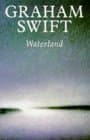
Graham Swift (1983)
Genre
Literary Fiction / Historical Fiction
Reading Time
8-10 hours
Key Themes
See below
Sign in to track this book
In the desolate East Anglian Fens, a history teacher's meandering narrative of eels, incest, madness, and murder unravels his family's tormented legacy and the relentless, cyclical nature of history itself.
In 1980, Tom Crick, a history teacher in Greenwich, London, learns that history will be removed from the curriculum, and he will lose his job. Instead of following the syllabus, Tom begins to tell his personal and family history to his students, a story deeply rooted in the Fenland of East Anglia. He introduces his wife, Mary, who has recently kidnapped a baby, an event that makes Tom urgently need to understand his past. This narrative shift establishes Tom as a narrator who sometimes strays from strict facts, constantly mixing his personal story with philosophical thoughts on history itself, questioning its purpose and the nature of storytelling.
Tom takes his students and the reader to the Fenland, a reclaimed marshland in East Anglia, emphasizing its flat, watery, and often bleak character. He describes generations of Cricks, his ancestors, who lived and worked the land, often as lock-keepers or brewers. He explains how Dutch engineers drained the Fens, creating a landscape that is both artificial and prone to flooding. The Crick family history is connected with the history of the Fens, a place where time seems to move differently, and the past is always present. Tom's narration explores the specific and often unusual customs and ways of life of the Fen people, such as eel-catching.
Tom explains the upsetting event that prompted his story: his wife Mary's abduction of a baby from a supermarket. He explains that Mary, after many years of trying, could not have children, leading to deep sadness and psychological distress. This act, while seemingly random, is deeply connected to their shared past and Tom's unspoken guilt. He sees his storytelling as a way to understand Mary's actions and to face the secrets he has kept from her and himself. The kidnapping is a current crisis that forces Tom to uncover the hidden truths of their youth in the Fens, linking a present tragedy to past trauma.
Tom recounts his childhood growing up in the lock-keeper's house with his older brother, Dick, who was born with a learning disability and a large head. Their father, Henry Crick, was the lock-keeper. Tom describes their isolated life and their close friendship with Mary Metcalf, the daughter of the local pub owner, and her brother Freddie Parr. These four children form a close group, exploring the Fens and playing childhood games. Tom highlights Dick's unique view of the world and his physical strength, contrasting it with his intellectual limitations, which often made him a target for local bullies.
The story moves to a summer when Tom and Mary, still teenagers, become lovers. Mary discovers she is pregnant. At a time when such a situation would bring great shame, they desperately look for a solution. They confide in Dick, who, despite his limitations, is very loyal to Tom and Mary. Their plan involves an illegal abortion, for which they get help from a local 'wise woman' or midwife, Sarah Atkinson. This event is kept secret and feared, and its tragic outcome will affect their lives for a long time, becoming the central, unspoken trauma that defines their relationship and Mary's future infertility.
After Mary's abortion, a series of tragic events unfolds. Freddie Parr, Mary's brother, is found dead in the lock. His death is officially called an accident, but Tom and Mary know otherwise. Freddie had discovered Mary's pregnancy and the abortion, threatening to expose them. Tom suggests that Freddie was silenced, though he does not directly say who was responsible. Freddie Parr's death adds more guilt and secrecy to Tom and Mary's lives, further intertwining their fates. The lock, always present in the Crick family's life, becomes a symbol of hidden depths and tragic endings.
Dick, despite his intellectual limitations, figures out the truth about Freddie Parr's death and Mary's abortion. He confronts Tom, showing unexpected understanding and pain. Driven by a desire to protect Mary and perhaps to make up for something, Dick goes on a bicycle journey, seemingly to confess or seek justice. He is later found dead, having apparently fallen from a bridge into a sluice. Tom reveals that Dick was actually the child of an incestuous relationship between his father, Henry Crick, and his aunt, Helen Atkinson, the sister of the 'wise woman.' This revelation about Dick's true parents and his death adds another layer of tragic irony and predestination to the Crick family story, connecting his fate to the Fens' hidden secrets.
Tom finally reveals the full, dark truth about his family: his father, Henry Crick, and his aunt, Helen Atkinson (Sarah Atkinson's sister), had an incestuous relationship. Dick was the result of this union. This explains Dick's distinct appearance and learning disability, which the family had always blamed on a 'blow to the head.' This revelation is a deep shock, not only to Tom's students but also to the reader, as it changes how much of the earlier story is understood. It highlights the recurring themes of hidden histories, the cyclical nature of sin, and the inescapable influence of the past on the present. This secret, kept for generations, finally surfaces, exposing the deep-seated problems within the Crick family line.
Tom explores the tradition of eel-fishing in the Fens, a practice passed down through generations. He describes the eel's life cycle, its mysterious origins, and its journey, comparing it to the flow of history and the human condition. He also tells a story about his grandfather, who, in despair, drowned himself in a vat of beer, which the townspeople then drank, showing the Fen people's dark humor and resilience. Tom uses these stories to illustrate his philosophy of history – that it is a continuous, sometimes murky, and often repetitive cycle. He emphasizes that the past is never truly gone but continues to influence the present, much like eels returning to their origins.
As Tom finishes his long story, he returns to the present day in Greenwich. Through his storytelling, he has tried to understand Mary's actions and their shared trauma. He admits that while he has uncovered the past, it does not necessarily offer a neat solution or forgiveness. He understands Mary's desire for a child as an attempt to fill the emptiness left by their lost baby and the events that followed. The history lesson ends with a sense of understanding, if not complete peace. Tom suggests that by facing their history, he and Mary might find a way forward, even if the scars remain. The act of telling the story becomes a form of release and an attempt to reconnect with Mary.
Throughout his story, Tom Crick constantly reflects on the nature of history itself. He argues against a linear, factual account, suggesting that history is more like a story, a collection of narratives, sometimes embellished, sometimes incomplete, but always vital for understanding the present. He believes that 'History is a yarn' and 'History is a flood.' He challenges his students, and the reader, to consider how the past shapes identity and destiny. His final message is that while history might not offer definitive answers, telling and understanding stories is essential for human survival and finding meaning, especially in a world that often tries to dismiss the past. He concludes that stories, even painful ones, provide a form of immortality and connection.
The Protagonist/Narrator
Tom's arc is one of confronting and articulating his repressed past, moving from a position of guarded secrecy to a more open, albeit still complex, understanding of his own and his family's history.
The Supporting
Mary's arc is less directly explored than Tom's, but she moves from silent suffering to an act of desperation, which then prompts the necessary confrontation with their past, potentially leading to a form of healing.
The Supporting
Dick's arc is tragic; he lives as a marginalized figure, unknowingly burdened by his origins, and dies after uncovering a painful truth, becoming a casualty of the family's secrets.
The Supporting
Henry remains a largely static, enigmatic figure, his arc defined by the gradual revelation of his past actions rather than personal development.
The Supporting
Freddie's arc is tragically cut short, his death serving as a pivotal moment that casts a long shadow over the protagonists' lives.
The Supporting
Sarah Atkinson is a static character, serving as a functional figure within the plot rather than undergoing significant personal change.
The Mentioned
Helen Atkinson's arc is revealed retrospectively; her actions in the past are the source of a major family secret.
The Supporting
Mr. Lewis is a static character, representing an institutional viewpoint rather than undergoing personal development.
Tom Crick's main argument is that history is not a dry collection of facts but a living narrative, a 'yarn' or a 'flood.' He questions the idea of objective historical truth, suggesting that personal experience and interpretation are essential. The novel itself shows this theme, as Tom weaves his family's story with philosophical thoughts on history's purpose and limits. This is clear in his repeated phrase, 'Children, I am going to tell you a story,' and his belief that 'History is a means to an end. History is a means to a beginning.'
“Children, I am going to tell you a story. A story about the past. For the past, as you will discover, is not a land of long ago and far away, but a country of here and now.”
The novel shows how the past, especially hidden secrets and traumas, deeply shapes the present and future. The incestuous relationship between Henry Crick and Helen Atkinson, Mary's abortion, and Freddie Parr's death all affect Tom and Mary's adult lives for a long time. Mary's infertility and subsequent baby kidnapping are direct results of these past events. Tom's entire story is an attempt to uncover this inescapable legacy, showing how 'the past is a foreign country' that is also 'a country of here and now.'
“For the past, as you will discover, is not a land of long ago and far away, but a country of here and now.”
The theme of fertility and its absence is central to the novel. Mary's inability to have children, stemming from her teenage abortion, drives her psychological distress and the baby kidnapping. This personal tragedy contrasts with the natural cycles of life in the Fens, particularly the mysterious life cycle of the eel. The story explores the deep human desire for children and the devastating impact of not having them, linking it to the continuation of family lines and the very idea of a future. The eel's journey from the Sargasso Sea to the Fens and back symbolizes this lasting, cyclical force.
“And it came to me that the eel, the blind, wriggling, instinct-driven eel, was the true inhabitant of the Fens.”
The novel explores the dark side of family secrets, especially the revelation of incest. The relationship between Henry Crick and Helen Atkinson, which results in Dick's birth, is a deep betrayal that affects generations. This secret, along with Mary's abortion and Freddie Parr's death, highlights the destructive power of hidden truths and how far people go to hide them. These secrets contribute to the widespread feeling of guilt and unspoken trauma that defines the Crick family and the Fenland community.
“And so, children, we have arrived at the secret. The secret that explains the secret.”
The Fenland itself is almost a character in the novel; its unique, flat, watery, and often bleak landscape deeply influences the lives and minds of its inhabitants. The Fens, a man-made landscape constantly fighting the threat of flood, mirrors the human struggle against nature and history. The isolated, self-contained nature of the Fens creates a sense of detachment and allows secrets to fester. The locks, rivers, and eels are important to the story, symbolizing the flow of time, the hidden depths of human experience, and the cyclical nature of life and death. The landscape dictates the livelihoods and often the fates of the Crick family.
“The Fens. A land of water. A land of flatness. A land that wants to be water.”
Tom Crick's personal biases and selective memory shape the historical account.
Tom Crick is a quintessential unreliable narrator. His storytelling is deeply personal, often embellished, and driven by his own psychological needs, particularly his guilt and desire to understand Mary's actions. He frequently interjects philosophical asides, questions the nature of truth, and admits to shaping his narrative for his audience. This device forces the reader to actively engage with the text, scrutinizing Tom's version of events and considering what might be omitted or distorted, thereby mirroring the novel's larger theme about the subjective nature of history.
Tom's classroom lectures frame the recounting of his family's history.
The novel employs a frame narrative, with Tom Crick's classroom in Greenwich serving as the outer frame for his expansive telling of his family's history in the Fens. This structure allows Tom to directly address his 'students' (and by extension, the reader), establishing a conversational and didactic tone. The present-day crisis of Mary's baby kidnapping provides the urgent impetus for his historical excavation, linking the immediate personal drama to the broader historical sweep. The frame highlights the tension between the 'here and now' of the classroom and the 'then and there' of the Fenland past.
Subtle hints and recurring motifs hint at future revelations and tragedies.
Graham Swift utilizes extensive foreshadowing throughout the novel, creating a sense of impending doom and deepening the mystery surrounding the Crick family. Early mentions of Dick's 'cabbage-head' and the family's vague explanations hint at his true parentage. The constant presence of the lock and water, and repeated references to drowning, foreshadow Freddie Parr's and Dick's deaths. These subtle clues and recurring motifs build suspense and reinforce the idea that the past is always lurking, ready to surface and impact the present, even before the full revelations are made explicit by Tom.
The unique landscape and its watery elements symbolize history, memory, and the human condition.
The Fenland landscape, with its flatness, its constant battle against the encroaching water, and its network of locks and rivers, functions as a powerful symbol. The water itself represents the flow of history, memory, and the subconscious, often murky and prone to flooding. The locks symbolize control, containment, and the attempts to manage powerful forces, both natural and human. The eels, with their mysterious life cycle and journey, symbolize the cyclical nature of life, death, and the enduring, instinctual aspects of humanity. The Fenland embodies the idea of a place where the past is never truly buried.
“Children are not children, they are the vessels into which we pour our most poisonous secrets.”
— Tom Crick reflecting on the nature of childhood and the burdens passed down through generations.
“The past is not a package to be wrapped up and put away. It is a living, breathing thing that informs every moment of our present.”
— Tom Crick discussing the inescapable influence of history on the present.
“Water, water everywhere, nor any drop to drink.”
— A direct allusion to 'The Rime of the Ancient Mariner,' used to describe the overwhelming and often unusable presence of water in the Fens.
“History is a story, but it is also a river, and sometimes the river changes its course.”
— Tom Crick explaining the fluid and interpretive nature of historical narrative.
“We are all the products of our landscape, and the landscape of the Fens is one of flatness, of water, and of a relentless, unyielding past.”
— Tom Crick linking the geographical features of the Fens to the character and destiny of its inhabitants.
“The greatest secret is not what is hidden, but what is revealed, and then ignored.”
— Tom Crick on the human tendency to overlook obvious truths.
“Every story has a beginning, a middle, and an end. But not every life does.”
— Tom Crick contemplating the structure of narratives versus the often messy reality of life.
“To understand the present, you must understand the past. And to understand the past, you must tell its story.”
— Tom Crick emphasizing the importance of historical narrative for comprehension.
“The Fens are a place where the land is always fighting the water, and the people are always fighting the land.”
— A description of the perpetual struggle between nature and humanity in the Fens.
“Perhaps all history is a digression, a rambling, circuitous route to an unknown destination.”
— Tom Crick musing on the winding and unpredictable nature of historical events and their interpretation.
“We invent stories to make sense of the world, to give it shape and meaning.”
— Tom Crick reflecting on the human need for narrative to cope with reality.
“There are things that happen which simply cannot be explained by reason, only by the heart.”
— Tom Crick acknowledging the limits of rationality in understanding certain human experiences.
“The future is always uncertain, but the past is a certainty, even if we choose to forget it.”
— Tom Crick contrasting the known past with the unknown future, and the human capacity for selective memory.
“Love, like the Fens, can be a treacherous landscape, full of hidden depths and unexpected turns.”
— A metaphorical comparison between the landscape of the Fens and the complexities of human love.
Ready to see how well you understood this book? Take our interactive quiz with 10 questions.

Biography coming soon.







