“A warrior of light is never a coward.”
— A foundational statement about the warrior's character.

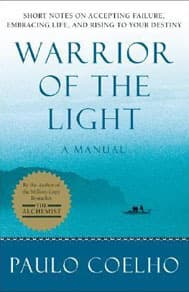
Paulo Coelho (2003)
Genre
Fantasy / Spirituality / Philosophy
Reading Time
142 min
Key Themes
See below
Sign in to track this book
Discover your inner warrior and live your most authentic life by embracing self-discovery and finding wisdom in everyday challenges.
The 'Manual of the Warrior of the Light' starts by introducing the Warrior. This figure is not a literal fighter but someone aware of their flaws who tries to improve and grow spiritually. The first sections state that everyone can be a Warrior, no matter their past or present. It tells readers to listen to their hearts, follow their own path, and conquer fears and doubts. The text suggests that the journey is not about being perfect but about always learning, adapting, and finding joy in the process. It sets the stage for a spiritual quest, urging readers to notice the signs that guide them.
The manual often discusses how challenges and defeats are unavoidable on the Warrior's path. It advises that a true Warrior accepts failure as a key part of learning. The text points out that moments of despair and doubt are not weaknesses but chances to renew commitment and find inner strength. It encourages Warriors to learn from mistakes, get up after falling, and keep moving with new resolve. The message is clear: setbacks are not endings but detours that lead to greater wisdom and resilience, which are essential for anyone trying to live a meaningful life.
Solitude is an important tool for the Warrior of the Light. The manual explains that time alone lets the Warrior reconnect with themselves, listen to their intuition, and understand their true desires and fears. During these quiet times, the Warrior can process experiences, gain clarity, and make important decisions without outside distractions. While valuing human connection, the text also stresses the need to withdraw from the world periodically to recharge and gain perspective. This balance of engaging with the world and retreating for reflection helps maintain spiritual balance.
A main theme in the manual is the importance of living in the present. The Warrior is encouraged to fully experience each day, appreciate life's small wonders, and not worry about the future or regret the past. The text suggests that true happiness and fulfillment come only from fully engaging with the 'now.' It advises against putting off joy or waiting for perfect conditions, instead urging the Warrior to find beauty and purpose in their current situation. This focus on the present helps the Warrior act decisively and enjoy the journey, rather than just focusing on the end goal.
The manual often mentions the importance of intuition, calling it the 'voice of God' or the 'language of the world.' The Warrior learns to pay attention to instincts, subtle omens, and the 'signs' the universe provides. It states that rational thought alone is not enough to navigate life's complexities and that true wisdom often comes from intuitive understanding. The text encourages Warriors to develop their sensitivity to these unseen forces, trust their gut feelings, and follow inner guidance, even when it seems illogical to others. This trust in intuition unlocks one's true potential.
Fear and doubt are constant companions on the Warrior's path. The manual does not say Warriors are fearless, but that they choose to act despite their fears. It encourages the Warrior to recognize anxieties, understand where they come from, and then consciously decide not to let them paralyze them. The text states that courage is not the absence of fear, but overcoming it. It advises Warriors to face their inner demons, challenge self-limiting beliefs, and take risks for their dreams, knowing that growth often lies just beyond their comfort zone.
Love, in its many forms, is a central theme. The manual discusses romantic love, self-love, love for humanity, and divine love. It teaches that the Warrior must first love and accept themselves, flaws and all, before they can truly love others. Love is a source of strength, courage, and understanding. The text advises Warriors to open their hearts, forgive, and be generous with affection, knowing that love heals, transforms, and connects people to something greater. It encourages Warriors to express love freely and without expectation.
The manual stresses the importance of humility, reminding the Warrior not to become arrogant or overly pleased with achievements. It advises against seeking fame or recognition, instead focusing on personal growth and real contributions. Simplicity is also highlighted, suggesting the Warrior finds strength and clarity in an uncluttered life, free from excessive material desires or unnecessary complications. The text warns against the dangers of pride and self-importance, which can blind the Warrior to new lessons and hinder progress. Humility keeps the Warrior open to learning from everyone and everything.
Ultimately, the manual guides the Warrior to understand and fulfill their personal path. It suggests that each Warrior has a unique purpose and something to contribute to the world. The text encourages them to pursue dreams with passion and honesty, knowing that their actions, however small, can have a ripple effect. It discusses leaving a legacy, not necessarily through grand achievements, but through the positive impact they have on others and the example they set. The Warrior's journey is a quest to become their best self, inspiring others through their authenticity and courage.
Beyond philosophical ideas, the manual offers practical advice for the Warrior's daily life. It covers habits like mindful observation, patience, kindness, and self-discipline. It encourages Warriors to find joy in everyday tasks, treat others with respect, and remain committed to self-improvement. The text emphasizes that the Warrior's path is not a single event but a continuous practice, a way of living that integrates spiritual principles into every part of existence. It reminds us that the biggest battles and wins often happen within ourselves, through consistent effort and a dedicated spirit.
The Protagonist
The Warrior's arc is a continuous journey of self-discovery, learning to embrace imperfections, overcome fears, and live authentically.
The Supporting
The Teacher's arc is static, serving as a consistent source of wisdom throughout the Warrior's journey.
The Antagonist
The Adversary's arc is to be continually challenged and diminished by the Warrior's growing courage and self-awareness.
The Supporting/Mentioned
The Others remain largely unchanged, serving as a backdrop against which the Warrior's unique path is defined.
The main theme is the journey of finding and living one's unique purpose or 'Personal Legend.' The manual consistently encourages readers to listen to their hearts, identify dreams, and pursue them with strong dedication. It suggests that everyone has a special gift and a destiny to fulfill, and that true happiness comes from aligning one's life with this inner calling. This theme appears in passages urging the Warrior to ignore outside distractions and societal pressures to focus on their inner voice, as when it says, 'The Warrior of the Light believes. Because he believes, he can overcome any obstacle.'
“A warrior of the light knows that he has much to be grateful for. He never forgets the help he has received from others, and he thanks them for it.”
This theme emphasizes that setbacks and failures are not roadblocks but necessary parts of growth. The manual redefines failure as a chance to learn, reflect, and change direction, rather than a reason to quit. It teaches that true strength is resilience — the ability to get up after falling, learn from mistakes, and continue the journey with new determination. This is clearly shown when the text states that 'The warrior knows that the best way to learn is by doing. He makes mistakes, but he never gives up.' This theme promotes courage in the face of difficulty and a persistent spirit.
“A warrior of the light knows that he has much to be grateful for. He never forgets the help he has received from others, and he thanks them for it.”
The book repeatedly highlights the importance of fully engaging with the 'now.' It advises against dwelling on past regrets or future worries, stating that true life and joy are found in the present. The Warrior is encouraged to appreciate the small wonders of daily life, act decisively now, and find contentment in their current situation. This theme is seen in passages that warn against delaying happiness, such as when it suggests, 'He knows that life is a continuous lesson, and that the present is the only moment that matters.' It promotes mindfulness and a deep appreciation for how life unfolds.
“A warrior of the light knows that he has much to be grateful for. He never forgets the help he has received from others, and he thanks them for it.”
A major theme is the development and reliance on intuition, often called 'the language of the world' or the 'voice of God.' The manual guides the Warrior to notice subtle signs, omens, and gut feelings, suggesting these inner prompts provide vital direction beyond rational thought. It encourages trusting one's inner wisdom, even when it goes against logic or outside advice. This theme is clear in many passages that urge the Warrior to 'listen to their heart' and to 'read the signs,' helping them make decisions based on a deeper, spiritual understanding of their path and purpose.
“A warrior of the light knows that he has much to be grateful for. He never forgets the help he has received from others, and he thanks them for it.”
This theme explores the internal struggle against fear, doubt, and limiting beliefs. The manual acknowledges these are constant companions on the Warrior's journey, but it stresses that courage is not the absence of fear, but the willingness to act despite it. It offers ways to confront inner demons, challenge negative self-talk, and build resilience. This is a recurring idea, as the text often encourages the Warrior to 'take risks' and to 'fight for their dreams,' knowing that overcoming these internal foes is essential for spiritual and personal growth. It is a call to inner strength and mental toughness.
“A warrior of the light knows that he has much to be grateful for. He never forgets the help he has received from others, and he thanks them for it.”
Short, memorable statements and illustrative stories conveying moral truths.
The book is structured almost entirely as a collection of aphorisms and short parables. Each entry presents a distinct piece of wisdom or a brief narrative that illustrates a spiritual principle. This device allows for easy digestibility and encourages reflection on individual passages. For example, a short story about a Warrior encountering a challenge in the desert might be followed by a concise statement about perseverance. This fragmented, yet interconnected, structure allows the reader to engage with the text at their own pace and apply the lessons to their specific life circumstances, making the manual a timeless and adaptable guide.
The narrator directly addresses the reader as 'the Warrior,' creating a personal, immersive experience.
A key plot device is the consistent use of second-person narration, directly addressing the reader as 'you' and implicitly as 'the Warrior of the Light.' This creates an immediate and deeply personal connection, making the reader feel as though the manual is specifically written for them and their journey. By placing the reader directly into the role of the protagonist, the book fosters introspection and self-identification with the challenges and triumphs described. This direct address transforms the act of reading into an active process of self-discovery and empowerment, blurring the lines between reader and character.
Utilizes universal symbols and archetypes (Warrior, Light, Darkness, Path) to convey complex spiritual concepts.
The manual extensively uses archetypal symbolism to communicate its philosophical and spiritual messages. The 'Warrior of the Light' itself is an archetype, representing inner strength, courage, and spiritual striving. 'Light' symbolizes knowledge, truth, and divine guidance, while 'Darkness' represents fear, doubt, and ignorance. The 'Path' or 'Journey' is a universal symbol for life's progression and personal development. These archetypes resonate deeply with the collective unconscious, making the lessons universally relatable and timeless, transcending specific cultural or religious contexts to tap into fundamental human experiences and aspirations.
The narrative voice is instructive and advisory, aiming to teach and guide the reader.
The book employs a consistently didactic tone, meaning its primary purpose is to teach and instruct. The narrator acts as a wise mentor, offering guidance, warnings, and encouragement. Each passage is designed to impart a specific lesson about spiritual growth, self-discovery, or navigating life's challenges. This tone is not authoritarian but rather gentle and supportive, inviting the reader to reflect and apply the teachings. This direct instructional approach reinforces the manual's purpose as a guide for personal transformation, ensuring that its messages are clear, impactful, and actionable for the aspiring Warrior.
“A warrior of light is never a coward.”
— A foundational statement about the warrior's character.
“The warrior of light knows that he has much to be grateful for.”
— Emphasizing gratitude as a key trait.
“A warrior of light is never afraid to make mistakes.”
— Highlighting the importance of embracing imperfection and learning.
“The warrior of light knows that the most important battles are those he fights within himself.”
— Focus on introspection and inner conflict.
“A warrior of light does not waste his time listening to provocations.”
— Advice on maintaining focus and avoiding distractions.
“He knows that he cannot find the truth by trying to convince others.”
— Understanding that personal truth is not for external validation.
“The warrior of light never gives up on his dream.”
— A core message about perseverance and aspiration.
“He knows that life is a constant challenge, and for this reason, he must be attentive to the signs.”
— Emphasizing mindfulness and recognizing opportunities or warnings.
“A warrior of light always remembers that everything he does, everything he experiences, has a purpose.”
— A spiritual perspective on the meaning of life events.
“He is not afraid to weep, for he knows that tears are part of life.”
— Acknowledging vulnerability and the naturalness of emotions.
“The warrior of light shares with others what he knows and what he has.”
— Highlighting generosity and community spirit.
“He knows that a boat is safer in the harbor, but that is not what boats are made for.”
— A metaphor for taking risks and living fully.
“A warrior of light does not try to be someone else.”
— Emphasizing authenticity and self-acceptance.
“He knows that faith is a practice, not just a theory.”
— Highlighting the active nature of belief and spirituality.
Ready to see how well you understood this book? Take our interactive quiz with 10 questions.

Paulo Coelho de Souza is a Brazilian lyricist and novelist and a member of the Brazilian Academy of Letters since 2002. His novel The Alchemist became an international best-seller and he has published 30 more books since then.







