“Hope was a fragile thing, easily shattered, but it was also the only thing that kept them going.”
— Reflecting on the dire situation facing the Elves and the world.

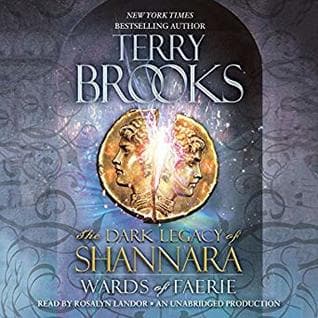
Terry Brooks (2012)
Genre
Fantasy / Science Fiction
Reading Time
360 min
Key Themes
See below
Sign in to track this book
As a sinister politician rises to power amidst a war between magic and science, a young Druid uncovers the lost tale of the Elfstones, thrusting her into a dangerous quest to recover their power before the Four Lands are consumed by an ancient evil.
The story opens with Ard Rhys Paxon Leah, the leader of the Druid order, traveling to the Elven city of Arborlon. She seeks advice and help from Queen Linden, warning her of the growing threat from the Federation, a technologically advanced human nation that is expanding its territory and influence. The Federation, under Prime Minister Bellweathers, views magic users and the traditional races of the Four Lands with suspicion and hostility. Paxon Leah fears that the Federation's advance will lead to the eradication of magic and the subjugation of all non-human peoples, and that the ancient wards protecting the lands are weakening, leaving them vulnerable.
Back at the Druid's Keep, Paranor, Aphenglow Elessedil, a young Druid, studies ancient texts. She finds an old diary belonging to an Elven girl named Pythia, an ancestor of the Elessedil line. Pythia's diary tells a personal story but, more importantly, reveals critical information about the fabled Elfstones – powerful magical artifacts that once protected the Four Lands from the demonic hordes of the Forbidding. Aphenglow learns that the Elfstones were not just lost, but intentionally hidden after a catastrophic event involving their misuse, and that their true nature and location have been hidden for centuries. This discovery sets her on a dangerous path.
Aphenglow's discovery does not go unnoticed. Shortly after deciphering Pythia's diary, she becomes the target of an assassination attempt within Paranor. The attackers are skilled and relentless, showing a powerful force knows of her findings and wants to silence her. With help from her mentor, the elderly Druid Khyber, Aphenglow escapes the Keep, but Khyber is mortally wounded. Before dying, Khyber tells Aphenglow to continue her quest, stressing the importance of her knowledge and the need to find the Elfstones before they fall into the wrong hands. Aphenglow, now a fugitive, must navigate a dangerous world alone.
Paxon Leah's efforts to create an alliance between the Elves and the Druids against the Federation are largely unsuccessful. Queen Linden, while sympathetic, hesitates to commit her people to open warfare, fearing the consequences. Meanwhile, Prime Minister Bellweathers of the Federation consolidates his power, using fear and propaganda to demonize magic users and justify his expansionist policies. He deploys advanced airships and ground troops, pushing deeper into the traditional lands of the Elves and other free races. The Federation's technological superiority makes them a formidable foe, and the free peoples of the Four Lands find themselves increasingly isolated and vulnerable.
Aphenglow, armed with clues from Pythia's diary, begins a dangerous journey to uncover the Elfstones' true location. Her path takes her through treacherous wilderness and territories increasingly patrolled by Federation forces. Along the way, she meets various individuals – some hostile, some helpful. She learns to rely on her wits and a new magical ability she barely knew she had. The diary's riddles lead her to believe the Elfstones are hidden in a place deeply connected to Elven history, possibly within a forgotten part of the ancient Silver River basin, far from any established Druid or Elven settlements, making her quest even more isolated and dangerous.
Prime Minister Bellweathers, having learned of the Elfstones' possible existence and Aphenglow's involvement, sends his elite forces, led by Commander Taelor, to track her down. Bellweathers understands that control of the Elfstones would give him immense power, solidifying his dominance over the Four Lands. However, an older, more insidious threat also begins to stir: the Shadowen. These dark, evil entities, drawn to chaos and suffering, are attracted to the weakening wards and the escalating conflict. They subtly influence events, creating divisions between the different races, making Aphenglow's mission even more urgent.
As the Federation's military presence expands and the Shadowen's influence grows, Ard Rhys Paxon Leah sees firsthand the decline of the ancient wards that protect the Four Lands. The once strong magical energies are fading, leaving the land and its people vulnerable. She observes the growing despair among the Elves, Dwarves, and other free races as their traditional ways of life are threatened by the Federation's technology and Bellweathers' oppressive policies. Paxon Leah realizes that the future of magic, and indeed all life in the Four Lands, depends on finding the Elfstones and restoring balance before it is too late. Her hope rests almost entirely on Aphenglow.
Aphenglow faces several close calls with Federation patrols and fights with creatures corrupted by the Shadowen. Her journey forces her to mature quickly, sharpening her instincts and developing her magical abilities. She continues to study Pythia's diary, uncovering more layers of the Elven girl's tragic story and, more importantly, more specific clues about the Elfstones' hiding place. The diary suggests a deep connection between the Elfstones' power and the core of Elven magic, implying they are not just objects but hold a deeper, intrinsic link to the Elven race. She realizes the stones are not just hidden, but protected by ancient Elven magic, accessible only to those deemed worthy.
Prime Minister Bellweathers, emboldened by his military successes and the disunity among the free races, issues a harsh ultimatum to Queen Linden and the Elven Council. He demands their complete submission to Federation rule, threatening total annihilation if they resist. His actions reveal his tyrannical nature, making it clear that his goal is not just security but absolute control over all the Four Lands. He manipulates public opinion, painting the Elves and magic users as dangerous relics of the past that must be eradicated for the sake of progress and order. The Elves are left with a terrible choice: surrender or face inevitable war against a technologically superior foe.
Following the final clues from Pythia's diary, Aphenglow arrives at a hidden, ancient Elven sanctuary, long forgotten by most. She discovers that the Elfstones are not a single entity, but a set of three distinct stones, each with its own purpose and power. Pythia's story reveals that they were separated and hidden after a devastating event involving their misuse, which caused immense suffering for the Elven people. Aphenglow, through her Elessedil heritage and the guidance of Pythia's spirit, finds and retrieves the first of the three Elfstones. The moment she touches it, a surge of raw, ancient magic flows through her, confirming its immense power and the urgency of her quest to find the others before Bellweathers or the Shadowen can intervene.
The Protagonist
Aphenglow transforms from an academic Druid into a resourceful and courageous protector, embracing her destiny and latent magical abilities.
The Supporting
Paxon Leah struggles to unite the free peoples against a common enemy, facing the limitations of her power and the growing despair.
The Antagonist
Bellweathers solidifies his tyrannical rule, revealing his true, power-hungry nature as he pursues the Elfstones.
The Supporting
Queen Linden grapples with the difficult decision of war or submission, trying to protect her people from overwhelming odds.
The Supporting
Khyber makes the ultimate sacrifice to protect Aphenglow and the secret of the Elfstones, ensuring the quest continues.
The Mentioned/Guiding Force
Though deceased, Pythia's story and spirit guide Aphenglow, revealing the past and influencing the future.
The Supporting Antagonist
Taelor relentlessly pursues Aphenglow, serving as the physical embodiment of the Federation's threat.
The Antagonist
The Shadowen slowly gain influence as the wards weaken, becoming an increasingly pervasive and insidious threat.
This theme explores the clash between ancient magical traditions and modern technological advancement. The Federation, representing science, seeks to dominate and eradicate magic, viewing it as a primitive and dangerous force. The Druids and Elves, representing magic, strive to preserve their heritage and the natural balance of the world. This conflict is seen in Prime Minister Bellweathers' relentless pursuit of power through technology and his disdain for the magical races, contrasting with Ard Rhys Paxon Leah's efforts to protect the ancient ways. The novel questions whether these two forces can coexist or if one must destroy the other.
““Magic was a relic, a superstition, a dangerous delusion. Technology was order, progress, and the only true path to a civilized future.””
The past plays a crucial role in shaping the present and future. Aphenglow's discovery of Pythia's diary, an ancient Elven artifact, directly triggers the main plot. The secrets of the Elfstones are buried in Elven history, and Aphenglow's Elessedil lineage gives her a unique connection to them. The novel shows how historical events, past mistakes (like the misuse of the Elfstones), and ancestral legacies continue to impact current challenges. The characters are often guided or burdened by the actions and knowledge of those who came before them, highlighting the enduring power of heritage.
““The past was not merely prologue; it was the very ground upon which the present stood, and its forgotten secrets could reshape the world.””
The story shows how power, whether magical or technological, can corrupt. Prime Minister Bellweathers' desire for control drives him to tyrannical acts, using the Federation's advanced technology for oppression rather than progress. The historical account of the Elfstones' misuse, as revealed in Pythia's diary, is a warning about the dangers of unchecked magical power. The Shadowen also represent a form of corrupting power, feeding on despair and discord. The narrative explores the moral responsibility that comes with wielding great power and how easily it can be twisted for selfish ends.
““Power, whether born of machine or magic, was a hungry beast, and it devoured those who sought to master it without wisdom.””
Despite the overwhelming odds against them – the powerful Federation, the dwindling magic, and the re-emerging Shadowen – characters like Aphenglow and Paxon Leah show persistent hope and resilience. Aphenglow, a young and initially inexperienced Druid, undertakes a dangerous quest against powerful enemies, driven by a belief in the possibility of saving her world. Paxon Leah tirelessly seeks alliances, refusing to give in to despair. This theme highlights the human (and Elven) spirit's capacity to endure hardship, fight for what is right, and find strength even when faced with seemingly impossible challenges, suggesting that even a small spark of hope can ignite change.
““Even in the deepest shadows, a single flicker of hope could illuminate the path forward, if only one dared to follow it.””
Aphenglow's discovery of Pythia's ancient diary drives the central mystery.
Pythia's diary serves as the primary catalyst for the plot. It is an ancient, personal account that, through its cryptic entries and emotional narrative, reveals the shocking truth about the Elfstones' disappearance and true nature. This device allows for exposition of critical backstory without resorting to lengthy narration, providing clues that propel Aphenglow's quest. It also connects her directly to her Elven heritage and the past mistakes that led to the current crisis, making her quest deeply personal.
The declining magical protections of the Four Lands create urgency and vulnerability.
The weakening of the ancient wards that protect the Four Lands from external threats (like the Shadowen) is a crucial plot device. It establishes the immediate danger and urgency of finding the Elfstones. This decline is a direct consequence of the diminishing magic in the world and the growing technological dominance of the Federation. It creates a sense of impending doom and explains why the Shadowen are able to stir, heightening the stakes for Aphenglow's quest and Paxon Leah's efforts to unite the free peoples.
The Federation's advanced technology creates an imbalance of power and a formidable antagonist.
The Federation's technological prowess, manifested in airships, advanced weaponry, and surveillance, acts as a significant plot device by creating a powerful and intimidating antagonist. This superior technology directly contrasts with the magical abilities of the Druids and Elves, creating an imbalance of power that forces the magical races to adapt or perish. It justifies the fear and caution among the free peoples and provides a tangible threat that Aphenglow must constantly evade, making her journey more perilous and the stakes higher.
Aphenglow's Elven ancestry grants her unique abilities and connection to the Elfstones.
Aphenglow's heritage as an Elessedil, an ancient Elven line, is a key plot device. It provides a genetic and magical link to the Elfstones and Pythia's diary, making her uniquely suited to unlock their secrets. This lineage suggests a latent magical potential within her, which begins to manifest as she embarks on her quest. It reinforces the theme of destiny and the importance of ancestry, giving Aphenglow not just a personal stake, but an inherited responsibility in the fate of the Four Lands.
“Hope was a fragile thing, easily shattered, but it was also the only thing that kept them going.”
— Reflecting on the dire situation facing the Elves and the world.
“The past was a road, not a destination. You could look back, but you couldn't stay there.”
— Crispin reflecting on his past mistakes and the need to move forward.
“Magic was not a tool to be wielded lightly, for it had a will of its own, and sometimes that will was contrary to your own.”
— Pondering the unpredictable nature of the ancient Elven magic.
“Sometimes the greatest strength lay not in fighting, but in enduring.”
— Moral reflection during a period of siege and hardship.
“Fear was a powerful weapon, and often, the enemy used it more effectively than any sword.”
— Observing the psychological tactics employed by the antagonists.
“The truth, like a river, would always find its way to the sea, no matter how many dams were built to stop it.”
— Hinting at revelations to come despite attempts to conceal information.
“To forget history was to doom oneself to repeat it, a lesson the Elves had learned many times over.”
— A general observation on the cyclical nature of conflict and peace.
“Even in the darkest of times, there were always those who would stand for what was right, no matter the cost.”
— Inspiring thought about the heroes emerging in a desperate situation.
“The world was a tapestry woven of choices, and every thread, no matter how small, altered the pattern.”
— Contemplating the consequences of individual decisions on a grand scale.
“Trust was earned, not given, and once broken, it was nearly impossible to mend.”
— Reflecting on betrayal and the difficulty of rebuilding relationships.
“Sometimes the greatest battles were fought not with swords and spells, but within the confines of one's own mind.”
— Recognizing the internal struggles faced by the protagonists.
“Change was the only constant, and resisting it was like trying to hold back the tide.”
— Accepting the inevitability of new circumstances and adapting to them.
“A leader's true test was not in how they commanded, but in how they inspired.”
— Assessing the qualities of true leadership amidst chaos.
“The smallest spark could ignite the greatest fire, for good or ill.”
— Considering the potential impact of seemingly minor events or actions.
Ready to see how well you understood this book? Take our interactive quiz with 10 questions.

Biography coming soon.







