“The only reason you don't like an idea is because you didn't think of it.”
— Lightsong's cynical view on human nature and innovation.

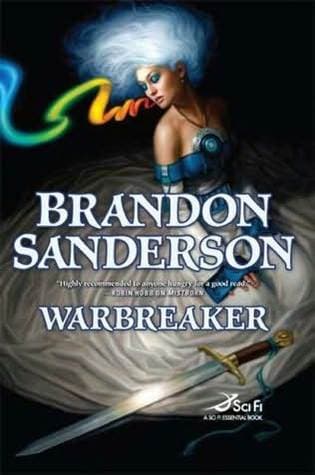
Brandon Sanderson (2009)
Genre
Fantasy / Romance
Reading Time
15-20 hours
Key Themes
See below
Sign in to track this book
In a world where color provides power and gods are reborn as mortals, two royal sisters navigate divine politics, ancient magic, and a reluctant God King to prevent a war that could destroy them.
Princess Vivenna of Idris prepares for marriage to the God King of Hallandren to prevent war, as required by a treaty. However, her younger sister, Siri, is sent instead due to a last-minute decision by their father, King Dedelin. Siri, unprepared for royal life, is sent into the opulent and foreign court of Hallandren, scared of her marriage to the mysterious and silent God King Susebron. Meanwhile, Vivenna, feeling her life's purpose taken and worried for Siri's safety, secretly travels to Hallandren, determined to rescue her sister and stop the war she believes is coming.
Upon arriving in Hallandren, Siri marries the God King Susebron. She is scared by his presence and inability to speak, thinking him a monster. Confined to the royal palace, Siri struggles with loneliness and the strange customs of Hallandren. She is especially wary of the priests, particularly Denth and Tonk Fah, who seem to be controlling her. Slowly, Siri starts to communicate with Susebron through writing and discovers he is not the monster she imagined, but a kind, intelligent, and lonely person who has been kept voiceless and ignorant by his priests to maintain their control.
Vivenna arrives in Hallandren, disguised as 'Vivilar'. She is overwhelmed by the colors and BioChromatic magic of the city, which is very different from the simple Idrian culture. Looking for information and allies, she tries to join various groups but is quickly targeted by dishonest people. She eventually joins a mercenary group led by Denth and Tonk Fah, not knowing they are the same people controlling Siri. Vivenna believes they are helping her gather information on Hallandren's war preparations, but they are secretly using her for their own purposes, taking advantage of her naiveté and anti-Hallandren feelings.
Lightsong, one of the Returned gods in the Hallandren pantheon, lives a life of luxury and philosophical detachment. He is known for his wit and cynicism, always questioning his divinity and purpose. Unlike other gods, he has no memory of his past life and finds the idea of leading his followers into war unsettling. He spends his days trying to solve riddles and understand the world, often talking with his priest, Llarimar. Lightsong has prophetic dreams and a growing sense of worry, feeling a significant event is coming that will require his attention and possibly his sacrifice.
Vivenna continues to work with Denth and Tonk Fah, believing they are preparing for a coordinated Idrian uprising. However, her suspicions grow as she sees their ruthlessness and disregard for life. She eventually discovers their true nature: they are not Idrian sympathizers but mercenaries hired by an unknown party, likely to destabilize Hallandren and start a war. When Denth tries to kill her after she learns too much, she is unexpectedly rescued by a mysterious, cynical, and powerful Awakener named Vasher, accompanied by his sentient sword, Nightblood. Vasher reluctantly takes Vivenna in, showing his knowledge of BioChromatic magic and the Hallandren court.
As Siri and Susebron communicate through writing, Siri starts to teach him about the outside world, Idrian culture, and government basics. She realizes the priests have deliberately kept him uneducated and isolated, using his silence and the fear it creates to strengthen their own power. Siri discovers that the priests, especially the High Priest, are planning to start a war with Idris, believing it will lead to a new Age of the Returned and solidify their control. Susebron, though hesitant at first, starts to assert himself, encouraged by Siri's support and love.
Vasher reluctantly trains Vivenna in the basics of Awakening, showing some of the dangers and details of BioChromatic magic. He explains that his sword, Nightblood, is a unique and powerful Awakened object, but also dangerous, always wanting 'evil' and draining the Breath of anyone nearby. Through their talks, Vivenna learns that Vasher is much older and more knowledgeable than he seems, suggesting a long and troubled past. She starts to suspect his true identity, linking him to the legendary 'Warbreaker the Peaceful' and the origins of Awakening.
Lightsong's prophetic dreams become clearer, showing the true nature of the coming war. He realizes the priests are planning to use the God King's Breath to Awaken a large army, sacrificing Susebron. He also concludes that the priests are trying to manipulate the Idrian people into attacking Hallandren, creating an excuse for war. With this knowledge, Lightsong confronts the other gods and his own doubts. In a key moment, he sacrifices himself to save Siri and Susebron, using his Divine Breath to heal the God King's tongue, allowing him to speak and expose the priests' deceit.
The full truth about Denth is revealed: he is a Returned, one of the Five Scholars, and a traitor working with the priests to start war. Vasher is also revealed to be a Returned, and Warbreaker the Peaceful, one of the original Five Scholars who created Nightblood. He explains that the Returned are not gods but individuals who died and came back with a single Divine Breath, a large amount of power, but no memories of their past lives. His goal has always been to prevent the destructive use of Awakening and make up for his past mistakes, especially the creation of Nightblood.
Susebron, now able to speak thanks to Lightsong's sacrifice, exposes the High Priest's conspiracy to the other gods and the Hallandren people. A battle happens within the palace as Vasher, Vivenna, and Siri confront Denth and his remaining forces. Vasher uses Nightblood, but its destructive power is almost uncontrollable. Denth is defeated. Afterward, the High Priest is arrested, and the immediate threat of war is stopped. Siri and Susebron start to rebuild Hallandren, with Susebron now an active ruler. Vivenna, now a skilled Awakener, decides to stay in Hallandren to help her sister and learn more about Awakening, seeking a new purpose.
The Protagonist
Transforms from a naive, fearful princess into a compassionate and politically astute queen.
The Protagonist
Evolves from a rigid, prejudiced princess to a more open-minded and skilled Awakener.
The Supporting
Transforms from a voiceless, manipulated figurehead to an active and benevolent ruler.
The Supporting
A centuries-old figure seeking atonement, who reluctantly mentors Vivenna and plays a key role in stopping the war.
The Supporting
Accepts his destiny and makes a heroic sacrifice, finding purpose in his death.
The Antagonist
Revealed as a cunning antagonist and former ally of Vasher, driven by a twisted philosophy.
The Supporting
Remains a powerful, dangerous, and morally simplistic force, changing hands but not nature.
The Supporting
Remains a loyal and supportive figure, helping Lightsong fulfill his destiny.
The Mentioned
Serves as a brutal henchman, illustrating the ruthlessness of Denth's group.
The Antagonist
Revealed as the primary antagonist, whose conspiracy is ultimately exposed.
The novel explores how characters define themselves and discover their true identities, often against what society expects. Siri, first defined by her Idrian upbringing and then by her role as the God King's wife, discovers her own strength and voice. Vivenna deals with her ideas and learns that her identity is not just tied to her birthright. Lightsong, a Returned without memories, constantly questions his divine purpose. Vasher, burdened by centuries of his past, tries to reconcile his actions with his current self. Each character's journey is a quest to understand who they are beyond their roles.
“'What if I wasn't meant to be a princess? What if I was meant to be something else entirely?'”
The cultural differences between the simple, Breath-less Idrians and the colorful, BioChromatic-rich Hallandrens cause much of the initial conflict. Vivenna shows Idrian prejudice, seeing Hallandren as decadent, which leads her to make bad judgments. Hallandrens see Idrians as dull. The story shows how these biases lead to misunderstanding and conflict, and how characters like Siri and Vivenna must overcome them to find common ground and prevent war. The novel ultimately supports understanding and empathy between different cultures.
“'Ignorance is not wisdom. Prejudice is not strength.'”
Warbreaker looks at different forms of power: political authority (the God King, the priests), magical power (Awakening, Breath), and the power of influence. The Hallandren priesthood controls Susebron's authority through his voicelessness, showing how power can be used indirectly. The power of BioChromatic magic, especially Nightblood, is shown to be both amazing and dangerous, requiring responsibility. The novel asks who truly holds power and how it should be used, supporting good leadership over manipulation and control.
“'Power is not a thing to be wished for. It is a burden to be carried, and a heavy one at that.'”
Sacrifice is a main theme, especially through Lightsong, who gives his life to save Susebron and Siri, finding his purpose in death. Siri's initial 'sacrifice' in marrying the God King, while not actual death, is a personal sacrifice. Vasher's centuries-long quest to prevent the wrong use of Awakening is a form of ongoing atonement for his past mistakes, especially creating Nightblood. These acts show that heroism often involves selflessness and that redemption can be found by making up for past wrongs.
“'Perhaps the purpose of a god is not to live, but to die.'”
Despite the political plots and coming war, love and connection are important parts of the story. The bond between Siri and Vivenna, though strained, drives both. Siri's growing love for Susebron allows her to see past his scary appearance and help him reclaim his power. The novel explores different kinds of love – familial, romantic, and platonic – as essential elements that can bridge cultural divides and inspire courage and selflessness, proving to be a powerful force for peace and understanding.
“'Love is not something that is earned, it is something that is given.'”
The unique magic system based on stored life force and color.
BioChromatic magic, or Awakening, is the core magic system of Warbreaker. It relies on 'Breath,' a unit of life force that can be transferred from person to person, and the manipulation of color. Awakened objects obey commands, and the power scales with the amount of Breath and the wielder's knowledge. This system is not just a power source but also a cultural cornerstone for Hallandren, influencing their art, architecture, and social hierarchy. It provides both the means for miracles and for immense destruction, driving much of the plot's conflict and resolution.
Individuals who die and return to life with a single Divine Breath and no memories.
The Returned are a central plot device, forming the Hallandren pantheon of gods. These individuals die and inexplicably return to life with a 'Divine Breath'—an immense store of Breath—but no memories of their past lives. Their existence is the foundation of Hallandren's religion and political structure. The mystery of their origin and the implications of their powers (and lack of memories) are crucial to understanding the political machinations and the true history of the world, particularly concerning Vasher and Denth's identities.
A sentient, power-hungry Awakened sword that drains 'evil' and Breath.
Nightblood is a unique and dangerous Awakened sword, created by Vasher, that serves as a powerful and unpredictable plot device. It is sentient, capable of speech, and constantly hungers for 'evil,' draining the Breath of its wielder and victims. Its immense destructive power makes it a weapon of last resort, but its simplistic morality and constant drain on Breath make it a severe liability. Nightblood symbolizes the dangers of unchecked power and the unforeseen consequences of magical creation, pushing characters like Vasher and Vivenna to confront its moral implications.
The stark differences between two nations that fuel misunderstanding and conflict.
The extreme cultural differences between the austere, monochromatic, and religious Idris and the vibrant, BioChromatic, and hedonistic Hallandren serve as a major plot device. This contrast immediately establishes conflict and prejudice, driving the sisters' individual journeys. Vivenna's initial contempt for Hallandren and Siri's fear of the unknown are direct results of this cultural divide. The eventual bridging of this gap, through understanding and empathy, is key to the story's resolution and thematic exploration of tolerance.
Susebron's inability to speak, used as a tool for manipulation.
The God King Susebron's silence is a crucial plot device. It is initially presented as a terrifying, divine mystery, fostering fear and allowing the Hallandren priests to manipulate his image and power. His inability to speak isolates him and prevents him from ruling effectively, making him a puppet. Siri's efforts to communicate with him and Lightsong's ultimate sacrifice to restore his voice are pivotal moments, exposing the priests' conspiracy and allowing Susebron to reclaim his agency, directly impacting the war's outcome.
“The only reason you don't like an idea is because you didn't think of it.”
— Lightsong's cynical view on human nature and innovation.
“A man's ethical code is not a suit of clothes he can don or doff at will. It is the man himself.”
— Siri reflecting on the nature of morality and identity.
“The purpose of a storyteller is not to tell you how to think, but to give you questions to think upon.”
— Lightsong, in a moment of philosophical reflection on art and meaning.
“Sometimes the only way to win is to change the rules.”
— Vasher explaining his pragmatic approach to difficult situations.
“The less you know, the more you believe.”
— Lightsong's observation on faith and ignorance.
“Life is a journey of discovery, and you are the only one who can decide what you want to find.”
— Siri's internal thoughts on personal agency and self-discovery.
“A lie is an act of power, and often, an act of kindness.”
— Vasher's complex view on the nature and utility of deception.
“It's easy to be a hero when you're not the one making the sacrifice.”
— Susebron's quiet resentment and understanding of his role.
“The true measure of a man is not how he behaves in moments of comfort and convenience, but how he stands at times of controversy and challenge.”
— Vasher's assessment of character, echoing a common philosophical sentiment.
“You cannot make someone see what they don't want to see.”
— Lightsong's frustration with the stubbornness of others' beliefs.
“Sometimes, the hardest thing and the right thing are the same.”
— Siri facing a difficult decision that requires courage.
“Fear is a tool. You can use it, or it can use you.”
— Vasher's pragmatic approach to managing emotions.
“The greatest truths are often the simplest ones.”
— Lightsong reflecting on profound simplicity.
“Just because you have a choice, doesn't mean you have an easy choice.”
— Siri grappling with the weight of her limited options.
Ready to see how well you understood this book? Take our interactive quiz with 10 questions.
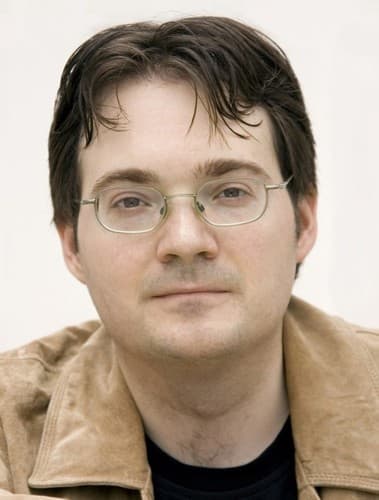
Brandon Sanderson is a prolific American author of epic fantasy and science fiction. He is best known for his expansive Cosmere universe, featuring series like Mistborn and The Stormlight Archive, as well as his completion of Robert Jordan's Wheel of Time series. Sanderson's intricate magic systems and compelling world-building have earned him a dedicated global fanbase and critical acclaim.







