“I was a farm horse, not a war horse, but war had come to find me.”
— Joey's reflection on being conscripted into World War I.

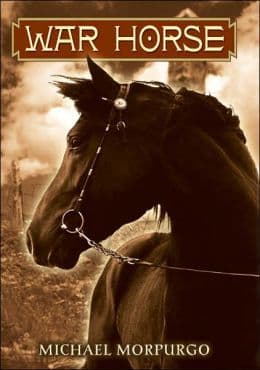
Michael Morpurgo (1982)
Genre
Children's / Historical Fiction / Young Adult
Reading Time
180 min
Key Themes
See below
Sign in to track this book
Separated by World War I, a farm horse named Joey endures the Western Front, his spirit longing for the boy he left behind. He inspires hope and humanity in the soldiers he meets.
The story begins in rural Devon, England, in 1912. Joey, a young foal, is bought by Farmer Narracott at auction. The horse is expensive and seems unsuitable for farm work, but Albert Narracott, the farmer's son, immediately connects with Joey. Albert trains Joey, teaching him to plough and pull carts, even though the horse is initially wild. Their bond grows through Albert's patience and Joey's trust. Joey becomes an important part of the farm, working with Albert and enduring the harsh farm life, including the farmer's occasional drunken outbursts and money struggles.
In 1914, World War I starts. Financial problems force Farmer Narracott to sell Joey to the British army for a good price, despite Albert's pleas. Captain Nicholls, a kind officer, assures Albert that Joey will be cared for. Albert, heartbroken, tries to enlist but is too young. He makes Captain Nicholls promise to look after Joey and write to him. Joey is taken to France, leaving Albert behind. Albert vows to find Joey once he is old enough to join the war. This separation starts Joey's journey through the war.
Joey starts his military service as a cavalry horse under Captain Nicholls, who keeps his promise to Albert by treating Joey with kindness. Joey becomes friends with Topthorn, another cavalry horse. They train for battle and soon experience the Western Front. During a charge against a German encampment, Captain Nicholls dies. Joey's care passes to Trooper Warren, a young soldier who finds comfort in Joey. Joey and Topthorn see how effective machine guns are, making cavalry charges useless and changing their role in the war.
During a battle, German forces capture Joey and Topthorn. They work pulling ambulance carts, transporting wounded soldiers from the front lines. Their new master is Friedrich, a kind German soldier who, like Albert, loves horses. He cares for them well, seeing their strength. Joey and Topthorn endure tough conditions, always exposed to shelling and the suffering of war. Friedrich talks to the horses, sharing his hopes of surviving the war and returning to his family, showing shared humanity despite opposing sides.
After months, Friedrich and his unit retreat, leaving Joey and Topthorn with an elderly French farmer and his granddaughter, Emilie. Emilie, a frail but spirited girl, immediately loves the horses. She and her grandfather hide the horses from German patrols, caring for them with love. Joey and Topthorn have a period of peace, helping with farm work. Emilie's bond with the horses is strong; she sees them as hope and joy during the war. This period offers a brief break from the front lines.
The peace at Emilie's farm ends quickly. German soldiers find Joey and Topthorn and take them for heavy artillery work, pulling large guns through mud. The work is hard and constant. Topthorn, Joey's friend, dies from exhaustion, leaving Joey alone and sad. Emilie, upset by the loss of her horses and the war, also gets sick and dies after Topthorn, her heart broken. Joey is again without a friend, facing the war alone.
After Topthorn's death, Joey continues to serve, enduring hardship. One day, confused and scared during a battle, Joey runs blindly through the chaos until he gets caught in barbed wire in no man's land. Trapped and injured, he spends a night between the trenches. In the morning, British and German soldiers see him. A German soldier, using a white flag, and a British soldier go out into the dangerous area to free him. They toss a coin to decide who keeps him, and the British soldier wins.
The British soldiers take Joey to a veterinary field hospital. Joey is severely injured, thin, and has 'fever in the feet.' He is almost unrecognizable. Albert Narracott, now a soldier, works at this hospital. He enlisted and volunteered for the Veterinary Corps, still determined to find his horse. Albert, partially blinded by gas, recognizes Joey's white cross on his nose and his unique whinny. Despite Joey's changed appearance, Albert's belief and voice save Joey, confirming their reunion.
Albert cares for Joey, nursing him back to health. He shares his rations, cleans his wounds, and talks to him constantly, just as he did when Joey was a foal. Under Albert's care, Joey slowly recovers, regaining his strength. Their bond is stronger than ever, showing lasting loyalty during war. As Joey recovers, the war ends with the Armistice. The soldiers begin the journey home, relieved but sad for those lost.
With the war over, the army plans to auction the remaining horses, including Joey. Albert does not want to lose Joey again. With help from his fellow soldiers, who pool their money, and Emilie's grandfather, who travels from France to return Joey's original halter and buy him for Albert, Joey is saved. Emilie's grandfather refuses payment, saying he only wants Joey reunited with Albert, fulfilling Emilie's wish. Albert and Joey finally return home to Devon, together, their journey complete.
The Protagonist
Joey transforms from a wild farm horse into a seasoned war horse, enduring immense suffering, yet ultimately finding his way back to his original master, symbolizing resilience and enduring hope.
The Protagonist
Albert matures from a devoted farm boy into a determined soldier, overcoming obstacles and personal injury to fulfill his promise and reunite with Joey.
The Supporting
Topthorn serves as Joey's constant companion, sharing the burdens and horrors of war until his tragic death from exhaustion, symbolizing the widespread animal sacrifice.
The Supporting
Captain Nicholls' brief but impactful role establishes a standard of humane treatment for Joey before his tragic early death in battle.
The Supporting
Friedrich provides a brief period of humane care for Joey and Topthorn, illustrating shared humanity across enemy lines, before he too succumbs to the war's violence.
The Supporting
Emilie's bond with Joey and Topthorn is a beacon of innocence and love, but her tragic death underscores the war's devastating impact on the most vulnerable.
The Supporting
Emilie's Grandfather acts as a protector and a guardian of memory, ensuring Joey's return to Albert, fulfilling his granddaughter's legacy of love.
The Supporting
Trooper Warren's brief ownership of Joey illustrates the bond between soldiers and their horses, providing mutual comfort and courage in wartime.
The Supporting
Farmer Narracott's initial impulsive purchase and subsequent desperate sale of Joey drive the plot's central conflict, highlighting economic hardship.
The novel shows the realities of World War I from an animal's perspective. Joey sees cavalry charges made useless by machine guns, artillery fire, trench squalor, and the suffering of soldiers and horses. The constant death and loss show the pointlessness of the conflict. The story does not glorify war. Instead, it focuses on the destruction it causes to lives, land, and innocence, seen through Joey's eyes and the experiences of characters like Friedrich and Emilie.
“And it was that very day that I saw the first horrors of the war. They came at us in the mist, a whole line of them, French cavalry. They came on at the gallop, sabres drawn, and disappeared into the smoke and the noise. And then they were gone. And then came the wounded. And then came the dead.”
A main theme is the strong bond between Joey and Albert. This bond is a source of hope throughout the story. Despite years of separation and the dangers of war, their loyalty never wavers. This theme also appears in other relationships: Joey's friendship with Topthorn, Captain Nicholls' promise to Albert, Friedrich's care for the horses, and Emilie's affection. These connections show how devotion sustains individuals through hardship and loss, leading to Joey's reunion with Albert.
“I knew his smell, I knew his touch, I knew his voice. He was my Albert. And I had found him again. And that was all that mattered.”
Despite the violence, the novel shows humanity and compassion across enemy lines. Characters like Captain Nicholls, Friedrich (a German soldier), Emilie and her grandfather (French civilians), and even the British and German soldiers who free Joey from no man's land, show kindness and respect for life. These acts of humanity contrast with the war's brutality. They suggest that goodness exists even in dark times, bridging divides and offering hope.
“For a moment, as we stood there, two enemies of war, we were no longer enemies. We were just two men who loved a horse.”
War Horse shows the often-forgotten sacrifice of animals, especially horses, during wartime. Joey's story gives a voice to these victims. Horses endure the same horrors as soldiers—shelling, gas attacks, exhaustion, injury, and death—often without understanding the conflict. Their strength is used for cavalry charges, pulling artillery, and ambulance work, leading to many deaths from combat, disease, and overwork, as Topthorn's death shows. The book honors their forgotten contribution and suffering.
“My friend Topthorn was no longer with me. He had died, as so many thousands of horses had died, of exhaustion and of a broken heart.”
Loss and grief are present throughout the story. Joey loses Albert, Captain Nicholls, Topthorn, and Emilie, each leaving an emotional impact. Soldiers mourn comrades, and civilians like Emilie and her grandfather suffer the loss of loved ones and homes. The constant presence of death and separation shows the emotional toll of war on everyone, emphasizing the sorrow and longing that define the wartime experience for both humans and animals.
“I whinnied for Topthorn, again and again, but there was no reply, only the echo of my own despair.”
The entire story is told from the perspective of the horse, Joey.
By telling the story through Joey's eyes, Morpurgo offers a unique and powerful perspective on the war. This device allows readers to experience the events without human biases or political agendas, focusing instead on the sensory details, emotional impacts, and the sheer physical and psychological toll of war on an innocent creature. It humanizes the animal experience and makes the horrors of war more visceral and universal, transcending language and nationality. It also highlights the animals' uncomprehending endurance and their vital role in the conflict.
A distinctive physical feature that serves as a symbol of identity and recognition.
Joey's distinctive white cross on his nose is a recurring motif and a crucial plot device. It is the identifying mark that Albert uses to recognize Joey after years of separation and injury. This physical trait becomes a symbol of Joey's unique identity and the enduring nature of his bond with Albert. It represents the hope of reunion and the power of memory, allowing for the miraculous recognition scene that brings the main characters back together, even when Joey is otherwise unrecognizable due to the ravages of war.
A moment of chance that decides Joey's fate in no man's land.
The coin toss between the British and German soldiers to decide who gets to keep Joey after he is freed from no man's land is a powerful symbolic moment. It underscores the arbitrary nature of fate in wartime and highlights the shared humanity of the soldiers, who momentarily set aside their conflict to act with compassion for an animal. This device creates suspense and emphasizes that Joey's survival and subsequent reunion with Albert were, in part, due to a stroke of luck and the kindness of strangers from both sides.
A physical object symbolizing the bond between Joey and Albert.
The original bridle that Albert used to train Joey, and later the halter given to Emilie, serves as a tangible link between Joey's past and present. It's a symbol of Albert's initial love and care. When Emilie's grandfather returns it to Albert at the auction, it becomes a powerful emblem of memory, loyalty, and the fulfilling of promises. It represents the enduring connection that transcends physical separation and the devastation of war, contributing to the emotional climax of the story and securing Joey's return to Albert.
“I was a farm horse, not a war horse, but war had come to find me.”
— Joey's reflection on being conscripted into World War I.
“It is not just the men who have to be brave in war, but the horses too.”
— Albert's father explaining the harsh realities of war to his son.
“We were all in it together, man and horse, doing our bit.”
— Joey describing the camaraderie between soldiers and horses in the trenches.
“The war took everything from me, but it gave me something too—a friend.”
— Albert reflecting on his bond with Joey despite the horrors of war.
“In the noise and the mud and the fear, there was still beauty to be found.”
— Joey observing a moment of peace amidst the chaos of battle.
“A horse doesn't care who owns him, only how he is treated.”
— Joey's perspective on the different handlers he encounters during the war.
“War makes strangers of us all, but it can also bring us together.”
— A soldier's observation during the Christmas truce scene.
“I learned that courage is not the absence of fear, but the will to go on in spite of it.”
— Joey's realization after enduring numerous battles.
“The bond between a boy and his horse is stronger than any war.”
— Albert's determination to find Joey across the battlefields.
“In the end, we are all just creatures trying to survive.”
— Joey's thought as he witnesses the suffering of both humans and animals.
“Sometimes the smallest acts of kindness are the bravest.”
— A moment where a soldier risks his life to save a wounded horse.
“The land remembers the war long after the men have gone.”
— Description of the scarred landscapes left by the battles.
“We carried the weight of the world on our backs, but we carried it together.”
— Joey describing the shared burden of horses in the war effort.
“Home is not a place, but a feeling of belonging.”
— Joey's longing for peace and the farm with Albert.
Ready to see how well you understood this book? Take our interactive quiz with 10 questions.

Biography coming soon.
Dan Gemeinhart
4.5
Kate O'Hearn
4.4

Jeanne Birdsall
4.4

Jen Wang
4.4
Wendelin Van Draanen
4.3

John Marsden
4.3

Chris Van Allsburg
4.3
Jennifer A. Nielsen
4.2