“All war is a crime. And all peace is a crime. The crime is in being a man.”
— Pug Henry reflecting on the nature of humanity and conflict.

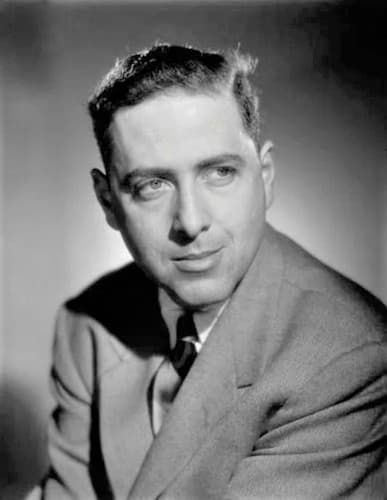
Herman Wouk (1978)
Genre
Historical Fiction
Reading Time
2500 min
Key Themes
See below
Sign in to track this book
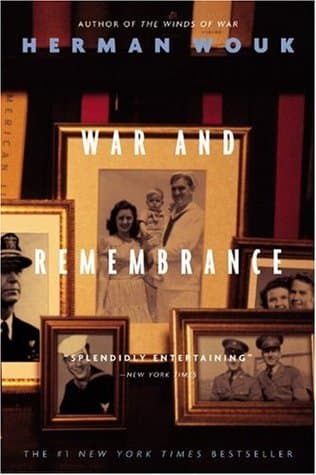
During World War II, the Henry family's personal struggles and successes show how the nation grappled with the largest conflict in human history.
The novel starts with Captain Victor 'Pug' Henry working as a naval attaché in Berlin, seeing the growing tensions in Europe. As the United States stays neutral, Pug is moved to command the USS Northampton in the Pacific. His son, Warren Henry, is a dive-bomber pilot at Pearl Harbor. On December 7, 1941, the Japanese attack Pearl Harbor by surprise. Warren is one of the few pilots who gets airborne, fighting enemy planes. Pug, on the Northampton, sees the attack firsthand. This event pulls the United States into World War II, changing the Henry family's lives and setting the stage for their individual struggles and contributions to the war effort in different places.
While Pug is at sea, his wife, Rhoda Henry, continues her affair with Washington socialite Palmer Kirby. Their relationship grows, driven by loneliness and a feeling of being left alone. Meanwhile, Pug's younger son, Byron Henry, now married to Natalie Jastrow, is serving on a submarine in the Pacific. Byron's missions are dangerous, involving attacks on Japanese ships. He deals with the harsh realities of submarine warfare, the constant threat of depth charges, and the moral compromises needed in combat. His experiences harden him, making him more distant from his pre-war self and from Natalie, who is stuck in Europe.
Natalie Jastrow, Byron Henry's wife, and her uncle, the writer Aaron Jastrow, live in Siena, Italy, at the war's start. As the war spreads and anti-Jewish rules increase, they seek safety in Vichy France, thinking it is safer. However, their situation quickly worsens as the Nazis tighten their control on collaborationist France. They face more discriminatory laws and the constant threat of arrest and deportation. Aaron, at first not believing the full extent of Nazi cruelty, slowly realizes the danger they are in, leading to their capture and imprisonment.
After the Pearl Harbor attack, Captain Victor Henry is moved to various high-level strategic planning roles in the Navy, giving him an inside view of the Allied war effort. He serves under Admiral Spruance, helping plan important naval battles. Pug is present during the Battle of Midway, a turning point in the Pacific War. He sees the strategic skill and the human cost of the battle, which shifts the balance of power in the Pacific. His experiences in these roles give a broad view of the war, contrasting with his sons' more personal, front-line struggles.
After their capture in France, Natalie Jastrow and her uncle Aaron are sent to the Theresienstadt 'model ghetto' in Czechoslovakia. While not an extermination camp, Theresienstadt is a transit camp and a place of great suffering, starvation, and disease. They see the systematic dehumanization and persecution of Jews, the constant fear of being chosen for further deportation to the East, and the fight for survival under brutal conditions. Aaron, especially, tries to keep his mind and spirit intact amid the horror, writing down what he sees and trying to comfort others, while Natalie fights to protect her infant son, Louis.
Lieutenant Warren Henry shows himself to be a brave and skilled dive-bomber pilot throughout the Pacific campaign. He takes part in several major naval battles, including the Battle of Midway and the Battle of the Philippine Sea, known as the 'Great Marianas Turkey Shoot.' His actions are consistently heroic, showing a strong commitment to his duty and country. However, his luck eventually runs out. During a fierce fight, Warren's plane is shot down, and he is killed. His death is a deep blow to the Henry family, showing the personal cost of the war and the sacrifices made by many young men.
After good service in submarines, Byron Henry is badly wounded during a mission and sent home to recover. Haunted by what he knows about Natalie and Louis, he becomes driven to find them. As the war in Europe ends, Byron uses his military connections and personal drive to move through the chaotic, war-torn continent. He travels through liberated areas, displaced persons camps, and former concentration camps, facing the devastating aftermath of the Holocaust. His search is a difficult journey, full of hope and despair, as he follows faint clues and hears fragmented rumors about his missing family.
As Allied forces move through Europe, they begin to free the Nazi concentration and extermination camps, including Auschwitz. The full horror of the Holocaust is revealed to the world. The novel describes the unsanitary conditions, the starving survivors, and the piles of bodies, making characters and readers alike face the systematic, industrial-scale murder by the Nazis. This revelation deeply affects the Henry family, especially Byron, who is desperately searching for Natalie and Louis. It highlights the ultimate evil of the enemy they have been fighting and the human tragedy of the war.
Towards the end of the war, Captain Victor Henry finally achieves his goal of commanding a battleship, the USS Iowa. He takes part in the final, brutal attacks on the Japanese home islands, seeing kamikaze attacks and the constant bombing of enemy targets. As the war in Europe ends, the focus shifts entirely to the Pacific. Pug is present during the final parts of the conflict, leading his ship through dangerous waters. The novel ends with the dropping of the atomic bombs on Hiroshima and Nagasaki, leading to Japan's surrender and the official end of World War II, closing Pug's naval career.
After a difficult and emotional search, Byron Henry finds Natalie and their son, Louis, who have survived the Holocaust. Their reunion is bittersweet, overshadowed by the trauma they endured. Natalie is deeply scarred by her experiences in Theresienstadt and Auschwitz, having seen horrors and lost loved ones, including Aaron. Louis, though young, also shows the marks of their ordeal. While they are together again, the novel shows that the war's physical and psychological wounds will remain, affecting their relationship and their ability to return to a normal life. Their survival shows human resilience, but also reminds readers of the war's lasting impact.
With the war over, Rhoda Henry divorces Victor and marries Palmer Kirby. Their relationship, which started as an affair, becomes a formal union, though it is clear that the war has deeply affected all personal relationships. Victor 'Pug' Henry, now a Rear Admiral, thinks about his long naval career, the sacrifices made, and the changes brought by the war. He considers the world's future in the atomic age and the personal cost of his dedication to duty. The novel concludes with the Henry family, though reunited in some ways, forever changed by the global conflict, each member carrying the marks of their 'war and remembrance'.
The Protagonist
Pug evolves from a detached observer of global conflict to an active participant and ultimately a thoughtful, weary veteran reflecting on the immense cost of war.
The Supporting
Rhoda's arc is one of personal seeking, culminating in her divorce from Pug and marriage to Palmer Kirby, finding a form of companionship but not necessarily deep fulfillment.
The Protagonist
Byron transforms from a somewhat aimless young man into a hardened, courageous naval officer and a determined searcher, forever marked by the war's horrors.
The Protagonist
Natalie's arc is one of profound suffering and survival, transforming her from an academic intellectual into a testament to human endurance against unimaginable evil.
The Supporting
Aaron's arc is one of tragic disillusionment, as he confronts the ultimate evil of the Holocaust, maintaining his intellectual and spiritual integrity until his demise.
The Supporting
Warren's arc is one of pure heroism and ultimate sacrifice, representing the thousands of young men who died in combat.
The Supporting
Pamela's arc sees her develop a deep, unconsummated love for Pug, serving as his confidante and intellectual equal throughout the war.
The Supporting
Palmer's arc is primarily defined by his relationship with Rhoda, culminating in their marriage after her divorce from Pug.
The novel clearly shows the harsh realities of World War II, from the systematic killing of Jews in the Holocaust to the terror of naval combat and submarine warfare. It explores the moral compromises soldiers make, the dehumanization of the enemy, and the psychological toll on those who fight and those who suffer under occupation. Scenes in Theresienstadt and Auschwitz, and Byron's experiences in submarines, clearly show the depths of human cruelty and resilience.
“What was it all for? What was the use of victory if the world was to be left with such a scar?”
World War II breaks and remakes the Henry family. Marriages are strained (Pug and Rhoda), new relationships form (Byron and Natalie), and the experience of combat and survival changes individuals. The war separates loved ones, leads to infidelity, and results in tragic losses (Warren's death, Aaron's murder). Even for survivors like Natalie and Byron, the trauma leaves deep, lasting scars that affect their ability to reconnect and live 'normal' lives after the conflict.
“The war had taken their youth, their innocence, and a part of their very souls.”
A repeated conflict, especially for Victor Henry, is the tension between his strong sense of duty to his country and his personal desires and family. Pug's dedication to his naval career often comes at the cost of his marriage and his relationship with his sons. Similarly, Byron's sense of duty as a submarine officer often conflicts with his love and concern for Natalie. The novel examines how people handle these competing demands during a global crisis, and the sacrifices that are made.
“A man's duty was to his country, first and always. Everything else was secondary.”
The Holocaust, shown through Natalie and Aaron's experiences, is central to the novel's look at evil. It shows the systematic, bureaucratic nature of Nazi cruelties and the depths of human depravity. Balancing this is the human spirit's resilience, shown by Natalie's fight for survival, Aaron's attempts to keep his dignity, and Byron's search for his family. The novel suggests that while evil can cause great suffering, hope, love, and endurance remain.
“Man's capacity for evil was boundless, but so, too, was his capacity for enduring it.”
Through Victor Henry's high-level assignments, the novel gives a wide view of the strategic decisions, major battles, and political actions of World War II. It shows how different war areas are connected and the complex interaction of military and political leaders. This broad view contrasts with the personal struggles of other characters, offering a full understanding of the war's global scale and strategic difficulties.
“The war was a chess game played on a global board, with nations as pawns and lives as stakes.”
The story is told through the eyes of various characters, offering a comprehensive view of the war.
Wouk masterfully employs multiple perspectives, shifting between the Henry family members and other key figures. This allows for a panoramic view of World War II, encompassing the strategic naval commands of Pug, the harrowing combat of Warren and Byron, the civilian suffering and Holocaust experiences of Natalie and Aaron, and the home front struggles of Rhoda. This device provides both an intimate, personal look at the war's impact and a broad, historical overview of its scope and complexities, immersing the reader in different facets of the conflict.
Fictional historical analyses and documents provide context and foreshadowing.
Throughout the novel, Wouk intersperses fictionalized historical analyses, excerpts from 'World Holocaust' (a book written by a character named Armin von Roon), and other documentary-style elements. These serve as a meta-narrative, offering insights into the historical context, strategic decisions, and the unfolding horrors of the war, particularly the Holocaust. This device adds a layer of historical authenticity and allows Wouk to provide exposition and foreshadowing without disrupting the main narrative flow, deepening the reader's understanding of the global events.
Simultaneous storylines follow different family members across various theaters of war.
The novel employs parallel plotlines, following Victor in the Pacific and in strategic roles, Byron in submarines and later searching for Natalie, Natalie and Aaron's ordeal in Nazi Europe, and Rhoda's life on the home front. These distinct yet interconnected narratives highlight the global reach of the war and its diverse impacts. The tension and eventual convergence of these plotlines build dramatic suspense, especially in Byron's desperate search for Natalie, and ultimately illustrate how the war's grand events profoundly affect individual lives across vast distances.
“All war is a crime. And all peace is a crime. The crime is in being a man.”
— Pug Henry reflecting on the nature of humanity and conflict.
“The past is not dead, it is not even past.”
— A recurring theme, often expressed by various characters when discussing historical events and their impact.
“A man's life is his own. If he loses it, he loses it. If he saves it, he saves it. That's all there is to it.”
— Byron Henry contemplating his choices and fate during the war.
“The human mind, like the human body, is a marvelous creation, but it has its limits.”
— Aaron Jastrow's thoughts on the capacity of the human intellect in the face of immense suffering.
“No man is a whole man until he has a son.”
— Pug Henry reflecting on fatherhood and legacy.
“Hope is a good breakfast, but it is a bad supper.”
— Leslie Slote's cynical observation about sustained optimism in dire circumstances.
“The greatest cruelty of war is that it makes you forget what peace is like.”
— Natalie Jastrow's internal struggle with the prolonged conflict and its psychological toll.
“Power is never given, it is taken.”
— A general discussing the realities of international politics and military might.
“The world is a very small place when you're caught in its traps.”
— Characters feeling trapped by the circumstances of war and their personal situations.
“To be a Jew in this time is to be a target, always a target.”
— Aaron Jastrow lamenting the plight of the Jewish people during the Holocaust.
“Love is not a feeling, it is a decision.”
— Pamela Tudsbury reflecting on the complexities of her relationship with Pug Henry.
“There are no atheists in foxholes, nor are there any agnostics in Auschwitz.”
— Aaron Jastrow's poignant observation on faith in the face of ultimate horror.
“The only thing a man can do is to do his best, and then let God do the rest.”
— Pug Henry's pragmatic philosophy on duty and fate.
“History does not repeat itself, but it often rhymes.”
— A general discussing historical patterns and the inevitability of conflict.
Ready to see how well you understood this book? Take our interactive quiz with 10 questions.
Biography coming soon.







