“The greatest treasures aren't always found in plain sight, but hidden within the stories we tell ourselves.”
— A thematic reflection on the nature of discovery and personal narrative.

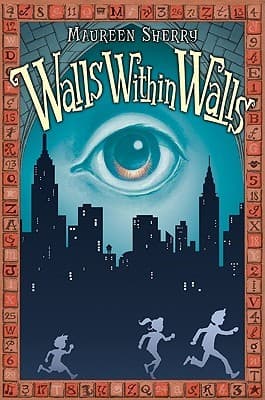
Maureen Sherry (2010)
Genre
Children's / Historical Fiction / Mystery / Young Adult
Reading Time
291 min
Key Themes
See below
Sign in to track this book
Three siblings, moved to a lavish Fifth Avenue apartment, discover their new home holds a giant, city-spanning puzzle left by its eccentric deceased owner, leading them on a quest to find a hidden fortune and long-lost secrets.
The Smithfork family, including siblings Brid, CJ, and Patrick, and their parents, experience a sudden change in lifestyle. Their father, a video-game inventor, becomes wealthy. They must leave their comfortable Brooklyn home and move into an opulent apartment on Manhattan's Fifth Avenue. The children dislike this move, feeling isolated and friendless in their new, sterile environment. Their parents are often absent, leaving them with a strict nanny, Mrs. B. The change is hard, and the children miss their old life and community.
One day, while exploring their new, large apartment, Brid, the eldest Smithfork sibling, finds a loose panel in a wall. Inside, she discovers a hidden compartment. It holds an antique-looking book, bound in leather and filled with strange symbols and riddles. This discovery sparks her curiosity and distracts her from her unhappiness. She shares her find with her younger brothers, CJ and Patrick, who are equally interested in the mysterious object and its potential secrets.
As the children look into the mysterious book, they research their new apartment's history. They learn it once belonged to a reclusive and eccentric multimillionaire named Mr. Post, who had no known heirs. Rumors say Mr. Post was obsessed with puzzles and secret codes. The children soon realize the book is not just an old item, but a piece of a larger, elaborate puzzle designed by Mr. Post. They suspect the entire apartment might be a giant riddle left by its former owner.
Using their individual strengths – Brid's intelligence, CJ's computer skills, and Patrick's observation – the Smithfork children begin to decipher the clues in the book. These clues lead them to various hidden panels and mechanisms throughout the apartment, revealing more puzzle segments. Each discovery increases their excitement and determination. They quickly realize Mr. Post designed the puzzle as a path to a significant secret, possibly involving his lost fortune. The shared adventure begins to bond them, easing their earlier feelings of isolation.
As the children progress through the puzzle, they face unexpected obstacles. They learn that a distant relative of Mr. Post, a man named Mr. Plum, also knows about the potential fortune and is trying to find it. Mr. Plum is a formidable and unscrupulous character who will stop at nothing to claim the inheritance. The children must now solve the puzzles and outwit Mr. Plum, who subtly tries to sabotage their efforts. This adds suspense and urgency to their quest, making it a race against time.
The clues in Mr. Post's puzzle are not just in the Fifth Avenue apartment. They lead the Smithfork children on a scavenger hunt across historical landmarks in New York City. From the New York Public Library to Grand Central Station and other architectural sites, the children must visit these places, interpret historical references, and find hidden symbols. This journey deepens their understanding of Mr. Post's life and the city's history. It also forces them to interact with the outside world, helping them shed their shyness and build confidence.
As the children unravel more of Mr. Post's puzzle, they uncover parts of his personal history. They learn about his solitary life, his love for a woman he could not marry, and the existence of a hidden child he never publicly acknowledged. The fortune, they realize, is not just about money, but about correcting a past injustice and ensuring his true heir receives what is theirs. This discovery adds emotional depth to their adventure, shifting their motivation from curiosity to a desire to fulfill Mr. Post's final wish.
The pursuit of the fortune ends in a tense confrontation with Mr. Plum. He tries to intercept the children, believing he is close to the final solution. However, the Smithfork siblings, having grown more resourceful and courageous, outsmart him. They use their combined intelligence and the knowledge gained from the puzzle to stay ahead. The confrontation shows their teamwork and resilience, proving their bond and ingenuity are stronger than Mr. Plum's greed.
After solving the final riddle, the Smithfork children discover Mr. Post's legacy. The fortune is substantial, but it is bequeathed not to a distant relative, but to a foundation for young talent in the arts and sciences, established in honor of his lost love. More importantly, they uncover evidence of Mr. Post's secret child, who had been adopted and lived a quiet life. The puzzle was designed to ensure this specific individual, or their descendants, would ultimately benefit from his wealth, correcting a long-standing personal regret.
With the mystery solved and the fortune's purpose revealed, the Smithfork children feel a sense of accomplishment. Their adventure has brought them closer as siblings and given them a new appreciation for their new home and New York City. They no longer feel isolated in their opulent apartment; instead, they see it as a place filled with history and possibility. The experience changes their perspective, making them more confident, resilient, and appreciative of family and shared experiences over material wealth.
The Protagonist
Transforms from a shy, unhappy girl into a confident and resourceful leader who embraces her new life.
The Protagonist
Evolves from a cynical tech-head to an engaged and valuable team member.
The Protagonist
Develops from a seemingly naive child into a crucial contributor whose keen senses are invaluable.
The Mentioned
His character is revealed through the unraveling of his life's work, showcasing his depth and ultimate desire for justice.
The Antagonist
Remains largely static in his greed, serving as an external obstacle for the protagonists.
The Supporting
Experiences a subtle shift from detached caregiver to a slightly more understanding presence.
The Supporting
Undergoes a subtle realization about the importance of family connection over material wealth.
The Supporting
Experiences a gradual awakening to her children's needs beyond material provisions.
The novel explores the idea that true wealth is not in possessions or status, but in family bonds, shared experiences, and purpose. The Smithfork children initially dislike their opulent new apartment, finding it isolating compared to their Brooklyn home. Their quest for Mr. Post's fortune ultimately shows that his legacy was meant to correct a past injustice and encourage creativity, not just accumulate money. This teaches the children that the most valuable treasures are intangible.
“The real treasure wasn't gold or jewels, but the story it told and the people it brought together.”
At the story's heart is the strengthening of the Smithfork siblings' relationship. Initially disconnected and unhappy in their new environment, the shared adventure of solving Mr. Post's puzzle forces Brid, CJ, and Patrick to rely on each other's strengths. Brid's intellect, CJ's tech skills, and Patrick's observation combine to form an effective team. This collaboration leads them to the fortune and creates a deep bond between them, showing that adversity can bring families closer.
“They were three separate pieces, but together, they made a whole, perfectly designed to unlock any secret.”
The entire narrative is driven by the children's curiosity and their desire to uncover secrets. Brid's discovery of the hidden book starts a chain of events that leads them on a grand adventure. This theme highlights how an inquisitive mind can transform a mundane existence into an exciting journey of learning and self-discovery. The children's pursuit of answers solves the mystery and broadens their understanding of history, architecture, and human nature.
“Every hidden panel was a new question, and every answer opened a door to a wider world.”
The novel includes elements of New York City's history and the concept of leaving a lasting legacy. Mr. Post's elaborate puzzle is not just a game but a carefully constructed narrative of his life, his regrets, and his desire to ensure his fortune serves a meaningful purpose. The children's journey through historical landmarks connects them to the city's past, showing how history can be alive and relevant. The story emphasizes that a person's true legacy is not just what they own, but the impact they have and the truths they reveal.
“A life isn't just lived; it leaves echoes, and sometimes, those echoes are clues.”
The Fifth Avenue apartment is designed as a giant, interactive puzzle.
Mr. Post, the eccentric former owner, meticulously designed his Fifth Avenue apartment to contain hidden panels, secret passages, and cryptic clues. This transforms the physical setting into a living, breathing plot device. It serves as the primary stage for the initial mystery, compelling the children to explore their new home with a sense of wonder and purpose. The apartment's intricate design not only advances the plot but also symbolizes the layers of secrets waiting to be uncovered, both within the building and within Mr. Post's past.
An antique book filled with riddles and symbols that guides the children.
The leather-bound book discovered by Brid is the central catalyst for the plot. It contains the initial set of riddles, ciphers, and historical references that form the blueprint of Mr. Post's grand puzzle. This book acts as a continuous guide and a repository of clues, leading the children from one discovery to the next. It not only provides the narrative's direction but also serves as a tangible link to Mr. Post's mind, revealing his personality and intentions through its complex content.
A series of clues leading to various locations across New York City.
As the children delve deeper into the puzzle, the clues extend beyond the apartment, transforming the quest into a city-wide scavenger hunt. This device allows the narrative to expand its scope, incorporating iconic New York City landmarks and historical facts. It provides dynamic settings for action and discovery, forcing the children to engage with the outside world and apply their problem-solving skills in diverse environments. The scavenger hunt structure builds suspense and momentum, propelling the plot forward through a series of interconnected challenges.
Mr. Plum's concurrent search for the fortune creates urgency and conflict.
The character of Mr. Plum functions as a crucial plot device by introducing external conflict and a sense of urgency. His greedy pursuit of Mr. Post's fortune creates a race against time for the Smithfork children. His presence provides a tangible threat and raises the stakes of their adventure, forcing them to be more cunning and resourceful. This antagonistic element not only generates suspense but also highlights the moral contrast between the children's curiosity-driven quest and Mr. Plum's self-serving motives.
“The greatest treasures aren't always found in plain sight, but hidden within the stories we tell ourselves.”
— A thematic reflection on the nature of discovery and personal narrative.
“Sometimes, the smallest key can unlock the biggest secrets.”
— Pondering the significance of a small clue found early in the mystery.
“History isn't just about dates and names; it's about the echoes of people's lives.”
— Reflecting on the personal connection to historical figures and events.
“Fear can be a powerful motivator, but courage is what truly opens doors.”
— Facing a daunting challenge or obstacle.
“Every wall has a story, if you only know how to listen.”
— Considering the hidden narratives within the mansion's architecture.
“It's not about being fearless, but about doing what needs to be done despite the fear.”
— A character's internal monologue about bravery in the face of danger.
“The past is never truly gone; it just waits for someone to find it.”
— Discovering an ancient artifact or hidden message.
“Sometimes, you have to break a few rules to uncover the truth.”
— Justifying a risky or unconventional approach to solving the mystery.
“A good mystery isn't just about what happened, but why.”
— Discussing the deeper motivations behind the historical events.
“Even in the grandest of houses, there are always hidden corners.”
— Exploring the vast and intricate mansion, finding secret passages.
“The most valuable things are often those that money can't buy.”
— Reflecting on the true worth of friendship, knowledge, or adventure.
“Trust is a fragile thing, easily broken and hard to mend.”
— Dealing with betrayal or suspicion among characters.
“Every puzzle piece, no matter how small, contributes to the whole picture.”
— Connecting various clues to form a coherent understanding of the mystery.
“Adventure often begins when you least expect it, and in the most ordinary places.”
— The protagonist's initial surprise at finding themselves embroiled in a mystery.
Ready to see how well you understood this book? Take our interactive quiz with 10 questions.

Dan Gemeinhart
4.5
Kate O'Hearn
4.4

Jeanne Birdsall
4.4

Jen Wang
4.4

Wendelin Van Draanen
4.3

John Marsden
4.3

Chris Van Allsburg
4.3
Jennifer A. Nielsen
4.2