“The only difference between a madman and a genius is that the genius gets lucky.”
— Often said by Dr. svare to justify unconventional methods.

Sylvain Neuvel (2017)
Genre
Thriller / Fantasy / Science Fiction
Reading Time
360 min
Key Themes
See below
Sign in to track this book
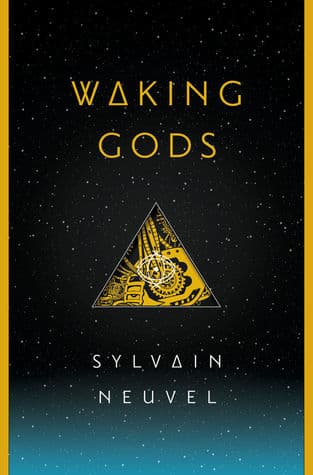
When a second, even larger alien robot appears and starts a global attack, humanity's only hope is to understand the first fragmented giant Rose Franklin found years ago, using ancient alien technology as their defense in a fight for survival.
Ten years after finding and building Themis, the first giant robot, Rose Franklin is a high-ranking member of the Earth Defense Corps (EDC). Her team, including Vincent Couture and Kara Resnik, watches a new energy signature in London. This signature quickly becomes a second, much larger and more powerful robot than Themis. This new machine, called 'The Sentinel,' immediately attacks, causing widespread destruction and deaths. Themis, piloted by Eva, tries to fight the Sentinel, but is quickly outmatched and badly damaged. This shows the huge threat this new alien presence poses. The world falls into chaos, realizing the first robot was not a one-time event but a sign of a possible invasion.
After the Sentinel appears, more alien robots materialize in major cities worldwide, including Beijing, Moscow, and New York. These 'Sentinels' are hostile, causing massive destruction and loss of life. The EDC, led by General Govender, struggles to organize a global defense. Rose, needing to understand and defeat these machines, pushes for aggressive research into Themis's technology to find weaknesses or solutions. World governments, at first divided, are forced to unite, sharing resources and information to face this threat. The scale of the invasion tests humanity's strength and ability to work together.
As the global conflict grows, Rose and her team increase their research into Themis. They find new data suggesting that Themis was not just a dormant artifact but a probe or scout sent by a benevolent alien race, the 'Creators,' to check Earth's readiness. The Sentinels, they think, are an opposing, more aggressive alien group. This changes the understanding of the initial discovery and the ongoing invasion. The EDC shifts its strategy from only defense to understanding how Themis's technology can be used not just for fighting, but for communication or even diplomacy, hoping to find allies or a way to stop the Sentinels without complete destruction.
Eva, Themis's original pilot, finds a deeper connection with the robot's systems. Her unique genetic markers, possibly from early exposure to the Hand, let her interface with Themis in ways no one else can. Through this connection, she starts to understand parts of an alien language in Themis's systems. This breakthrough is important, as it provides the first direct communication channel with the alien technology. Eva's role becomes key, as she is not just a pilot but a link between humanity and the advanced alien intelligence, tasked with interpreting warnings, commands, or historical records from the Creators.
During their investigations, Rose's team finds another alien artifact, called the 'Genesis Device,' hidden inside Themis's core. This device, once Eva activates it, projects complex holographic sequences and data streams. It shows a detailed history of the Creator race, their conflict with the Sentinels, and their mission to spread life across the galaxy. More importantly, it contains a message: Earth is a 'seed world,' and humanity is a product of the Creators' involvement. The Genesis Device provides a partial, cryptic warning about the Sentinels' true goal and a possible way to defend Earth, but its full meaning remains a puzzle, needing more deciphering.
As global attacks continue, Rose and her team notice a disturbing pattern: the Sentinels are not just destroying cities; they are changing the environment. Analysis of their activities shows that they are terraforming machines, systematically changing Earth's atmosphere and ecosystem to suit their own biology or that of their masters. This realization is horrifying, as it means the Sentinels are not just trying to conquer Earth but to fundamentally transform it, making it unlivable for humans. The need to find a solution grows, as humanity now faces not just an invasion but an extinction event caused by environmental changes.
Under extreme pressure, General Govender, believing in a 'fight fire with fire' approach, starts a risky plan to activate an unknown alien weapon system found in Themis, hoping to turn the tide. He forms an uneasy alliance with an extraterrestrial entity, the 'Children of the Creator,' which he thinks will help humanity. However, this alliance turns out to be a betrayal. The Children of the Creator are manipulative, parasitic species that use other races for their own purposes, and Govender's actions accidentally give them a foothold on Earth, complicating the already bad situation and adding another threat to humanity's survival.
To stop the Children of the Creator from fully taking control of Earth's defense systems and exploiting humanity, Eva makes a sacrifice. She uses her connection to Themis to activate a self-destruct sequence or a system overload that cripples the Children's immediate plans. However, her sacrifice comes at a great cost, leaving Themis severely damaged and Eva's fate uncertain. Despite her efforts, the Children of the Creator manage to establish a significant presence, manipulating the remaining human forces and beginning to implement their own agenda, further complicating the struggle against the Sentinels.
With Eva gone and the Children of the Creator now a dominant threat, Rose takes command. She creates a desperate, high-stakes plan to activate a powerful, ancient alien weapon system, called 'The Sword of Damocles,' which was hinted at in the Creator's data. This weapon can cause immense destruction, but activating it is risky and could backfire, potentially destroying Earth itself. Rose plans to use this weapon not just against the Sentinels, but also to neutralize the Children of the Creator, hoping to buy humanity enough time to rebuild and defend itself without outside manipulation.
Rose's desperate gamble with the Sword of Damocles is partly successful, damaging both the Sentinels and the Children of the Creator. However, the activation has unforeseen results, opening a wormhole or dimensional rift that brings in a new, unknown alien threat or greatly changes Earth's place in the galaxy. The immediate invasion stops, but humanity is left in a difficult position, having survived one threat only to face another, possibly greater one. The novel ends with a sense of both triumph and deep uncertainty, as humanity has gained new knowledge and power but also attracted unwanted attention.
The Protagonist
Rose evolves from a researcher focused on discovery to a hardened commander making impossible choices for humanity's survival.
The Supporting
Eva transforms from a reluctant pilot into a heroic figure who makes the ultimate sacrifice to protect Earth.
The Supporting
Vincent remains a steadfast and reliable scientific partner, growing in his understanding of the alien threat.
The Supporting
Kara hones her linguistic skills to become instrumental in understanding alien communication.
The Antagonist/Supporting
Govender's desperation leads him to make flawed decisions, ultimately complicating humanity's fight for survival.
The Mentioned
The Interviewer's role is purely structural, providing a framework for the story.
The Supporting
Themis transforms from a mysterious artifact into a vital tool and source of alien knowledge.
The Antagonist
The Sentinels' true purpose as terraforming machines is gradually revealed, intensifying the threat.
The Antagonist
The Children of the Creator emerge as a deceptive new threat, exploiting humanity's desperation.
Despite facing alien threats far beyond human technology, the book shows humanity's ability to be resilient, innovative, and united. From the shock of the Sentinels' arrival to the desperate actions taken to fight back, humans show a strong will to survive. Rose and her team constantly adapt, learning from alien technology and creating new strategies, showing the power of human intellect and cooperation when facing extinction. This is clear in the global sharing of resources and scientific minds to analyze Themis and fight the invasion.
“We were not meant to be alone. But we were meant to fight. And we would.”
The story questions simple ideas about alien intentions, showing a complex cosmic world. At first, Themis seems like a harmless discovery, but the Sentinels prove hostile. Later, the benevolent 'Creators' are revealed, along with the parasitic 'Children of the Creator,' showing that not all aliens have the same intentions. This theme explores the moral uncertainty of first contact and the struggle to tell friend from foe, forcing humanity to face the possibility of both benevolent guardians and ruthless exploiters among the stars. General Govender's mistaken alliance with the Children of the Creator is an example of this struggle.
“The universe doesn't care about good or evil. It only cares about survival.”
Gaining alien knowledge and technology, while needed for survival, comes with significant costs and risks. Rose's constant search for understanding leads to discoveries but also to unforeseen dangers, such as activating the Genesis Device or the Sword of Damocles, which attract more attention or have unintended consequences. The power from these discoveries can be a double-edged sword, able to both save and destroy. Eva's connection to Themis, while giving great power, also demands a deep personal sacrifice, showing the high price often linked to using advanced alien capabilities.
“Every answer only leads to more questions, and every power comes with a price.”
The discovery that Earth is a 'seed world' and humanity is a product of the Creators' involvement fundamentally changes how humanity sees itself. This theme explores existential questions about origin, purpose, and independence. Are humans just an experiment, or do they have inherent value and agency? The fight against the Sentinels and the Children of the Creator becomes a battle not just for physical survival, but for humanity's right to self-determination and its claim to its own destiny, separate from the plans of its creators or exploiters. It forces humanity to define its identity in a much larger, more complex universe.
“We were not alone. We were never alone. And that changed everything.”
Objects of unknown origin that drive the plot and reveal critical information.
These artifacts, particularly Themis and later the Genesis Device, serve as central plot drivers. They are sources of both conflict and solutions. Their discovery and subsequent analysis by Rose and her team provide key exposition about the alien races, their history, and their technology. Unlocking their secrets propels the narrative forward, revealing new threats and potential countermeasures. They act as MacGuffins that constantly evolve in their meaning and function, from a simple discovery to a weapon, a communication device, and finally, a historical archive.
A retrospective narrative structure where events are recounted through interviews.
The entire story is presented as a series of interviews conducted by an unseen interviewer with Rose Franklin and other key characters. This device allows for a retrospective narrative, providing a sense of immediacy through the characters' recounting of events while also allowing for reflection and foreshadowing. It adds a layer of authenticity and a 'historical record' feel, making the extraordinary events more grounded. It also allows for multiple perspectives on the same events, enriching the narrative and providing exposition in a natural, character-driven way.
A character with a unique, innate ability to interact with alien technology.
Eva's unique genetic connection to Themis and her ability to interface with alien technology serve as a 'chosen one' trope. This device is crucial for progressing the plot, as only Eva can unlock certain secrets, decipher alien languages, or activate specific systems. Her special ability makes her indispensable to humanity's defense and provides a compelling character arc as she embraces her extraordinary role. It also raises questions about the nature of humanity's interaction with advanced alien races – whether some individuals are inherently predisposed to such connections.
Initial misleading information about alien intentions.
The initial understanding of Themis as a benevolent or dormant artifact, contrasted with the immediate hostility of the Sentinels, acts as a red herring. This misdirection leads humanity down certain paths of research and defense before the true, more complex nature of the alien conflict (involving the Creators, Sentinels, and Children of the Creator) is revealed. This device builds suspense, challenges character assumptions, and ultimately deepens the thematic exploration of trust and deception in first contact scenarios, making the later revelations more impactful.
“The only difference between a madman and a genius is that the genius gets lucky.”
— Often said by Dr. svare to justify unconventional methods.
“Humanity is a virus. We infect, we consume, and then we move on. Until there's nowhere left to go.”
— A dark observation about humanity's expansionist nature.
“Sometimes, the only way to save something is to break it first.”
— A difficult decision made in the face of an impossible choice.
“We build our gods, and then we pray they don't destroy us.”
— Reflecting on the creation of powerful artificial intelligences or technologies.
“The universe doesn't care about your plans. It has its own.”
— A humbling thought when facing cosmic-scale events.
“Fear is a powerful motivator. But so is hope. And hope is a better one.”
— A character trying to inspire others in a dire situation.
“The greatest threats are often the ones you create yourself.”
— A realization about the consequences of human actions.
“There are no easy answers, only harder questions.”
— When grappling with complex ethical and scientific dilemmas.
“To truly understand the future, you must first understand the past. And then forget everything you thought you knew.”
— A statement about the cyclical nature of history and the need for open-mindedness.
“We are not alone. We were never alone. And that is the most terrifying truth of all.”
— The revelation of alien presence and its implications.
“Intelligence without empathy is just a more efficient way to be cruel.”
— A critique of purely logical or advanced beings lacking compassion.
“The end of the world isn't a single event. It's a series of choices.”
— A philosophical take on how humanity's actions lead to its fate.
“Even a god can bleed. And once it does, it's just a thing.”
— Challenging the invincibility of powerful entities.
“Sometimes, doing nothing is the most dangerous thing you can do.”
— A call to action when inaction has severe consequences.
Ready to see how well you understood this book? Take our interactive quiz with 10 questions.
Biography coming soon.







