“To be a human being, one must be able to choose.”
— Lin Kong reflecting on his inability to make a definitive choice between his two loves.

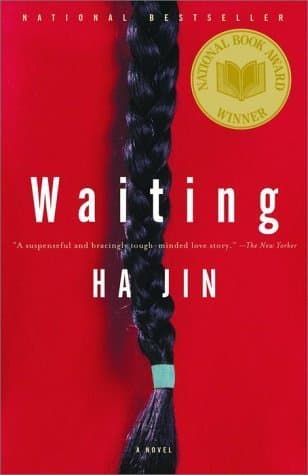
Ha Jin (1998)
Genre
Young Adult / Romance
Reading Time
620 min
Key Themes
See below
Sign in to track this book
Trapped by tradition and the watchful eye of Communist China, a devoted doctor spends seventeen years navigating the agonizing limbo between his arranged, loyal wife and his modern, passionate love, desperately waiting for a divorce that never seems to come.
Lin Kong, an army doctor in Muji City, makes his yearly summer trip to Goose Village to see his wife, Shuyu. Their marriage was arranged when they were young, and Lin has loved Manna Wu, a nurse at his hospital, for seventeen years. Each year, he tries to get a divorce from Shuyu, but she always says no. This year, his superiors at the army hospital have given him a choice: divorce Shuyu and marry Manna, or risk professional problems, including a transfer to a far-off post. Despite his pleas and Manna's growing impatience, Shuyu, a simple peasant woman, holds firm in her refusal, citing tradition and her duty to their daughter, Hua.
Back in Muji, Manna Wu confronts Lin Kong about his failed attempt to divorce Shuyu. Manna is a modern, educated woman who has spent her youth waiting for Lin, facing social judgment and turning down other suitors. Her patience is running out, and she gives him an ultimatum: if he cannot get the divorce soon, she will move on. Lin is very distressed, caught between his love for Manna and the cultural and family duties that tie him to Shuyu. The army's pressure further complicates his situation, making the divorce a matter of both personal happiness and career survival. He feels great guilt toward both women, unable to please either.
The political department of the army hospital, led by Commissar Ma, calls Lin Kong to discuss his long-standing marital situation. They see his two-decade-long entanglement as an ideological problem and a distraction, reflecting poorly on the Party. They order him to finalize his divorce from Shuyu within a year, or face serious consequences, including a transfer to a remote, unwanted post in Xinjiang. This official involvement adds immense pressure on Lin, turning his personal struggle into a matter of state compliance. He feels trapped, his private life now controlled by bureaucracy, further showing the lack of personal freedom in Communist China.
Under pressure from Lin and the Party, Shuyu agrees to visit Muji City, a big step outside her traditional village life. Her arrival creates tension, as she observes Lin's modest apartment and the modern things. She meets Manna Wu, who treats her with politeness mixed with barely hidden dislike. Shuyu, though uneducated, understands people well. During her stay, she sees the close bond between Lin and Manna, confirming her suspicions about their relationship. This visit marks a turning point, as Shuyu gets a clearer picture of the life Lin wants and the woman he truly loves, setting the stage for a dramatic decision.
After her visit to Muji and the army's direct involvement, Shuyu finally agrees to the divorce. The local court in Goose Village holds a hearing, a surprisingly quick and impersonal process. Lin Kong presents his case, stressing the long separation and lack of affection, while Shuyu, though heartbroken, agrees. The judge grants the divorce, ending their arranged marriage of nearly twenty years. This moment is bittersweet for Lin; he has gained his long-sought freedom but at the cost of Shuyu's dignity and peace. The legal separation paves the way for his future with Manna, but the emotional weight of his past remains.
After the divorce, Lin Kong and Manna Wu marry quickly. Their wedding is a small event, celebrated among close friends and colleagues. After seventeen years of secret meetings, social scrutiny, and professional pressure, they are officially husband and wife. Lin is overjoyed, believing he has finally achieved his dream of a life with the woman he loves. Manna also feels relief and triumph, having endured years of waiting and social judgment. However, the years of waiting have taken a toll, and the reality of their married life soon begins to unfold, showing that their struggles are far from over.
Life with Manna Wu, while initially good, soon shows its difficulties. The passion and idealism that kept Lin Kong and Manna going through their long wait begin to fade in the face of everyday life. Manna, used to a certain level of independence and social standing, struggles with the realities of married life and Lin's often passive nature. They face money problems and arguments over household matters. Lin finds Manna increasingly demanding and critical, a sharp contrast to the respectful Shuyu. The constant arguments and underlying resentments suggest that their idealized vision of marriage may not match their daily reality.
After the divorce, Shuyu stays in Goose Village, continuing her simple life. Despite the pain and humiliation, she shows remarkable strength. She continues to care for their daughter, Hua, and works hard in the fields. The villagers, knowing her situation, offer her quiet support and respect. Shuyu, free from the burden of waiting for Lin's yearly visits, begins to find some peace and independence. While her heart is broken, she puts her energy into her daily tasks and community, slowly rebuilding a life for herself on her own terms, showing a quiet strength that Lin often underestimated.
As years pass, Lin Kong becomes increasingly unhappy in his marriage to Manna. He finds her materialistic, critical, and often cold. The initial passion has gone, replaced by a sense of duty and quiet resentment. He begins to think of Shuyu fondly, remembering her as humble, devoted, and not complaining. Lin often thinks about his past decisions, wondering if the seventeen years of waiting and the pain he caused Shuyu were truly worth it. His dream of happiness with Manna has become a daily struggle, leaving him with deep regret and a feeling of having lost something that cannot be gotten back.
Lin Kong's daughter, Hua, visits him and Manna in Muji City. Her presence reminds him of his past life with Shuyu and the family he left behind. Hua is respectful but distant, showing the silent judgment of the village and her mother's suffering. Lin is acutely aware of his failures as a father and husband to Shuyu, feeling renewed pangs of guilt. Manna, uncomfortable with Hua's presence, treats her with politeness but keeps an emotional distance. This visit highlights the lasting damage caused by Lin's choices, solidifying his feelings of remorse and the permanent split in his original family.
Years turn into decades, and Lin Kong, now older, settles into a life of quiet acceptance. His marriage to Manna Wu continues, but without joy or deep affection. He does his duties as a doctor and husband, but the spark of his youth and the strong feelings for Manna have long since faded. He often thinks of Shuyu and the simple, peaceful life he gave up, acknowledging the irony that the woman he waited so long for ultimately brought him less contentment than the one he left. Lin's journey ends not in triumph, but in a deep acceptance of his fate, marked by the weight of his past decisions and the bittersweet reality of his present.
The Protagonist
Lin's arc is one of disillusionment. He achieves his long-sought goal of marrying Manna but finds that happiness remains elusive, leading to regret and quiet resignation.
The Supporting/Love Interest
Manna achieves her dream of marrying Lin but finds the reality of marriage less romantic than the pursuit, becoming more critical and less idealized.
The Supporting/Lin's Wife
Shuyu's arc is one of silent suffering and eventual resilience. She loses her husband but rebuilds her life with quiet dignity and finds a measure of independence.
The Supporting/Antagonist (Systemic)
Commissar Ma remains a steadfast figure of authority, his role primarily to enforce Party policy rather than undergo personal change.
The Mentioned/Supporting
Hua's arc is one of growing up in the shadow of her parents' fractured marriage, bearing the emotional weight of her father's choices.
The Supporting
Doctor Li remains a stable, observational character, a sounding board for Lin's struggles.
The Supporting
Auntie's role is primarily to support Shuyu and represent traditional village wisdom.
The novel explores the conflict between a person's desire for happiness and the strong pressure of tradition, family duty, and social expectations in Communist China. Lin Kong's seventeen-year struggle to divorce Shuyu shows this theme directly. His arranged marriage to Shuyu represents the strong bonds of tradition, while his love for Manna Wu symbolizes his desire for personal choice and modern love. The Party's involvement further complicates this, showing how even personal desires are subject to state-approved 'tradition' or political convenience. Lin's unhappiness, even after getting what he wanted, suggests the lasting impact of going against or being limited by these forces.
“For nearly twenty years, his life had been a waiting, a waiting for a woman, a waiting for a divorce, a waiting for freedom.”
The novel focuses on "waiting" and how it changes love. Lin and Manna's love is kept alive by waiting, becoming an idealized, almost mythical, goal. The long delay, however, also harms their relationship, leading to resentment, impatience, and unrealistic expectations for their life together. When the waiting ends, the reality of their marriage is very different from their romanticized vision, showing that the 'love' was perhaps more about the anticipation and the struggle than the actual shared life. Shuyu also waits—for Lin's yearly visits, for his decision—but her waiting is about duty and hope, not romantic passion.
“He knew that the waiting itself had become a kind of love, a habit that defined their relationship.”
Ha Jin shows clearly how little personal control people have under a totalitarian government like Communist China. Lin Kong's most personal decision—who he marries—is not just his own. The Party, through Commissar Ma, directly steps in, setting deadlines and threatening professional consequences if he does not conform. This shows how even private matters are subject to state control and ideological review. The pressure on Lin to maintain a 'proper' image for the army highlights the constant monitoring and the need for people to align their personal lives with Party rules, often at the cost of true feelings or happiness. His eventual divorce is less a personal victory and more an act of compliance.
“His superiors were giving him an ultimatum: either he must get a divorce, or he must forget about Manna Wu.”
The novel questions the idea that reaching a long-desired goal automatically brings happiness. Lin Kong spends seventeen years believing that marrying Manna Wu will bring him ultimate happiness. However, once the divorce is final and they are married, their life together is full of everyday frustrations, arguments, and a growing sense of disappointment. The idealized Manna of his dreams becomes a demanding and critical partner. This theme suggests that true happiness is not just the absence of problems or the fulfillment of one desire, but a more complex, perhaps unreachable, state. Lin's eventual regret over leaving Shuyu highlights this illusion.
“He had waited so long, and for what? A life no better than the one he'd left behind, perhaps even worse.”
Time is a main element in 'Waiting.' The seventeen-year delay deeply shapes the characters and their relationships. It hardens Manna, makes Lin indecisive, and eventually breaks Shuyu's resistance. The passing of time also twists memory, idealizing the past or exaggerating the future's potential. Lin, in his later years, romanticizes Shuyu and the quiet life he gave up, blurring the less appealing parts of their arranged marriage. The novel suggests that while time can heal some wounds, it also creates new ones and permanently changes perceptions, making a true return to the past impossible and often distorting the present.
“Seventeen years. It was a lifetime, a monument to their patience, or perhaps to their folly.”
A recurring ritual that highlights Lin's indecision and Shuyu's steadfastness.
This device refers to Lin Kong's yearly pilgrimage to Goose Village to ask Shuyu for a divorce. This ritual, repeated for seventeen years, serves multiple functions: it underscores Lin's perpetual indecision and emotional paralysis, highlights Shuyu's unwavering traditional values and stubborn refusal, and symbolizes the cyclical nature of their predicament. Each year, the hope for change is dashed, reinforcing the theme of 'waiting' and the insurmountable barriers Lin faces. It also builds dramatic tension, as readers anticipate whether this year will finally be different, only to be met with the familiar outcome.
External pressure that forces Lin Kong's hand and removes his agency.
The intervention of the army hospital's political department, particularly Commissar Ma's ultimatum, acts as a crucial plot device. It removes Lin Kong's agency in his own marital decision, transforming his personal struggle into a matter of state compliance. This external pressure is the catalyst that finally breaks the stalemate, forcing Shuyu to agree to the divorce and pushing Lin and Manna towards marriage. It highlights the pervasive nature of totalitarian control in personal lives and underscores the theme of limited individual autonomy, moving the plot forward by externalizing the conflict that Lin could not resolve internally.
A symbolic representation of tradition versus modernity and different value systems.
The stark contrast between Goose Village (Shuyu's home) and Muji City (Lin and Manna's home) serves as a significant plot device. Goose Village embodies tradition, rural simplicity, community ties, and a more fatalistic acceptance of life's hardships. Muji City represents modernity, education, ambition, and a desire for individual fulfillment. Lin Kong is caught between these two worlds, and his annual journeys between them physically manifest his internal conflict. Shuyu's brief visit to Muji further emphasizes this contrast, allowing her to see the life Lin desires and the woman who represents it, ultimately influencing her decision to grant the divorce.
A narrative structure that emphasizes the psychological and emotional toll of prolonged delay.
The extended period of seventeen years that Lin Kong waits to marry Manna Wu is not just a backdrop but a central plot device. It allows the novel to explore the psychological impact of prolonged expectation, hope, and disillusionment on all characters. This lengthy delay transforms their relationships: Lin becomes more passive, Manna grows increasingly impatient and hardened, and Shuyu's quiet suffering endures. The 'waiting' itself becomes a character, shaping their identities and ultimately determining the quality of their eventual happiness (or lack thereof). It allows Ha Jin to show how time can both preserve and erode love and desire.
“To be a human being, one must be able to choose.”
— Lin Kong reflecting on his inability to make a definitive choice between his two loves.
“Waiting is a long process, a kind of slow death.”
— Lin Kong's internal monologue about the protracted nature of his predicament.
“He was a man caught between two women, two worlds, two destinies.”
— A narrative description of Lin Kong's central conflict.
“Love was not a sudden burst of fireworks but a slow-burning fire.”
— Manna Wu's evolving understanding of her relationship with Lin Kong.
“The army taught him how to wait, how to endure, how to obey.”
— Description of Lin Kong's military conditioning and its impact on his character.
“Sometimes, doing nothing is the hardest thing of all.”
— Lin Kong's contemplation of his passive role in his own life.
“Life was a series of compromises, and he was a master of them.”
— A reflection on Lin Kong's tendency to avoid confrontation and accept his circumstances.
“The past was a burden, but it was also a part of who he was.”
— Lin Kong's struggle to reconcile his past with his desire for a different future.
“Hope was a dangerous thing, especially when it was prolonged.”
— Manna Wu's experience with the emotional toll of their long wait.
“He knew that happiness was not a destination but a way of traveling.”
— Lin Kong's eventual realization about the nature of contentment.
“Marriage was not just about two people, but about two families, two histories.”
— Lin Kong's understanding of the broader implications of his marital situation.
“The greatest freedom was to be free from desire.”
— A philosophical thought expressed by Lin Kong, influenced by his long struggle.
“He had waited so long that waiting had become his habit, his second nature.”
— Lin Kong's deep-seated conditioning to the state of waiting.
“To love someone was to understand their weaknesses and still choose them.”
— Manna Wu's mature perspective on love after years of complexity.
Ready to see how well you understood this book? Take our interactive quiz with 10 questions.

Biography coming soon.