“I was not made for the great world. I am an observer, not a participant.”
— The Magistrate reflecting on his role and nature.

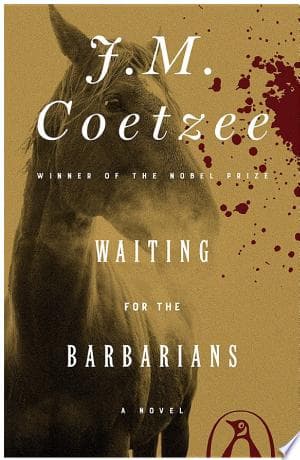
J. M. Coetzee (2017)
Genre
Literary Fiction / Historical Fiction
Reading Time
240 min
Key Themes
See below
Sign in to track this book
A magistrate's quiet frontier life unravels into rebellion against the Empire's brutal tactics, forcing him to confront his complicity in an oppressive system.
The Magistrate, an aging man who has peacefully governed a small frontier settlement for decades, lives a quiet life of routine and archaeology. His world is suddenly disturbed by the arrival of Colonel Joll of the Third Bureau, a special unit of the Empire's civil administration. Joll's purpose is to investigate the 'barbarian problem' and interrogate local barbarian prisoners. He brings a chilling aura of authority and an unsettling disregard for justice, immediately setting up a makeshift prison and beginning brutal interrogations. The Magistrate watches Joll's methods, which include torture, with growing unease and a sense of foreboding about the Empire's changing nature.
Colonel Joll and his subordinate, Warrant Officer Mandel, begin interrogating captured barbarian prisoners. The Magistrate is horrified by the casual cruelty and systematic torture, particularly the blinding of one old man and the mutilation of others. He cannot intervene directly, but the brutality deeply disturbs his long-held sense of order and justice. This exposure to the Empire's ruthless efficiency in getting information, regardless of truth or humanity, marks a significant change in his view of his own role and the Empire he serves, shattering his comfortable acceptance.
Among the prisoners tortured by Joll's men is a young barbarian girl, left with broken ankles and partially blinded. After Joll leaves, the Magistrate takes the girl into his care. He is driven by pity, guilt, and a new desire to make up for the Empire's cruelty. He washes her, cares for her injuries, and tries to understand her silence and pain. Their interactions are marked by a deep language barrier and her lingering trauma, yet the Magistrate feels an inexplicable connection and responsibility towards her, often massaging her damaged feet.
Driven by a strong need to correct a wrong and perhaps to understand the barbarians better, the Magistrate decides to personally return the young barbarian girl to her people. He undertakes a dangerous journey into the desolate frontier lands, traveling for days through harsh terrain with only a few companions. This is both an act of defiance against the Empire's policies and a personal quest. During the journey, he faces suspicion from the girl's people and the harsh realities of the untamed land, solidifying his detachment from the Empire's 'civilized' world.
After successfully returning the barbarian girl, the Magistrate returns to his settlement, expecting some official reprimand but not the severity he encounters. He is immediately arrested by Warrant Officer Mandel, who has taken over command in Joll's absence. The Magistrate is accused of consorting with the enemy, treason, and aiding barbarians. His comfortable life shatters as he is stripped of authority, imprisoned, and subjected to the same kind of humiliation and arbitrary justice he had only observed before, though less brutally.
Imprisoned in his own barracks, the Magistrate is subjected to public humiliation and arbitrary punishment by Mandel and his soldiers. He is forced to perform menial tasks, deprived of basic comforts, and made a spectacle for the townspeople who now view him with suspicion or hostility. His former authority and respect vanish completely. This period of imprisonment forces him to confront his own vulnerability and the true nature of the Empire's power, which operates through fear and absolute control, even over its loyal servants.
As the Magistrate remains in prison, rumors of barbarian movements and potential attacks on the frontier settlement grow. The Empire's soldiers, now under Mandel's command, become increasingly paranoid and brutal in their treatment of anyone suspected of collusion. The townspeople live in fear, and the military presence tightens its grip. The 'barbarian threat,' once a distant idea, becomes a real and terrifying reality, ironically fueled by the Empire's own aggressive policies and the fear it instills.
Colonel Joll unexpectedly returns to the settlement, now with more soldiers, to address the growing 'barbarian crisis.' He immediately resumes his brutal interrogations of newly captured barbarian prisoners, using even more extreme methods than before. The Magistrate, still imprisoned, sees these atrocities again, but this time with a deeper understanding of the cycle of violence and the Empire's self-destructive nature. He sees the terror in the eyes of the prisoners and recognizes the same fear and pain he experienced during his own detention.
Following a particularly brutal interrogation and public execution of several barbarian prisoners by Joll's men, the Empire's forces suddenly decide to abandon the frontier settlement. Convinced of an impending barbarian invasion, Joll orders a full retreat, leaving the townspeople to fend for themselves. The Magistrate, now released from prison but still without authority, watches as the soldiers depart in a chaotic and undignified manner, taking everything of value and leaving the settlement vulnerable and desolate. This abandonment shows how hollow the Empire's claims of protection were.
With the Empire's forces gone, the Magistrate, though still officially disgraced, is the only figure left with any leadership. He tries to restore order among the remaining townspeople, who are now vulnerable and confused. He organizes patrols, distributes food, and tries to build a sense of resilience. Despite the looming threat of the barbarians and the complete breakdown of the Imperial system, the Magistrate finds a new purpose in caring for his people, facing the unknown future with a quiet dignity that contrasts sharply with the Empire's recent panicked retreat. He teaches the children to read, offering a small sign of hope.
The Protagonist
He transforms from a complacent, complicit servant of the Empire to a defiant individual who actively resists its cruelty, eventually becoming a figure of quiet resilience and leadership for his abandoned people.
The Antagonist
He remains static, a consistent force of unfeeling authority and cruelty, never questioning his methods or the Empire's righteousness.
The Supporting
She does not have a traditional character arc but serves as a static symbol of the Empire's brutality and the impetus for the Magistrate's transformation.
The Supporting
He remains a consistently cruel and unquestioning enforcer of the Empire's will, rising in temporary power during Joll's absence.
The Mentioned
His role is to symbolize the initial shock of the Empire's brutality.
The Supporting
They shift from complacent citizens to fearful subjects, then to a vulnerable community reliant on the Magistrate after the Empire's retreat.
The novel is an allegory for imperialism's destructive nature. The Empire, a faceless entity, asserts dominance through fear, torture, and an 'us vs. them' mentality against the 'barbarians.' It shows how colonial powers create and demonize an 'other' to justify expansion and brutality. Colonel Joll's methods and the Empire's abandonment of the frontier settlement illustrate the self-serving and unsustainable nature of such regimes, which prioritize control and perceived security over justice and human dignity. Joll tortures prisoners to 'protect' the Empire, but his actions only escalate conflict.
“''Empire has located its existence outside the metropolitan heartland, in the borderlands, on the frontier. The frontier is its life, its purpose, its meaning. It will be there, and it will be barbarian, long after the people of the metropolis have ceased to believe in it.''”
A central conflict is the clash between personal moral justice and the state's arbitrary, often cruel, laws. The Magistrate, initially a loyal servant of the Empire's law, realizes that the Empire's 'justice' is merely a tool for control and oppression, lacking true fairness or humanity. His act of returning the barbarian girl is a rejection of the Empire's law in favor of a higher, personal sense of justice and empathy. Joll's torture is legal under Imperial decree, but the Magistrate's compassionate care is deemed treasonous.
“''I was a magistrate, I was not a soldier. I had no training in the law of war. I was not even sure that there was such a law.''”
The novel explores how societies create and demonize an 'other' (the 'barbarians') to justify violence and maintain power. The Empire's propaganda paints the barbarians as an existential threat, despite little evidence. This dehumanization allows figures like Joll and Mandel to inflict horrific torture without guilt. The Magistrate's journey to return the barbarian girl and his imprisonment highlight the dangers of challenging this constructed 'other' and the xenophobia that underpins imperial ideology. Fear of the unknown 'barbarians' drives the Empire's brutal policies.
“''The enemy is out there, beyond the walls. That is the truth of the situation. And the barbarians are not human, they are not like us.''”
The Magistrate undergoes a moral awakening throughout the story. Initially accepting and involved, his exposure to Colonel Joll's brutality forces him to confront the true nature of the Empire he serves. His empathy for the tortured barbarian girl and his act of defiance are driven by a reawakened conscience. This theme explores the individual's responsibility to resist injustice, even at great personal cost, and the process of shedding comfortable illusions to face harsh truths. His decision to return the girl is the key moment of this awakening.
“''I was the man who had been a magistrate, and who had chosen to be a man instead.''”
The novel dissects how power and authority work, especially how they are abused and maintained through fear. The Empire's authority is absolute, unquestioning, and backed by brutal force, as shown by Colonel Joll. The Magistrate initially has a gentler form of authority, but this is quickly overridden by the military's might. The story shows how easily power can corrupt and how individuals, like Mandel, can become instruments of oppression. The public humiliation of the Magistrate demonstrates the Empire's need to assert power over even its loyal servants to maintain control.
“''There is no law here but my law.''”
The narrative functions as a symbolic representation of broader political and ethical conflicts.
The entire novel operates as an allegory for the dynamics of imperialism, colonialism, and the oppression of an 'other.' The unnamed Empire and 'barbarians' prevent specific historical identification, allowing the themes to resonate universally. The Magistrate's moral struggle symbolizes the individual's conscience confronting state brutality. This device allows Coetzee to explore complex philosophical questions about power, justice, and human nature without being tied to a particular historical event, making the story timeless and applicable to various contexts of oppression.
The story is told exclusively through the perspective of the Magistrate, providing intimate insight into his internal struggle.
The use of first-person narration allows the reader to experience the Magistrate's moral awakening and his internal conflict directly. We witness his initial complacency, his growing unease, and his eventual defiance through his own thoughts and observations. This perspective emphasizes his isolation and the subjective nature of his experience, making his transformation more impactful. It also highlights the psychological toll of witnessing and enduring state-sanctioned violence, grounding the abstract allegorical elements in a deeply personal human experience.
The Magistrate's repeated washing and massaging of the barbarian girl's injured feet symbolizes his attempt at atonement and empathy.
The Magistrate's ritualistic care for the barbarian girl's broken feet is a powerful symbol of his compassion, guilt, and desire for atonement. Her injured feet represent the wounds inflicted by the Empire, and his gentle ministrations are an attempt to heal those wounds, both literally and figuratively. This act is intimate and vulnerable, contrasting sharply with the Empire's brutality. It signifies his rejection of the Empire's dehumanization of the 'other' and his embrace of shared humanity, becoming a physical manifestation of his moral shift.
The deliberate lack of specific names for the warring factions enhances the allegorical nature of the story.
By referring to the main powers as simply 'the Empire' and 'the barbarians,' Coetzee universalizes the conflict. This anonymity prevents readers from associating the narrative with any single historical event or specific cultural group, thereby amplifying its allegorical power. It allows the novel to speak to any situation where a dominant power demonizes an 'other' to justify its actions, making the themes of oppression, xenophobia, and moral complicity resonate across different times and places. It forces the reader to confront the abstract concepts rather than specific historical details.
“I was not made for the great world. I am an observer, not a participant.”
— The Magistrate reflecting on his role and nature.
“One thought alone preoccupies me: that we are waiting for the barbarians. It is a phrase that has been current among us for as long as I can remember.”
— The opening lines, establishing the central theme and atmosphere.
“Empire has nothing in common with love.”
— The Magistrate's realization about the true nature of power.
“There is no way of knowing whether you have achieved your aim or not. The only thing you can be certain of is that you have acted.”
— The Magistrate pondering the effectiveness of his actions.
“I too am a barbarian.”
— The Magistrate's dawning self-identification with the 'other'.
“What has made it impossible for us to live in time like fish in water, like birds in air, like children on a summer's day?”
— A philosophical question posed by the Magistrate about the human condition.
“The crime of which I am accused is that I have lived here, in this outpost, on the frontier.”
— The Magistrate's understanding of why he is being persecuted.
“Civilization begins with the sword and ends with the sword.”
— A cynical observation on the cyclical nature of power and violence.
“The barbarians are not going to come. It's an illusion we created for ourselves.”
— A realization late in the novel, challenging the initial premise.
“Pain is truth; all else is subject to doubt.”
— The Magistrate's reflection on the undeniable reality of physical suffering.
“I am a man who likes to sleep in his own bed.”
— A simple statement from the Magistrate revealing his desire for normalcy and peace.
“The greatest evil is not done by evil men, but by good men who are too weak to resist evil.”
— A profound moral reflection on complicity and inaction.
“We are like children who have been told a story, and now we must live it out.”
— The Magistrate contemplating the predetermined nature of their fate.
“I am not a torturer. I am a man of peace.”
— The Magistrate's internal struggle with the violence he witnesses and indirectly participates in.
Ready to see how well you understood this book? Take our interactive quiz with 10 questions.
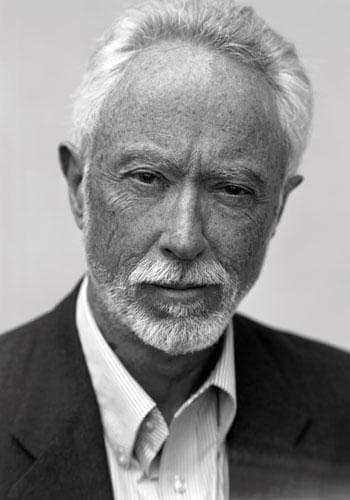
John Maxwell Coetzee OMG is a South African and Australian novelist, essayist, linguist, translator and recipient of the 2003 Nobel Prize in Literature. He is one of the most critically acclaimed and decorated authors in the English language. He has won the Booker Prize (twice), the CNA Prize (thrice), the Jerusalem Prize, the Prix Femina étranger, and The Irish Times International Fiction Prize, and holds a number of other awards and honorary doctorates.







