“Man is a concept, and he will remain a concept, until I have made him reality.”
— Voss speaking about his expedition and his vision for humanity.

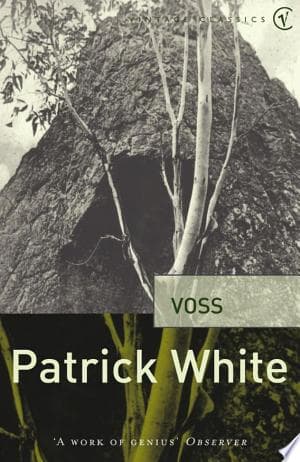
Patrick White (2011)
Genre
Literary Fiction / Historical Fiction
Reading Time
10-12 hours (based on 464 pages and dense prose)
Key Themes
See below
Sign in to track this book
In the unforgiving 19th-century Australian outback, a German explorer's perilous journey across the continent mirrors the growing, telepathic obsession that binds him to a young Sydney woman he barely knows.
Johann Ulrich Voss, a German explorer, arrives in Sydney in 1845, full of an almost messianic zeal to conquer the unknown Australian interior. He is introduced to the Bonners, a wealthy merchant family, and immediately makes an impression with his intense, almost confrontational personality. Mr. Bonner, intrigued by Voss's grand vision and potential for prestige, agrees to fund his expedition. During his stay, Voss meets Laura Trevelyan, Mr. Bonner's orphaned niece, a young woman of sharp intellect and independent spirit who is initially repulsed by his arrogance but soon finds herself drawn to his unsettling ambition. Their initial encounters are marked by intellectual sparring and a growing, unspoken connection.
Before Voss departs, he and Laura Trevelyan engage in a series of conversations that go beyond conventional courtship. Their discussions concern ambition, the nature of God, suffering, and the human spirit. Laura, initially resistant to Voss's hubris, gradually recognizes a shared depth and intensity within him that she rarely finds in others. Voss, in turn, is captivated by her intelligence and her ability to see beyond his outward persona. This intellectual and spiritual intimacy forms an almost telepathic bond between them, despite their limited physical proximity. Laura becomes the silent anchor for Voss's journey, and he, the consuming thought of her inner world.
Voss meticulously selects his expedition party, a varied group reflecting aspects of colonial society and human nature. This includes the pragmatic and initially skeptical Mr. Palfreyman, a natural scientist; the devoutly religious and somewhat naive Judd; the aspiring artist, Harry Robarts; the melancholic and intellectual Le Mesurier; and the morally ambiguous and manipulative Turner. Voss's leadership style is authoritarian and demanding, immediately setting a tone of strict discipline and unwavering commitment to his vision. He believes in the necessity of suffering and self-overcoming, which he projects onto his men, many of whom struggle to reconcile his grand pronouncements with the harsh realities of the impending journey.
The expedition departs from Jildra, a remote outpost, and immediately encounters the unforgiving Australian land. The men face extreme heat, lack of water, treacherous terrain, and the psychological strain of isolation. Voss's leadership, while resolute, often borders on the tyrannical, as he pushes his men to their limits, viewing their suffering as a necessary crucible for spiritual growth. Early signs of dissent and personal grievances begin to surface among the party members, particularly between Voss and the more pragmatic individuals like Turner, who resents Voss's perceived arrogance and spiritual posturing. The initial optimism slowly gives way to a grim determination, punctuated by moments of despair.
As the expedition pushes deeper into the interior, the men's physical and mental states deteriorate. Sickness, exhaustion, and dwindling supplies worsen existing tensions. Le Mesurier, a sensitive and introspective member, begins to keep a detailed journal, recording the daily struggles, the growing animosity towards Voss, and his own evolving philosophical reflections. His entries provide a crucial internal perspective on the expedition's unraveling, capturing the men's disillusionment and the increasing isolation of Voss. The lack of significant geographical discoveries further dampens morale, challenging Voss's insistence on the journey's inherent spiritual value, while Turner actively works to undermine Voss's authority.
The expedition has several encounters with Aboriginal people, which are often marked by misunderstanding and fear, though sometimes by cautious curiosity. These interactions highlight the deep cultural divide between the explorers and the land's original inhabitants. More significantly, the sheer, indifferent vastness of the Australian desert begins to exert a deep psychological strain on the men. Voss, in particular, becomes increasingly withdrawn, his internal world becoming more dominant than external reality. His sense of self-importance grows, bordering on delusion, as he believes he is becoming one with the land, a god-like figure. This mental deterioration is mirrored by the increasing desperation of his men.
The accumulated hardships and Voss's increasingly erratic and tyrannical behavior finally lead to a mutiny. Led by Turner and joined by others, a significant portion of the party rebels against Voss's leadership, demanding a return to civilization. In a tense confrontation, Voss refuses to turn back. The party splits, with Voss, Palfreyman, Le Mesurier, Judd, and Robarts continuing deeper into the interior, while the mutineers, including Turner, attempt to find their way back. This division marks a critical turning point, isolating Voss further and leaving him with only the most loyal or broken members of his original group, intensifying the sense of impending doom.
As the remaining party pushes onward, Voss's physical and mental health rapidly deteriorates. He suffers from fever, exhaustion, and increasingly vivid hallucinations, blurring the line between reality and his internal struggles. His leadership becomes less about guiding and more about a personal, almost masochistic quest for self-annihilation. During a severe drought, Palfreyman, the scientist, sacrifices himself in a desperate attempt to find water, believing his death might appease the land or a higher power. His selfless act deeply affects the remaining men and momentarily shakes Voss's egocentric worldview, hinting at a glimmer of humanity beneath his hardened exterior.
Severely weakened and delusional, Voss is eventually killed by one of the Aboriginal guides, Jackie, who had remained with the party. The exact circumstances are ambiguous, but it appears to be an act of mercy or self-preservation, ending Voss's prolonged suffering and the madness that had consumed him. His death is not a triumphant conquest but a humbling, almost anonymous end in the vast, indifferent land he had sought to dominate. Le Mesurier, who dies shortly after Voss, and Judd are the last to perish. Only Jackie survives, carrying the fragmented story of the expedition's tragic conclusion.
Back in Sydney, Laura Trevelyan experiences a deep, almost psychic connection to Voss's suffering and eventual death. She falls ill, experiencing visions and sharing in his agony, solidifying their spiritual bond across the vast distances. Years later, after the truth of the expedition's failure and the deaths of its members are confirmed, Laura is a figure associated with Voss's memory. She dedicates herself to charitable work and education, subtly shaping the public perception of Voss, transforming him from a failed conqueror into a symbolic figure of human endurance and spiritual quest. She becomes the keeper of his flame, ensuring his legacy endures, albeit in a form reshaped by her love and understanding.
Years after the expedition's demise, a memorial is erected in Sydney, commemorating Voss and his party. Laura, now an older woman, attends the ceremony, observing how the public memory of Voss has been sanitized and romanticized, detached from the brutal realities of his hubris and suffering. She reflects on how society constructs heroes. While the public celebrates Voss as a martyr of exploration, Laura holds the truer, more complex understanding of the man, his flaws, his ambition, and the deep, almost mystical connection they shared. The novel concludes with the enduring, yet ambiguous, legacy of Voss, forever intertwined with the untamed Australian spirit.
The Protagonist/Antagonist
Voss's arc is one of gradual physical and mental deterioration, leading to a humbling and ultimately tragic death, ironically achieving a form of spiritual union with the land he sought to dominate.
The Protagonist/Supporting
Laura evolves from a sharp but somewhat naive young woman into a mature, compassionate figure who understands the profound complexities of human ambition and suffering, shaping Voss's memory.
The Supporting
Palfreyman transitions from a pragmatic scientist to a figure of profound spiritual sacrifice, finding his own form of transcendence through selflessness.
The Supporting
Le Mesurier's arc is one of increasing disillusionment and physical decay, culminating in his death, but his journal ensures a lasting, albeit grim, record of the expedition's truth.
The Supporting
Judd's arc is one of steadfast endurance and quiet suffering, remaining loyal to Voss until the end, representing the enduring spirit of the common man.
The Antagonist
Turner's arc is defined by his active resistance to Voss, culminating in the mutiny and his eventual, unheroic return, representing the failure of simple pragmatism against the greater, if misguided, spiritual quest.
The Supporting
Robarts' arc is one of disillusionment and physical decay, his artistic dreams crushed by the brutal reality of the interior, leading to his death.
The Supporting
Mr. Bonner remains largely static, representing the societal forces that both enable and misunderstand Voss's grand ambition.
The Supporting
Mrs. Bonner remains largely static, representing the societal norms and expectations that Voss and Laura implicitly challenge.
The Mentioned
Jackie survives the expedition, a silent witness to the white man's folly and a symbol of the land's enduring power.
Voss explores the dangerous interplay between human ambition and a perceived divine mandate. Voss believes he is on a spiritual quest, attempting to become god-like by conquering the 'empty' continent. His hubris leads him to embrace suffering and tyranny, seeing himself as a Christ-figure or a deity. The novel questions whether his suffering is redemptive or merely a consequence of his inflated ego. This theme is evident in Voss's pronouncements to his men and in his internal monologues, where he grapples with his relationship to a higher power, culminating in a humbling, rather than triumphant, death. Laura, too, grapples with this, seeing the divine in his flawed humanity.
“''When man is truly humbled, when he has learnt that he is not God, then God may begin to use him.''”
The vast, indifferent, and often hostile Australian interior is a central character. It is not merely a backdrop but an active force that tests, breaks, and ultimately consumes the expedition. Voss initially seeks to conquer it, but the land's immense power forces a re-evaluation of human dominance. The land strips away all pretense, revealing the raw essence of each man. This theme is manifested through the detailed descriptions of the desert's harshness, the men's physical and mental deterioration, and the ultimate futility of their attempts to impose their will upon it. The land eventually absorbs Voss, becoming a part of his legend rather than being conquered by him.
“''The explorer is a man with a dream, a dream of a world that does not exist, and he goes to find it, and in finding it, he creates it.''”
The novel suggests that the physical journey into the unknown is a metaphor for an internal, spiritual quest. While the men are ostensibly charting new territory, Voss's true expedition is into the depths of his own soul and the nature of human will. The extreme physical suffering and isolation serve to strip away societal veneers, forcing the characters to confront their inner selves, their faith, and their capacity for good and evil. This theme is most powerfully seen in the telepathic connection between Voss and Laura, suggesting that true exploration can transcend physical boundaries, and in Le Mesurier's journal, which documents the men's psychological and spiritual unraveling.
“''Knowledge was never a matter of geography. Quite the contrary. It was by those deserts, which the explorer entered, that he has made his soul.''”
The unconventional love story between Voss and Laura Trevelyan forms the emotional core of the novel. Their connection is not based on physical intimacy but on an intense intellectual and spiritual understanding, bordering on obsession. Despite meeting only a few times, their bond deepens across vast distances, with Laura experiencing Voss's suffering clairvoyantly. This theme explores the nature of deep human connection, suggesting that true love can transcend absence and even death, becoming a transformative force. Laura's enduring devotion and her role in shaping Voss's legacy highlight the power of this unique bond.
“''There are degrees of love, as there are degrees of light.''”
Voss examines how historical figures and events are transformed into myths by society. The brutal reality of Voss's failed expedition and his flawed character is gradually reshaped into a heroic narrative of exploration and martyrdom by the public and, significantly, by Laura. The novel critiques the process of myth-making, showing how uncomfortable truths are often sanitized for public consumption. Laura's role in preserving a more complex, nuanced memory of Voss, one that acknowledges his flaws alongside his ambition, is central to this theme, questioning who controls the narrative and what constitutes a 'hero'.
“''It is always the fate of the man who attempts to discover, to be misunderstood.''”
The unexplained, psychic link between Voss and Laura Trevelyan.
This device allows Voss and Laura to communicate and share experiences across vast geographical distances, particularly during Voss's suffering. It externalizes their profound spiritual and intellectual bond, making their love story unique and deeply symbolic. It also serves to heighten the drama of Voss's journey, as Laura's visions provide a parallel narrative of his decline, emphasizing the spiritual stakes of his expedition beyond mere physical exploration. This mystical element underscores the novel's exploration of transcendent human connection and the limits of rational understanding.
A written account by an expedition member, offering an internal perspective.
Le Mesurier's journal serves as an epistolary element, providing a crucial, intimate, and often poetic counterpoint to the more external narrative of the expedition. It offers insights into the psychological deterioration of the men, their growing disillusionment, and their evolving perceptions of Voss. The journal allows the reader direct access to the thoughts and philosophical struggles of a key character, adding depth and a sense of immediacy to the harrowing journey, while also chronicling the daily realities that Voss's grand vision often obscures. Its eventual recovery is vital for understanding the expedition's true end.
The Australian continent itself, acting as a character and a symbolic force.
The vast, largely unexplored Australian interior functions not merely as a setting but as a powerful, almost sentient entity. It is the antagonist that Voss seeks to conquer, but it ultimately humbles and consumes him. Its indifference, its beauty, and its brutality are constantly emphasized, shaping the characters' fates and psychological states. This device highlights the theme of man's struggle against nature and the limits of human hubris, transforming a physical landscape into a profound spiritual and existential challenge. The 'emptiness' of the interior reflects the internal voids and spiritual quests of the characters.
The explorer's mental deterioration, leading to increasingly vivid, self-aggrandizing visions.
As Voss's physical condition worsens, he experiences frequent delusions and hallucinations, blurring the lines between reality and his internal world. These visions, often involving Laura or manifestations of his own perceived god-like status, serve to illustrate his descent into madness and the intense psychological pressure of the expedition. This device allows the author to explore Voss's complex inner life, his hubris, and his ultimate spiritual reckoning, making his journey as much a psychological one as a physical one. They are a manifestation of his struggle to maintain control and his increasing detachment from reality.
“Man is a concept, and he will remain a concept, until I have made him reality.”
— Voss speaking about his expedition and his vision for humanity.
“The only religion is the spirit, which is within.”
— Voss sharing his personal philosophy with Laura Trevelyan.
“Perhaps true knowledge comes of death by torture in the country of the mind.”
— Voss reflecting on the extreme suffering and mental anguish he endures.
“He who has a personality, and is not afraid of it, will make his own laws.”
— Voss asserting his independence and self-determination.
“All knowledge is sorrow.”
— Laura Trevelyan's somber realization about the nature of understanding.
“The explorer is the only fit human occupation.”
— Voss expressing his profound belief in the value of exploration.
“It is not beauty that we need, but the knowledge of the human heart.”
— Laura Trevelyan reflecting on what truly matters in life.
“God is in the rocks, and in the trees, and in the voice of the wind.”
— Voss perceiving divinity in the raw, untamed landscape.
“The country will break you, but it will also make you.”
— A general sentiment about the harsh but transformative Australian landscape.
“Love is not a comfortable thing. It is a terrible thing, like a storm.”
— Laura Trevelyan's understanding of love's intense and often destructive power.
“To be truly alone is to be truly free.”
— Voss embracing his isolation as a form of ultimate freedom.
“The greatest journeys are not across continents, but within the soul.”
— An underlying theme of the novel, reflecting on internal exploration.
“We are all martyrs to our own delusions.”
— A cynical observation about human self-deception and ambition.
“The wilderness is not a place, but a state of mind.”
— Voss's philosophical view of the wilderness as an internal as well as external reality.
Ready to see how well you understood this book? Take our interactive quiz with 10 questions.
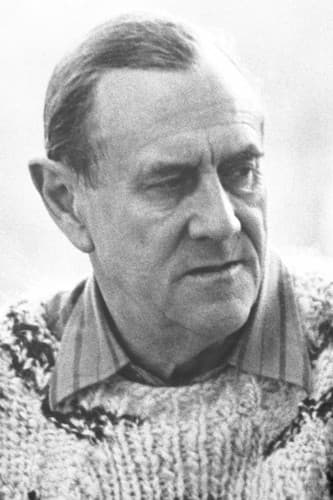
Patrick Victor Martindale White was a British-born Australian writer who published 12 novels, three short-story collections, and eight plays, from 1935 to 1987.







