“I want to work in the world, be on the streets instead of in a room, and I want to write, and I want to be great, and I want to be good.”
— Cody's internal monologue about his aspirations.

Jack Kerouac (1972)
Genre
Literary Fiction
Reading Time
920 min
Key Themes
See below
Sign in to track this book
Kerouac's "Visions of Cody" is a jazz-infused portrait of Neal Cassady, a wild, motherless hustler whose spirit and car-stealing adventures defined a generation's search for freedom on the American road.
The novel begins with a wide-ranging, stream-of-consciousness introduction to Cody Pomeray. He is presented not just as a friend but as a force of nature, an American figure showing freedom, recklessness, and an untamed spirit. Kerouac, through his alter ego Jack Duluoz, sets the stage for an exploration of their friendship, shared adventures, and Duluoz's intense interest in Cody's life and unique way of being. He describes Cody's early life in Denver, his difficult family background, and his natural charm that draws people to him, even as his actions often cause trouble. This first part establishes the book's main point: Duluoz's attempt to capture Cody's essence through words, a hard task given Cody's changing nature.
Duluoz tells of Cody's early life in Denver, showing his upbringing in poverty, often with his alcoholic, transient father. Cody's mother left the family early, leaving him to deal with a hard world with little guidance. These early experiences gave Cody a deep restlessness and a survival instinct, seen in his early adventures: petty theft, hustling in pool halls, and a strong desire for experience. Duluoz details Cody's first times stealing cars, his time in reform school, and his growing sexual awareness, all adding to the legend of the 'wild boy' that Duluoz admires. The story highlights Cody's charm and intelligence, which often helped him avoid the full results of his actions.
The story moves to Cody's arrival in New York City, where he first meets Jack Duluoz and their group of bohemian friends. Cody's raw, unrestrained energy immediately clashes with and enlivens Duluoz's more intellectual, thoughtful world. Duluoz is fascinated by Cody's fast speech, his street knowledge, and his sheer energy. This period marks the start of their intense friendship, defined by long, philosophical talks, shared drug experiences, and a mutual respect for each other's views. Duluoz sees in Cody a true American spirit, a living example of the freedom and recklessness he himself wants but often struggles to fully embrace. Their early interactions set up their famous cross-country trips.
A large part of the book covers the famous cross-country road trips Duluoz and Cody take. These journeys are shown as a search for meaning, experience, and the true soul of America. They drive constantly, often fueled by Benzedrine and a desire for adventure, crossing highways, back roads, and empty landscapes. Duluoz carefully records their talks, their observations of roadside America, and their meetings with different people along the way. Cody's driving style, his improvisational approach to life, and his constant pursuit of pleasure and experience are central to these parts. The road itself becomes a character, a symbol of freedom and escape, but also of the endless, sometimes pointless, search for something undefined.
Duluoz explores Cody's troubled personal life, focusing on his many marriages and the domestic disorder that often surrounds him. He describes Cody's strong attraction to women and their equal fascination with his wild charm, but also the instability his lifestyle brings to these relationships. Special attention goes to Cody's marriage to Evelyn, a woman who tries to steady him but often struggles with his cheating and restlessness. Duluoz shows Cody as a man torn between wanting a home life and a strong need for freedom and constant movement. These sections highlight the difference between Cody's public image as an adventurer and the private struggles of his emotional life, showing a deeper vulnerability beneath his outward confidence.
Cody's constant need for money and his cleverness in getting it are a repeated theme. Duluoz describes Cody's many jobs, from railroad brakeman and car attendant to various hustles and schemes. These episodes show Cody's resourcefulness, his ability to charm and manipulate, and his endless energy. Whether he's working on the railroad, dealing cards, or doing small cons, Cody approaches everything with an intensity Duluoz finds both admirable and puzzling. These sections also highlight how uncertain Cody's life is, how close he always is to breaking the law, and his ability to survive and even thrive in difficult situations, always with a certain detached amusement at his own problems.
A unique part of 'Visions of Cody' is Kerouac's inclusion of what he says are direct transcriptions of Cody's talks and monologues, often recorded on tape. These sections break from the story, showing Cody's fast, improvisational speech patterns directly to the reader. This technique aims to capture the raw, pure essence of Cody's voice and mind, giving an unfiltered look into his thoughts, observations, and unique way of speaking. Duluoz uses these 'interviews' to further analyze Cody's character, looking at his tone, his gestures, and the deeper meaning of his seemingly spontaneous statements. This experimental approach blurs the lines between fiction and documentary, emphasizing Kerouac's search for authenticity in showing his muse.
Beyond Cody's life story, the book is also about Duluoz's writing process and his almost obsessive attempt to capture Cody on the page. Duluoz often thinks about how language fails to convey Cody's full being, experimenting with different story styles, stream-of-consciousness, and direct transcription. He questions memory, perception, and literary representation. This meta-narrative layer shows Duluoz's deep admiration for Cody, almost a spiritual quest to understand and remember his friend forever. The struggle to describe Cody's core becomes a main conflict, making the book a meditation on art, friendship, and the elusive nature of truth.
Despite the energy that fills the book, a subtle but constant sense of death and the temporary nature of life appears in Duluoz's thoughts. He often considers the eventual fate of his friends, the passing of time, and the unavoidable decay that comes with existence. This sad tone adds depth to the celebration of Cody's life, suggesting that even the most energetic spirits are limited by time and biology. Duluoz's intense focus on keeping Cody's image in words can be seen as a desperate attempt to defy death, to create a lasting monument to a life lived so fully and intensely. The joyful chaos has a hint of coming loss.
Throughout the story, Duluoz raises Cody from a mere friend to a symbol of a certain American spirit. He sees Cody as embodying the country's restless energy, its ability to change, its mix of innocence and corruption, and its endless promise. Cody represents the frontier spirit, the individualist, the drifter, and the hustler—types deeply rooted in the American mind. Duluoz projects onto Cody his own ideals of freedom, authenticity, and the pursuit of experience, making the book not just a friend's biography, but a meditation on America's identity through one extraordinary, flawed person. This symbolic meaning gives the personal story a wider cultural importance.
While not explicitly a Beat statement, 'Visions of Cody' is a key text that captures the early spirit of what became the Beat Generation. The constant pursuit of experience, the rejection of typical society, the exploration of jazz, drugs, and spontaneous prose, and the celebration of the marginalized are all central themes. Duluoz and Cody's adventures, their intellectual discussions, and their shared desire to break free from social norms represent the Beat way of life. The book is a raw, unfiltered record of the early years of this cultural movement, showing the people and experiences that shaped its distinct voice and ideas, even before the term 'Beat' was widely known.
The novel ends not with a clear conclusion, but with a lasting, almost mythical thought on Cody's ongoing presence in Duluoz's mind and in the world. Duluoz admits it is impossible to fully capture Cody, but confirms the deep impact his friend has had on his life and art. The final sections are less about specific events and more about the impressionistic afterglow of their friendship, the 'visions' that continue to shape Duluoz's view. Cody remains an elusive, larger-than-life figure, a source of endless fascination and inspiration, forever moving through the American landscape in Duluoz's imagination. The book ends with a sense of wonder and a testament to how extraordinary people can leave a lasting mark.
The Protagonist/Narrator
Duluoz's arc is less about external change and more about an internal journey of understanding, as he grapples with the limitations of language to capture the boundless spirit of Cody.
The Central Figure/Inspiration
Cody's arc is less about transformation and more about the relentless unfolding of his inherent nature, a consistent embodiment of wildness and motion.
The Supporting
Her arc is largely one of consistent struggle and quiet endurance in the face of Cody's unwavering nature.
The Supporting/Mentioned
He serves as a static background figure, an origin point for Cody's wildness rather than undergoing personal development.
The Supporting/Mentioned
These characters generally remain static, serving to populate the world and reinforce the era's cultural milieu.
The novel constantly explores what it means to live truly and freely, often through Cody Pomeray's life. Duluoz sees Cody as the example of an unrestrained existence, free from social rules. Their cross-country road trips are physical examples of this search, always moving, always seeking new experiences and truths on the open road. Cody's rejection of traditional jobs, home life, and social norms, and Duluoz's interest in it, show a desire for a life lived on one's own terms, even if it leads to disorder. This theme is clear in Duluoz's detailed descriptions of Cody's hustles and his endless energy, always trying to break free.
“What is that feeling when you're driving away from people and they recede on the plain till you see their specks dwindling? – it's the too-huge world again, and we're on our way. But what is that feeling? – it's the great North American sadness.”
At its core, the book deeply explores an intense, almost obsessive friendship between Jack Duluoz and Cody Pomeray. Duluoz's admiration for Cody is close to hero-worship, and his constant attempt to capture Cody's essence in words shows a deep psychological bond. Duluoz is not just recording a friend's life; he is trying to understand and remember a figure who represents something vital and elusive to him. This theme appears in Duluoz's detailed observations of Cody's actions, speech, and life choices, as well as in the sheer amount of text about his friend. The friendship drives Duluoz's creative process and is a source of both inspiration and deep self-reflection.
“I was writing about Cody because he was the only hero I could possibly find in America.”
Kerouac uses Cody Pomeray to explore and redefine the American myth. Cody embodies classic American figures: the pioneer, the cowboy, the hobo, the hustler, the restless individualist. Duluoz sees in Cody a raw, untamed spirit he believes is central to the American character, free from European tradition. The endless road trips across the vast American landscape are a literal and symbolic journey into the heart of this identity. The book considers what it means to be American after the war, questioning traditional ideas of success and stability and celebrating the marginalized, the spontaneous, and the wild.
“He was the Saint of the Railroads, the American Saint of the Railroads.”
A main meta-theme is Duluoz's struggle with language itself—its ability to capture experience and its limits. He constantly experiments with story forms, stream-of-consciousness, and direct speech transcriptions to convey Cody's 'truth.' Duluoz often expresses frustration with words, feeling they cannot fully represent Cody's dynamic, elusive nature. This theme is clear in the novel's experimental structure, its changes in style, and Duluoz's direct thoughts on writing. The book becomes a testament to the writer's endless effort to connect lived experience and its literary portrayal.
“The only truth is the immediacy of the word.”
Beneath the frantic energy and celebration of life is a deep existential questioning. Duluoz and Cody, through their talks and travels, grapple with the meaning of existence, the nature of time, and the search for spiritual truth. Cody's constant movement can be seen as an attempt to outrun or fill an inner emptiness, while Duluoz's self-reflection often leads to moments of deep doubt and a longing for something more. The temporary nature of their lives, the constant movement, and the fleeting meetings with others all add to a sense of impermanence, pushing the characters to face their own death and the ultimate purpose of their lives.
“Ah, life is a dream, and we are but shadows in it, and sometimes the shadows touch.”
Narrative technique mimicking the unfiltered flow of thoughts, feelings, and memories.
Kerouac employs stream of consciousness extensively, particularly in Jack Duluoz's narration. This device allows Duluoz's thoughts to spill onto the page in an unedited, associative manner, often characterized by long, rambling sentences, rapid shifts in topic, and a blending of past and present. It aims to capture the raw, immediate experience of perception and memory, immersing the reader directly into Duluoz's mind and his obsessive process of trying to understand Cody. This technique mirrors the improvisational spirit of jazz and the spontaneous nature of Cody's own life.
The physical journey across America symbolizing spiritual quest, freedom, and escape.
The open road is a central and recurring motif, functioning as a powerful metaphor. It represents freedom, escape from societal constraints, and a continuous search for meaning and experience. The endless movement of Duluoz and Cody across the American landscape symbolizes their spiritual quest, their rejection of stagnation, and their embrace of the unknown. The road is also a place of discovery, where new characters are met, new insights are gained, and the vastness of America itself becomes a character in the narrative, reflecting the boundless possibilities and inherent loneliness of their journey.
Inclusion of supposedly verbatim recordings of Cody's conversations and monologues.
A unique structural device is the integration of sections presented as direct transcriptions of Cody Pomeray's speech, often indicated by specific formatting. These 'interviews' and monologues break the conventional narrative flow, offering an unfiltered, raw glimpse into Cody's distinctive voice, rapid-fire delivery, and idiosyncratic thought process. This device serves to heighten the sense of authenticity and immediacy, allowing the reader to 'hear' Cody directly. It also underscores Duluoz's intense focus on capturing Cody's essence, even experimenting with quasi-documentary techniques within his fiction.
Elevating everyday events and individuals to legendary status through hyperbolic and poetic language.
Kerouac consistently uses highly poetic, often hyperbolic language to elevate the seemingly ordinary events of Cody's life – his hustles, his driving, his conversations – into something grand and mythical. Cody himself is portrayed not just as a friend, but as an archetypal figure, an 'American Saint.' This device imbues the narrative with a sense of epic scale and spiritual significance, transforming personal anecdotes into universal statements about human experience. It reflects Duluoz's awe and reverence for Cody, and his artistic ambition to create a lasting legend out of his friend's unconventional life.
“I want to work in the world, be on the streets instead of in a room, and I want to write, and I want to be great, and I want to be good.”
— Cody's internal monologue about his aspirations.
“The only people for me are the mad ones, the ones who are mad to live, mad to talk, mad to be saved, desirous of everything at the same time, the ones who never yawn or say a commonplace thing, but burn, burn, burn like fabulous yellow roman candles exploding like spiders across the stars and in the middle you see the blue centerlight pop and everybody goes 'Awww!'”
— A classic Kerouacian declaration about the kind of vibrant, intense individuals he admires.
“All of life is a foreign country.”
— A reflection on the strangeness and unfamiliarity of existence.
“What is that feeling when you're standing on a mountain in a thunderstorm and you've just been struck by lightning? Is that God or is that just electricity?”
— A philosophical question about the nature of intense experience and the divine.
“He was a great man, a great father, a great husband, a great friend, a great lover, and a great bum.”
— Describing the multifaceted and contradictory nature of Cody's character.
“The world is a great big movie, and I'm just a little guy in the audience.”
— A sense of detachment and observation from the world around him.
“And the only way to say it is to say it, and the only way to write it is to write it.”
— A simple, direct statement about the act of creation and expression.
“The greatest poet in America is Cody Pomeray.”
— Kerouac's high praise and admiration for Neal Cassady, the real-life inspiration for Cody.
“I want to be a writer, and I want to be a good one, and I want to be a great one, and I want to be remembered.”
— A recurring theme of ambition and the desire for literary legacy.
“There was nothing to do but burn, burn, burn.”
— A reiteration of the theme of intense, passionate living.
“You can't get away from yourself by going from one place to another.”
— A realization about the internal nature of one's struggles, irrespective of external changes.
“And the great thing about Cody was that he didn't care what anybody thought of him.”
— Highlighting Cody's defiant and independent spirit.
“The world is a great big poem, and I'm just trying to read it.”
— Seeing the world as a text to be interpreted and understood.
“Everything is holy, everything is a miracle, everything is impossible.”
— A sense of wonder and awe at the world's existence.
Ready to see how well you understood this book? Take our interactive quiz with 10 questions.
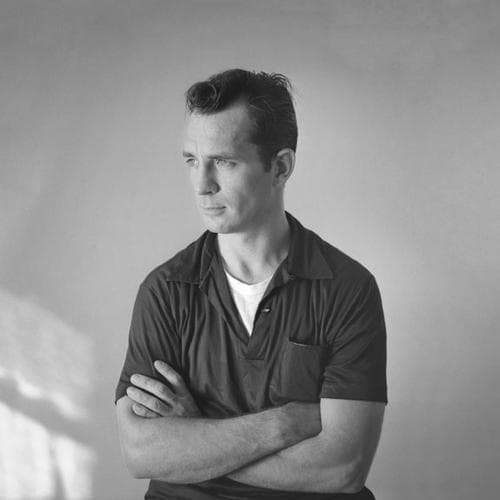
Jean-Louis Lebris de Kérouac, known as Jack Kerouac, was an American novelist and poet who, alongside William S. Burroughs and Allen Ginsberg, was a pioneer of the Beat Generation.







