“Each of us is a whole world, and the death of each is the destruction of a world.”
— Davidov reflecting on human life and loss.

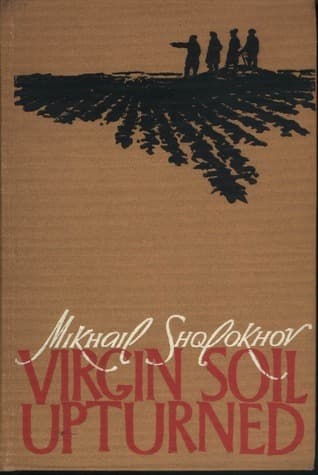
Mikhail Sholokhov (1935)
Genre
Historical Fiction
Reading Time
1050 min
Key Themes
See below
Sign in to track this book
A Bolshevik arrives in a traditional Don village, starting a dangerous fight to bring its people into the Soviet future.
Semyon Davidov, a former Baltic Fleet sailor, is sent by the Party to the Don Cossack village of Gremyachy Log. His job is to start a collective farm and end the traditional system of individual land ownership. Davidov is a strong communist, earnest but at first naive about rural life and the resistance he will face. He immediately finds local Party secretary Makar Nagulnov and village Soviet chairman Andrei Razmyotnov to plan how to convince villagers to join the collective. His arrival begins a great change in Gremyachy Log's old way of life.
Davidov, Nagulnov, and Razmyotnov start their campaign, holding meetings and trying to persuade the peasants. But most villagers, especially wealthier 'kulaks' like Yakov Ostrovnov and Titus Borodin, are wary and openly against giving up their land and livestock. Davidov, pressured by higher authorities to meet goals, soon uses harsher methods. Kulaks are called enemies of the people, their property threatened with seizure, and their social standing hurt. This force creates anger and fear among all villagers, not just the rich, as they see their neighbors lose their livelihoods.
Under great pressure and threat, many villagers reluctantly agree to join the collective, named 'Gremyachy Log.' The 'dekulakization' process gets stronger, with kulaks forcibly losing their property, livestock, and homes. Their families are often sent away. A special commission oversees this brutal process. Nagulnov is a zealous participant, but Razmyotnov struggles with the harshness, finding it hard to accept given his relationships with old neighbors. Davidov, though sometimes uneasy, continues, believing it is a necessary step for the revolution.
A major problem starts when the collective leaders decide to collectivize all privately owned cows, not just work animals. This decision, seen as an attack on their last personal property and ability to feed their families, causes a furious revolt among the village women. Led by strong women like Lukerya Nagulnova (Makar's estranged wife), the women arm themselves with tools and stones, confronting Davidov, Nagulnov, and Razmyotnov. They attack the men, take back their cows, and temporarily stop collectivization, showing the depth of popular resistance and the limits of the Party's immediate power.
After the women's revolt, and recognizing the widespread unhappiness, the Party issues an order allowing peasants to voluntarily take their livestock from the collective. This seems like a retreat, and many villagers quickly reclaim their animals. However, this 'voluntary' measure is temporary, and the goal of full collectivization remains. The incident, while a small win for the peasants, also strengthens the Party activists' resolve and further divides the village, with deep mistrust between collective members and those outside it.
Amidst the political unrest, Davidov is drawn to Lushka Nagulnova, Makar's spirited and beautiful estranged wife. Lushka is a complex, independent, and often defiant character who has suffered under Makar's strict ideology. Their relationship develops, marked by passion, misunderstanding, and clashing worlds. Davidov, a dedicated communist, tries to balance his personal desires with his revolutionary duties, while Lushka seeks genuine affection. Their affair adds a personal element to the story, showing the human side amidst grand political changes, and further complicates Davidov's standing in the village.
Unknown to the Party activists, a secret counter-revolutionary group operates in Gremyachy Log, led by former White Army officer Polovtsev and involving local figures like the seemingly cooperative Yakov Ostrovnov. This group, hating the Bolsheviks and wanting to restore the old order, plans an armed uprising. Ostrovnov, pretending to be a loyal collective member, acts as their informant and saboteur, secretly hurting the collective from within. Their goal is to use peasant discontent and strike at Soviet power when ready, showing the ongoing threat to the new government.
Makar Nagulnov, a fervent communist, is obsessed with world revolution. He believes he must learn English to participate in the global struggle. He studies the language with fanatical dedication, often ignoring his duties and personal life. This unique pursuit highlights his strong ideological commitment, bordering on obsession, and his separation from practical realities and personal relationships, including his troubled marriage to Lushka. His single-mindedness reflects the era's revolutionary fervor and belief in an upcoming international communist future.
Razmyotnov, through careful observation, begins to suspect Ostrovnov's true loyalties. Eventually, the full counter-revolutionary plot, involving Polovtsev and others, is discovered. As the conspirators prepare for their uprising, they launch a surprise attack. Davidov, Nagulnov, and Razmyotnov, along with other loyal collective members, are targeted. A fierce and deadly shootout follows, bringing the simmering tensions and ideological conflict to a violent end in Gremyachy Log. The battle shows the high stakes of the collectivization drive.
In the shootout with the counter-revolutionaries, Semyon Davidov and Makar Nagulnov are killed. Davidov is ambushed by Polovtsev and his men, and Nagulnov dies fighting. Andrei Razmyotnov, though wounded, survives. The deaths of Davidov and Nagulnov are a blow to the collective and a reminder of the dangers in the revolutionary struggle. Razmyotnov, now leading Gremyachy Log, is burdened with grief but determined to continue building the collective farm, showing the Party's enduring spirit and the sacrifices made for its ideals. The village is forever changed.
The Protagonist
Davidov transforms from an idealistic, somewhat naive Party envoy into a hardened leader who grapples with the moral complexities and personal sacrifices demanded by the revolution, ultimately dying for his cause.
The Supporting
Nagulnov remains steadfast in his unbending ideological commitment, culminating in his heroic death fighting for the revolution.
The Supporting
Razmyotnov grapples with the moral implications of Party directives, maturing into a more resilient and compassionate leader who must carry on the revolutionary work after his comrades' deaths.
The Supporting
Lushka maintains her independent spirit and resilience amidst the revolutionary upheaval, finding a brief, intense connection with Davidov but ultimately remaining a figure of untamed vitality.
The Antagonist
Ostrovnov maintains his duplicitous nature throughout, acting as a secret saboteur and eventually revealed as a key conspirator against Soviet power.
The Antagonist
Polovtsev remains a staunch and violent enemy of the Soviet regime until his ultimate defeat.
The Supporting
Schukar remains largely static, a source of comic relief and folksy wisdom, adapting to the collective in his own idiosyncratic way.
The Supporting
Lukerya asserts her agency during the women's revolt, temporarily halting a key aspect of collectivization, and remains a symbol of peasant resilience.
The novel shows the violent and destructive parts of collectivization, especially through 'dekulakization.' Sholokhov depicts the suffering inflicted on individuals and families, even as Party members like Davidov and Nagulnov believe these harsh actions are necessary for a new socialist society. The theme asks if the 'old ways' must be brutally changed for progress, showing the human cost of revolution. The deaths of Davidov and Nagulnov highlight the high price paid.
“''We'll tear down the old world, the world of the kulaks and the White Guards, and build a new one!''”
This theme is central to the conflict for characters like Andrei Razmyotnov, who struggles to balance the Party's harsh orders with his empathy for neighbors. Nagulnov shows strong ideological zeal, often at the cost of human kindness, while Davidov tries to balance both. The novel explores the psychological toll of enforcing policies that demand suppressing natural human feelings for an abstract ideal. The women's revolt, caused by collectivizing cows, is an example of human needs clashing with ideology.
“''My heart aches for them, Davidov. They're our own folk, after all.''”
Gremyachy Log is a village rooted in tradition, and the novel clearly shows the peasants' strong resistance to the radical changes of collectivization. Their attachment to individual land ownership, livestock, and way of life is immense. This resistance appears in different ways: open defiance (the women's revolt), clever sabotage (Ostrovnov), and deep suspicion. The 'virgin soil' represents not just unplowed land, but the deeply established social and economic structures the Party tries to change, facing great friction.
“''Our fathers and grandfathers lived on this land, and we'll die on it. We won't give it up!''”
The novel explores how personal relationships and individual desires are affected by, and sometimes clash with, the all-consuming demands of the revolution. Davidov's affair with Lushka Nagulnova is a key example, showing his struggle to balance revolutionary duties with personal longing. Makar Nagulnov's complete focus on ideology, leading to his separation from Lushka, also shows this theme. The novel suggests that even amidst large historical changes, human connection and individual needs remain, often creating touching conflicts.
“''You're a man of the Party, Semyon. You have no right to a life of your own.''”
The theme of deception and betrayal is shown by characters like Yakov Ostrovnov, who outwardly cooperates with collectivization while secretly planning its downfall. This highlights the hidden dangers and the constant need for alertness within the revolutionary struggle. The counter-revolutionary plot itself relies on secrecy and manipulation, forcing Party activists to confront enemies who appear to be friends or neutral. This creates an atmosphere of paranoia and mistrust, where telling true allies from hidden enemies is a matter of life and death.
“''He's a wolf in sheep's clothing, that Ostrovnov.''”
Urban workers sent to rural areas to lead collectivization.
This term refers to the 25,000 industrial workers dispatched by the Party to the countryside to assist in the establishment of collective farms. Davidov is a prime example. This device highlights the Party's strategy of bringing 'proletarian consciousness' and organizational skills from the cities to the largely agrarian villages, often creating cultural and ideological clashes with the traditional peasantry. It underscores the top-down nature of the collectivization drive and the role of external agents in transforming rural life.
The forced dispossession and exile of prosperous peasants ('kulaks').
Dekulakization serves as a major plot driver, creating immense conflict and suffering. It's the mechanism by which the Party eliminates perceived class enemies and acquires resources for the collectives. This device demonstrates the brutal and coercive nature of collectivization, fueling both internal Party debates (like Razmyotnov's struggles) and external resistance (like the counter-revolutionary plot). It is a central element in establishing the new social order by dismantling the old one through force.
A spontaneous, violent uprising by peasant women against collectivization.
This pivotal event serves as a turning point, demonstrating the limits of Party authority and the depth of popular resistance. It highlights the specific concerns of peasant women, particularly regarding the collectivization of their privately owned cows, which were vital for family sustenance. The revolt forces a temporary retreat by the Party, revealing the fragile balance of power and the raw, unorganized power of the masses when their most basic interests are threatened. It is a moment of stark realism amidst the ideological push.
A secret network of former White Army officers and disaffected peasants plotting against Soviet power.
This plot device provides the primary external antagonist force and creates suspense and danger. It represents the persistent threat from the 'old world' and the ongoing civil war in a different form. The existence of this underground, embodied by Polovtsev and involving figures like Ostrovnov, justifies the Party's harsh measures in the eyes of its most fervent adherents and ultimately leads to the tragic deaths of Davidov and Nagulnov, showcasing the life-and-death stakes of the revolutionary struggle.
“Each of us is a whole world, and the death of each is the destruction of a world.”
— Davidov reflecting on human life and loss.
“You can't make an omelet without breaking eggs.”
— A common saying used to justify the harshness of collectivization.
“The earth is our mother, and we must not let her go to rack and ruin.”
— Nagulnov expressing his deep connection to the land and the need to care for it.
“It's easy to live when you're young and strong. It's harder when you're old and your strength is gone.”
— An old man lamenting the difficulties of aging amidst social change.
“A man without a cause is like a bird without wings.”
— Davidov contemplating the importance of purpose and ideology.
“The collective farm is a voluntary affair, but if you don't join, you won't get any land.”
— The coercive nature of collectivization being revealed to the peasants.
“The old world is dying, and the new world is being born. It is a time of monsters.”
— A reflection on the tumultuous period of societal transformation.
“Fear has big eyes.”
— A proverb used to describe how fear magnifies perceived threats.
“We'll build a new life, a good life, for ourselves and for our children.”
— The optimistic vision of the communists for the future of the village.
“The truth is a bitter pill, but sometimes it has to be swallowed.”
— Someone facing an unpleasant reality about the situation.
“It's not enough to want to change things; you have to know how to change them.”
— Davidov discussing the practicalities of implementing collectivization.
“The soul of a peasant is like the soil: deep, fertile, but sometimes stubborn.”
— A description of the complex character of the Don Cossacks.
“A good word is better than a sharp sword.”
— An argument for persuasion over force, though often ignored.
“You can't make everyone happy, especially when you're making a revolution.”
— A leader acknowledging the inevitable discontent during radical change.
Ready to see how well you understood this book? Take our interactive quiz with 10 questions.

Biography coming soon.







