“I believe in some blending of hope and sunshine sweetening the worst lots. I believe that this life is not all; neither the beginning nor the end.”
— Lucy Snowe reflects on her philosophy of life and resilience.


Charlotte Brontë (2004)
Genre
Historical Fiction / Romance
Reading Time
1120 min
Key Themes
See below
Sign in to track this book
In the foreign city of Villette, the orphaned Lucy Snowe navigates unrequited love and societal limits, all while protecting her independent spirit.
The story begins with Lucy Snowe, a quiet young woman, remembering a time in her childhood spent at her godmother, Mrs. Bretton's, home in Bretton. During this visit, she watches the lively interactions between Mrs. Bretton, her son Graham Bretton, and their young guest, Paulina Home (Polly), a sensitive girl. Lucy sees Polly's strong attachment to her father and her sadness when he leaves her with Mrs. Bretton. Later, Lucy mentions a personal loss: her entire family dies, leaving her an orphan with no money. This event makes her seek independence and work, setting up her future.
After her family's death, Lucy Snowe gets a job as a companion to an old, sick lady. This job gives her temporary security, though it is not fulfilling. The old lady eventually dies, leaving Lucy without work or prospects again. Facing poverty and not wanting to be idle, Lucy makes a big decision. Wanting independence and a hope for a better future, she decides to leave England and look for work in Europe, specifically in the fictional city of Villette, the capital of the fictional country of Labassecour (like Brussels, Belgium).
Lucy Snowe travels alone to Villette, enduring a rough sea crossing and a confusing arrival in the foreign city. Alone and speaking little French, she struggles to find her way through the unfamiliar streets at night. By chance, she meets a kind Englishwoman who directs her to the Pensionnat de Demoiselles, a girls' boarding school. Despite her fear and the presence of the directress, Madame Beck, Lucy gets a job, not as a governess as she hoped, but as an English teacher for the younger girls. She quickly gets used to the school's strict routines and constant supervision, watching its residents carefully.
At the school, Lucy Snowe quietly observes the lives around her, including Madame Beck and her family, especially Professor Paul Emmanuel, Madame Beck's cousin. Lucy also notices a mysterious presence in the school, a nun-like ghost that seems to wander the grounds, creating a suspenseful atmosphere. During a school play, Lucy has to take on a male role, which she performs surprisingly well. Around this time, she first meets Dr. John Graham Bretton, the school's English doctor. Lucy does not initially know that Dr. Bretton is the same Graham Bretton from her childhood, though she feels a growing attraction to him.
Lucy Snowe falls into a deep illness and depression. The difficult atmosphere of the school during the long summer holidays, when most students and teachers leave, makes it worse. Feeling completely alone and neglected, she wanders the deserted streets of Villette in despair. She eventually collapses and Madame Beck finds her, sending her to a quiet lodging. To her surprise and relief, she discovers she is being cared for by Mrs. Bretton, her godmother, and Dr. John Graham Bretton. Through talks and shared memories, Lucy realizes that Dr. Bretton is indeed the Graham Bretton of her youth, and Mrs. Bretton is her godmother. This reunion brings Lucy comfort and a brief time of domestic happiness.
During Lucy's recovery at Mrs. Bretton's home, another familiar person from her past reappears: Paulina Home, now Paulina de Bassompierre, a refined and wealthy young lady. Paulina has grown into a beautiful woman, and she quickly renews her childhood friendship with Graham Bretton. Lucy watches their growing relationship with affection and quiet sadness, seeing the strong connection between them. Graham, though kind to Lucy, clearly loves Paulina more. Lucy, always the quiet observer, understands her place as a friend, not a romantic interest, in Graham's life. She prepares for her return to the school.
Graham Bretton and Paulina de Bassompierre's relationship deepens, leading to their engagement. Lucy Snowe sees their joy, confirming her understanding that Graham loves Paulina. While she feels a deep sense of loss and loneliness, Lucy stays calm, never showing how much she felt for Graham. She accepts her situation quietly, knowing she is meant to observe, not participate in, such happiness. Her focus returns to her duties at the school, where she continues teaching English, finding comfort in routine and learning.
Back at the school, Lucy Snowe finds herself more and more under Professor Paul Emmanuel's influence. At first, she sees him as bossy, odd, and often harsh, but she also recognizes his intelligence and kindness. He challenges her academically, pushing her to overcome shyness and improve her teaching skills, especially in writing and public speaking. Despite his rough manner, Paul shows a real interest in Lucy's well-being and intellectual growth, seeing her hidden talents. Their relationship is complex, with frequent arguments, but also a growing mutual respect and an unspoken affection.
The nun-like ghost continues to appear at the school, especially to Lucy. The mystery grows when Lucy finds a nun's habit hidden in her bed. This supernatural element adds to the gothic mood and suggests deeper plots. It becomes clear that Madame Beck, with the help of Père Silas, a Jesuit priest, is actively trying to keep Lucy and Paul Emmanuel apart. They manipulate situations, spread rumors, and try to control Paul's affairs, often using the perceived threat of the nun. Lucy, though confused at first, starts to understand how much they interfere in Paul's life and his possible affections.
Because of Madame Beck, Père Silas, and other important people, Professor Paul Emmanuel is pressured to leave Villette for a three-year business trip to the West Indies. This departure is planned to separate him from Lucy, whom they see as an unsuitable partner. Before he leaves, Paul, in private meetings, shows his deep affection for Lucy. He makes plans for her future, getting her a small school of her own near the pensionnat, and promises to return to her. Their farewell is full of unspoken love and hope for a future reunion, though Paul's departure leaves Lucy feeling alone again.
After Paul Emmanuel leaves, Lucy Snowe, using the money and arrangements he made for her, starts her own small school. She works hard, finding some independence and satisfaction in her new role as a directress. She stays in touch with Paul through letters and hopes for his promised return after three years. The story builds toward the expected reunion, but Brontë describes a powerful storm, suggesting a tragic end. Lucy, always strong, continues to wait, her future uncertain.
The novel ends with an uncertain conclusion about Paul Emmanuel's return. Lucy Snowe describes a violent storm that lasts for seven days and nights, happening at the same time Paul is expected to return. While she does not say he died, her words strongly suggest his ship was lost at sea, and he never came back to Villette. Lucy ends her story by saying, 'Here pause the account. I cease to describe a period of seven years. Reader, they were the happiest of my life.' This sad statement, along with the storm's description, leads the reader to believe Paul died, and Lucy's brief time of hope and happiness ended, leaving her to endure alone once more.
The Protagonist
From a seemingly passive observer, Lucy evolves into an independent schoolmistress who finds her voice and a profound, albeit tragically brief, love. She learns to assert herself and find solace in her own capabilities.
The Major Supporting/Love Interest
Paul moves from being a seemingly antagonistic and overbearing figure to revealing his true, benevolent nature and becoming Lucy's intellectual and romantic equal. He shows growth in his willingness to defy social pressures for love.
The Major Supporting/Love Interest
Graham's arc is less about internal change and more about fulfilling his destiny as a successful, beloved figure, ultimately marrying his childhood sweetheart. He remains a consistently good-natured but somewhat oblivious character.
The Antagonist/Supporting
Madame Beck remains largely static, a consistent force of control and manipulation throughout the novel, her character defined by her unwavering self-interest and desire for order.
The Supporting
Paulina's arc is one of maturation into a beloved and fortunate woman, fulfilling a traditional path of marriage and happiness. Her character remains consistent in her gentle nature and deep affections.
The Supporting
Mrs. Bretton remains a consistent figure of maternal comfort and support, offering stability and kindness to Lucy throughout her journey.
The Supporting/Antagonist
Père Silas remains a consistently manipulative and influential figure, serving as an instrument of control and opposition to Lucy and Paul's relationship.
The Supporting
Ginevra remains largely static in her vanity and flirtatiousness, eventually achieving her goal of marrying a titled man, albeit one she initially disliked.
The Supporting
Count de Hamal's arc reveals the mundane truth behind the supernatural mystery of the nun, culminating in his successful pursuit and marriage to Ginevra.
Lucy Snowe's life is marked by isolation. Orphaned and without family, she often finds herself alone in a foreign country, watching others' happiness from a distance. Her quiet nature and difficulty expressing emotions often make her feel detached, even when people are around. The long, solitary summer holidays at the school, where she becomes very depressed, show her loneliness. Even in her feelings for Graham and Paul, she keeps some emotional distance, never fully showing her feelings, which highlights her isolated life.
“A great solitude fell upon me, and in its hush I heard a voice whisper: 'The end is not yet. You have a trial to undergo: a struggle with yourself, with your natural foes.'”
Lucy's life is a search for self-understanding and her own identity, especially in a world that offers few options for independent women. At first, her roles (governess, teacher) define her, but she slowly shows her intellectual and emotional strength. Her talks with Paul Emmanuel, who encourages her to speak and write, are important for her growth. She learns to trust her own judgment and skills, leading to her opening her own school. Despite the sad ending, Lucy achieves a strong sense of self and defines her worth beyond traditional romantic or family roles.
“I was not made for the life I lead; it is too tame, too colourless, too devoid of zest.”
A main theme is Lucy's experience with unrequited love and her emotional repression. Her deep affection for Graham Bretton is never returned romantically, and she calmly hides her feelings, watching his romance with Paulina. Even her love for Paul Emmanuel, though mutual, has many problems and is never openly declared. Lucy's inability to express her true feelings is a key trait, causing much inner suffering and showing the societal limits on women's emotional expression in the Victorian era.
“I seemed to hold a treasure, then, within my wet, cold hand. I knew well enough what I held. It was the key to a secret, which I might have kept all my life.”
The novel looks at the limited choices and societal expectations for women in the 19th century. Lucy, as an orphaned, unmarried woman, must work to survive. She navigates a world that offers few paths to independence or happiness outside of marriage. She struggles against the limits of her job as a teacher, Madame Beck's watchful eyes, and the general views of women's intellectual and emotional abilities. Her eventual opening of her own school, though helped by Paul, shows a significant act of female independence and self-sufficiency, challenging the usual roles set for her.
“I had wanted to be good, to be loved, to be a woman, to be happy. I had wanted all this, but I knew I could not have it.”
Throughout 'Villette', there is a constant difference between what seems real and what is real. Lucy observes well, often seeing past others' appearances. Madame Beck's calm outside hides a calculating mind; Paul Emmanuel's roughness hides deep kindness. The mystery of the nun is the clearest example, appearing as a ghost but turning out to be a disguise. This theme shows Lucy's sharp mind and the deceptive nature of human interactions, making the reader question first impressions.
“To my mind, a man or woman who is not a hypocrite, is a man or woman of clear and noble nature.”
The entire story is filtered through Lucy Snowe's introspective and often unreliable perspective.
The novel is told entirely from Lucy Snowe's first-person point of view, making her highly subjective and often unreliable narration a primary plot device. Her observations are acute but colored by her own anxieties, repressions, and perceptions, particularly regarding her feelings for Graham and Paul. The reader is privy only to Lucy's internal world, her interpretations of events, and her carefully guarded emotions, forcing them to infer much about other characters and the true nature of situations. This narrative choice deepens the themes of isolation and emotional repression, as Lucy rarely articulates her true feelings directly, even to the reader.
A recurring gothic motif that adds suspense and foreshadows underlying conspiracies.
The mysterious appearances of a nun-like specter haunting the pensionnat serve as a gothic plot device, creating an atmosphere of suspense, fear, and the supernatural. Lucy frequently encounters or hears about this figure, which preys on her anxieties and contributes to her sense of isolation. The nun initially appears to be a ghostly presence, hinting at past tragedies or spiritual unrest. However, its ultimate revelation as a mundane disguise used by Count Alfred de Hamal to visit Ginevra Fanshawe cleverly subverts the gothic expectation, grounding the supernatural in human intrigue and manipulation, while still highlighting Lucy's vulnerability.
Letters serve as crucial plot points, often revealing or concealing information, and highlighting communication barriers.
Letters play a significant role in advancing the plot and revealing character. Initially, Lucy's letters to Graham are intercepted by Madame Beck, highlighting her manipulative surveillance. Later, letters from Graham to Lucy are initially lost or misdirected, causing Lucy distress. Paul Emmanuel's letters to Lucy after his departure are vital for maintaining their connection and hope. The presence or absence of letters, and their content, often serve as catalysts for Lucy's emotional states and reveal the machinations of others, underscoring themes of communication, control, and the often-indirect nature of human connection.
The external weather often reflects Lucy's internal emotional state and foreshadows plot developments.
Brontë frequently uses detailed descriptions of weather, particularly storms, as a powerful metaphorical device. The oppressive heat of the summer holidays mirrors Lucy's deep depression and loneliness. The tumultuous sea journey to Villette reflects her own internal turmoil and the uncertainty of her future. Most notably, the violent, prolonged storm at the novel's end, coinciding with Paul Emmanuel's expected return, serves as a stark metaphor for the tragic loss and dashed hopes that Lucy experiences. The external environment mirrors and amplifies Lucy's intense internal emotional landscape.
Lucy often describes her own personality as fragmented, with an 'inner' and 'outer' self.
Lucy Snowe frequently refers to her 'outer' self—the calm, reserved, and often impassive face she presents to the world—and her 'inner' self, which is filled with intense passion, anxiety, and longing. This concept of a divided self is a key psychological device, highlighting her emotional repression and the societal pressures that force her to conceal her true nature. She often feels a disconnect between how she appears and how she truly feels, struggling to reconcile these two aspects of her identity. This device allows Brontë to explore the complexities of a character forced to live a double life, internally vibrant but externally subdued.
“I believe in some blending of hope and sunshine sweetening the worst lots. I believe that this life is not all; neither the beginning nor the end.”
— Lucy Snowe reflects on her philosophy of life and resilience.
“I am no bird; and no net ensnares me: I am a free human being with an independent will.”
— Lucy asserts her independence and autonomy.
“The negation of severe suffering was the nearest approach to happiness I expected to know.”
— Lucy describes her low expectations for joy, shaped by her hardships.
“Reader, I married him.”
— Lucy reveals her marriage to M. Paul Emanuel in the novel's conclusion.
“A great many women and girls are supposed to have very little feeling, and to be able to bear anything.”
— Lucy critiques societal expectations of women's emotional endurance.
“I was not a native of Villette; I was not even a visitor; I was a stranger, an alien, a sojourner.”
— Lucy expresses her sense of isolation and foreignness in Villette.
“The human heart has hidden treasures, In secret kept, in silence sealed; The thoughts, the hopes, the dreams, the pleasures, Whose charms were broken if revealed.”
— Lucy muses on the private inner life of individuals.
“I seemed to hold two lives—the life of thought, and that of reality.”
— Lucy describes her dual existence between imagination and actuality.
“To follow the lead of another, to be guided by a will not my own, was to me intolerable.”
— Lucy emphasizes her need for self-determination.
“The love born of beauty is not the best.”
— Lucy reflects on the superficiality of love based on appearance.
“I have not yet said that I was happy; but I was content.”
— Lucy distinguishes between happiness and contentment in her life.
“It is a very strange sensation to inexperienced youth to feel itself quite alone in the world.”
— Lucy describes the feeling of solitude as a young person.
“The future was all a blank to me.”
— Lucy expresses uncertainty about her prospects.
“I am glad I am not a man, for then I should be obliged to act as they do.”
— Lucy comments on the constraints of male societal roles.
Ready to see how well you understood this book? Take our interactive quiz with 10 questions.
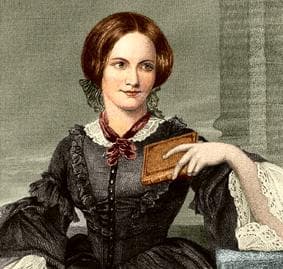
Charlotte Brontë was an English novelist and poet, the eldest of the three Brontë sisters who survived into adulthood and whose novels became classics of English literature.







