“Oh, my dear, I'm simply thrilled to be going to a party. I haven't been to a party for simply ages.”
— Early in the novel, before a major party, highlighting the characters' socialite nature.

Evelyn Waugh (1930)
Genre
Literary Fiction
Reading Time
360 min
Key Themes
See below
Sign in to track this book
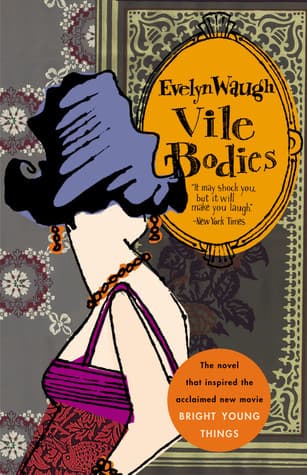
After World War I, a generation of young people navigates Mayfair's ballrooms and reckless parties, using their pursuit of pleasure as a fragile shield against a changing world.
The novel begins with Adam Fenwick-Symes, a struggling writer, returning to England on a ferry. He shares a cabin with Father Rothschild, a Jesuit, and Lord Metroland, a minor peer. At Dover, customs officials confiscate Adam's autobiography manuscript, which he hoped to sell to afford marriage to Nina Blount, calling it obscene. This immediate problem shows Adam's ongoing money troubles and sets a tone of chaotic bad luck that follows him.
Adam proposes to Nina Blount, his on-again, off-again fiancée, who accepts despite his constant poverty. Their engagement is a recurring theme, always depending on Adam getting enough money. Nina's father, Colonel Blount, is wealthy but often forgets Adam and their engagement. Adam tries various ways to earn money, including writing for the 'Daily Excess' gossip column as 'Mr. Chatterbox' and later for 'The Twentieth-Century,' a more intellectual magazine. These jobs are often unstable or brief, reflecting the uncertain financial state of many Bright Young Things.
Adam, Nina, and their friends—including Miles Malpractice, Agatha Runcible, and Simon Balcairn—immerse themselves in the social scene of 1920s Mayfair. They attend many lavish parties, often fueled by alcohol and marked by reckless behavior, costumes, and general wildness. These gatherings are less about real connection and more about excitement, spectacle, and avoiding boredom. The parties serve as a setting for their aimless lives and superficial interactions, with gossip and short-lived alliances dominating.
Adam and his friends are invited to a weekend party at the Chisholms' country estate. The event quickly devolves into typical Bright Young Things chaos, with excessive drinking, ill-advised pranks, and a general disregard for social rules. Agatha Runcible causes a significant disturbance. The weekend ends in scandal and embarrassment for the hosts, showing the group's destructive and self-indulgent activities, which often cause disruption without serious consequences for themselves.
Adam unexpectedly receives a telegram saying he has inherited £1000. Believing this is his long-awaited financial solution, he tells Nina and plans their marriage. However, the inheritance is a mistake; the money was for another Adam Symes. Colonel Blount, in one of his memory lapses, had written a check for £1000, which Nina then gave to Adam. When the error is found, Adam must return the money, crushing his hopes and further delaying his marriage to Nina. This highlights the arbitrary nature of their financial struggles.
As Adam's money prospects remain poor, Nina starts to consider other men who have the wealth Adam lacks. She is pursued by Ginger Littlejohn, a dull but rich young man, and later by Lord Metroland, a more established figure. Nina's practical view of marriage, driven by a desire for security, contrasts with Adam's romantic but impractical goals. Her willingness to consider other suitors shows the transactional nature of relationships in their social class and the pressure on women to marry well.
Agatha Runcible, in a daring stunt, decides to enter a dangerous motor race disguised as a male driver. Her reckless driving and the sport's inherent dangers lead to a horrific accident. Agatha dies in the crash, a sudden end for one of the most lively characters. Her death reminds readers of the nihilism and self-destructive tendencies beneath the glittering surface of the Bright Young Things' lives, bringing a moment of tragedy amid the satire and absurdity.
After various setbacks and increasing despair, Adam finds himself again writing for the 'Daily Excess' under his 'Mr. Chatterbox' pseudonym. The work is unfulfilling and morally compromising, as he invents scandalous stories about his friends. This return to the gossip column symbolizes Adam's inability to escape his superficial world and his growing disappointment with his own life and his peers. The newspaper's sensationalism reflects the public's desire for scandal and the group's role in their own commodification.
Facing ongoing financial instability with Adam, Nina makes the practical choice to marry Ginger Littlejohn, a wealthy but uninteresting man. Her marriage marks the end of her romantic involvement with Adam and his hopes of marrying her. This event changes Adam's life, as he loses the main object of his affection and the reason for his attempts to earn money. Nina's choice highlights the reality that love alone cannot sustain relationships in their financially driven world, and social expectations often outweigh personal desires.
The novel ends with the backdrop of an approaching global war. The frivolous parties and carefree lives of the Bright Young Things are suddenly overshadowed by the grim reality of conflict. Adam, now a soldier, finds himself in a desolate, war-torn landscape, sharing champagne with a General. The final scenes show a world completely changed, where the pleasure-seeking of the previous decade seems like a distant, irrelevant dream. The war ends their era of youthful indulgence, forcing a sober look at a much harsher reality.
The Protagonist
Adam begins with hopeful aspirations for marriage and financial stability but ends up a disillusioned soldier, his youthful dreams shattered by the realities of war and his own lack of agency.
The Supporting
Nina starts as Adam's hopeful fiancée but eventually marries a wealthy, dull man, choosing security over love, thus adapting to the harsh realities of her world.
The Supporting
Colonel Blount remains consistently eccentric and forgetful throughout the novel, serving as a static comedic and plot device.
The Supporting
Agatha's arc is one of escalating recklessness, ending abruptly and tragically, serving as a stark warning about the consequences of their decadent lifestyle.
The Supporting
Simon remains a consistently cynical and exploitative figure, thriving on the scandals of others.
The Supporting
Miles remains largely static, a symbol of the unchanging frivolousness of the wealthy elite until the war's end.
The Supporting
Father Rothschild remains a consistent voice of wisdom and observation, his presence highlighting the spiritual void of the main characters.
The Supporting
Ginger begins as a background suitor and rises to become Nina's husband, symbolizing the pragmatic choices made in the absence of true passion.
The novel shows the superficiality, pleasure-seeking, and ultimate emptiness of the 'Bright Young Things' lives in 1920s Mayfair. Their existence is a cycle of parties, gossip, and fleeting sensations, without real purpose or connection. Characters like Adam, Nina, and Agatha Runcible constantly escape reality through promiscuity, drinking, or reckless stunts, all to avoid facing the void beneath their glittering surface. The constant pursuit of pleasure leads to disappointment and tragedy, as seen in Agatha's death and Adam's final despair.
“''Oh, Adam, when will you learn that the world is a place of infinite woe?'”
Waugh subtly includes a sense of coming disaster, reflecting post-World War I disillusionment and hinting at another global conflict. The Bright Young Things' frivolity contrasts with the world's underlying instability. Father Rothschild's cryptic warnings and the eventual outbreak of war in the novel's final scenes emphasize this theme. The characters' inability to adapt or find meaning beyond their self-indulgent lives suggests a broader societal decay, where old values have collapsed and no new ones have emerged.
“''The world was just getting ready for another of its periodical big bust-ups.'”
A main conflict in the novel involves Adam and Nina's engagement, which is always stopped by Adam's lack of money. Their love, though present, is not enough to overcome the practical demands of their society. Nina's eventual marriage to the wealthy Ginger Littlejohn, despite his dullness, highlights the transactional nature of relationships and the societal pressure to marry for financial security rather than affection. This theme shows the economic realities that affect even the most seemingly frivolous social circles, demonstrating how money dictates personal choices and happiness.
“''Oh, Adam, when will you learn that one can't live on love?'”
The novel examines the growing role of media, especially gossip columns, in shaping and distorting public perception. Adam's work as 'Mr. Chatterbox' for the 'Daily Excess' shows how journalists exploit and invent stories about the people they socialize with. This theme highlights the superficiality of fame and the blurred lines between public and private life in the age of mass media. The Bright Young Things themselves contribute to this, often performing for cameras and seeking notoriety, creating a cycle of sensationalism.
“''They weren't people any more. They were just names, and the names were the important thing.'”
The 'Bright Young Things' begin with a mix of innocence and sophistication, but their journey ends with lost idealism. The relentless pursuit of pleasure and the superficiality of their lives gradually erase any real joy or hope. Adam's initial optimism about marrying Nina turns into cynicism and despair. The tragic death of Agatha Runcible, one of the most 'bright' of the young things, symbolizes the cost of their reckless abandon and the end of their carefree youth, replaced by the grim realities of war.
“''Masked and unmasked, they moved in a tinsel world.'”
A recurring false hope for Adam's financial salvation.
The 'inheritance' Adam receives is a significant plot device. It functions as a tantalizing but ultimately false promise of financial stability, repeatedly raising Adam's hopes for marriage to Nina only to cruelly dash them. This device emphasizes Adam's perpetual penury and the arbitrary, chaotic nature of the world he inhabits. It also highlights the theme of money as the primary barrier to his happiness, reinforcing the idea that love alone is insufficient in their materialistic society.
A satirical representation of media exploitation and social commentary.
The 'Daily Excess' and Adam's role as 'Mr. Chatterbox' serve as a critical plot device. It allows Waugh to satirize the sensationalist press and the public's insatiable appetite for gossip about the upper classes. It also forces Adam into a morally ambiguous position, writing about his friends and exacerbating their superficiality. This device directly comments on the theme of media's influence and the commodification of private lives, while also illustrating Adam's own moral compromises in his struggle for survival.
A source of comedic absurdity and plot complications.
Colonel Blount's chronic forgetfulness is a recurring comedic device that also drives several plot points. His inability to remember Adam, Nina's engagement, or even basic facts about his own life creates absurd situations and contributes to Adam's frustration. It symbolizes the detachment and eccentricity of the older, wealthy generation, highlighting a disconnect from reality. This device also serves to emphasize the precariousness of Adam's position, as his future often depends on the whim of a man who can barely remember his name.
A looming threat that eventually shatters the characters' frivolous world.
The subtle and then overt references to an approaching war function as a powerful plot device. Initially, it's a distant, almost abstract threat, contrasting sharply with the characters' immediate concerns of parties and gossip. As the novel progresses, the war becomes more imminent, ultimately transforming their world entirely. It serves as a stark external force that brings an abrupt end to the era of the Bright Young Things, forcing a confrontation with reality and providing a somber, definitive conclusion to their aimless existence.
“Oh, my dear, I'm simply thrilled to be going to a party. I haven't been to a party for simply ages.”
— Early in the novel, before a major party, highlighting the characters' socialite nature.
“The world, in fact, was like a vintage champagne that had lost its fizz.”
— A description of the general atmosphere of disillusionment and decline in post-WWI England.
“All that was left was the last, most desperate resource: to be amused.”
— Reflecting the characters' pursuit of superficial pleasure amidst a lack of deeper meaning.
“It was a time of change, of experiment, of general topsy-turviness.”
— A general observation about the chaotic and shifting nature of the era depicted.
“Masked parties, Savage parties, Victorian parties, Greek parties, Russian parties, Frolics, Fun-Fairs, Fancy-Dress, no one had been to bed for a week.”
— A vivid description of the relentless and extravagant party culture of the Bright Young People.
“The world was not a stage, but a film set.”
— A commentary on the performative and artificial nature of society and the characters' lives.
“She took a long time to die, and when she did, nobody noticed.”
— A grim and cynical observation about the indifference of society to individual suffering.
“The trouble with you, my dear, is that you are quite, quite mad.”
— A character's exasperated remark, highlighting the eccentric and often irrational behavior of the social set.
“It was a sad business, really, this business of being young.”
— A poignant reflection on the challenges and superficiality of youth in that era.
“Everything was getting faster and faster, and more and more complicated.”
— A comment on the accelerating pace of life and increasing complexity of the modern world.
“They were all in the same boat, drifting aimlessly, with no rudder and no destination.”
— A metaphor for the lack of purpose and direction among the characters.
“The past was a foreign country; they did things differently there.”
— While more famously associated with L.P. Hartley, a similar sentiment of detachment from previous eras runs through Waugh's portrayal of the modern age.
“No one seemed to be able to tell the difference between a joke and a serious statement.”
— Highlighting the blurring of lines between frivolity and gravity in the characters' interactions.
“And then, quite suddenly, the lights went out.”
— The very final line of the novel, a stark and abrupt end, signifying the collapse of their world into war.
Ready to see how well you understood this book? Take our interactive quiz with 10 questions.
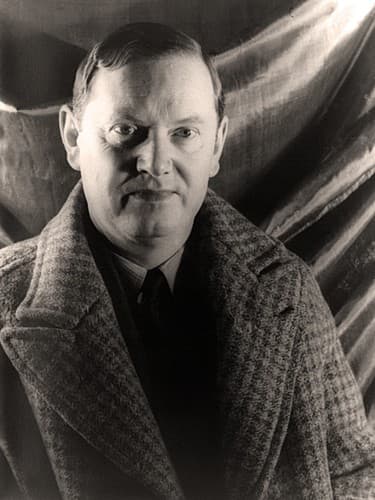
Arthur Evelyn St. John Waugh was an English writer of novels, biographies, and travel books; he was also a prolific journalist and book reviewer. His most famous works include the early satires Decline and Fall (1928) and A Handful of Dust (1934), the novel Brideshead Revisited (1945), and the Second World War trilogy Sword of Honour (1952–1961). He is recognised as one of the great prose stylists of the English language in the 20th century.







