“Youth! Youth! When I was young, I believed that everything I desired would be mine, and now I have learned that the world is a different place.”
— Johannes reflecting on his past aspirations and the realities of life.

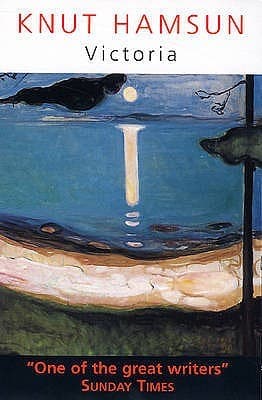
Knut Hamsun (1898)
Genre
Literary Fiction / Historical Fiction / Romance
Reading Time
120 min
Key Themes
See below
Sign in to track this book
Johannes and Victoria, childhood sweethearts from different social classes, are kept apart by duty and circumstance, their enduring love only revealed in Victoria's dying confession.
The story begins with Johannes, the miller's son, remembering his childhood summers near Victoria's family castle. Despite their different social positions, Johannes and Victoria form a deep, unspoken bond. They play in the woods and by the lake, and Johannes is taken with Victoria's beauty. These early times set the stage for their lifelong connection, though the large social gap between them is already clear. Johannes often brings Victoria flowers and writes her poems, signs of his growing love, which Victoria seems to return subtly, though she is always aware of her family's expectations.
As they get older, Johannes focuses on poetry, finding his voice and some fame, while Victoria stays in her aristocratic world. Driven by his love, Johannes eventually proposes to Victoria. However, Victoria's father, the stern Lord, immediately rejects Johannes, citing his low status and lack of wealth as impossible problems. He makes it clear that Victoria must marry someone who can help her family financially and socially. This rejection deeply hurts Johannes and shows him the rigid social barriers that separate them.
The Lord's estate is in serious financial trouble, close to bankruptcy. To save their fortune and reputation, Victoria's father arranges for her to marry Otto, a wealthy and influential lieutenant from a prominent family. Otto is in love with Victoria. Victoria, though still attached to Johannes, feels great pressure from her family to agree, understanding the severe consequences if she refuses. This situation puts Victoria in a terrible position, torn between her heart and her family duty.
Victoria, wanting to tell Johannes her true feelings despite her engagement to Otto, sends him a coded message with a bouquet of flowers. Johannes, however, misunderstands her gesture as a final rejection. In despair, he publicly shows his pain, further pushing Victoria away and confirming that their love is impossible. This miscommunication, caused by their inability to speak openly and by social rules, becomes a key turning point, separating them further and deepening their tragedy. Johannes's emotional display only confirms the Lord's negative view of him.
Victoria, feeling trapped and believing Johannes has moved on, formally accepts Otto's proposal. The engagement is celebrated. Meanwhile, a heartbroken Johannes, seeking comfort or a way to forget Victoria, briefly gets engaged to Camilla, a kind girl from a simpler background. This engagement is short-lived, as Johannes cannot truly love Camilla, his heart still bound to Victoria. These parallel engagements show how both characters try to live without each other, yet highlight their lasting, unrequited love.
Tragedy strikes when Otto, Victoria's fiancé, dies in a hunting accident. His sudden death frees Victoria from the arranged marriage and, for a short time, creates a chance for her and Johannes. Johannes, hearing the news, feels a new hope, believing fate might finally bring them together. However, the emotional impact of Otto's death and the continuing social expectations still weigh heavily on Victoria. This event, while seeming positive, becomes another obstacle, as the characters struggle to balance their desires with their circumstances.
Soon after Otto's death, Victoria's younger brother, Henrik, becomes very ill. The family's financial problems continue, and the cost of his medical care becomes a huge burden. To save her brother and her family's future, Victoria makes another sacrifice. She agrees to marry a wealthy, older man, a Baron, who can pay for Henrik's treatment and protect her family from ruin. This decision, made out of love for her family, again forces Victoria to give up her own happiness and any potential future with Johannes, solidifying her role as a self-sacrificing person.
While Victoria makes her sacrifices, Johannes's writing career thrives. He gains wide recognition and praise for his poetry, becoming a celebrated figure. His success brings him wealth and social standing, the very things that first kept him from Victoria. However, despite his public triumphs, Johannes remains deeply unhappy. His poetry, though beautiful, often has a deep sadness, reflecting his lasting love for Victoria and the pain of their separation. His external success sharply contrasts with his inner emotional emptiness.
Years pass, and Victoria, now married to the Baron, becomes gravely ill. On her deathbed, she finally expresses her true feelings for Johannes. She writes a moving letter, confessing that she has loved him her entire life, despite all obstacles and separations. She explains her choices, especially her sacrifices for her family, and expresses regret for the life they could not share. This letter is her last attempt to tell Johannes the truth of her heart, a truth suppressed for so long.
Johannes receives Victoria's letter after her death. Reading her words, he is overwhelmed with deep grief and painful understanding. The letter clears up all misunderstandings, reveals her sacrifices, and confirms the depth of her lasting love for him. He realizes that Victoria loved him as deeply as he loved her, and that their separation was not due to a lack of feeling on her part, but rather to cruel fate and social pressures. This revelation, while bringing clarity, also brings unbearable despair, as he finally understands what they lost, forever.
After Victoria's death and receiving her letter, Johannes feels a deep sense of loss. He continues his life as a celebrated poet, but his personal world remains sad. The knowledge of Victoria's unwavering love, revealed too late, only increases his sorrow. He dedicates his remaining years to his art, his poetry becoming a tribute to their lost love. The story ends with Johannes living a solitary life, forever tied to Victoria's memory and the 'what ifs' of a love that was never fully realized, showing the tragic power of circumstance and social rules.
The Protagonist
From a hopeful, budding poet, Johannes evolves into a celebrated but ultimately heartbroken artist, forever marked by his lost love.
The Protagonist
Victoria transforms from a carefree child into a self-sacrificing woman, her life a series of choices dictated by duty rather than desire, culminating in a posthumous confession of her true love.
The Antagonist/Supporting
Remains largely static, his pride and financial concerns dictating his actions throughout the story.
The Supporting
Serves as a temporary obstacle to the main characters' love story, removed by an accident.
The Supporting
Appears briefly as a potential romantic interest for Johannes, highlighting his inability to move on from Victoria.
The Mentioned/Supporting
His illness is a catalyst for Victoria's final, most significant sacrifice.
The Mentioned/Supporting
Serves as the final, tragic destination for Victoria's life path, illustrating her complete sacrifice.
The main theme is the tragic, unfulfilled love between Johannes and Victoria, constantly blocked by outside events and their inability to talk openly. Victoria sacrifices much, marrying Otto for her family's finances and the Baron for Henrik's medical care, all while secretly loving Johannes. Johannes, in turn, sacrifices his immediate happiness by staying devoted to Victoria. Their love, though deep, is continually given up for duty, social standing, and money, as Victoria's final letter shows with her suppressed feelings.
“Oh, had it been possible! But it was not possible. There were powers at work stronger than love.”
The novel clearly shows the rigid social classes of the time and how they shaped individual lives. Johannes, the miller's son, despite his talent and eventual fame, is initially considered unworthy of Victoria because of his birth. Victoria, a noblewoman, is bound by her family's need to keep up appearances and financial stability, forcing her into marriages of convenience rather than love. The Lord, Victoria's father, embodies this theme, putting family status and wealth above his daughter's happiness. The impossible gap between their social classes dictates their choices and ultimately prevents their union, showing how social structures can crush personal desires.
“A miller's son and a noble's daughter – it was not to be.”
A repeated element in the story is Johannes and Victoria's failure to openly communicate their true feelings. Victoria's attempts to signal her love, like the coded flower bouquet, are misunderstood by Johannes. His public displays of despair are, in turn, seen by Victoria as final rejections or signs of instability. This constant misreading of intentions, combined with their inability to overcome social barriers and speak plainly, leads to many missed chances for reconciliation. The truth only comes out in Victoria's deathbed letter, a moving and devastating revelation that arrives too late to change their fate, highlighting the destructive power of unspoken words.
“We did not understand each other, we poor, foolish children.”
The novel is filled with memory and nostalgia, especially through Johannes's recollections of his childhood with Victoria. These cherished memories of ideal summers and innocent affection contrast sharply with the harsh realities of their adult lives. Johannes often revisits these moments, holding onto them as proof of their lasting bond, even as their current situations drive them apart. The past is idealized, representing a time when their love seemed possible and free from social constraints. This constant interplay between the beautiful past and the tragic present increases the sense of loss and the deep sadness that fills the story.
“Our childhood, Victoria, it was like a dream, a poem, a song.”
Characters who highlight the protagonists' traits by contrast.
Camilla and Otto serve as foil characters. Camilla, a simple and kind girl, highlights Johannes's profound and singular devotion to Victoria, as he cannot truly love anyone else. Otto, a wealthy and 'suitable' suitor, underscores Victoria's forced sacrifices and the societal pressures she faces, as she must choose duty over her heart's desire. These characters exist not as fully developed individuals but to illuminate the depths of the protagonists' true feelings and the external forces acting upon them.
Flowers as a subtle means of communication and a symbol of their fragile love.
Flowers are used throughout the novel, particularly by Johannes, as a symbolic language to express his unspoken love for Victoria. The bouquet Victoria sends to Johannes, with its specific arrangement, is intended as a coded message of her enduring affection. However, Johannes misinterprets it, turning a symbol of hope into one of despair. This device highlights their miscommunication and the fragility of their love, which, like the flowers, is beautiful but easily crushed and misunderstood in the harsh light of reality. They represent the purity of their feelings, often tainted by external circumstances.
A posthumous revelation that clarifies all misunderstandings, but too late.
Victoria's deathbed letter is a crucial plot device, serving as the ultimate revelation of her true feelings and the reasons behind her actions. It retrospectively clarifies all the misunderstandings and perceived rejections, transforming Victoria from a seemingly aloof figure into a deeply loving and self-sacrificing one. This device creates a powerful sense of tragic irony, as the truth of their mutual love is only fully understood by Johannes after Victoria's death, ensuring their love remains eternally unfulfilled in life. It delivers catharsis but also profound, unchangeable sorrow.
The rigid class structure of society as the primary antagonist.
The overarching 'plot device' or structural element is the pervasive and unyielding social class system of the period. It acts as the primary antagonist, constantly thwarting the love between Johannes and Victoria. It dictates Victoria's arranged marriages, the Lord's rejection of Johannes, and the very perception of their suitability for one another. It's not a single character but an entire societal construct that separates them, demonstrating how external forces can dictate personal destinies and ensure tragic outcomes. This device emphasizes the novel's commentary on societal constraints versus individual desire.
“Youth! Youth! When I was young, I believed that everything I desired would be mine, and now I have learned that the world is a different place.”
— Johannes reflecting on his past aspirations and the realities of life.
“The human heart is an ocean, full of secrets and storms.”
— A general observation on the complexity of human emotions.
“Love is like a forest fire, consuming everything in its path, leaving only ashes and memories.”
— Johannes's poetic description of the destructive power of love.
“One must live and die for one's dream, even if the dream is a lie.”
— A character's strong conviction about pursuing their ideals.
“There are wounds that time can never heal, only cover with a thin skin of forgetfulness.”
— A reflection on enduring pain and the superficiality of healing.
“Happiness is a brief moment, a fleeting butterfly, that one must catch quickly before it flies away.”
— A character's perspective on the ephemeral nature of happiness.
“The greatest sorrow is to love without hope.”
— Johannes expressing his profound despair over unrequited love.
“Life is a journey from illusion to disillusion.”
— A philosophical statement about the progression of life experiences.
“A poet's heart is a garden where all flowers bloom, even the poisonous ones.”
— Description of the poet's sensitivity and capacity for both beauty and pain.
“The world spins and spins, and we with it, until we become dizzy and fall.”
— A metaphorical reflection on the relentless pace of life and human vulnerability.
“Sometimes, silence speaks louder than any words.”
— An observation on unspoken emotions and their power.
“We are all prisoners of our own desires.”
— A general statement about the human condition and internal struggles.
“To be young is to be full of dreams, to be old is to be full of memories.”
— A contrast between the aspirations of youth and the reflections of old age.
“There is a kind of beauty in sorrow, a deep, resonant chord that only the suffering can hear.”
— A poetic take on finding meaning or depth in sadness.
Ready to see how well you understood this book? Take our interactive quiz with 10 questions.
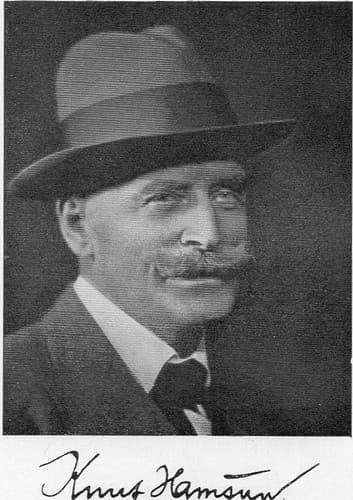
Knut Hamsun was a Norwegian writer who was awarded the Nobel Prize in Literature in 1920. Hamsun's work spans more than 70 years and shows variation with regard to consciousness, subject, perspective and environment. He published more than 20 novels, a collection of poetry, some short stories and plays, a travelogue, works of non-fiction and some essays.







