“I'm not a person who believes in fate. But I'm also not a person who believes in coincidences.”
— Lowen reflects on her unexpected meeting with Jeremy and the opportunity to ghostwrite for Verity.

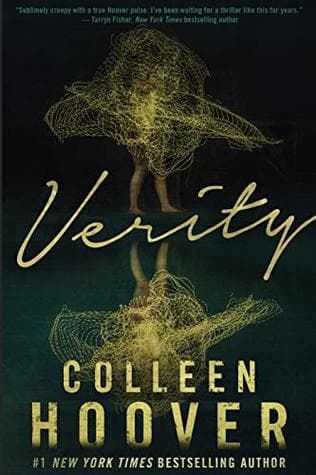
Colleen Hoover (2018)
Genre
Thriller / Mystery / Romance
Reading Time
6-8 hours
Key Themes
See below
Sign in to track this book
A writer ghostwriting for an injured author finds a chilling autobiography that blurs truth and manipulation, forcing a choice between love and a devastating secret.
Lowen Ashleigh, a struggling writer facing eviction, has an awkward encounter with Jeremy Crawford at a publishing meeting. Soon after, Jeremy offers her a job: to complete the remaining books in his wife Verity Crawford's bestselling series. Verity, a famous author, is unable to write after a car accident. Lowen is hesitant but needs the money. Jeremy explains that Verity's agent, Corey, recommended Lowen after reading one of her lesser-known works. Lowen accepts the generous offer, which requires her to move into the Crawford home in Vermont to sort through Verity's notes and manuscripts.
Lowen arrives at the large, isolated Crawford estate. Jeremy and their young son, Crew, greet her. She immediately notices the house's eerie atmosphere and the strong sense of grief. Jeremy shows her to her room and explains Verity's condition: she is in a vegetative state, needs constant care, and stays in a special room. Lowen feels an immediate, complex attraction to Jeremy. She also meets Verity, who appears unresponsive, though Lowen feels uneasy around her motionless form. Lowen begins to settle in, preparing to start work in Verity's chaotic office.
Lowen begins the task of organizing Verity's office, a room filled with papers, notebooks, and files. Her goal is to find outlines and notes for Verity's unfinished series. While going through a box of personal belongings, Lowen finds a hidden, red leather-bound manuscript titled 'Soledad.' It is an autobiography, not fiction, written by Verity. Lowen's curiosity grows, and she starts reading, quickly realizing it is no ordinary memoir. The content is disturbing, detailing Verity's dark thoughts, her twisted view of motherhood, and her admissions about her deceased daughters, Harper and Chastin.
As Lowen reads 'Soledad,' she is horrified by Verity's detailed account of her daughter Harper's death. Verity describes how Harper, a lively and difficult child, became a source of intense frustration. The manuscript details Verity's resentment towards Harper, her feelings of being overwhelmed, and a shocking admission that she intentionally allowed Harper to drown during a swimming lesson. Verity's writing shows a cold, calculating mother who saw her child as an obstacle to her career and relationship with Jeremy. Lowen is sickened by the confession, struggling to see the famous author as the monster described.
The autobiography continues to reveal Verity's depravity, moving to the death of her other daughter, Chastin. Verity recounts how Chastin, a seemingly healthy child, suddenly died from an allergic reaction to nuts. However, Verity's narrative hints at a more sinister truth. She describes deliberately exposing Chastin to nuts, knowing her severe allergy, wanting to remove another 'obstacle' from her life. Lowen is aghast, realizing that Verity is confessing to the murder of both her children. The manuscript portrays Verity as a psychopath, lacking maternal affection and consumed by a twisted sense of self-preservation.
Lowen is conflicted. She feels a growing attraction to Jeremy, an innocent man grieving his children and his wife, unaware of Verity's secrets. At the same time, her observations of Verity's seemingly comatose state raise questions. Lowen glimpses what she thinks are Verity's eyes following her, or subtle movements too deliberate for someone in a vegetative state. The line between Verity's written confessions and her current physical state blurs, making Lowen increasingly paranoid and suspicious. She struggles with whether to show the manuscript to Jeremy, knowing it would destroy him.
The tension in the house becomes too much for Lowen. After a disturbing incident where she believes Verity is trying to harm her or Crew, Lowen decides to show Jeremy the autobiography. She can no longer bear Verity's secrets, especially with Crew, the last surviving child, in the house. Jeremy is first disbelieving, then devastated as he reads the chilling confessions. His grief turns to horror and rage as he faces the truth about his wife and his daughters' deaths. The revelations shatter his world and his view of Verity.
With the autobiography's knowledge, Jeremy confronts Verity. The scene is tense and emotional. Verity, seemingly incapacitated, is in her bed. Jeremy, consumed by fury and betrayal, believes the manuscript is true. In a fit of rage and a desperate attempt to protect Crew and Lowen, Jeremy smothers Verity, ending her life. Lowen witnesses this act, a silent accomplice, believing it a justifiable response to Verity's deeds. They cover up the murder, making it look like Verity's condition simply worsened, and she passed away peacefully.
With Verity 'gone,' Lowen and Jeremy begin a new life together, raising Crew. They find solace and love, trying to move past the past's trauma. Lowen finishes the ghostwriting project, and her relationship with Jeremy deepens. However, months later, while packing Verity's belongings to clear the house, Lowen finds a hidden letter in a secret compartment of Verity's old desk. This letter, written by Verity, challenges the entire autobiography's narrative, presenting an alternative, horrifying truth.
The letter, written by Verity, completely changes Lowen's understanding of events. In it, Verity claims the autobiography, 'Soledad,' was a writing exercise, a fictional story to explore a villain's mind, not a true confession. She alleges that Jeremy was abusive and controlling, and that he harmed their children. Verity claims her 'incapacitated' state was a ruse to protect herself and Crew from Jeremy, and that she was trying to communicate this to Lowen. The letter suggests Jeremy staged the car accident and was slowly poisoning her, making her appear ill. Lowen is in shock, questioning everything she believed and the man she loves.
Lowen now faces two irreconcilable stories: the chilling autobiography implicating Verity as a child murderer, and Verity's letter claiming the autobiography was fiction and Jeremy is the true psychopath. The letter implies that Jeremy was manipulating Lowen all along, using her to get rid of Verity. Lowen is left in confusion and paranoia, unable to tell which version of the truth is real. The book ends with Lowen choosing to burn Verity's letter, burying the second truth and protecting her relationship with Jeremy, but forever haunted by the possibility she made the wrong choice and is now with a dangerous man.
The Protagonist
Lowen transforms from a passive observer to an active participant in the Crawford family's tragic narrative, ultimately making a morally ambiguous decision to protect her new life.
The Love Interest / Antagonist (potentially)
Jeremy's character shifts from a sympathetic widower to a man capable of murder, leaving his true moral alignment ambiguous by the story's end.
The Antagonist / Victim (potentially)
Verity's character arc is a descent into moral ambiguity, as her actions and motivations are constantly reinterpreted, ultimately leaving her true role unresolved.
The Supporting
Crew remains a constant, innocent figure, representing the hope for a future free from the past's darkness.
The Mentioned
Harper's story is static, serving as a catalyst for the plot's dark revelations.
The Mentioned
Chastin's story is static, serving as a further catalyst for the plot's dark revelations.
The Supporting
Corey's role is functional, initiating the central conflict without significant personal development.
The novel challenges the reader's perception of truth, especially through the conflicting stories in Verity's autobiography and her final letter. Lowen, and the reader, must question which story is real, if either, and how much is made up for personal gain or protection. This theme appears in Lowen's struggle to believe Verity's confessions, her observations of Verity's 'vegetative' state, and the ambiguous ending, where two plausible but contradictory truths exist. The story shows how easily truth can be manipulated and how perception shapes reality, particularly when emotions and self-preservation are involved.
“What Verity wrote in that manuscript was not a confession. It was a practice.”
A central and disturbing theme is the perversion or absence of maternal love. Verity's autobiography details her resentment, disdain, and alleged murderous intent towards her own children, Harper and Chastin. This contrasts sharply with the societal expectation of a mother's unconditional love. The novel explores the darkest aspects of motherhood, showing a character who sees her children as obstacles. Lowen, by contrast, feels a protective instinct towards Crew, highlighting the range of maternal feelings. This theme makes readers consider the psychological complexities of parenthood and the potential for evil within family structures.
“I didn't want to be a mother. I wanted to be a writer. And the two could not coexist.”
The entire plot relies on the power of narrative, specifically Verity's written words. The autobiography 'Soledad' drives the plot, shaping Lowen's view of Verity. It shows how a written account, regardless of its factual basis, can influence beliefs and actions. The twist at the end, with Verity's letter claiming 'Soledad' was fiction, reinforces this. It demonstrates that narratives can be crafted to manipulate, persuade, and deceive, making the reader question any story's reliability, even one presented as truth. Writing itself becomes a weapon or a shield.
“I was writing a villain. And the only way to write a good villain is to fully understand their perspective.”
Obsession appears in several ways: Lowen's growing obsession with Verity's manuscript and Jeremy, Jeremy's obsession with avenging his daughters, and Verity's alleged obsession with her career and control. Lowen's moral compass is tested as she gets caught in the Crawford family's secrets. She grapples with the ethical dilemma of revealing the manuscript, the implications for Jeremy and Crew, and her developing feelings for Jeremy. The novel explores how extreme circumstances and personal desires can blur moral lines, leading characters to make choices they might otherwise find unthinkable, such as concealing a murder or hiding a potentially exonerating letter.
“I felt like an intruder, but I also felt like a detective, piecing together a crime.”
A hidden manuscript that reveals chilling confessions and drives the plot.
This is the central plot device. Lowen's discovery of 'Soledad' is the inciting incident that transforms the story from a simple ghostwriting job into a psychological thriller. The manuscript functions as Verity's voice, directly conveying her darkest thoughts and alleged crimes. It provides exposition, creates suspense, and serves as the primary source of conflict and moral dilemma for Lowen. The eventual revelation that it might be a fictional exercise completely reshapes the narrative, making it a powerful tool for ambiguity and misdirection.
Verity's apparent incapacitation creates an eerie presence and allows for manipulation.
Verity's physical condition is a crucial plot device. It renders her unable to speak or defend herself, making her a silent, unsettling presence in the house. This state allows Lowen to observe her without direct interaction, leading to growing suspicions about her true condition. It also creates a power imbalance, making Jeremy and Lowen feel safe in discussing and acting upon the autobiography's contents, believing Verity is harmless. The ambiguity of her condition (is she truly incapacitated or faking?) is a source of suspense and ultimately central to the story's twist.
A final letter that introduces an alternative truth, leaving the ultimate villain ambiguous.
Verity's letter, discovered by Lowen at the very end, is a classic twist device that recontextualizes the entire story. It functions as an unreliable narrator's final attempt to control the narrative, offering a completely different version of events where Jeremy is the true villain and 'Soledad' was a fictional exercise. This device ensures an ambiguous ending, leaving the reader to decide which truth to believe and challenging their perception of the characters. It elevates the thriller aspect by creating profound doubt and moral uncertainty.
The use of multiple, potentially untrustworthy perspectives to tell the story.
While Lowen is the primary narrator, the story heavily relies on the unreliable narration of Verity through her autobiography and later her letter. Each character presents their version of events, often contradicting the others. Verity's manuscript might be a confession or a fictional exercise, and her letter might be a genuine plea or a final act of manipulation. Lowen herself could be seen as unreliable due to her emotional involvement and her decision to burn the letter. This device forces the reader to actively interpret the evidence and decide what is true, creating a profound sense of psychological suspense and moral ambiguity.
“I'm not a person who believes in fate. But I'm also not a person who believes in coincidences.”
— Lowen reflects on her unexpected meeting with Jeremy and the opportunity to ghostwrite for Verity.
“The only way to truly know a person is to live with them.”
— Lowen considers the intimate insights she gains into Verity's life through her autobiography.
“Some people are just born to be destroyers. And some people are just born to be destroyed.”
— A chilling thought Lowen has while reading Verity's manuscript and piecing together the events.
“What you don't know can't hurt you. Unless what you don't know is literally killing people.”
— Lowen grapples with the dangerous secrets she uncovers in Verity's writings.
“It's a strange thing, to feel like you're falling in love with a man who is still in love with his dead wife.”
— Lowen's internal conflict as her feelings for Jeremy grow, despite his lingering grief for Verity.
“Evil isn't born, it's taught. Or, in some cases, it's a choice.”
— Lowen's musings on Verity's potential malevolence.
“There are people who are good at faking it, and then there are people who are good at not faking it.”
— Lowen's struggle to discern truth from fiction in Verity's manuscript.
“The mind is a powerful thing. It can make you believe anything.”
— Lowen's thoughts on the psychological manipulation and self-deception present in the story.
“I think the scariest thing about a person is the unknown. The parts of them you don't see.”
— Lowen reflects on the hidden depths and dark sides of people, particularly Verity.
“Love isn't always pretty. Sometimes you have to get your hands dirty.”
— A dark sentiment that could apply to the extreme actions taken by characters in the name of love.
“Sometimes, the best way to get over someone is to get under someone else.”
— A pragmatic, albeit cynical, thought about moving on from past relationships.
“I learned a long time ago that the most dangerous people are the ones who don't look dangerous.”
— Lowen's realization about the deceptive appearances of characters in the story.
“There are two sides to every story, and then there's the truth.”
— Lowen's internal struggle to determine what truly happened amidst conflicting narratives.
“Fear can be a powerful motivator. It can make you do things you never thought you were capable of.”
— Lowen considering the extreme actions driven by fear within the plot.
Ready to see how well you understood this book? Take our interactive quiz with 10 questions.

Colleen Hoover is a prolific American author best known for her contemporary romance and young adult fiction. Her novels often explore complex emotional themes and relationships, resonating deeply with a large readership. Notable works include 'It Ends with Us', 'Verity', and 'Ugly Love', which have achieved widespread commercial success and bestseller status.







