“Beneath the city of Veniss, an entire world of fungal life flourished, a silent, unseen kingdom of spores and mycelium.”
— Describing the underground world beneath Veniss.

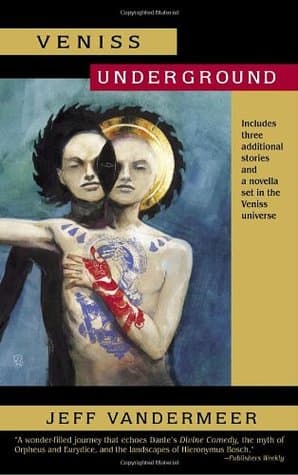
Jeff VanderMeer (2003)
Genre
Fantasy / Science Fiction
Reading Time
360 min
Key Themes
See below
Sign in to track this book
In the bioluminescent depths of Veniss, a city both wondrous and grotesque, a desperate artist, his searching twin, and her tormented lover descend into a spiraling nightmare of living art, parasitic gods, and body-altering fungi, all to reclaim what they've lost to the city's beautiful, horrifying embrace.
Nicholas, a troubled artist haunted by past failures and a strained relationship with his twin sister Nicola, finds himself drawn to the appealing and dangerous Veniss Underground. He believes that by immersing himself in its strange ecosystems and interacting with its unique inhabitants, particularly the enigmatic 'Grub,' he can achieve a new form of 'Living Art.' Ignoring warnings from Nicola and his own instincts, Nicholas makes a pact with the Grub, a powerful and manipulative entity. This deal involves a transformation, both physical and psychological, as Nicholas becomes more involved in the Grub's schemes and the dark, hallucinatory reality of the deep underground, losing his former self in the process.
Alarmed by Nicholas's sudden disappearance and the unsettling changes in his behavior before he vanished, Nicola begins a frantic search for her twin. Her quest leads her through the active, yet often unsettling, layers of Veniss, from the bustling surface markets to the decaying, forgotten districts. During her journey, she meets various strange characters and learns about the city's hidden histories, the power of its bio-engineered flora and fauna, and the widespread influence of entities like the Grub. Nicola's determination is fueled by her deep, complex bond with Nicholas, but also by a growing sense of dread about what he might have become or where he might be imprisoned.
Shadrach, Nicola's lover, is devastated by her sudden and unexplained disappearance, which occurs shortly after she began her search for Nicholas. He struggles with immense grief and a profound sense of loss, made worse by the lack of any clear explanation. Haunted by her memory and unable to accept her absence, Shadrach is eventually spurred into action. He learns of the deep underground and the rumors surrounding Nicholas's fate, realizing that Nicola must have followed her brother into this dangerous realm. His love for Nicola becomes his main motivation, compelling him to go on his own dangerous journey into the heart of Veniss Underground to bring her back.
Following fragmented clues and driven by a strong resolve, Shadrach descends into the deeper, more nightmarish levels of Veniss Underground. This journey is immediately full of danger, as the environment becomes increasingly alien and hostile. He navigates treacherous paths, encounters grotesque creatures, and witnesses the bizarre, often horrifying, results of the Grub's manipulations and experiments. Shadrach's initial encounters test his physical and mental strength, forcing him to adapt quickly to the strange logic and dangers of this subterranean world. He begins to understand the true scale of the threat that both Nicholas and Nicola have stumbled into.
As Shadrach goes deeper, he sees the full, horrifying extent of the Grub's influence. The Grub, a powerful and ancient entity, has twisted the natural world into a nightmarish ecosystem, creating sentient, bio-engineered beings and manipulating reality itself. Shadrach encounters creatures that are both beautiful and monstrous, often products of the Grub's 'art' or experiments. He learns that the Grub feeds on despair, ambition, and the very essence of those who make deals with it. This realization deepens his understanding of the danger Nicholas and Nicola are in, and the true nature of the entity he is up against.
Shadrach finds unsettling evidence of Nicholas's presence and transformation within the underground. He encounters beings or artistic manifestations that bear Nicholas's signature, but are distorted and corrupted by the Grub's influence. These encounters are often ambiguous, making it difficult for Shadrach to tell if Nicholas is a willing participant in the Grub's schemes or a captive, his identity taken over. The remnants of Nicholas's artistic aspirations are twisted into tools for the Grub, serving its dark purposes rather than true creation. This discovery fills Shadrach with both sorrow and a renewed urgency to find Nicola before she suffers a similar fate.
Nicola, having located Nicholas deep within the Grub's domain, finds him profoundly altered, almost unrecognizable. He is a shell of his former self, a puppet of the Grub, or perhaps even an integral part of its monstrous 'Living Art.' Despite her efforts, she is unable to free him or fully communicate with the person he once was. Nicola herself becomes trapped, resisting the Grub's attempts to absorb her and exploit her unique connection to Nicholas. She fights to maintain her identity and sanity amidst the overwhelming psychological and physical pressures of the underground, preparing for a confrontation or an opportunity to escape.
After enduring countless trials, Shadrach finally finds Nicola, deep within the Grub's central domain. Their reunion is bittersweet, overshadowed by the oppressive environment and the horrifying state of Nicholas. Nicola is relieved but weary, having barely held onto her sense of self. Shadrach's arrival offers a glimmer of hope, but they quickly realize that escaping the Grub's intricate trap will be even harder than finding each other. They must now combine their strengths and wits to navigate the final, most dangerous sections of the underground, with the Grub actively working to prevent their departure and reclaim its 'property.'
Shadrach and Nicola confront the Grub directly, or at least its central manifestation, in a climactic struggle for their freedom. The Grub shows the full extent of its power, its ancient intelligence, and its insidious desire to absorb and transform. The confrontation is less a physical battle and more a psychological and existential struggle, as the Grub tries to break their wills, exploit their weaknesses, and integrate them into its twisted ecosystem. Nicholas, in his altered state, may play a role in this confrontation, either as an obstacle or a tragic symbol of what they are fighting against. Their survival depends on their ability to resist its mental and emotional attacks.
Through cunning, resilience, and perhaps a desperate sacrifice or intervention, Shadrach and Nicola manage to break free from the Grub's domain and ascend back towards the surface of Veniss. Their escape is harrowing and costly, both physically and psychologically. While they may have escaped the Grub, the experience has profoundly changed them. The trauma of the underground, the loss of Nicholas, and the horrors they witnessed leave a lasting mark. They carry the scars of their journey, forever altered by their descent into the nightmarish heart of Veniss Underground, though their love endures.
The Supporting/Antagonist
From a disillusioned artist seeking inspiration, he transforms into a corrupted, almost unrecognizable entity, a tragic extension of the Grub's will.
The Protagonist
Transforms from a concerned sister into a hardened survivor, her love tested and strengthened by the horrors she endures.
The Protagonist
From a grieving lover, he becomes a heroic figure, his love for Nicola driving him through the most nightmarish landscapes.
The Antagonist
Remains a constant, powerful, and malevolent force, its nature fully revealed as the source of the underground's horrors.
The Setting/Mentioned
Its true nature and terrifying power are gradually revealed, becoming the ultimate prison and test for the protagonists.
The Supporting/Mentioned
Their collective presence escalates in horror and complexity as the protagonists delve deeper into the Grub's domain.
The novel explores what it means to be an artist and the ethical boundaries of creation. Nicholas's pursuit of 'Living Art' becomes a descent into monstrous creation under the Grub's influence, showing the dangers of ambition without morality. The Grub itself is a perverse artist, twisting life into grotesque forms for its own aesthetic and predatory purposes. The story contrasts true, human-driven creation with the Grub's parasitic, destructive 'art,' raising questions about the cost of artistic genius and the line between inspiration and corruption. This is clear in Nicholas's transformation and the horrific 'artworks' Shadrach encounters.
“He wanted to be the brush and the canvas, the sculptor and the clay, the living embodiment of his vision, no matter the cost.”
The intertwined narratives are driven by powerful forms of love and obsession. Nicola's strong love for Nicholas fuels her initial search, even as she confronts the disturbing truth of his transformation. Shadrach's deep love for Nicola compels him on his journey into the heart of the underground, showing how far one will go for a loved one. This theme also explores the darker side of obsession, particularly Nicholas's obsession with his art, which leads to his downfall. The ultimate sacrifices made or considered by the characters show the power and sometimes tragic consequences of these intense emotional bonds.
“His love for her was a compass, a shield, and a relentless engine, pulling him into the very maw of the world.”
A central theme is the fluidity and fragility of identity, especially when facing extreme environments and powerful influences. Nicholas undergoes a profound, horrifying transformation, losing his humanity and becoming an extension of the Grub. Nicola and Shadrach, while resisting complete assimilation, are also changed by their experiences in the underground. The novel explores how identity can be eroded, corrupted, or strengthened through trauma, choice, and the influence of external forces. The inhabitants of the underground, often former humans or creatures twisted by the Grub, are examples of this theme.
“He looked at his reflection, but it was not himself he saw, not truly. Only an echo, a memory of the man he had been.”
Veniss Underground presents a world that is both terrifying and captivating, embodying the human interest in the unknown. The deep underground, with its alien ecosystems and hidden powers, draws characters like Nicholas in with promises of revelation and artistic transcendence. However, this appeal hides profound dangers, as the unknown proves to be a source of corruption, madness, and destruction. The novel suggests that while exploring the unknown can lead to discovery, it also carries the risk of encountering forces beyond human comprehension and control, leading to irreversible consequences. The city of Veniss itself, with its layers of mystery, reinforces this theme.
“The darkness whispered promises of power, of truth, of art unbound. And he, fool that he was, had listened.”
The narrative shifts between different characters, each with their own biases and limited perspectives.
The story is told through the perspectives of Nicholas, Nicola, and Shadrach, but their accounts are not always consistent or fully objective. Nicholas's early chapters might be colored by his ambition and eventual corruption, while Nicola's and Shadrach's narratives are filtered through their love, fear, and trauma. This device creates a sense of disorientation and mystery, forcing the reader to piece together the truth from fragmented and potentially skewed viewpoints, reflecting the disorienting nature of Veniss itself and the Grub's manipulative influence.
The physical environment of the Veniss Underground acts as a complex, disorienting maze.
The Veniss Underground is not merely a backdrop but an active plot device. Its constantly shifting, complex, and often hallucinatory pathways serve to disorient the characters, heighten their sense of isolation, and symbolize their psychological journeys. The physical labyrinth mirrors the moral and existential maze they navigate, making escape difficult and forcing them to confront their deepest fears and desires. Its design, largely influenced by the Grub, ensures that every turn brings new dangers and challenges, pushing the characters to their limits.
Characters undergo grotesque physical and psychological changes, highlighting the theme of identity loss.
The novel frequently employs body horror, particularly through Nicholas's transformation and the Grub's various creations. This device serves to underscore the profound and often irreversible changes wrought by the underground and the Grub's influence. It's not just about physical alteration but also the loss of self, humanity, and autonomy. The grotesque imagery emphasizes the stakes of the characters' journey and the insidious nature of the antagonist, making the threat tangible and deeply disturbing. It externalizes the internal corruption and psychological trauma experienced by those who succumb to the Grub.
The novel explores various relationships where one entity benefits at another's expense, often with mutual transformation.
This device is central to the Grub's nature and its interactions with the characters. The Grub forms a parasitic relationship with Nicholas, feeding on his ambition and essence while 'transforming' him into its 'art.' Other creatures in the underground also exhibit complex symbiotic or parasitic bonds, blurring the lines between host and parasite, creator and creation. This device highlights themes of control, exploitation, and the blurring of boundaries between self and other, reflecting the insidious way the Grub infiltrates and corrupts everything it touches, including the characters' very identities.
“Beneath the city of Veniss, an entire world of fungal life flourished, a silent, unseen kingdom of spores and mycelium.”
— Describing the underground world beneath Veniss.
“Sometimes, the only way to find yourself is to get lost in someone else's nightmare.”
— Nicola contemplating her journey into the underworld.
“The city itself was a kind of living organism, constantly shedding and regrowing, a monument to both beauty and decay.”
— A general description of Veniss.
“He understood then that true monstrosity wasn't about fangs or claws, but about the slow, insidious corruption of the soul.”
— Nicholas's realization about the nature of evil.
“The past is a fungal growth, clinging to the present, always threatening to consume it.”
— A character reflecting on the inescapable nature of history.
“Love, even in its most twisted forms, always leaves a mark. Sometimes, it's a scar.”
— Relating to the complicated relationships between characters.
“There are secrets buried so deep, even the earth forgets them, but the fungi remember.”
— Hinting at ancient, hidden knowledge within the underground.
“The most beautiful things often grow in the darkest places.”
— Observing the strange beauty of the underground ecosystem.
“Every city has its shadow, its unseen heart that pulses with forgotten lives and discarded dreams.”
— A broader reflection on the hidden aspects of cities.
“He had sought immortality and found only a deeper kind of death.”
— Describing the fate of a character who pursued forbidden knowledge.
“The air itself seemed to hum with untold stories, each spore a tiny whisper of a forgotten time.”
— Nicola's sensory experience of the underground.
“Sometimes, the only way to save something is to let it go, even if it breaks you.”
— A character making a difficult sacrifice.
“The line between creation and destruction was often blurred in Veniss, two sides of the same fungal coin.”
— Reflecting on the cyclical nature of life and death in the city and its underworld.
“Hope was a fragile thing, easily crushed, but sometimes, even from the deepest despair, it could sprout anew.”
— A moment of resilience amidst the bleakness.
Ready to see how well you understood this book? Take our interactive quiz with 10 questions.
Biography coming soon.







