“The problem with secrecy was that it bred suspicion, and suspicion, in turn, often bred reality.”
— Reflecting on the government's handling of the anthrax attacks.

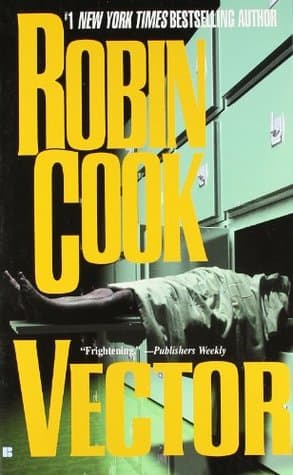
Robin Cook (1999)
Genre
Thriller / Mystery / Science Fiction
Reading Time
525 min
Key Themes
See below
Sign in to track this book
A disillusioned Russian bioweapons expert orchestrates a chilling bioterror plot in New York City, using unsuspecting victims as his macabre test subjects before unleashing a catastrophic modern plague.
Yuri Davydov, a disgruntled Russian emigre and former Soviet bioweapons technician, begins his experiment. He targets a New York City cab driver, Mr. Mendoza, exposing him to a potent biological agent. Mendoza quickly develops severe symptoms, including high fever, respiratory distress, and bleeding. He is rushed to a hospital, where Dr. Marissa Blumenthal, a CDC epidemiologist, is called in because of the unusual illness. The medical team struggles to diagnose the rapidly deteriorating patient, who dies from the mysterious disease, leaving unanswered questions and a growing sense of unease.
Following Mr. Mendoza's death, Dr. Marissa Blumenthal and her CDC team launch a full investigation. They interview the cab driver's family and colleagues, trace his recent movements, and collect samples from his home and the hospital. Initial tests for common pathogens come back negative, deepening the mystery. Blumenthal notices a faint, unusual smell described by Mendoza's family, and she begins to suspect a deliberate act rather than a natural outbreak. The team also discovers a strange, almost imperceptible residue in Mendoza's cab, which they send for advanced analysis, the first tangible clue to a potentially man-made agent.
The narrative shifts to Yuri Davydov, revealing his background as a skilled microbiologist from a top-secret Soviet bioweapons facility. He resents the United States, believing it failed to deliver on the promise of the 'American Dream' after his defection. He feels marginalized and exploited, fueling his desire for vengeance. Yuri prepares his biological agent in a hidden, makeshift lab, using his knowledge to cultivate a highly virulent and antibiotic-resistant strain. He views his initial victims as test subjects, refining his delivery methods and observing the agent's effects, all while planning a larger attack on New York City.
A second person, a restaurant worker who had indirect contact with Mr. Mendoza's cab, falls gravely ill with symptoms identical to the first victim. This development alarms Dr. Blumenthal and her team. The similar symptoms and rapid progression of the disease suggest a targeted, highly infectious agent. The CDC raises its alert level, bringing in more resources and experts. Dr. Blumenthal connects the dots, theorizing about a possible bioterrorism attack. This hypothesis is initially met with skepticism by some, but gains traction as the evidence mounts, pushing the investigation into a more urgent phase.
The samples from the victims and the cab undergo intense scrutiny at the CDC's high-security labs. Dr. Blumenthal collaborates with Dr. Jack Stapleton, a forensic pathologist, and other specialists. After painstaking work, they identify the pathogen: a genetically engineered form of anthrax, far more potent and resistant than naturally occurring strains. This discovery confirms their fears – they are dealing with a sophisticated bioweapon. The identification of the agent provides crucial information for developing countermeasures but also highlights the extreme danger and the calculated nature of the attack, confirming that a bioterrorist is at work.
With the nature of the threat confirmed, the CDC, led by Dr. Blumenthal, collaborates with the FBI and New York City law enforcement. The focus shifts from identifying the disease to finding the perpetrator. They begin to piece together profiles of potential suspects, looking for individuals with the necessary scientific knowledge and a motive. The FBI's behavioral analysis unit is brought in, and they start sifting through intelligence, immigration records, and any leads related to individuals with a background in bioweaponry or a history of anti-American sentiment, understanding that time is of the essence before a larger attack can be launched.
Confident in the potency of his bioweapon, Yuri Davydov continues his experiments, expanding his scope beyond isolated incidents. He exposes more unsuspecting individuals in different public settings, such as subway stations and crowded markets, observing the spread and effectiveness of his agent. These new victims present themselves to various hospitals, creating a growing cluster of unexplained illnesses across the city. Yuri tracks the news and medical reports, deriving satisfaction from the chaos and fear he is instilling. Each new victim is a step closer to his ultimate goal of a large-scale attack, refining his technique for maximum impact.
As the number of unexplained illnesses mounts, public awareness and panic grow. Dr. Blumenthal and her team work tirelessly, tracing connections between the victims. They discover a common thread: contact with specific public areas or transportation routes. The FBI intensifies its search, focusing on individuals with access to bioweapons knowledge. There are several close calls where investigators are near Yuri's locations, but he manages to evade capture. The pressure on the authorities escalates dramatically, as they race against time to prevent a city-wide catastrophe, knowing that the bioterrorist is becoming increasingly bold and dangerous.
Yuri Davydov finalizes his plans for the ultimate act of vengeance. He targets a densely populated public event in New York City – a major parade or festival – intending to release a massive aerosolized dose of his engineered anthrax. He believes this will cause widespread death and cripple the city, making a statement against the nation he feels betrayed him. He has perfected his delivery mechanism and chosen his location, confident that this final act will bring about the chaos and destruction he has long envisioned.
Through forensic analysis, surveillance, and a crucial tip, Dr. Blumenthal and the FBI finally identify Yuri Davydov as the bioterrorist. They pinpoint his location and learn of his imminent plan to release the bioweapon at the public event. A high-stakes chase ensues, culminating in a tense confrontation. Dr. Blumenthal and the FBI agents intercept Yuri just as he is about to deploy his device. In a desperate struggle, Yuri is subdued, and the bioweapon is secured, averting a catastrophic attack on New York City. The city breathes a collective sigh of relief, but the experience leaves a lasting mark on all involved.
In the aftermath of Yuri Davydov's capture, New York City begins a slow recovery. The surviving victims are treated, and decontamination protocols are implemented in areas Yuri had contaminated. Dr. Blumenthal and her team work on developing effective treatments and vaccines for the engineered anthrax, while the FBI and other agencies review their intelligence and security protocols. The incident is a stark reminder of the threat of bioterrorism and the need for constant vigilance and preparedness. The experience impacts Dr. Blumenthal, solidifying her commitment to public health and biodefense, recognizing the fragility of safety in a complex world.
The Protagonist
Marissa evolves from a skilled disease investigator to a frontline defender against bioterrorism, grappling with the moral complexities of man-made threats.
The Antagonist
Yuri's character remains largely static in his conviction for revenge, growing only in the scale and audacity of his planned attack.
The Supporting
Jack's arc involves deepening his professional collaboration with Marissa and potentially developing a romantic interest, while confronting the horrors of bioterrorism.
The Mentioned
His character serves as a plot device to initiate the central conflict, with no personal arc.
The Supporting
Agent Stevens's arc is largely professional, demonstrating the efficacy of inter-agency cooperation in crisis.
The Supporting
Dr. Harken's arc shows him moving from initial caution to fully supporting Marissa and embracing the bioterrorism threat.
The Supporting
Dr. Chen's arc is primarily professional, showcasing the vital role of lab science in biodefense.
The Mentioned
Serves as a plot point to escalate the threat, with no personal arc.
The novel explores the reality of bioterrorism, demonstrating how a single disgruntled individual with scientific knowledge can threaten an entire city. It highlights the vulnerability of modern society to biological weapons, even in developed nations. The initial confusion and difficulty in diagnosing the mysterious illness in Mr. Mendoza and subsequent victims underscore the challenges in identifying and responding to such attacks, exposing the thin line between public health and national security. The theme emphasizes that the threat is not just from state actors but also from individuals.
“The invisible enemy was the most terrifying, capable of striking anywhere, anytime, with devastating, silent force.”
Yuri Davydov's motivation for his attack stems from his resentment and the perceived failure of the 'American Dream' he sought. The novel explores how unfulfilled expectations and a sense of betrayal can fester into destructive rage. Yuri's past as a celebrated Soviet scientist who felt marginalized in the U.S. drives his desire for vengeance. This theme explores the psychological underpinnings of radicalization and how personal grievances, when combined with dangerous knowledge, can lead to widespread destruction, making a point about the human cost of cultural and economic displacement.
“They promised me a new life, a new beginning. Instead, they gave me nothing but scorn. Now, they will pay.”
The book raises questions about scientific responsibility and the ethical implications of biological research. Yuri Davydov, a brilliant microbiologist, perverts his knowledge for destructive purposes, showing the dual-use dilemma of scientific advancements. Conversely, Dr. Marissa Blumenthal and her team use their scientific expertise to save lives and combat the threat, embodying the responsible application of science. The narrative contrasts these two paths, highlighting the moral imperative for scientists to consider the potential societal impact of their work and the dangers when knowledge is weaponized without ethical constraints.
“Knowledge is power, but in the wrong hands, it becomes a weapon of mass destruction.”
The novel champions the heroism of public health officials, particularly Dr. Marissa Blumenthal and her CDC team. They work tirelessly behind the scenes, often facing skepticism and immense pressure, to protect the populace from invisible threats. Their dedication, meticulous investigation, and scientific prowess are crucial in identifying the pathogen and ultimately preventing a city-wide catastrophe. This theme highlights the vital role of epidemiologists, lab technicians, and other public health professionals as the first line of defense against infectious diseases and bioterrorism, celebrating their commitment to societal well-being.
“We are the last line of defense, the silent guardians against the unseen.”
A mysterious, rapidly fatal disease that acts as the initial catalyst for the plot.
The unknown pathogen is the central plot device that drives the initial mystery and urgency of the narrative. By presenting a disease that defies immediate diagnosis and rapidly kills its victims, the author creates suspense and highlights the vulnerability of medical science. This device allows Dr. Marissa Blumenthal to showcase her epidemiological skills, as she must piece together clues without knowing the enemy. The gradual identification of the pathogen as an engineered bioweapon escalates the stakes, transforming a medical mystery into a bioterrorism thriller.
A highly skilled individual with a personal vendetta, possessing the means to execute a catastrophic attack.
Yuri Davydov, the disgruntled ex-Soviet bioweapons scientist, serves as a crucial plot device by providing the 'how' and 'why' of the bioterrorism threat. His background offers a plausible explanation for the sophisticated nature of the bioweapon and his deep-seated resentment provides a clear, albeit twisted, motivation. This device grounds the fantastical element of a man-made plague in a relatable human emotion (vengeance), making the threat more chilling and personal. It also allows the author to explore the dark side of scientific expertise when combined with extreme personal grievance.
The escalating urgency to identify the threat and apprehend the perpetrator before a larger attack.
The 'race against time' is a classic thriller plot device, masterfully employed in 'Vector.' From the moment the first victim falls ill, the rapid progression of the disease and the increasing number of victims create an escalating sense of urgency. This device propels the narrative forward, adding tension and stakes to every discovery and every lead pursued by Dr. Blumenthal and the FBI. The looming threat of a large-scale attack on New York City constantly reminds the reader of the catastrophic consequences if the heroes fail, making the climax particularly intense.
The inter-agency cooperation between scientific and law enforcement bodies.
This device highlights the necessity of multiple disciplines working together to combat a complex threat. The collaboration between the CDC (scientific expertise) and the FBI (law enforcement and intelligence) is crucial. It demonstrates how different skill sets—epidemiological tracking, laboratory analysis, forensic pathology, and criminal investigation—must converge to effectively identify, understand, and neutralize a bioterrorism threat. This device provides a realistic portrayal of crisis management, showing the challenges and triumphs of inter-agency cooperation, and allows for diverse perspectives to contribute to the plot's progression.
“The problem with secrecy was that it bred suspicion, and suspicion, in turn, often bred reality.”
— Reflecting on the government's handling of the anthrax attacks.
“In the world of biological warfare, the most terrifying weapon was not the one that killed quickly, but the one that spread silently.”
— Considering the insidious nature of biological agents.
“Fear was a powerful motivator, capable of making people do things they would never have considered in saner moments.”
— Observing the public's reaction to potential bioterrorism.
“The line between genius and madness was often blurry, especially when ambition fueled the drive.”
— Pondering the psychological state of a brilliant but unhinged scientist.
“Sometimes, the biggest threats came not from foreign enemies, but from within.”
— Realizing the domestic origins of the bioterrorist plot.
“Ignorance was a luxury no one could afford when facing an invisible enemy.”
— Highlighting the importance of knowledge in combating biological threats.
“The human body, for all its complexity, was surprisingly vulnerable to the simplest of organisms.”
— A medical professional reflecting on the fragility of life.
“Trust, once broken, was a difficult thing to mend, if it could be mended at all.”
— Dealing with the aftermath of deception and betrayal.
“The allure of power, even destructive power, could corrupt even the most brilliant minds.”
— Analyzing the motives behind the villain's actions.
“In the face of an epidemic, statistics became faces, and numbers became lives.”
— A doctor grappling with the human cost of a widespread illness.
“The greatest weapon against chaos was often simply the truth, however unpalatable it might be.”
— Advocating for transparency in a crisis.
“Revenge, like a virus, could consume its host, leaving nothing but devastation in its wake.”
— Exploring the destructive nature of a character's vengeful motivations.
“Science, in the wrong hands, was not a tool for progress, but a weapon of mass destruction.”
— Reflecting on the ethical implications of scientific advancements.
“The world was a far more interconnected and fragile place than most people dared to imagine.”
— A realization about global vulnerability to biological threats.
Ready to see how well you understood this book? Take our interactive quiz with 10 questions.
Biography coming soon.







