“Ah! Vanitas Vanitatum! Which of us is happy in this world? Which of us has his desire? or, having it, is satisfied?”
— The narrator's closing reflection on the novel's events and characters.

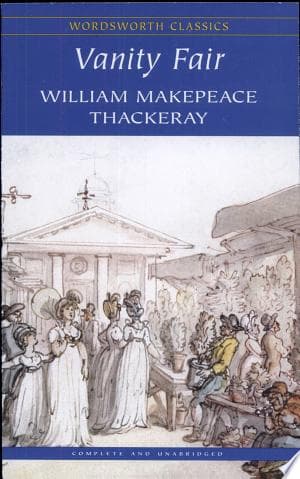
William Makepeace Thackeray (2021)
Genre
Historical Fiction / Romance
Reading Time
1200 min
Key Themes
See below
Sign in to track this book
In the ballrooms and battlefields of Napoleonic England, two women—one a social climber and the other an idealist—live in a society where ambition and virtue clash.
The novel begins with Becky Sharp and Amelia Sedley leaving Miss Pinkerton's Academy. Amelia, kind and wealthy, invites Becky, a poor orphan and governess-in-training, to spend a week at her family home before Becky starts her job with the Crawley family. During her visit, Becky quickly charms Amelia's family, especially Mr. Sedley, and tries to get Amelia's brother, Jos Sedley, a timid Collector, to marry her. She almost succeeds in getting a proposal from Jos during an outing, but his shyness and the interference of Amelia's suitor, George Osborne, stop the match. Becky is disappointed but not discouraged.
Becky goes to Queen's Crawley, Sir Pitt Crawley's estate, where she works as governess to his two youngest daughters. The household is disorganized and unusual. Becky quickly adapts, charming Sir Pitt and his sons, Rawdon and Pitt. She uses her intelligence to gain influence, especially with the family's wealthy aunt, Miss Crawley, who initially likes Becky. Becky's manipulative nature shows as she handles family dynamics, aiming to secure her future. She secretly marries Rawdon Crawley, a dashing but wasteful army officer and Miss Crawley's favorite nephew. This upsets the family, particularly Miss Crawley, who disinherits Rawdon.
Meanwhile, Amelia's family loses money. Her father, Mr. Sedley, suffers financial losses, leading to the family's ruin. George Osborne's proud father forbids George from marrying Amelia, as she is no longer wealthy. However, George's friend, William Dobbin, who secretly loves Amelia, encourages George to keep his promise. George, influenced by Dobbin's honor and a desire to defy his father, marries Amelia. Mr. Osborne disinherits George, leaving the young couple to live on George's small army pay, a change from their previous comfortable lives.
George Osborne and Rawdon Crawley, both army officers, go to fight in the Napoleonic Wars. The novel shows the worries and social events in Brussels before the Battle of Waterloo. At a ball, George flirts with Becky, upsetting Amelia. The battle is a turning point: George Osborne dies, leaving Amelia a young widow with a newborn son, Georgy. This tragedy causes Amelia deep mourning, and she dedicates her life to her son and the idealized memory of her husband. Rawdon Crawley survives the battle, and he and Becky return to England, still struggling financially but determined to improve their social standing.
After Waterloo, Becky and Rawdon live in London, spending more than they have through credit, charm, and Becky's cleverness. Becky is good at social climbing, charming influential people like the wealthy Marquis of Steyne. She hosts fashionable parties, despite their financial problems, and gets Rawdon a job as a collector for Lord Steyne. Her manipulative skills let her borrow money, avoid creditors, and maintain an appearance of wealth, all while Rawdon knows little of her deeper plans and her close relationship with Lord Steyne, which causes gossip.
Amelia, burdened by poverty and grief for George, lives a quiet life devoted to her son, Georgy. Her family's finances have not recovered, and she relies on her parents' kindness and William Dobbin's support. Dobbin, still secretly in love with Amelia, helps her and Georgy financially and emotionally, often at personal cost. He visits them often, making sure Georgy gets a good education and offering Amelia a steady, if unreturned, love. Amelia does not realize Dobbin's true feelings, holding onto George's memory.
Rawdon Crawley, despite his easygoing nature, eventually suspects Becky's relationship with Lord Steyne. After being arrested for debt and released by Steyne, Rawdon returns home unexpectedly to find Becky entertaining Lord Steyne alone. A violent fight happens, during which Rawdon attacks Steyne and takes the jewels Steyne gave Becky. Devastated by the betrayal, Rawdon leaves Becky, entrusting his son, Little Rawdon, to his brother Pitt and his wife, Lady Jane. This event ends Becky and Rawdon's marriage and marks Becky's fall from her social position in London.
After the scandal with Lord Steyne and Rawdon's departure, London society shuns Becky. She goes to Europe, living a wandering life in various cities, often poor and disgraced. She tries to regain her footing through various schemes and relationships, but her reputation follows her. She is often seen with questionable people and struggles to maintain her former lifestyle. This period shows the consequences of social transgression and the vulnerability of women without strong male protection or independent money in Victorian society, contrasting with her earlier successes.
Years pass, and Dobbin's patience with Amelia's devotion to George's memory wears thin. After serving in India for a long time, Dobbin returns to England and confronts Amelia, expressing his frustration with her blindness and her refusal to acknowledge his love. He tells her the truth about George's flaws, showing evidence of George's flirtations with Becky and his general unworthiness. This painful revelation shatters Amelia's idealized image of her late husband. Dobbin, tired of unreturned love, gives Amelia an ultimatum and prepares to leave her life, causing a change in Amelia's perception and feelings.
Amelia, finally understanding Dobbin's devotion and George's true character, realizes her love for Dobbin. They marry, and Amelia finds happiness and stability with him, raising Georgy and their daughter, Jane. Meanwhile, Becky Sharp, now poor and living in a boarding house, meets Jos Sedley, Amelia's brother, in Germany. She quickly influences the gullible Jos, becoming his companion and manager. She encourages his extravagant lifestyle and persuades him to make a will in her favor, showing her manipulative nature is unchanged.
Becky continues to live with Jos Sedley, eventually returning to England. Jos, increasingly sick and afraid, dies under mysterious circumstances after signing over his fortune to Becky. While there is no proof of foul play, the story strongly suggests Becky's involvement in his death, possibly through poisoning or neglect. Becky inherits some of Jos's wealth, allowing her to live a comfortable, though still somewhat disreputable, life. She tries to re-enter society but is never fully accepted. The novel ends with Becky living as a wealthy widow, still seeking social approval, while Amelia and Dobbin lead a quiet, contented life, a contrast in their fates.
The Protagonist/Antagonist
Becky rises from penniless governess to a prominent figure in London society through marriage and manipulation, only to fall into disgrace and exile, eventually securing a modest fortune through dubious means.
The Protagonist
Amelia moves from a pampered, sheltered life to one of poverty and widowhood, clinging to an idealized past, before finally realizing true love and finding contentment.
The Supporting
Dobbin endures years of unrequited love and self-sacrifice for Amelia and Georgy, eventually confronting Amelia and marrying her, finding the happiness he long deserved.
The Supporting
George marries Amelia against his father's wishes, struggles with financial hardship, flirts with Becky, and dies heroically but foolishly at Waterloo.
The Supporting
Rawdon sacrifices his inheritance for Becky, rises and falls in London society with her, and eventually leaves her after discovering her infidelity, later finding a measure of dignity abroad.
The Supporting
Jos is initially targeted by Becky for marriage, escapes, but later falls back under her influence, eventually dying under suspicious circumstances while in her care.
The Antagonist/Supporting
Lord Steyne elevates Becky socially and financially through his patronage, but his affair with her leads to Rawdon's discovery and Becky's ultimate disgrace.
The Supporting
Mr. Osborne disinherits his son for marrying Amelia, but later dotes on his grandson, Georgy, eventually leaving him a fortune.
The Supporting
Miss Crawley is charmed by Becky and favors Rawdon, but disinherits Rawdon after his marriage, leaving her fortune to Pitt.
The Supporting
Pitt steadily rises in social and political standing, inherits the family estate and Miss Crawley's fortune, and maintains a respectable, if somewhat dull, reputation.
The novel explores social climbing through Becky Sharp's search for status and wealth in a society focused on appearances. Becky, a poor orphan, uses her wit, charm, and manipulation to navigate 19th-century England's class structure. Her journey from governess to a prominent figure in London society, and her subsequent fall, shows how unstable social standing built on deception is, and the limited options for women without money. The theme also appears in other characters' aspirations, such as Mr. Osborne's desire for his son to marry well, and the general competition for position in 'Vanity Fair.'
“Ah! Vanitas Vanitatum! Which of us is happy in this world? Which of us has his desire? or, having it, is satisfied? — Come, children, let us shut up the box and the puppets, for our play is played out.”
Hypocrisy and deception are common throughout the novel, showing the moral flaws of Victorian society. Becky Sharp is a master of deception, constantly creating stories and manipulating perceptions for her own benefit. However, she is not alone; many characters, from the outwardly religious Pitt Crawley to the aristocratic Lord Steyne, pretend and make moral compromises. The novel satirizes society's pressure to maintain a respectable appearance, even when personal behavior is not virtuous. This theme highlights the difference between public appearance and private reality, showing a world where honesty is often less rewarded than cunning.
“A man may be an ass, and yet have money; but a man may be a ass, and have no money, and then he is a nobody.”
The novel shows different kinds of love and loyalty, often in complex ways. Amelia's strong loyalty to George Osborne's memory, despite his flaws, is a main example. In contrast, William Dobbin's lasting, self-sacrificing love and loyalty to Amelia, despite years of unreturned affection, shows true devotion. Becky's love, especially for Rawdon, is more practical and conditional, often overshadowed by her ambition. The theme explores how love can be blind, enduring, or a tool for personal gain, and how loyalty can be a strength or a weakness in the 'world of Vanity Fair.'
“It is the fate of most of us who are in the world to meet with a number of ungrateful people; but, to find them out, we must have been kind to them.”
Vanity Fair examines the limited roles and unstable status of women in 19th-century society. Women like Becky Sharp, without money or family connections, must rely on their wits and charm to secure a husband and social standing, often using manipulation. Amelia Sedley, on the other hand, represents the traditional ideal of womanhood – devoted, sentimental, and dependent on male protection – yet she suffers greatly due to her passivity and economic reliance. The novel shows how women's lives are largely determined by their marriage prospects and the fortunes of their male relatives, emphasizing their vulnerability and the societal pressures they face.
“A woman with fair opportunities, and without a heart, is an invaluable treasure.”
Money and class drive character motivation and plot in Vanity Fair. The novel details how financial status determines social acceptance, marriage prospects, and quality of life. Characters like Becky Sharp constantly seek wealth, understanding its power. The Sedley family's downfall shows how uncertain fortune is, while Mr. Osborne's rigid class consciousness and his disinheritance of George for marrying a 'poor' woman highlight the snobbery of the wealthy. The theme shows how economic realities influence personal relationships and societal structures, demonstrating how money often matters more than genuine affection or virtue.
“The world is a looking-glass, and gives back to every man the reflection of his own face.”
A highly intrusive and opinionated narrator who guides the reader through the 'Fair.'
Thackeray employs a highly visible, omniscient narrator, often referred to as 'The Showman' or 'Manager of the Performance.' This narrator frequently interjects with direct addresses to the reader, moralizing comments, philosophical reflections, and satirical observations on human nature and society. The narrator's presence is not merely to advance the plot but to actively comment on the characters' motivations and the societal follies being depicted. This device allows for sharp social commentary and reinforces the novel's subtitle, 'A Novel without a Hero,' by constantly reminding the reader of the moral ambiguities and imperfections of all characters.
The central metaphor for the corrupt and superficial world depicted in the novel.
The title itself, 'Vanity Fair,' is a direct reference to John Bunyan's 'Pilgrim's Progress,' where it represents a perpetual fair in the town of Vanity, selling all manner of worldly goods and temptations. In Thackeray's novel, it serves as the overarching metaphor for the entire society he portrays. It symbolizes a world driven by superficiality, ambition, greed, and the relentless pursuit of material possessions and social status. All characters, to varying degrees, are participants in this 'Fair,' buying into its values and often suffering its consequences. The metaphor critiques the emptiness of such a life and the moral compromises required to succeed within it.
The disparity between what characters know/believe and what the reader (and narrator) knows.
Dramatic irony is frequently used, particularly in relation to Becky Sharp's machinations and Amelia Sedley's naivety. The narrator often provides insight into Becky's true intentions, while other characters remain oblivious to her cunning. Similarly, Amelia's idealized view of George Osborne is repeatedly undermined by the narrator's revelations of his flaws and George's own actions, creating a poignant sense of irony for the reader who understands the truth. This device enhances the satirical tone and allows the reader to judge characters more critically than they might be judged by their peers within the story.
A pivotal historical event that dramatically alters the characters' lives.
The Battle of Waterloo serves as a significant plot device, acting as a historical pivot point that irrevocably changes the trajectories of several main characters. It removes George Osborne from the narrative, plunging Amelia into widowhood and setting the stage for Dobbin's eventual opportunity. For Becky and Rawdon, it marks a temporary reprieve from debt and a chance to return to England, though their financial struggles persist. The depiction of the anxieties and social activities in Brussels on the eve of the battle also serves to highlight the contrast between the superficial concerns of society and the brutal realities of war, adding a layer of historical realism to the fictional narrative.
“Ah! Vanitas Vanitatum! Which of us is happy in this world? Which of us has his desire? or, having it, is satisfied?”
— The narrator's closing reflection on the novel's events and characters.
“I think I could be a good woman if I had five thousand a year.”
— Becky Sharp's cynical remark about morality and wealth.
“Revenge may be wicked, but it's natural.”
— Becky Sharp justifying her actions against those who wronged her.
“The world is a looking-glass, and gives back to every man the reflection of his own face.”
— The narrator's observation on how people perceive others based on themselves.
“A woman with fair opportunities and without a positive hump, may marry whom she likes.”
— The narrator's satirical comment on marriage and social climbing.
“It is only hope which is real, and reality is a bitterness and a deceit.”
— Reflection on the illusions people maintain in life.
“Which is the most reasonable, and does his duty best: he who stands aloof from the struggle of life, calmly contemplating it, or he who descends to the ground and takes his part in the contest?”
— The narrator questioning passive observation versus active participation in society.
“A good marriage is like a casserole: only those responsible for it really know what goes in it.”
— A humorous analogy about the private nature of marital relationships.
“The Colonel's lady and Judy O'Grady are sisters under their skins.”
— Comment on the fundamental equality of all people despite social class.
“It is not beauty, but fine qualities, my girl, that keep a husband.”
— Advice given to a character about sustaining a marriage.
“Everybody in Vanity Fair must have remarked how well those live who are comfortably and thoroughly in debt.”
— Satirical observation on the paradox of debt and luxury in society.
“The art of pleasing is the art of deception.”
— A cynical view of social interactions and flattery.
“We are puppets, pulled by the strings of destiny.”
— Reflection on fate and human agency in the characters' lives.
“A little kindness and good breeding may be practiced even towards a barber.”
— A lesson on treating all people with respect regardless of status.
Ready to see how well you understood this book? Take our interactive quiz with 10 questions.
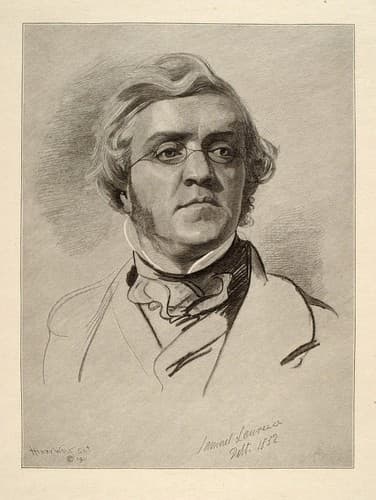
William Makepeace Thackeray was a British novelist, author and illustrator. He is known for his satirical works, particularly his 1848 novel Vanity Fair, a panoramic portrait of British society, and the 1844 novel The Luck of Barry Lyndon, which was adapted for a 1975 film by Stanley Kubrick.







