“The Empire never ended.”
— A recurring theme and realization by the narrator, Horselover Fat, about the enduring nature of oppressive systems.

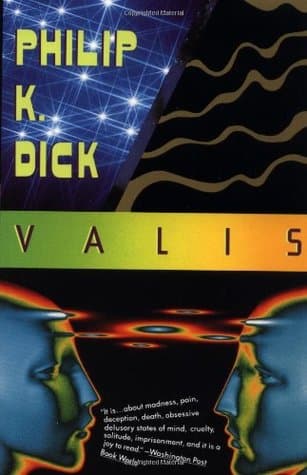
Philip K. Dick (1981)
Genre
Fantasy / Spirituality / Science Fiction / Philosophy
Reading Time
240 min
Key Themes
See below
Sign in to track this book
A schizophrenic Gnostic detective unravels reality's hidden divinity, or ultimate cosmic joke, through the revelation of a pink laser.
The story introduces Horselover Fat, an alter ego of Philip K. Dick. Fat is deeply affected by the suicide of his friend Gloria, a young woman struggling with mental illness and drug addiction. Her death causes a spiritual and psychological crisis in Fat, leading him to believe he is experiencing divine madness or Gnostic revelation. He begins to see everyday events as signs from a higher intelligence, which he later names VALIS (Vast Active Living Intelligence System). Fat's initial coping involves intense philosophical and theological study, trying to understand the universe and his worsening mental state, often differing from his more grounded friends.
One night, Fat has a series of visions, most notably a pink laser beam that sends information directly into his brain. This 'pink beam' gives him Gnostic knowledge, revealing that reality is a holographic projection, that time is an illusion, and that an ancient, alien intelligence (VALIS) is trying to communicate with humanity. This event completely changes Fat's view of reality, convincing him that he has been chosen to understand and share this truth. He begins to see the world as a 'Black Iron Prison' from which humanity needs freedom, a core Gnostic idea.
Convinced that VALIS is a real, external entity, Fat enlists his friends – Philip K. Dick (the 'normal' persona), Kevin, and Sherri – to find its physical form. They think VALIS might be communicating through a new cult, a specific piece of media, or even a child. Their search leads them to analyze various cultural things, including a science fiction film called 'VALIS,' which they believe contains coded messages from the intelligence. The film's plot, about a hidden Gnostic truth and an alien savior, mirrors Fat's own experiences and beliefs.
The friends become fixated on the 'VALIS' film, believing it is a divinely inspired message. They carefully analyze its symbolism and themes, convinced it holds the key to understanding VALIS. Their investigation eventually leads them to the film's mysterious creator, Eric Lampton, whom they suspect might be a prophet or even VALIS itself. Lampton's reclusive nature and the deep Gnostic themes in his film only strengthen their belief that they are on the right path, fueling their spiritual detective work.
Through strange coincidences and further investigation, the group learns about a young girl named Sophia. She is presented as a 'divine child,' an emissary or even an embodiment of the Logos (divine reason) or Sophia (wisdom) in Gnostic tradition. They believe she is the physical form of VALIS, sent to Earth to heal humanity and reveal the true nature of reality. Their quest shifts from abstract understanding to finding and interacting with this child, hoping she will provide direct answers and a path to salvation.
Fat and his friends finally meet Sophia, a seemingly ordinary but remarkably wise and calm young girl. Their meeting brings both hope and disappointment. While Sophia shows an unusual understanding and presence, she does not give the clear, definite answers or miracles they expected. Her existence challenges their ideas of what a divine emissary should be, forcing them to confront the ambiguity of their spiritual quest and the nature of divine intervention. Her presence, however, confirms that VALIS is indeed working in the world.
Tragically, Sophia dies from a sudden, unexplained illness. Her death destroys Fat's faith and sends him back into despair. He sees her death as a betrayal by VALIS or a sign of its indifference. The loss of Sophia, whom he saw as the embodiment of hope and divine wisdom, leaves him questioning the meaninglessness of his spiritual journey and the cruelty of existence. This event mirrors his earlier trauma over Gloria's death, repeating a pattern of loss and existential questioning.
Even after Sophia's death, Fat, though deeply hurt, cannot completely abandon his belief in VALIS. He continues to process the information he received from the pink beam and the insights gained from his Gnostic studies. The story suggests that VALIS, as an intelligence, goes beyond individual forms and continues to operate. Fat's struggle becomes one of reconciling the suffering and loss in the world with the potential for divine intervention and revelation, maintaining a fragile hope for future understanding.
After Sophia's death, Fat and his friends, especially Philip K. Dick, decide that Sophia was not the only 'divine child.' They believe VALIS will appear again through other children in different parts of the world. This resolution shows a shift from a single, local quest to a broader, ongoing search for the Logos. It suggests that the divine intelligence is persistent and will continue to send emissaries, even if individual ones are lost, reinforcing the cyclical and ongoing nature of spiritual revelation.
Throughout the novel, the relationship between Horselover Fat and Philip K. Dick is explored. Fat represents the deeply spiritual, Gnostic-obsessed, and mentally unstable aspect, while Dick is the more grounded, analytical, and skeptical authorial voice. Dick often comments on Fat's experiences, giving context, questioning his sanity, and offering other explanations. This meta-narrative structure allows the author to present Fat's radical theories and critically examine them, blurring the lines between autobiography, fiction, and philosophical inquiry, leaving the reader to consider the true nature of reality and sanity.
The Protagonist
Fat begins in despair and experiences a profound spiritual awakening, only to be plunged back into grief and doubt by Sophia's death, ultimately resolving to continue his search for meaning.
The Narrator/Authorial Voice
Dick begins as an observer of Fat's madness but gradually becomes more invested in the search for VALIS, though he maintains a critical distance.
The Supporting
Kevin supports Fat's quest and remains a steadfast friend and intellectual companion throughout the journey.
The Supporting
Sherri provides consistent emotional support to Fat, remaining a caring and involved friend throughout his spiritual and mental struggles.
The Mentioned/Catalyst
Her death is a pivotal event, driving Fat's spiritual quest, though she does not have a personal arc within the main narrative.
The Supporting/Symbolic
Sophia appears as a beacon of hope and divine manifestation, but her premature death shatters expectations and deepens the mystery of VALIS.
The Mentioned/Symbolic
Lampton's existence and work drive a significant part of the group's investigation, but he remains a distant, symbolic figure.
The novel constantly questions what is real and what is illusion, a central idea of Gnosticism. Horselover Fat's experiences with the pink beam convince him that the world is a 'Black Iron Prison,' a holographic projection meant to enslave humanity. This theme is explored through his changing perceptions, the ambiguity of his 'revelations,' and the meta-narrative where Philip K. Dick often questions Fat's sanity. The 'VALIS' film within the novel acts as a mirror, reflecting and distorting these questions about reality, suggesting that even art can be a way to truth or a distraction from it. The final answer remains unclear, leaving the reader to consider the authenticity of their own perceived reality.
“The universe is information and we are part of it.”
VALIS is deeply connected to Gnostic philosophy, especially the idea of a hidden, true God, a flawed creator (Demiurge), and humanity's entrapment in a material world. Fat's spiritual quest is a search for Gnosis – direct knowledge of the divine – which he believes he receives through the pink beam and subsequent insights. The novel explores Gnostic concepts like the 'Black Iron Prison,' the Logos, and Sophia, framing Fat's experiences as a modern-day Gnostic awakening. The tragic death of Sophia, the divine child, challenges this revelation, questioning divine intervention and the suffering in the world, even for those believed to be touched by God.
“The Empire never ended.”
A main theme is the blurred line between spiritual insight and mental illness. Horselover Fat's experiences, though profound, are often presented as symptoms of schizophrenia or psychosis, particularly by the 'Philip K. Dick' persona. The novel makes the reader question whether Fat is a prophet or simply delusional. His friends, though supportive, also worry about his mental state. This ambiguity is central to the story, suggesting that extraordinary perceptions, whether divine or pathological, can appear similar. The book implies that what society calls madness might, in some cases, be a heightened awareness of a deeper, stranger reality.
“Perhaps I'm mad. But if I am, then I'm mad in a way that is profoundly sane.”
The novel is full of themes of loss and grief, especially through Gloria's suicide and Sophia's death. These events deeply affect Horselover Fat, driving his desperate search for meaning and comfort in a seemingly indifferent universe. His Gnostic quest can be seen as an attempt to overcome the pain of loss by finding a higher purpose or a divine plan. The cyclical nature of his despair and renewed hope highlights the human need to find meaning in suffering. Ultimately, the search for meaning is an ongoing process, even with repeated heartbreak and unanswered questions.
“Grief, I've learned, is really love. It's all the love you want to give but cannot. All of that unspent love gathers up in the corners of your eyes, the lump in your throat, and in that hollow part of your chest. Grief is just love with no place to go.”
The 'VALIS' film within the novel is important to the characters' understanding of the divine intelligence. They believe the film contains coded messages and prophecies, suggesting that art can be a way for divine communication or a reflection of deeper truths. This theme explores how media shapes our perceptions of reality and spirituality, and whether an artist can unknowingly channel profound insights. The meta-fictional aspect of the novel, where Philip K. Dick writes about a character experiencing what Dick himself experienced, further blurs the lines between art, reality, and personal experience.
“Art is a way of seeing the world in a new light.”
A divine, information-rich laser beam that imparts Gnostic knowledge.
The pink beam is a pivotal plot device that serves as the catalyst for Horselover Fat's spiritual awakening and Gnostic revelations. It functions as a direct conduit for divine information, bypassing conventional senses and imprinting complex knowledge directly into Fat's mind. This device allows the author to introduce the core Gnostic philosophies and the concept of VALIS without lengthy exposition, presenting it as an immediate, visceral experience. Its mysterious origin and nature contribute to the ambiguity between divine intervention and hallucination, central to the novel's themes of sanity and reality.
A fictional science fiction film that mirrors and predicts the characters' experiences.
The 'VALIS' film within the novel is a significant meta-fictional plot device. It acts as a prophetic text or a coded message from the divine intelligence, mirroring Horselover Fat's own Gnostic experiences and theories. The film's plot, themes, and even its creator, Eric Lampton, become subjects of intense analysis for the characters, driving their investigation and providing 'evidence' for their beliefs. This device allows the author to explore the themes of art as a conduit for truth, the nature of prophecy, and the blurring lines between fiction and reality, while also critiquing popular culture's role in spiritual quests.
The use of a separate persona to explore intense spiritual and psychological experiences.
The creation of Horselover Fat as an alter ego for Philip K. Dick is a crucial narrative device. It allows the author to explore deeply personal and potentially controversial spiritual experiences and mental states from a semi-detached, analytical perspective. By separating his 'mad' spiritual self (Fat) from his 'sane' authorial self (Dick), the novel can simultaneously present radical Gnostic theories and critically examine them, maintaining ambiguity about their veracity. This device facilitates a meta-commentary on the author's own life and beliefs, blurring the lines between autobiography, fiction, and philosophical inquiry.
A Gnostic concept representing the illusory, oppressive nature of reality.
The 'Black Iron Prison' is a Gnostic concept introduced through Horselover Fat's revelations, functioning as a metaphorical plot device to describe the perceived nature of reality. It represents the idea that humanity is trapped in a false, oppressive, and illusory world created by a malevolent or ignorant deity. This concept provides the foundational motivation for Fat's quest for liberation and Gnosis. It frames the suffering and confusion in the world not as random but as part of a deliberate system, giving a grand, if bleak, cosmic context to the characters' struggles and their search for an escape or a true reality.
“The Empire never ended.”
— A recurring theme and realization by the narrator, Horselover Fat, about the enduring nature of oppressive systems.
“God is a circuit.”
— Part of Fat's complex theological and metaphysical theories, suggesting a technological or informational nature to the divine.
“We are a part of God, and God is a part of us.”
— A spiritual insight into the interconnectedness of humanity and the divine.
“Reality is that which, when you stop believing in it, doesn't go away.”
— A classic philosophical definition of reality, often attributed to Philip K. Dick himself, reflecting his concerns with perception and objective truth.
“The universe is information and we are part of it.”
— Reflects the Gnostic and informational theories that VALIS is built upon, where reality is fundamentally data.
“The true God is not the demiurge.”
— A Gnostic distinction between a flawed creator god (demiurge) and a higher, benevolent, unknowable God.
“The universe is a hologram.”
— A metaphor for the nature of reality, suggesting that each part contains information about the whole.
“The plasmate knew it was God.”
— Referring to the divine, intelligent energy entity, VALIS, and its self-awareness.
“The universe is a living organism.”
— An organic view of the cosmos, emphasizing its interconnectedness and inherent life.
“Suffering is not an option; it is a necessity.”
— A somber reflection on the role of pain and hardship in human existence and spiritual growth.
“The future is open to us, but only if we learn to see.”
— Emphasizes the importance of perception and understanding in shaping one's destiny.
“We are all prisoners of our own minds.”
— A statement on the limitations and biases of individual perception and thought.
“The universe is a vast, self-correcting information system.”
— Further elaborates on the informational and cybernetic theories of reality presented in the book.
“The divine invasion has already happened.”
— A core concept from the VALIS trilogy, suggesting that a benevolent, intelligent entity has already intervened in human history.
“The Logos is alive and it speaks.”
— Refers to the divine word or reason, suggesting an active, communicative aspect of the divine.
Ready to see how well you understood this book? Take our interactive quiz with 10 questions.
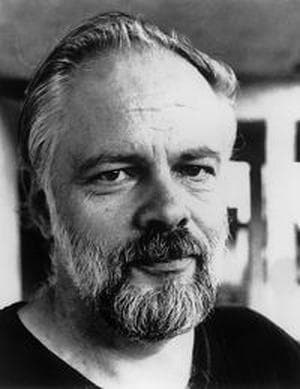
Philip Kindred Dick, often referred to by his initials PKD, was an American science fiction writer. He wrote 44 novels and about 121 short stories, most of which appeared in science fiction magazines during his lifetime. His fiction explored varied philosophical and social questions such as the nature of reality, perception, human nature, and identity, and commonly featured characters struggling against elements such as alternate realities, illusory environments, monopolistic corporations, drug abuse, authoritarian governments, and altered states of consciousness.







