“The sea is a cruel mistress, Dirk. She gives and she takes.”
— Dirk Pitt reflecting on the dangers of the ocean.

Clive Cussler (2001)
Genre
Thriller / Historical Fiction / Mystery
Reading Time
12-15 hours
Key Themes
See below
Sign in to track this book
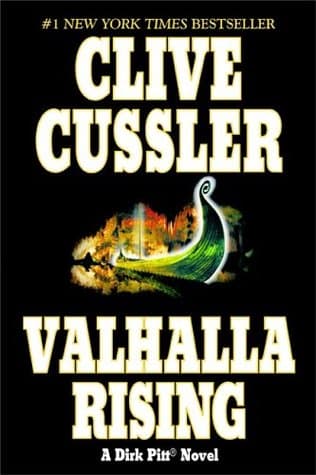
Dirk Pitt must decode Jules Verne's nautical secrets to stop a ruthless oil baron and his fleet of ancient, advanced ships from rewriting global power.
The luxury cruise liner, *Emerald Dolphin*, with new wave-propulsion engines designed by Dr. Kelly Egan's father, sinks off Baja California on its first trip. The ship's safety systems fail. Dirk Pitt, NUMA Special Projects Director, is nearby and sees the disaster. He rescues Kelly Egan, who escapes with her father's research. Dr. Egan dies, and Kelly wants to know the real cause of the catastrophe and what her father's work truly means.
Hired by maritime insurers, Dirk Pitt and his NUMA team, including Al Giordino, investigate the *Emerald Dolphin*'s wreckage. They find evidence of explosives and tampering, suggesting sabotage. Meanwhile, Kelly Egan examines her father's research, believing the technology holds the key to the ship's destruction. She realizes her father's inventions were more complex and dangerous than first thought, hinting at a larger conspiracy.
While exploring the seabed near the *Emerald Dolphin*'s wreck, Pitt and his team find ancient Viking artifacts, including an advanced battery-like device. This discovery is unexpected and challenges historical knowledge. The device, which generates great power, seems to be an early version of Dr. Egan's wave-propulsion technology. This link between ancient Norse explorers and modern engineering alarms Pitt, suggesting a deeper plot than just a ship sinking. He realizes this technology is highly desired.
The powerful oil magnate, Thor Ulfsson, appears. He is a ruthless and ambitious man, a descendant of ancient Vikings who believes he has a right to the advanced technology. Ulfsson has been secretly pursuing Dr. Egan's wave-propulsion research for years and caused the *Emerald Dolphin*'s sinking to eliminate Dr. Egan and take his work. He also wants the ancient Viking power source, believing it will give him global control. His resources and network make him a strong enemy for Pitt and Kelly.
Kelly Egan, using her father's cryptic notes and schematics, begins to understand the full scope of his wave-propulsion technology. She discovers the engines are not just efficient but can generate enormous energy, far beyond what was publicly known. More concerning, she realizes the technology has destructive potential if misused. Her father had included safeguards and warnings in his research, indicating he knew the dangers and likely feared someone like Ulfsson. Kelly understands that the technology, in the wrong hands, could be a weapon.
Thor Ulfsson shows the power of his illegal gains by deploying the *Sea Serpent*, a large, advanced submarine powered by a mix of the Viking power source and Dr. Egan's wave-propulsion technology. This stealthy vessel is incredibly fast and maneuverable, making it almost undetectable. Ulfsson uses the *Sea Serpent* for maritime terrorism, sinking ships and sabotaging oil platforms, while blaming other nations to cause global conflict. His goal is to destabilize world powers and control key resources.
As Pitt and Kelly investigate, they notice similarities between Ulfsson's plans and Jules Verne's works, especially *20,000 Leagues Under the Sea*. The *Sea Serpent*'s abilities, Ulfsson's secretive nature, and his desire to control the oceans all recall Captain Nemo and the *Nautilus*. Pitt thinks Verne might have based his stories on real, ancient legends or secret historical knowledge. This connection becomes important as Pitt uses Verne's narrative to predict Ulfsson's actions and understand his grand vision.
Following clues from Dr. Egan's research and the Jules Verne connection, Pitt and Kelly track Ulfsson to a hidden base under the Arctic ice. This base is not just a modern facility but a vast, ancient, submerged city – a lost civilization powered by the Viking technology Ulfsson has been using. They discover that Ulfsson's ancestors were part of this advanced society, and he sees himself as its rightful heir. This discovery reveals a history different from what humanity knows, showing the immense power Ulfsson now holds.
During the main confrontation, a surprising truth about Dirk Pitt's own family is revealed. He discovers he is also a descendant of this ancient civilization, sharing a bloodline with Thor Ulfsson. This makes their conflict personal, turning it into a battle between two individuals with shared, but opposing, destinies. Pitt realizes his natural skill with the sea and his intuition are not just abilities but perhaps echoes of his ancestral heritage, making him uniquely able to understand and confront Ulfsson.
The final battle happens within the ancient Arctic city. Pitt, with Al Giordino and Kelly Egan, confronts Ulfsson and his armed forces. The fight is intense, involving advanced technology, close combat, and strategic moves within the complex underwater structure. Ulfsson tries to activate a global network of his devices to cause widespread environmental and political chaos, bringing about his new world order. Pitt and Kelly must use all their cleverness and bravery to stop Ulfsson's plan and prevent a catastrophic event that would change the world.
Dirk Pitt and his allies defeat Thor Ulfsson, stopping his plans for global control. Ulfsson is either killed or captured, and his network of destructive devices is neutralized. The ancient city and its advanced technology are secured, though the implications of such a discovery are significant. The world remains unaware of the ancient civilization and the near-catastrophe it faced. Pitt, despite the personal revelations, continues his work with NUMA, changed by the encounter and the knowledge of his unique heritage. Kelly Egan commits to ensuring her father's technology is used for good, under strict control.
The Protagonist
Pitt's arc involves uncovering a surprising personal lineage, connecting him to an ancient civilization and giving his heroic actions a deeper, more fated significance.
The Supporting
Kelly evolves from a grieving daughter into a courageous and indispensable ally, understanding her father's legacy and helping to safeguard his technology.
The Antagonist
Ulfsson's arc is one of escalating villainy, culminating in his attempt to reshape the world, only to be defeated by Pitt.
The Supporting
Al remains a steadfast and reliable companion, a consistent pillar of support for Pitt throughout the perilous adventure.
The Supporting
Sandecker consistently provides leadership and support, facilitating Pitt's missions and protecting NUMA's interests.
The Mentioned
His arc is concluded before the story begins, but his legacy and the implications of his work drive much of the plot.
The Supporting
Maxine consistently provides vital technical support, helping to unravel complex data and expose Ulfsson's schemes.
The Supporting
Rudi consistently manages NUMA's operational complexities, ensuring the smooth execution of missions.
The novel explores the dangers of advanced technology in the wrong hands. Dr. Egan's wave-propulsion engine, meant for clean energy, becomes a weapon under Thor Ulfsson. The *Emerald Dolphin*'s sinking shows this immediately, as a technological marvel becomes a death trap. Ulfsson's *Sea Serpent*, powered by ancient and modern tech, shows how innovation without ethics can lead to global disaster. The ancient Viking power source, while remarkable, also represents a dormant power ready for misuse.
“Science has no conscience, only the man who wields it.”
A main theme is that ancient legends and historical accounts, often dismissed as myths, can contain truths that affect the present. The discovery of advanced Viking technology and a lost civilization directly links to Dr. Egan's modern inventions. The connection to Jules Verne's *20,000 Leagues Under the Sea* and Captain Nemo suggests Verne's 'fiction' might have been inspired by real, forgotten histories. This theme suggests the past is not truly gone, but constantly influences the present, offering clues or warnings for current challenges, especially concerning powerful, hidden technologies.
“Sometimes, the most incredible truths are found hidden in the oldest tales.”
The conflict between protecting the environment and using its resources is a strong theme. Dr. Egan's wave-propulsion system was first designed as a clean, sustainable energy source. In contrast, Thor Ulfsson, an oil baron, represents environmental exploitation, not just through his industry but through his willingness to cause ecological disasters (like sabotaging oil platforms) to increase his power. Pitt, as a NUMA operative, represents the protection of marine environments, making their clash an ideological battle over humanity's relationship with the planet's resources.
“The oceans are not ours to conquer, but to protect. Their fate is our own.”
The novel examines different types of power: the power of wealth (Ulfsson), the power of intellect (Dr. Egan, Kelly), and the power of heritage (Pitt, Ulfsson). Ulfsson seeks power to reclaim a perceived ancestral legacy and impose his will globally. Dr. Egan's legacy, conversely, is one of innovation and a desperate attempt to prevent misuse. Pitt's discovery of his ancient lineage highlights that power can be inherited, but how it's used defines one's character. The story ultimately asks whether power should be kept for control or used responsibly for the common good.
“Legacy is not what you take from the past, but what you build for the future.”
The revolutionary engine and its blueprints drive much of the plot's conflict.
Dr. Egan's wave-propulsion engine serves as the primary MacGuffin. Initially, it's the technology that sinks the *Emerald Dolphin*, prompting Pitt's investigation. Its blueprints, carried by Kelly Egan, become a highly sought-after item by Thor Ulfsson. The engine's true potential and its connection to ancient Viking power sources are gradually revealed, making it a central object of desire and conflict. It's the catalyst for the entire conspiracy, driving characters' actions and revealing their true motives. Its power is both a promise of clean energy and a threat of global destruction.
A lost, advanced society beneath the Arctic ice that provides the historical foundation for the advanced technology.
The discovery of a hidden ancient civilization, powered by the Viking battery technology, serves as a major plot twist and an expository device. It explains the origins of the advanced technology that Ulfsson seeks and provides a mythological/historical backstory for his megalomaniacal ambitions. This device expands the scope of the novel, moving it beyond a simple modern thriller into the realm of historical mystery and science fiction. It also provides the setting for the climactic confrontation and the revelation of Pitt's lineage.
Literary parallels to Verne's works, particularly *20,000 Leagues Under the Sea*, guiding Pitt's investigation.
The explicit connection to Jules Verne's writings, particularly *20,000 Leagues Under the Sea*, acts as a clever narrative guide for Pitt. As he uncovers Ulfsson's plans and the *Sea Serpent*'s capabilities, he recognizes the uncanny similarities to Captain Nemo and the *Nautilus*. This literary device not only adds a layer of intertextuality but also allows Pitt to anticipate Ulfsson's motives and methods by drawing parallels to a familiar fictional framework. It suggests that fiction can sometimes mirror or even reveal hidden truths, blurring the lines between myth and reality.
The discovery of Dirk Pitt's and Thor Ulfsson's shared ancient lineage.
The revelation that both Dirk Pitt and Thor Ulfsson share a common ancestry from the ancient Arctic civilization is a significant plot device. It transforms their conflict from a generic hero-villain dynamic into a deeply personal struggle, adding a layer of destiny and inherited purpose. This twist explains Pitt's innate abilities and his profound connection to the sea, while also highlighting the divergent paths two individuals from the same lineage can take – one towards preservation, the other towards destruction. It raises the stakes and provides a powerful, emotional climax.
“The sea is a cruel mistress, Dirk. She gives and she takes.”
— Dirk Pitt reflecting on the dangers of the ocean.
“History, like a deep-sea wreck, often holds more secrets than treasure.”
— Pitt contemplating the elusive nature of historical mysteries.
“Sometimes, the biggest threats are the ones you never see coming, hidden in plain sight.”
— A character discussing the insidious nature of their enemy.
“There's a fine line between daring and sheer madness, and you, Dirk, walk it with a smile.”
— Al Giordino commenting on Pitt's audacious plans.
“The past is a stubborn thing. It doesn't like to stay buried.”
— Pitt uncovering ancient artifacts and their implications.
“You can't outrun your destiny, not when it's been forged in fire and ice.”
— A reference to the ancient Viking prophecies and their impact.
“Even the most advanced technology can't account for human greed.”
— A character discussing the motivations behind the villain's plot.
“The ocean has a memory, Dirk. A long, cold memory.”
— Pitt feeling the weight of the ocean's history during an underwater exploration.
“Sometimes, the only way to find the truth is to dive headfirst into the abyss.”
— Pitt preparing for a dangerous underwater mission.
“Ancient legends often contain a grain of truth, buried deep beneath layers of myth.”
— Pitt and his team deciphering old Viking sagas.
“The echoes of Valhalla are louder than you think, even after a thousand years.”
— A character sensing the lingering presence of Viking power.
“There's a certain beauty in the chaos of the sea, a wild, untamed spirit.”
— Pitt observing a storm at sea.
“A man's true character is revealed not in comfort, but in crisis.”
— A reflection on the challenges faced by the characters.
“The world is full of wonders, Dirk, if you only know where to look.”
— Al Giordino encouraging Pitt to appreciate their adventures.
Ready to see how well you understood this book? Take our interactive quiz with 10 questions.
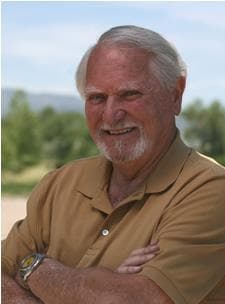
Clive Cussler was a "New York Times" bestselling author, renowned for his " Dirk Pitt" adventure novels. His "Isaac Bell" and "Juan Cabrillo" series also captivated readers. Cussler's "Valhalla Rising," "Dragon," and "Plague Ship" exemplify his signature blend of high-stakes action and historical intrigue.







