“The wind was from the south and it brought the smell of the sea, and of rain, and of something else, something wild and untamed.”
— Early description of the landscape and atmosphere.

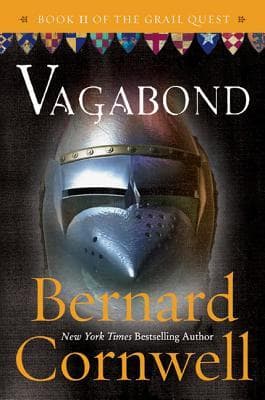
Bernard Cornwell (2002)
Genre
Fantasy / Historical Fiction
Reading Time
420 min
Key Themes
See below
Sign in to track this book
During the brutal Hundred Years' War, an English archer seeks the Holy Grail and revenge against the black rider who ruined his life, only to find himself hunted by a sadistic Inquisitor.
After his adventures in France, Thomas of Hookton, an English archer, returns to his home in Hookton, England. He remembers his grandfather, Father Ralph, who spoke of a great treasure hidden there—the Holy Grail. Thomas is driven by the relic's allure and a deep desire for revenge against the black rider and his master, the Count of Vannes, who destroyed his family and village. He carefully searches his ruined home and the surrounding lands, using clues from his grandfather, a man known for his unusual beliefs and knowledge of ancient secrets. His initial efforts are frustrating, but his determination remains strong.
Thomas's quest soon gets complicated with the arrival of Father Borja, a powerful and cruel Dominican Inquisitor. Borja, a Spaniard known for merciless interrogations and a firm belief in the Church's purity, is also tasked with finding the Holy Grail. He sees the relic as a tool to strengthen the Church's power and remove heresy. Borja's methods are brutal; he uses torture and threats to get information, and his presence darkens the English countryside. He quickly builds a network of informants and pursues any lead, however small, that might bring him closer to the Grail, setting him against Thomas.
Through careful searching and luck, Thomas finds a hidden message or symbol in his family's chapel ruins, a clue pointing to a specific place or another riddle. This discovery energizes his quest, but it also draws the attention of Borja's growing network. Thomas is ambushed by the Inquisitor's men, leading to a violent fight. Using his archery skills, Thomas fends off his attackers, but he realizes the true danger he is in. He understands that Borja is not just a rival but a deadly enemy who will stop at nothing to reach his goal, and that he must be extremely careful.
The clues Thomas has gathered, along with his grandfather's notes, lead him to Salisbury. He believes the next piece of the Grail puzzle is hidden in or near Salisbury Cathedral, a place of religious and historical importance. Thomas travels there, being very careful to avoid Borja's men, who are now actively hunting him. He uses his skills as an archer and mercenary to cross the land and avoid capture. Upon arrival, he begins a quiet investigation of the cathedral and its archives, looking for hidden symbols, old texts, or any sign that might reveal the Grail's location. Salisbury's size and history present a major challenge.
Father Borja, having learned Thomas's likely destination through his spies, also arrives in Salisbury. His presence immediately brings dread to the city. Borja quickly uses his authority, interrogating local clergy and citizens with his usual brutality. He believes Thomas is not only seeking the Grail but is also a heretic, making his capture even more urgent. Borja's men conduct thorough and often violent searches, creating fear and suspicion. The Inquisitor shows he will inflict pain and even death to get information, further solidifying his image as a ruthless antagonist, pushing Thomas to be even more cautious.
While in Salisbury, Thomas discovers a key fact: the Holy Grail's history is linked to the Knights Templar. He finds evidence suggesting his grandfather, Father Ralph, was not just an unusual priest but had a strong connection to the suppressed order, perhaps even being a former Templar or having their secrets. This explains much about the clues and the danger around the Grail. The Templars, known for their wealth and role as protectors of holy relics, were brutally suppressed by the King of France and the Pope, making any connection to them very risky. This new understanding changes Thomas's view of his quest and its true stakes.
Following the Templar clues, which often involve secret symbols and codes, Thomas is led to Glastonbury. This ancient site, rich in myth and legend, especially those about King Arthur and the Holy Grail, becomes the next focus of his quest. The journey to Glastonbury is dangerous, as Borja's agents are still close behind. Thomas uses all his skills in stealth and evasion to reach the sacred ground. He begins to explore the ruins of Glastonbury Abbey and the surrounding mystical landscape, believing the final pieces of the puzzle, or perhaps the Grail itself, are hidden there. Glastonbury's spiritual atmosphere adds another layer of interest to his mission.
Father Borja, relentlessly pursuing Thomas, also arrives in Glastonbury. His presence disrupts the peaceful and ancient atmosphere of the site. The Inquisitor, with his growing group of soldiers and torturers, terrorizes the local people, convinced they are hiding Thomas or information about the Grail. He sees Glastonbury's legends as dangerous superstitions that must be removed, and his methods become even more extreme. Borja's actions in Glastonbury show his fanaticism and complete disregard for human suffering in his pursuit of what he believes is divine will. The sacred ground becomes a battleground of wills and beliefs, with Thomas caught in the middle.
As tension rises in Glastonbury, Thomas's personal quest for revenge suddenly meets his search for the Grail. The black rider, the mysterious knight responsible for Hookton's destruction and his family's death, appears dramatically. This encounter shocks Thomas, as he thought his enemy was far away in France. The black rider is revealed to be allied with or influenced by Father Borja, or perhaps has his own agenda regarding the Grail. This sudden confrontation reignites Thomas's desire for revenge, adding a personal and emotional layer to the already high-stakes Grail quest.
The quest ends in a dramatic confrontation at Glastonbury Tor, a prominent hill with a rich mystical history. Thomas, having decoded the final clues, believes the Grail is hidden there. He is confronted by both Father Borja and the black rider, leading to a desperate three-way struggle. Ancient secrets about the Grail, its true nature, and its connection to Thomas's family are revealed during this intense fight. Thomas, using his archery skills and resilience, fights for his life, the Grail, and his long-awaited revenge. The Tor becomes the stage for a climactic battle of wits, faith, and force, with the Grail's fate and Thomas's future in the balance.
After the battle at Glastonbury Tor, the Holy Grail's true nature is finally revealed. It may not be a physical chalice as traditionally imagined, but something more symbolic: a piece of knowledge, a lineage, or a spiritual truth. Thomas, having survived, must deal with the results of his relentless pursuit. He has faced his enemies, but the cost has been high. The resolution of the Grail quest leaves him with new insights, but also new burdens. His journey has changed him, and he must now decide how to carry the weight of what he has discovered and lost, facing an uncertain future.
The Protagonist
Thomas transforms from a vengeful mercenary to a reluctant guardian of profound secrets, understanding that the Grail's true power lies beyond its physical form.
The Antagonist
Borja's fanaticism escalates throughout the story, leading to his ultimate downfall as his methods prove self-destructive.
The Antagonist
The Black Rider remains a symbol of vengeance, his true allegiance and motivations slowly revealed, culminating in a final, personal confrontation with Thomas.
The Supporting/Mentioned
Though deceased, his legacy and wisdom continue to shape Thomas's path, revealing deeper truths about his family and the Grail.
The Supporting
Guillaume remains a steadfast friend, his loyalty unwavering, providing a constant support system for Thomas.
The Supporting
Lady Jeanette reveals her deeper connection to the Grail's lineage, becoming a key figure in unraveling its true nature.
The Supporting
Brother Guy struggles with his conscience, eventually finding subtle ways to resist Borja's cruelty and aid the truth.
The Supporting
The Abbot's authority is challenged and diminished by Borja's actions, forcing him to confront the moral compromises of his position.
Thomas's main reason for action is initially revenge for his family's destruction at Hookton. This theme explores how personal revenge can be consuming, comparing it with the pursuit of a more abstract justice. While Thomas seeks to punish the black rider, his quest for the Grail makes him consider broader questions of right and wrong, and the corrupting effect of power (as seen in Borja). The story suggests that while vengeance can drive action, true resolution often means moving past it, or at least understanding its limits. The climax often forces Thomas to choose between these two drives.
“''Vengeance is a sword that cuts both ways, boy, but sometimes, it's the only blade left to hand.'”
This theme is central, especially through the conflict between Thomas and Father Borja. Borja represents a strict, dogmatic, and often cruel view of faith, where any difference is heresy deserving of extreme punishment. Thomas, influenced by his grandfather's more unusual views and the Templar secrets, embodies a more personal, spiritual, and questioning faith. The story explores how power can corrupt religious institutions and how the search for 'purity' can cause great suffering. The Grail itself, as a sacred object, becomes a focus for these different interpretations of belief and its boundaries.
“''God's truth is not found in the rack, Inquisitor, but in the heart.'”
The Holy Grail is the ultimate legend, driving the entire plot. The novel explores how myths, prophecies, and old stories shape human actions and beliefs, even centuries later. Glastonbury, with its Arthurian connections, is a strong symbol of this. The 'truth' of the Grail might be less about a physical object and more about the lasting power of what it represents—hope, redemption, or hidden knowledge. The story suggests that legends have a deep influence, often revealing more about history and humanity than simple facts alone.
“''Some truths are too old for history books, boy. They whisper in the stones.'”
While the immediate setting is England, the Hundred Years' War constantly reminds the reader of the wider political and social unrest of the time. Thomas's skills as an archer are formed in this conflict, and the war's chaos allows figures like Borja to act freely, and secret societies like the Templars to hide their legacies. The war represents a period of great change, violence, and shifting loyalties, which subtly affects characters' motivations and the overall feeling of danger and uncertainty. It shows how uncertain life was and the constant threat of violence, both personal and institutional.
“''The world was a bloody place, and a man either learned to fight or he learned to die.'”
Father Ralph's cryptic predictions about the Holy Grail.
The Grail prophecy, delivered by Thomas's grandfather, Father Ralph, serves as the primary inciting incident and guiding force for Thomas's quest. These fragmented and cryptic clues, often hinting at locations, symbols, or historical connections, compel Thomas to search for the Grail. The prophecy creates a sense of destiny and urgency, justifying Thomas's relentless pursuit despite the immense dangers. It also establishes the mystical and historical depth of the Grail, suggesting it is more than just a simple object and has a profound lineage connected to Thomas's own family history.
Father Borja's relentless hunt for Thomas and the Grail.
Father Borja's relentless pursuit acts as a constant external threat and a major source of conflict. His presence elevates the stakes, turning Thomas's quest from a solitary search into a desperate race against a powerful and ruthless adversary. The Inquisitor's methods, involving torture and widespread surveillance, create suspense and force Thomas to be constantly on guard, employing stealth and cunning. This device not only drives the plot forward but also highlights the themes of religious fanaticism and the abuse of power within the Church.
The concealed knowledge and legacy of the Knights Templar.
The revelation of the Holy Grail's connection to the suppressed Knights Templar is a crucial plot device. It provides a historical and conspiratorial layer to the narrative, explaining the esoteric nature of the clues and the extreme danger surrounding the Grail. The Templars, known for their wealth, power, and eventual brutal suppression, serve as a historical precedent for the dangers Thomas faces. Their hidden knowledge, passed down through generations or secreted away, provides the missing pieces of the Grail puzzle, deepening the mystery and raising the stakes for its discovery.
The antagonist who embodies Thomas's personal quest for vengeance.
The Black Rider functions as Thomas's direct, personal antagonist, embodying his desire for vengeance. Unlike Borja, who represents an institutional threat, the Black Rider is tied to Thomas's emotional trauma and the destruction of his home. His sporadic appearances, particularly his unexpected arrival in England, serve to reignite Thomas's burning hatred and remind him of his original, deeply personal motivation. This device grounds the epic Grail quest in a very human story of loss and retribution, ensuring that Thomas's personal journey remains central to the narrative.
“The wind was from the south and it brought the smell of the sea, and of rain, and of something else, something wild and untamed.”
— Early description of the landscape and atmosphere.
“God will judge us all, but first we must judge ourselves.”
— A reflection on morality and personal responsibility.
“A man without a cause is just a man with nowhere to go.”
— Reflecting on the importance of purpose and belonging.
“Fear is a cold companion, but it can keep you alive.”
— A pragmatic view on the role of fear in survival.
“The past is a heavy chain, but sometimes it is the only thing that pulls you forward.”
— Contemplating the influence of past events on future actions.
“Truth is a weapon, and like all weapons, it can cut both ways.”
— Discussing the dangerous nature of truth and its consequences.
“There are some wounds that never heal, only scar over, and even then they ache when the weather turns.”
— Describing the lasting impact of emotional and physical trauma.
“Hope is a small flame, easily extinguished, but without it, we are lost in the dark.”
— Emphasizing the fragility and necessity of hope.
“War makes villains of us all, even those who fight for God.”
— A cynical observation on the moral compromises of warfare.
“Sometimes the greatest loyalty is to oneself, even when it feels like betrayal.”
— A difficult choice made out of self-preservation.
“The world is full of shadows, but it is also full of light. You just have to know where to look.”
— A hopeful outlook despite challenging circumstances.
“A man's worth is not in his birth, but in his deeds.”
— A challenge to the societal norms of the time regarding social status.
“Silence can be a louder scream than any shout.”
— Describing the profound impact of unspoken emotion or absence.
“History is not just the story of kings and battles, but of the ordinary folk caught in their wake.”
— A reflection on the broader scope of historical narrative.
Ready to see how well you understood this book? Take our interactive quiz with 10 questions.
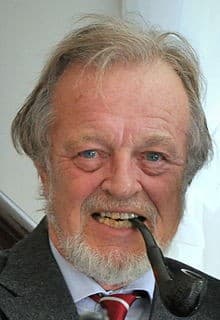
Bernard Cornwell is a prolific British author celebrated for his masterful historical fiction. He is best known for his Sharpe series, chronicling the Napoleonic Wars, and his Warlord Chronicles, which reimagines Arthurian legend. Cornwell's work is lauded for its meticulous research, gritty realism, and compelling narratives.







