
Biography coming soon.

Genre
Thriller
Reading Time
12 Minutes
Key Themes
See below
Sign in to track this book
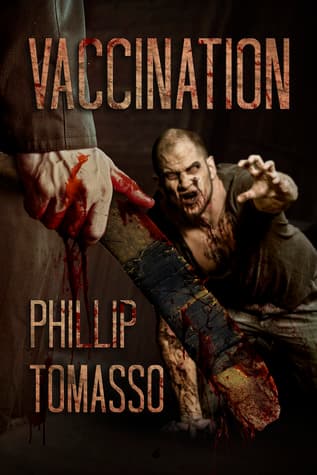
A 9-1-1 dispatcher races to save his children during an H1N1 outbreak that turns the city into a zombie nightmare, forcing him to question the vaccine's origins and seek refuge beyond the border.
Chase McKinney, a 9-1-1 dispatcher, starts his shift during a city-wide H1N1 vaccination campaign. The first calls are normal, but soon a disturbing pattern emerges: callers report bizarre, violent attacks, people biting and eating others. One call describes a man attacking his family, showing unusual strength and a hunger for flesh. Chase first thinks it is drug-induced psychosis or mass hysteria, but the sheer number and graphic nature of the calls quickly make him realize something far more sinister is happening. The city is falling into chaos, and the 'flu' seems to be turning people into ravenous monsters. His immediate concern shifts from his job to his two children, who are with their mother.
Overwhelmed by the unfolding apocalypse, Chase leaves his post, driven only by the need to find his children, Sarah and David. The streets are a nightmare: overturned cars, fleeing pedestrians, and the horrifying sight of the infected, now clearly 'walkers,' attacking anyone they can find. He sees firsthand how quickly the contagion spreads and how fast civilization unravels. Navigating through the pandemonium, he narrowly avoids several encounters with the infected, using his wits and any makeshift weapons he can find. His journey is a desperate race against time, fueled by paternal love and the growing realization that the world he knew is gone.
After a dangerous journey, Chase reaches his ex-wife's house, finding his children, Sarah and David, safe but terrified. His ex-wife, however, has been infected and is slowly succumbing. It is here that Chase pieces together the horrifying truth: the H1N1 vaccination, widely distributed by the government, caused the outbreak. The vaccine, meant to protect, has instead turned people into the walking dead. His ex-wife's deteriorating state confirms the vaccine's devastating effect. They must escape quickly before she fully turns and poses a threat to them all. The house is no longer a safe place.
With his ex-wife now a full-blown walker, Chase, Sarah, and David are forced to flee their home. The suburban streets are no safer than the city, full of the infected. Chase, armed with new resolve and a few scavenged weapons, leads his children through the chaos. They encounter other survivors, some hostile, some equally desperate. The experience is traumatic for Sarah and David, who watch their father's brutal efficiency in dispatching the walkers. The journey strengthens their bond as a family, even under the worst circumstances. They realize that staying in the city means death, and they must create a new plan for survival.
Remembering a news report about Mexico's inability to afford the H1N1 vaccine, Chase forms a desperate plan: head south to the Mexican border. He believes that if the vaccine is the cause, then areas where it was not administered might be safe. The U.S. government's recently built wall, meant to keep out illegal immigrants, now ironically becomes their potential salvation, as it might have prevented the vaccine from crossing. This risky gamble is their only hope. They gather what supplies they can, including a vehicle, and prepare for a long, dangerous journey across an infected country. The children, though scared, trust their father's leadership.
The journey south is dangerous. They navigate through abandoned towns, evade hordes of walkers, and scavenge for food and fuel. They encounter other survivors, some friendly and willing to help, others dangerous. Chase must make difficult decisions to protect his children, often using violence. Sarah and David see the brutal realities of their new world, growing up quickly under extreme pressure. The experiences strengthen Chase's determination to reach the border, despite dwindling hope and the constant threat of infection. Each day is a struggle for survival, pushing them to their physical and emotional limits.
While scavenging for supplies in an abandoned supermarket, Chase and his children are ambushed by a group of ruthless survivors. These individuals have embraced the lawlessness of the new world, preying on the weak. A tense standoff ensues, forcing Chase to protect his children from both the living and the dead. He shows his growing skill in combat and survival, outsmarting the scavengers. The encounter is brutal, highlighting the dual threat posed by both the infected and desperate humans. They escape, but with further emotional scars, understanding that humanity itself is as dangerous as the zombies.
After weeks of travel, the family finally reaches the imposing U.S.-Mexico border wall. The sight of it brings both relief and new challenges. The border area is not deserted; patrols of armed, uninfected individuals guard the wall, wary of any approaching survivors. Chase must find a way to convince them of his intentions and the validity of his theory about the vaccine. The children are exhausted but cling to the hope of safety. The wall, once a symbol of division, now represents their last hope for sanctuary, but crossing it is more complicated than simply avoiding the infected.
At the border, Chase encounters a small, organized group of uninfected U.S. military personnel and scientists who have also pieced together the truth. They confirm his theory: the H1N1 vaccine was indeed the vector for the zombie virus, a catastrophic biological weapon or a horrific accident. The Mexican government's inability to afford the vaccine inadvertently saved their population. This confirmation brings grim satisfaction, but also the crushing weight of the global catastrophe. They now face the monumental task of not only surviving but potentially finding a cure or a way to rebuild in a world overrun by the dead.
With his theory validated and having proven their resilience, Chase and his children are granted entry into a secure, if sparsely populated, zone on the Mexican side of the border. They find a community of survivors – a mix of Mexican citizens and a handful of uninfected Americans – working together to establish a new society. While the world remains dangerous, this new sanctuary offers a chance for stability and recovery. Chase, Sarah, and David begin to adapt to their new reality, understanding that survival is a continuous effort, but that hope, however fragile, still exists in the bonds of family and community. The fight for humanity's future has just begun.
The Protagonist
Chase transforms from a passive observer of chaos into an active, decisive leader and protector, embracing his role as a father in the most extreme circumstances. He sheds his former complacency to become a hardened survivor.
The Supporting
Sarah is forced to grow up rapidly, witnessing unimaginable horrors but retaining a core of resilience and hope, becoming a valuable member of the family's survival unit.
The Supporting
David transitions from a scared and vulnerable child to one who, while still young, begins to understand the need for survival and shows flashes of bravery.
The Antagonist
The Infected undergo no personal arc, serving as a static, relentless force of destruction that drives the plot and shapes the survivors' actions.
The Supporting
Her arc is brief and tragic, transforming from a seemingly normal person to an infected, emphasizing the swift and devastating impact of the virus.
The Supporting
They serve as a static plot device, representing the last bastion of order and knowledge, providing crucial information and a potential safe zone for the protagonists.
The novel shows how quickly societal structures, law, and order can collapse under a widespread catastrophe. Within hours, cities fall into chaos, emergency services are overwhelmed, and humanity's civility crumbles, replaced by primal fear and violence. The story emphasizes that our modern comforts and systems are far more fragile than we assume.
“The calls kept coming, each one painting a clearer picture of a world tearing itself apart, not slowly, but in a terrifying, instant implosion.”
Chase's strong love for his children drives the narrative. His change from an ordinary dispatcher to a hardened survivor is motivated solely by his desire to protect Sarah and David. He makes selfless decisions, faces extreme dangers, and endures immense emotional and physical hardship, all for his children's survival. This theme highlights the powerful, instinctual bond between a parent and child.
“Every step he took, every walker he dispatched, every fear he swallowed, was for them. His children were his only reason to keep moving.”
The novel's core idea is that the H1N1 vaccination, meant as a preventative measure, caused the zombie outbreak. This creates a powerful theme of governmental failure and betrayal, whether accidental or intentional. It fosters deep mistrust in authority and raises questions about the true intentions behind public health initiatives, leaving survivors to question who they can truly rely on.
“The same government that promised to protect us, gave us the very thing that turned us into monsters.”
As society collapses, characters must make brutal choices to survive, often at the cost of their humanity. Chase witnesses and participates in violent acts, not just against the infected but also against other desperate survivors. The novel explores the thin line between necessary brutality for self-preservation and succumbing to the savagery of the new world. It questions what remains of morality when civilization's rules no longer apply.
“He looked at his blood-stained hands, wondering how many more times he could kill before a part of him died with each blow.”
The U.S.-Mexico border, initially a political barrier, becomes a symbol of hope and a potential sanctuary. The irony that the Mexican government's inability to afford the vaccine saved its population, making the border a lifeline, is central to this theme. It explores how geographical and political divisions can take on new meanings in a crisis, with 'safe zones' determined by unforeseen circumstances rather than intentional design.
“The wall, built to keep them out, might now be the only thing keeping us alive.”
The H1N1 vaccine serves as the catalyst for the apocalypse.
The H1N1 vaccination is the central plot device that triggers the entire zombie outbreak. It is initially presented as a solution to a global pandemic, but it is revealed to be the very cause of the zombie transformation. This misdirection creates a sense of government betrayal and adds a layer of tragic irony to the catastrophe. It drives the plot by explaining the origin of the infected and sets up Chase's theory about the Mexican border as a safe zone, propelling his journey.
Government and media initially mislead the public about the true nature of the outbreak.
This device is evident in the early stages of the outbreak, where initial reports from authorities and media outlets downplay the severity or mischaracterize the cause of the violence. This creates confusion and delays effective responses, allowing the virus to spread unchecked. Chase's role as a 9-1-1 dispatcher, hearing raw, unfiltered calls, starkly contrasts with official narratives, highlighting the danger of trusting established institutions during a crisis.
The U.S.-Mexico border becomes the unlikely safe haven.
The U.S.-Mexico border, specifically the Mexican side due to their lack of vaccine distribution, functions as a sanctuary. This device subverts typical expectations, turning a political barrier into a beacon of hope. It provides a tangible goal for Chase's journey and offers a resolution, however temporary, to the immediate threat. The irony of the situation – that being unable to afford a vaccine saved a nation – is a powerful commentary on global inequities and unforeseen consequences.
Ready to see how well you understood this book? Take our interactive quiz with 10 questions.
Biography coming soon.







