“There are some things you can't hurry and some things you can't stop. A river in flood is one, and love is another.”
— Julie reflects on life and emotions.

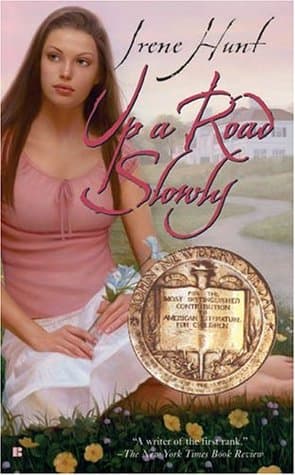
Irene Hunt (1966)
Genre
Children's / Historical Fiction / Young Adult / Romance
Reading Time
240 min
Key Themes
See below
Sign in to track this book
Orphaned Julie, under her Aunt Cordelia's strict but loving care, grows from childhood to young womanhood, finding love, loss, and inner strength in rural Illinois.
At age seven, Julie moves from her comfortable city home to live with her Aunt Cordelia, a stern and scholarly spinster, in a small rural town after her mother dies. Her father, a busy professor, feels he cannot care for her and her older brother, Chris. Julie's first impression of Aunt Cordelia's home is its quiet order, a stark contrast to her old life. She struggles with the rules and expectations, often feeling lonely and misunderstood. Her cousin, Aggie, a gentle and simple woman, also lives there, offering a quiet, comforting presence amid Aunt Cordelia's strictness. This move begins Julie's journey into a new and challenging environment.
Julie's early years with Aunt Cordelia are marked by various adventures and lessons. Her older brother, Chris, visits often and instigates mischief, to Aunt Cordelia's annoyance. For example, Julie tries to sell Aunt Cordelia's valuable antique watch to buy candy, showing her innocent but mistaken idea of value. Aunt Cordelia, though strict, uses these moments to teach Julie responsibility and the results of her actions. These early events highlight Julie's childish innocence and Aunt Cordelia's patient, firm approach to her upbringing, building the foundation of their changing relationship.
As Julie grows, she meets her Uncle Haskell, Aunt Cordelia's brother, a brilliant but troubled poet who visits occasionally. Haskell is very different from the disciplined household; he is charming, witty, and often brings romance and chaos. However, Julie soon learns of his severe drinking problem, which causes unpredictable behavior and periods of absence. Despite his flaws, Haskell sparks Julie's imagination and introduces her to literature's beauty and human nature's complexities, leaving a lasting impression. His presence adds emotional depth and shows her the harsher realities of the adult world.
During her teenage years, Julie forms close friendships, especially with her cousin Aggie and a neighbor, Suzy. She also experiences her first romantic interests. One important relationship is with Brett, a charming and somewhat rebellious boy who catches her eye. Their interactions are filled with the awkwardness and excitement of young love, marked by shared secrets and stolen moments. These relationships give Julie a sense of belonging and help her navigate her emotions outside Aunt Cordelia's strict home. These experiences are important for her social and emotional development, as she learns about loyalty, heartache, and human connection.
As Julie matures, her view of Aunt Cordelia slowly changes. No longer seeing her only as a strict disciplinarian, Julie begins to recognize the deep love and wisdom behind Aunt Cordelia's strictness. Aunt Cordelia teaches her not only school subjects but also life lessons about integrity, perseverance, and kindness. She encourages Julie's love for reading and learning, shaping her curiosity. Through various interactions, Julie learns to appreciate Aunt Cordelia's steady support and the stable, nurturing environment she provides, even if it is not always openly affectionate. This evolving understanding is a significant part of Julie's coming-of-age.
Julie experiences deep losses that make her face grief and change. The death of her beloved cousin Aggie is a heartbreaking event, as Aggie had been a constant source of gentle comfort and understanding. This loss deeply affects Julie, teaching her about life's fragility and the pain of goodbyes. Later, Uncle Haskell's struggles with alcoholism lead to his decline and death, further deepening Julie's understanding of human suffering and compassion. These experiences, though painful, greatly help her emotional growth, making her more empathetic and resilient as she deals with life and loss.
Julie's romantic life continues to develop, bringing both joy and disappointment. Her relationship with Brett becomes more serious, but it also has the typical challenges of young love, including misunderstandings and different goals. She also meets other potential romantic interests, forcing her to confront her feelings and make difficult choices. These experiences teach her about relationships, the importance of communication, and the pain of unrequited love or fading affections. Each romantic event helps her understand herself and what she truly wants in a partner, shaping her views on love and commitment as she nears adulthood.
As Julie nears her eighteenth birthday, she begins to seriously think about her future. Aunt Cordelia, always the educator, encourages her to pursue higher education, emphasizing intellectual independence. Julie reflects on her experiences and the lessons she has learned, especially from Aunt Cordelia and Uncle Haskell. She considers her options, thinking about her passion for literature and her desire for a meaningful life. This period involves introspection and self-discovery as she transitions from girlhood to young womanhood, making choices that will define her adult path and solidify her identity, guided by the values her guardians taught her.
In an important moment, Julie understands more about Aunt Cordelia's past. She learns about a lost love in Aunt Cordelia's youth, a secret heartache that shows a more vulnerable, romantic side to her stern aunt. This discovery changes Julie's previous idea of Aunt Cordelia as simply a strict, unfeeling spinster. She now sees her aunt as a complex person who has also felt deep emotions and disappointments. This discovery creates a new level of empathy and connection between them, strengthening their bond and deepening Julie's appreciation for Aunt Cordelia's sacrifices and strength.
By the novel's end, Julie, now eighteen, has fully become the woman she is meant to be. She acknowledges the deep impact of Aunt Cordelia, Uncle Haskell, and all the experiences, both joyful and painful, that have shaped her. She has learned to appreciate the quiet strength and constant love Aunt Cordelia provided. With a mature perspective, she understands that life is a journey 'up a road slowly,' filled with continuous learning and growth. Julie leaves Aunt Cordelia's home, not to escape, but to begin her own path, carrying the invaluable lessons and love that have prepared her for adulthood's challenges and opportunities.
The Protagonist
Julie transforms from an innocent, somewhat sheltered child into a thoughtful, resilient young woman, learning to appreciate the wisdom and love in her life.
The Supporting
Though seemingly static, Aunt Cordelia's character is revealed more deeply through Julie's evolving perception, showing her vulnerability and profound love.
The Supporting
Uncle Haskell's arc is tragic, showing the slow decline caused by his addiction, but also his enduring spirit and love for beauty.
The Supporting
Aggie's arc is one of gentle presence and quiet influence, culminating in her death which deeply impacts Julie.
The Supporting
Chris remains a relatively stable, though not central, figure, representing the continuity of family ties.
The Supporting
Brett's arc is tied to Julie's romantic awakening, representing the transient nature of first loves.
The Supporting
Suzy's arc is primarily as a supportive friend, a stable presence in Julie's social life.
The novel's central theme is Julie's growth from childhood to young adulthood. The story carefully details her emotional, intellectual, and moral development from age seven to eighteen. Through her experiences with loss (her mother, Aggie, Uncle Haskell), love (Brett, her family), and learning (Aunt Cordelia's lessons, her own mistakes), Julie slowly loses her childish innocence and gains a deeper understanding of herself and the world. Her growth is not direct but a 'slow' and deliberate process, showing the complexities of maturation. This theme is clear in her changing relationship with Aunt Cordelia, as she moves from resentment to deep appreciation.
“It was indeed a long road, the one I had traveled from the time I was seven until I was eighteen. It was a road up a slowly rising hill, and I had come to the top, and I could look back and see all the twists and turns and the places where I had stumbled and the places where I had run.”
The novel explores the many sides of love within a family, going beyond typical expressions. Aunt Cordelia's love for Julie, though strict, is deep and constant, shown in her dedication to Julie's upbringing and education. Uncle Haskell's love, though complicated by his alcoholism, is passionate and inspiring. Aggie's quiet, unconditional love offers a comforting presence. The story suggests that love can appear in many forms—nurturing, challenging, sacrificing, and even flawed—but it is the foundation of family and personal growth. Julie learns to recognize and appreciate these different forms of love as she matures.
“Aunt Cordelia was not a demonstrative woman, but she loved me. I knew it now, as surely as I knew my own name.”
Loss is a repeated theme throughout Julie's journey, starting with her mother's death and continuing with the deaths of Aggie and Uncle Haskell. Each loss forces Julie to face grief, impermanence, and the pain of separation. However, these experiences also build her resilience and empathy. She learns to cope with sadness, to find strength in memory, and to appreciate life's preciousness. How she processes these losses, especially her changing understanding of Uncle Haskell's struggles, shows her growing capacity for compassion and her ability to endure hardship.
“There were so many good-byes in my life. Each one tore a little piece from me, but each one also taught me something new about holding on.”
Education, both formal and informal, greatly influences Julie's development. Aunt Cordelia, a schoolteacher, teaches Julie a deep respect for learning, discipline, and critical thinking. She encourages Julie's love for reading and ensures she gets a strong education. Uncle Haskell, through his poetry and intellectual discussions, sparks Julie's imagination and introduces her to literature's beauty and power. These influences shape Julie's intellectual curiosity and give her tools to understand herself and the world, guiding her toward self-improvement and personal fulfillment.
“Aunt Cordelia believed that books were the finest companions a person could have, and that learning was a treasure no one could ever steal.”
A coming-of-age story that traces the protagonist's moral and psychological development.
The entire narrative structure of 'Up a Road Slowly' functions as a Bildungsroman. The story begins with Julie as a young child and follows her through various formative experiences, from adapting to a new home and navigating childhood mischief to experiencing first love, profound loss, and making decisions about her future. Each chapter marks a stage in her growth, demonstrating her intellectual, emotional, and moral development as she matures into a young woman. The title itself, 'Up a Road Slowly,' metaphorically encapsulates this gradual journey of self-discovery and maturation.
Characters who contrast with the protagonist or another character to highlight their qualities.
Aunt Cordelia and Uncle Haskell serve as significant foil characters for each other and for Julie. Aunt Cordelia's strict discipline, orderliness, and intellectual rigor contrast sharply with Uncle Haskell's bohemian nature, artistic temperament, and struggles with addiction. These contrasting personalities expose Julie to different facets of life, morality, and human nature, allowing her to draw her own conclusions and form her own values. Aunt Cordelia's hidden vulnerability, revealed later, also serves as a foil to her outward sternness, deepening Julie's understanding of her.
The 'road' as a metaphor for life's journey and personal growth.
The central metaphor of the novel, embedded in its title 'Up a Road Slowly,' symbolizes Julie's life journey. The 'road' represents the path of life, with its twists, turns, challenges, and gradual ascent towards maturity and understanding. The 'slowly' emphasizes that growth is not instantaneous but a continuous, deliberate process, filled with learning and introspection. This symbolic road encapsulates the Bildungsroman structure, suggesting that every experience, good or bad, contributes to the individual's progress along their unique path.
The story is told from Julie's perspective, looking back on her past.
The novel is narrated by Julie herself, looking back on her experiences from the vantage point of adulthood. This first-person retrospective narration allows for a mature, reflective tone, providing insight into Julie's thoughts and feelings at different stages of her life while also offering the wisdom and understanding gained from hindsight. This narrative choice enables the reader to witness Julie's emotional and intellectual development through her own eyes, lending authenticity and depth to her coming-of-age journey and emphasizing the theme of gradual self-discovery.
“There are some things you can't hurry and some things you can't stop. A river in flood is one, and love is another.”
— Julie reflects on life and emotions.
“It was a good life for a child, filled with the warmth of loving people and the quiet security of a house that had been lived in for a hundred years.”
— Julie describes her early childhood at Aunt Cordelia's.
“Aunt Cordelia believed that books were the most important things in the world, next to God and the truth.”
— Julie shares Aunt Cordelia's philosophy on reading.
“Sometimes you have to let go of the life you planned, to have the life that is waiting for you.”
— Julie learns to adapt to unexpected changes.
“It isn't what you have in your hand, but what you have in your heart.”
— Aunt Cordelia offers wisdom.
“Growing up is a little like climbing a road slowly, with many twists and turns, and sometimes you stumble and sometimes you fall, but you keep going.”
— The central metaphor of the book, as Julie matures.
“There was a loneliness in me, a kind of ache that no one could quite touch.”
— Julie describes her feelings of isolation at times.
“The past is a part of you, but it doesn't have to be all of you.”
— Julie grapples with past events and moving forward.
“It was a strange feeling, being loved and not quite knowing how to return it.”
— Julie reflects on her relationships and emotional development.
“People change, and that's a good thing. It means you're learning.”
— A character observes the evolving nature of individuals.
“Silence can be a friend, a comfort, or a terror. It all depends on what you bring to it.”
— Julie contemplates the nature of quietude.
“The best kind of beauty is the one that shines from inside.”
— Aunt Cordelia imparts a lesson on true beauty.
“Sometimes the greatest lessons are learned not from what we are told, but from what we experience.”
— Julie gains wisdom through her life experiences.
“Love is not a thing you find. It's a thing that finds you.”
— Julie's thoughts on the unpredictable nature of love.
Ready to see how well you understood this book? Take our interactive quiz with 10 questions.

Dan Gemeinhart
4.5

Kate O'Hearn
4.4

Jeanne Birdsall
4.4

Jen Wang
4.4

Wendelin Van Draanen
4.3

John Marsden
4.3

Chris Van Allsburg
4.3
Jennifer A. Nielsen
4.2