BookBrief
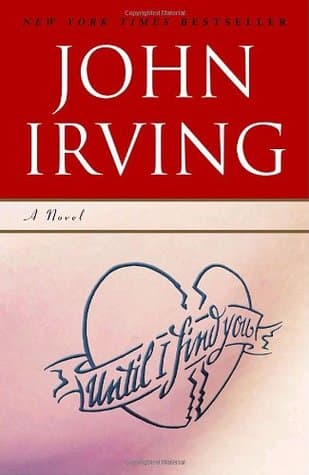
Until I Find You cover
Archivist's Choice

Until I Find You

John Irving (2005)

Genre

Literary Fiction

Reading Time

1500 min

Key Themes

See below

Track Your Reading

Sign in to track this book

Haunted by a tattoo-addicted organist father and a mother scarred by his absence, a young actor grapples with his own indelible marks left by a parade of older women.

Synopsis

Jack Burns's life starts in a Toronto tattoo parlor, where his mother, Alice, works and raises him among various tattooed men. His father, William Burns, a church organist, is gone, having left Alice and Jack due to his secret tattoo addiction. As a child, Jack travels across Europe with Alice, meeting many older women who influence his sexual awakening and view of the world. He eventually returns to Toronto for boarding school, all the while wondering about his father's disappearance and his mother's pain. Jack later learns the full extent of William's addiction through his tattoos, a discovery that affects his identity and future. Jack becomes an actor, finding success in Hollywood, but his personal life stays complicated, marked by multiple marriages and a continued search for understanding. He eventually confronts his father's past and accepts the inherited marks, both literal and metaphorical, that have shaped his life, ultimately finding forgiveness and self-acceptance.
Reading time
1500 min
Difficulty
Medium
Pacing
Slow
Mood
Introspective, Melancholy, Quirky, Profound
✓ Read this if...
You enjoy sprawling, character-driven literary sagas with a focus on psychological depth, unconventional family dynamics, and a touch of the bizarre.
✗ Skip this if...
You prefer fast-paced plots, straightforward narratives, or are uncomfortable with themes of sexual awakening and extensive exploration of childhood trauma.

Plot Summary

Childhood in Tattoo Parlors

Jack Burns spends his early childhood in the unconventional world of tattoo parlors across Northern Europe, mainly in Denmark, Sweden, and Finland. His mother, Alice, a tattoo artist, constantly moves them from city to city, driven by an effort to find Jack's father, William Burns, a church organist who left them shortly after Jack's birth. During these years, Jack meets a community of tattoo artists, sailors, and counter-cultural figures. He is raised by Alice and the various female tattoo artists she works with, especially the strong and maternal Hanne. Jack's education involves watching the tattoo trade, listening to adult stories, and experiencing a unique, unsupervised freedom.

The Search for William Burns

Alice's search for William Burns drives Jack's early life. She carries a single photograph of William, a young man with a distinctive tattoo, and shows it to everyone in the tattoo community, hoping for clues. They follow whispers and rumors, often arriving at a location only to find William has just left, or that the information was wrong. These near-misses and constant disappointments affect Alice deeply, fueling her bitterness and feeling of abandonment. Jack, a quiet observer, internalizes his mother's pain and her dedication to a man he has never met, shaping his own understanding of love and pursuit.

Encounters with Older Women

As Jack grows, he becomes the object of affection and sexual attention from many of the older women in Alice's tattoo artist circle. These women, often lonely or seeking comfort, introduce Jack to sexual experiences at a very young age. His first significant relationship is with a Danish tattoo artist named Inger, who is much older than him. These encounters, while often consensual at the time, affect Jack's psychological development, blurring the lines of appropriate relationships and creating a deep attraction to older women. These early experiences become a pattern that repeats throughout his adult life, influencing his romantic choices and his understanding of intimacy.

Return to Toronto and Boarding School

Eventually, Alice, tired of the fruitless search, settles in Toronto, Canada, where she opens her own tattoo parlor. To give Jack a more stable upbringing, she enrolls him in a private boarding school, The Favorite, a contrast to his nomadic, bohemian childhood. This transition is difficult for Jack, who struggles to fit in with his privileged peers. The school environment, especially the headmaster's wife, Mrs. Wurtz, introduces him to a different kind of female authority figure. This period marks a shift, pulling Jack away from the immediate influence of the tattoo world but not erasing its lasting impact.

The Discovery of William's Tattoos

During his adolescence, Jack learns a detail about his father: William Burns is not just a church organist, but a man obsessed with being tattooed. He learns that William is a 'collector' of tattoos, especially those done by renowned artists. This discovery provides a new way to understand his father's disappearance and Alice's relentless pursuit. It also explains the specific tattoo Alice used as a clue. Jack begins to put together the fragmented stories, realizing that his father's body is a living canvas, a sign of his unique devotion and obsession, mirroring Alice's own artistic passion.

Jack's Acting Career Begins

At The Favorite, Jack discovers a talent for acting. The stage gives him an outlet to explore different identities and channel his complex emotions and experiences. His performances are often intense, drawing on the influences of his unconventional upbringing and his relationships with older women. Acting becomes not just a career, but a psychological refuge, allowing him to inhabit other characters and momentarily escape the weight of his own identity. His early theatrical successes lead to a future in film, where his unique screen presence later captivates audiences.

Hollywood and Marriages

As an adult, Jack Burns becomes a successful Hollywood actor. Following his childhood patterns, he repeatedly marries older, established actresses, including the well-known Elizabeth 'Liz' Arden. These marriages are often difficult, marked by his complex psychological needs and the public scrutiny of their lives. Despite his professional success, Jack deals with the lingering effects of his past, particularly his unresolved feelings about his father and his mother's sacrifices. His fame brings both opportunities and new pressures, forcing him to confront his public persona versus his private struggles.

The Revelation of William's Addiction

Through various encounters, Jack finally understands the true depth of his father's obsession. William Burns is not just a collector but an addict, driven by an insatiable need for tattoos, viewing his body as a sacred text. This addiction is what led him to abandon Alice and Jack; he prioritized new tattoos and renowned artists over his family. The tattoos on William's body are not random art, but a narrative, a secret language that only Alice, with her artistic eye, can truly decipher. This understanding gives Jack a painful insight into his father's motivations and the sacrifices made.

Jack's Own Tattoos

In a turn of events, Jack, despite his earlier hesitation, begins to get tattooed himself. His first tattoo is a symbolic representation of his past, a choice that connects him directly to both his mother's artistry and his father's obsession. This act is a form of reconciliation, a way for Jack to physically embody his heritage and understand the compulsion that drove his parents. The tattoos become a personal narrative, a visual diary of his own journey and his acceptance of the complex legacy he carries. This act of self-marking is a step in his personal growth and healing.

Confronting the Past and Forgiveness

As Jack ages, he continues to deal with the impact of his childhood. He revisits the places of his youth, reconnects with people from the tattoo world, and ultimately accepts his parents' complex personalities. The novel explores forgiveness, not necessarily in a traditional sense, but in Jack's ability to understand and accept his parents' flaws and obsessions. He learns to integrate his unconventional upbringing into his identity, recognizing how it shaped him into the man and actor he became. The ending suggests a measure of peace and self-acceptance for Jack, as he embraces his own unique story.

Principal Figures

Jack Burns

The Protagonist

Jack moves from a confused, passive recipient of his unusual childhood to an actor who channels his experiences, eventually understanding and embracing his complex heritage, finding a measure of self-acceptance.

Alice

The Supporting

Alice's arc is one of sustained obsession and eventual resignation, moving from an active, hopeful searcher to a settled, successful artist who still carries the weight of her past.

William Burns

The Antagonist/Mentioned

William's arc is largely told in retrospect, revealing him as a man consumed by an addiction that dictates his life, ultimately becoming a legend within the tattoo community rather than a conventional father figure.

Hanne

The Supporting

Hanne remains a constant, supportive figure, representing the enduring kindness and unconventional family structure of the tattoo world.

Inger

The Supporting

Inger's role is primarily to establish the pattern of Jack's relationships with older women, a formative experience that shapes his sexual and emotional development.

Elizabeth 'Liz' Arden

The Supporting

Liz Arden serves as a significant adult relationship for Jack, reflecting his childhood patterns and contributing to his understanding of love, fame, and personal identity.

Mrs. Wurtz

The Supporting

Mrs. Wurtz serves as a symbolic figure of traditional authority, challenging Jack's ingrained understanding of female relationships and societal norms.

Svend

The Mentioned

Svend's role is largely static, serving to flesh out the world of the European tattoo community.

Themes & Insights

Loss of Innocence

The novel explores the loss of innocence, mainly through Jack's early life. His childhood among transient tattoo artists, his mother's quest, and his early sexual experiences with older women, remove him from a conventional childhood. This theme appears in his early exposure to adult relationships, sexuality, and human obsession. The contrast between his bohemian upbringing and the structured world of boarding school highlights this loss, as Jack continually grapples with the permanent imprint of his unconventional youth. His acting career becomes a way to re-enact and process these lost years.

What had been done to me as a boy, by those women, had indelibly marked me. It was like a tattoo. You could never get rid of it.

Jack Burns (narrator)

Obsession and Addiction

Obsession drives several characters. Alice is obsessed with finding William, spending years of her life in the pursuit. William, in turn, is consumed by his addiction to being tattooed, prioritizing it above all else, including his family. This theme shows how extreme devotion, whether to a person or an activity, can lead to both artistic expression and personal destruction. Jack inherits a legacy of intense fixation, influencing his own relationships and his dedication to acting. The novel shows how obsession can be both a creative and a destructive force, shaping lives.

He wasn't just collecting tattoos; he was collecting himself. He was the story he was telling on his own skin.

Alice (narrator recalling her understanding of William)

The Nature of Family and Identity

The book challenges traditional ideas of family. Jack grows up in a non-traditional 'family' of tattoo artists, raised by his mother and various female mentors. His identity is tied to his parents' unconventional lives — his mother's artistry and quest, and his father's mysterious tattoo addiction. The novel explores how one's origins, even fragmented or unconventional, shape who a person becomes. Jack's journey is about piecing together his family story, understanding the 'tattoos' of his past, and integrating them into his adult identity as an actor and individual. His identity is a constant negotiation between his bohemian roots and the conventional world he later inhabits.

You are who your parents are, and who they are is what they've done to you.

Jack Burns (narrator)

Art as a Form of Expression and Escape

Art, especially tattooing and acting, is a central theme for expression and escape. Alice's tattooing is a form of artistic expression and her livelihood, while William's tattoos are an extreme, almost spiritual, form of self-expression and addiction. For Jack, acting becomes his main artistic outlet, allowing him to embody different characters and process his complex emotions. The stage provides a safe space for him to explore the 'tattoos' of his own past, transforming personal trauma into public performance. Art in the novel is both a means of self-discovery and a powerful, sometimes destructive, force that shapes identity and destiny.

My father's tattoos were his autobiography, and my acting became mine.

Jack Burns (narrator)

The Enduring Impact of Childhood

The novel details how Jack's childhood experiences, particularly his early sexual encounters and his mother's search, affect his adult life. His attraction to older women, his emotional complexities, and even his chosen profession as an actor are direct results of his formative years. Irving emphasizes that these early experiences are 'tattooed' onto a person, permanent and constantly influencing future choices and relationships. The narrative often returns to Jack's youth, showing how the past is never truly past, but an active, shaping force.

A childhood isn't something you outgrow; it's something you carry with you, like a tattoo.

Jack Burns (narrator)

Plot Devices & Literary Techniques

The Motif of Tattoos

Physical and metaphorical marks that represent identity, memory, and obsession.

Tattoos are the central symbolic motif of the novel. Literally, they are Alice's art and William's addiction, forming a narrative on his skin. Metaphorically, they represent the indelible marks left by childhood experiences, trauma, and relationships. Jack's own decision to get tattooed is a symbolic acceptance and integration of his past. The permanence of tattoos mirrors the lasting impact of early life events, serving as a visual and psychological anchor for the characters' identities and histories.

Non-Linear Narrative

The story frequently jumps between Jack's childhood and adulthood, revealing information gradually.

The novel employs a non-linear narrative, frequently shifting between Jack's early childhood in Europe and his adult life as a famous actor. This structure allows Irving to slowly unveil the mysteries surrounding William Burns and the full impact of Jack's upbringing. By juxtaposing past and present, the reader gradually understands how Jack's formative experiences directly shape his adult relationships and choices. This narrative device builds suspense and emphasizes the enduring influence of childhood on identity.

First-Person Retrospective Narration

Jack Burns narrates his life story from an adult perspective, looking back on his past.

The story is told entirely from Jack Burns' first-person perspective, as an adult reflecting on his life. This retrospective narration allows Jack to offer insights, interpretations, and emotional depth to events that occurred when he was too young to fully comprehend them. His adult voice provides a layer of analysis and understanding, guiding the reader through the complexities of his childhood, his relationships, and his ongoing quest for self-discovery and reconciliation with his past.

Foreshadowing

Hints and clues about future revelations, particularly concerning William's true nature.

Irving uses subtle and overt foreshadowing throughout the novel, particularly regarding the truth about William Burns. Alice's relentless, almost desperate, search and the vague, often contradictory, information about William create an underlying tension. The recurring mention of William's single tattoo in Alice's photograph, and the strange reactions of other tattoo artists, all hint at a larger, more unusual truth about his character and his relationship with tattoos, building anticipation for the eventual revelation of his extreme addiction.

Critical analysis

Notable Quotes

Your father was a filmmaker. And filmmakers are like writers. They're like painters. They're like architects. They're like composers. They're like sculptors. They're like dancers. They're like actors. They're like musicians. They're like poets. They're like magicians. They're like shamans. They're like priests. They're like gods. They're like devils. They're like saints. They're like sinners. They're like everybody else. They're just more so.

Mrs. Deighan describing the nature of filmmakers to Jack.

You only have to forgive once. To resent, you have to do it all day, every day.

Graves, a tattoo artist, offering advice to Jack.

Memory is a tattle-tale. It tells on you.

Jack realizing the inescapable nature of his past memories.

The past is a place where you can only go in your mind. If you really go there, you're dead.

A reflection on the danger of living too much in the past.

It is a terrible thing to be an actor. You live in a world of make-believe and you are never quite sure who you are.

Jack's mother, Alice, talking about the challenges of her profession.

Sometimes the best way to get to where you're going is to get lost.

A general observation on the unexpected paths of life.

To be a writer, you must have a room of your own. And a life of your own. And a mind of your own.

An internal thought by Jack about the necessities for creative work.

You don't get over things. You just get through them. And then you get through some more.

A somber reflection on coping with trauma and loss.

The truth is, there's no such thing as normal. There's just what you get used to.

A character's philosophical outlook on life's eccentricities.

Love is not a feeling. It's a decision. It's a commitment.

A character expressing a mature view on the nature of love.

Every secret comes with a price, and the longer you keep it, the higher the price.

Jack reflecting on the burden of hidden truths.

The world is full of ghosts, some of them still breathing.

Jack contemplating the lingering presence of past figures and influences.

Sometimes what you're looking for is right in front of you, but you're too busy looking for something else.

A moment of realization about overlooked opportunities or truths.

Childhood is not a race to see who can grow up the fastest. It's a time to be a child, to explore, to dream.

A commentary on the importance of allowing children to experience their youth.

Quiz

Test Your Knowledge

Ready to see how well you understood this book? Take our interactive quiz with 10 questions.

10
Questions
~5
Minutes
?
Best Score

Key Questions (FAQ)

The novel primarily follows Jack Burns, an actor, through his childhood and adult life, exploring how his early experiences with older women, his absent father, and his mother's trauma shape his identity and relationships. It delves into themes of loss of innocence, memory, and the lasting impact of childhood on the adult psyche.

About the author

John Irving

John Winslow Irving is an American-Canadian novelist, short story writer, and screenwriter.