“All of us are an unwilling part of a machine that is a million times bigger than us, and we are just small cogs. We have no choice but to turn, and turn, and turn.”
— A reflection on the individual's powerlessness within a larger societal system.

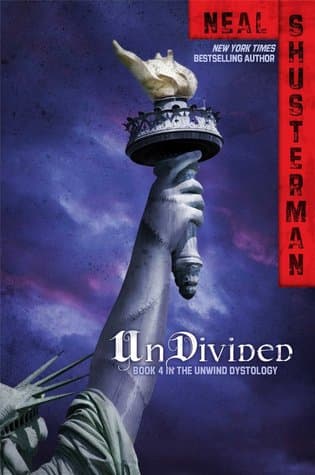
Neal Shusterman (2014)
Genre
Thriller / Fantasy / Science Fiction / Young Adult / Romance
Reading Time
450 min
Key Themes
See below
Sign in to track this book
As America nears civil war, three teens uncover a conspiracy that could save a generation from forced organ harvesting or push the nation into a bloodier rebellion.
Cam, the first successful 'rewound' teen, struggles with his made identity and the memories of his donors. He works for Proactive Citizenry and discovers their plan: to mass-produce rewound soldiers for a new military, believing they can control their personalities. Meanwhile, Conner Lassiter, Risa Ward, and Lev Calder lead a growing youth movement. They, along with other activists, organize a large march on Washington D.C. to expose unwinding and demand its end. This peaceful protest, however, faces increasing resistance and the threat of violence from authorities and radical elements within their own ranks, especially Starkey's storked army.
Hayden, now allied with Starkey, helps him gain power among the 'storked' teens — those abandoned on doorsteps. Starkey, driven by rage against adults and the system that allowed unwinding, forms a disciplined, militant army. His goal is not just to end unwinding, but to enact violent revenge against all adults responsible, starting with burning harvest camps and executing staff. His brutal methods create a dangerous parallel movement that threatens to derail Conner's efforts for peaceful reform and push the nation into further chaos, as his followers are loyal and ready for war.
Risa, using her medical knowledge and access within the system, investigates unwinding. She finds disturbing evidence that challenges the belief that unwinding merely redistributes body parts while preserving the soul. Through research, she learns the process might destroy an individual's consciousness and identity, making it more horrific than previously thought. This discovery becomes a key piece of evidence for the youth movement, giving undeniable moral weight to their cause and encouraging more people to join their fight against Proactive Citizenry and unwinding, confirming that unwinding is murder.
Lev, still dealing with his past as a tithe and his complex relationship with his family and faith, faces an identity crisis. He learns about the 'soul-splice' technology, which Proactive Citizenry has hidden — a method that could theoretically allow unwound consciousnesses to continue. He realizes this technology, while potentially offering a form of afterlife, could also be exploited. Lev struggles with the ethical implications and the personal cost of using such a device. His journey forces him to confront his own beliefs about life, death, and the soul, leading to a critical decision that will affect the future of unwinding and potentially offer redemption for many.
The planned peaceful march on Washington D.C. begins as a powerful display of unity. Thousands of teens arrive at the Capitol, demanding an end to unwinding. However, the situation quickly turns chaotic. Starkey's militant storked army, arriving with its own agenda of violent revenge, clashes with authorities and even with Conner's peaceful faction. The D.C. streets become a battleground, with casualties on both sides. This escalation forces Conner, Risa, and Lev to make difficult choices, as their message of peace is overshadowed by violence and the desperate fight for survival.
Cam, increasingly unhappy with Proactive Citizenry and their manipulative agenda, struggles with his fragmented identity. He feels like a pawn, a collection of parts rather than a whole person. During the D.C. confrontation, he decides to betray his creators, using his unique position and access to help Conner and the unwound movement. This act of defiance is a turning point for Cam, as he begins to form his own identity and purpose, separate from his creators' intentions. He uses his knowledge of Proactive Citizenry's secrets to expose their lies and bring their operations to light, seeking his own redemption.
As the conflict rages, the fatal flaw in Proactive Citizenry's rewinding process is revealed. It is discovered that while rewound individuals like Cam can integrate memories and personalities from their donors, the process is unstable. The donated parts retain some of their original consciousness, causing internal conflict, mental instability, and ultimately, a breakdown of the rewound individual's mind. This truth exposes Proactive Citizenry's project as unethical, flawed, and cruel, proving that their attempts to control human lives cause immense suffering. This revelation further fuels public outrage against unwinding.
Amidst the chaos and violence, Conner becomes a true leader. He gathers the different groups of unwound teens, storked teens who reject Starkey's extremism, and their adult allies. He inspires them to fight not just for their own lives, but for a future where no child is ever unwound. He organizes their defenses, makes strategic decisions, and becomes a symbol of hope and resistance against the oppressive system. His leadership is essential in uniting the various groups and focusing their efforts on a common goal, even as they face overwhelming odds against Proactive Citizenry and government forces.
In a desperate attempt to find a humane alternative to unwinding, Lev and his allies work to activate and publicize the hidden 'soul-splice' technology. This technology, if successful, could offer a way for individuals to transfer their consciousness into a new form, avoiding unwinding while preserving their identity. It is a risky, unproven solution, but it represents the only hope for a future where children are not simply harvested. Implementing this technology becomes a race against time, as they try to offer a viable alternative before the conflict consumes everything, providing a chance for a new kind of existence.
The conflict eventually ends, leaving a scarred nation but also the promise of a new beginning. Unwinding is abolished, and its proponents are brought to justice. The soul-splice technology, though imperfect, offers a path for many. Conner, Risa, and Lev, along with other key figures, take on new roles in shaping the future. They work to establish a society that values every life, where children are no longer seen as disposable. The ending has lingering challenges and questions, but it marks a profound shift in societal values and the fragile emergence of a more humane world, built on the sacrifices of the unwound.
The Protagonist
Conner evolves from a rebellious runaway to a strategic and inspirational leader, ultimately becoming a foundational figure in a new, unwound-free society.
The Protagonist
Risa grows from a skilled but institutionalized teen to a crucial scientific and moral voice, contributing significantly to the dismantling of unwinding and the understanding of the soul.
The Protagonist
Lev transforms from a willing tithe to a conflicted revolutionary, finding his own path to redemption and becoming a key figure in providing an alternative to unwinding.
The Supporting
Cam evolves from a pawn of Proactive Citizenry to an individual who actively rebels against his creators, searching for and eventually forging his own identity.
The Antagonist
Starkey rises as a powerful, destructive force, ultimately meeting a tragic end that highlights the futility of his violent path.
The Supporting
Hayden moves from cynical observation to active participation, eventually choosing a path of moral integrity over blind loyalty.
The Supporting
Marie remains a steadfast source of love and support, helping Cam to embrace his true self.
The Supporting
Nelson's ambition and unethical practices are exposed, leading to the downfall of Proactive Citizenry.
The novel explores identity, especially through Cam's struggle as a 'rewound' individual made of multiple donors. He deals with fragmented memories and personalities, questioning if he is unique or just a collection of parts. This theme extends to all unwound teens, who are told their parts are more valuable than their whole. The story suggests that identity is not inherent but shaped by choice and experience, as seen when Cam defines himself apart from his creators, and when characters like Lev redefine their purpose beyond their initial societal roles. (e.g., Cam's internal struggle with the 'ghosts' of his donors, the unwound's fight to be recognized as whole people).
““The soul isn’t in the body. The soul is in the choices you make.””
A central question is what defines a human and whether the soul can be divided or destroyed. Proactive Citizenry operates on the idea that unwinding preserves the soul by distributing parts. However, Risa's research and the failure of the rewinding process suggest a more complex truth: consciousness and identity are linked to the whole person. The 'soul-splice' technology further complicates this, offering a technological attempt to preserve consciousness, yet raising new ethical issues about what it means to exist. (e.g., Risa's medical findings on brain function post-unwinding, Lev's theological debates about the soul).
““They say that an unwind is still alive, just in a 'divided state.' But what if that's a lie? What if it's just plain murder?””
The novel highlights the dangers of both institutional oppression and radical, violent reactions. While unwinding is a horrific system, Starkey's militant 'storked' army, driven by rage and a desire for revenge against all adults, proves equally destructive. His goal to burn harvest camps and execute adults, though born from legitimate grievances, threatens to push the nation into a deeper cycle of violence and prevent any peaceful resolution. Conner and Risa consistently advocate for justice and reform, contrasting with Starkey's anger and showing that violence, even in response to injustice, can be self-defeating. (e.g., The clash between Starkey's army and Conner's peaceful protest in D.C.).
““There’s a difference between justice and revenge. One builds, the other burns.””
Despite the dystopian setting and the threat of unwinding, the novel emphasizes the power of hope and collective action, especially among youth. Conner, Risa, and Lev, along with thousands of other teens, unite to challenge a seemingly unbeatable system. Their march on Washington D.C. symbolizes their collective voice and refusal to be silenced. Even when met with violence, their determination to fight for a better future, whether through peaceful protest or strategic resistance, ultimately leads to unwinding's abolition. The story shows that even a small group of determined individuals can spark a revolution and bring about societal change.
““We are not just parts. We are whole. And we will not be silent.””
Proactive Citizenry's attempt to create a perfect human from unwound parts.
The Rewind Project is a central plot device, serving as a terrifying extension of the unwinding concept. It's Proactive Citizenry's secret endeavor to create 'complete awareness modalities' like Cam from the best parts of unwound teens, intending to mass-produce them for military purposes. This device not only raises profound ethical questions about identity and synthetic life but also ultimately reveals the inherent flaw in the entire unwinding premise: that the individual consciousness cannot be perfectly reassembled or controlled, leading to mental instability and reinforcing the inviolability of the human self.
A suppressed technology offering a potential alternative to unwinding by transferring consciousness.
The soul-splice technology is a crucial Deus ex machina and a central thematic device. It's a suppressed invention capable of transferring a person's consciousness into a new, non-biological form, thereby offering a theoretical alternative to unwinding that preserves identity. Its existence, and Proactive Citizenry's decision to suppress it, highlights the company's cynical motives. Lev's efforts to publicize and implement this technology offer a glimmer of hope and a path towards a more humane future, even as its ethical implications are still being explored, representing a technological 'solution' to a deeply moral problem.
A large-scale demonstration that serves as the climax of the youth movement.
The mass protest and subsequent siege on Washington D.C. is the primary climactic device. It brings all the major factions – Conner's peaceful movement, Starkey's militant army, and Proactive Citizenry/government forces – into direct conflict. This event is where the various ideological battles and personal narratives converge, forcing characters to make critical decisions under extreme pressure. It serves as a crucible for the characters' development and the ultimate showdown between the forces of oppression and liberation, determining the fate of unwinding and the nation.
A militant faction of abandoned teens seeking violent retribution.
The 'storked' army, led by Starkey, functions as an internal antagonist to the broader unwound movement. While they share the goal of ending unwinding, their extreme methods and thirst for violent retribution create a dangerous counterpoint to Conner's more peaceful approach. This plot device highlights the perils of extremism and the potential for a revolution to consume itself. Their presence escalates the conflict, forces difficult moral choices, and demonstrates that not all who suffer under oppression will choose the path of peace and justice.
“All of us are an unwilling part of a machine that is a million times bigger than us, and we are just small cogs. We have no choice but to turn, and turn, and turn.”
— A reflection on the individual's powerlessness within a larger societal system.
“Being alive is a risk. And every day is a gamble. So what's the difference between a life of risk and a life of safety? Only the illusion of control.”
— Lev's internal thoughts on the nature of life and perceived safety.
“The greatest prison people live in is the fear of what other people think.”
— A general observation about societal pressures and personal freedom.
“No one is ever truly gone. Not if you remember them.”
— Connor's comforting thought about those who have been unwound.
“Sometimes the only way to stay sane is to go a little crazy.”
— Risa's coping mechanism in the face of overwhelming odds.
“Fear is a powerful weapon. It can make people do things they never thought they would.”
— A reflection on how fear manipulates human behavior.
“The world doesn't need saviors. It needs solutions.”
— A pragmatic view on addressing complex problems.
“There's a difference between being alive and living.”
— One of the characters contemplating the value and quality of life.
“Justice isn't about what's fair. It's about what's done.”
— A harsh but realistic perspective on the nature of justice in their world.
“Even the smallest spark can ignite the greatest fire.”
— A hopeful metaphor for the potential of individual action.
“The truth is a dangerous thing, especially when it's inconvenient.”
— A character's observation on the suppression of uncomfortable truths.
“You can't choose your past, but you can choose your future.”
— A common theme of empowerment and taking control of one's destiny.
“Sometimes the greatest acts of rebellion are the quietest ones.”
— A subtle exploration of resistance beyond overt conflict.
“Love isn't a choice; it's a force.”
— A character reflecting on the involuntary and powerful nature of love.
Ready to see how well you understood this book? Take our interactive quiz with 10 questions.

Biography coming soon.







