BookBrief
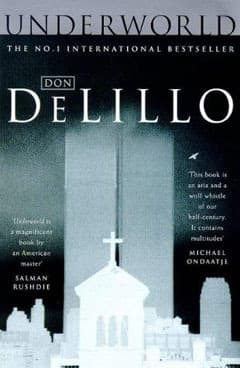
Underworld cover
Archivist's Choice

Underworld

Don DeLillo (1997)

Genre

Fantasy / Romance

Reading Time

12 Minutes

Key Themes

See below

Track Your Reading

Sign in to track this book

Synopsis

Don DeLillo's "Underworld" is a sprawling epic that intertwines the personal and the historical, tracing the trajectory of American life from the height of the Cold War in 1951 to the brink of the 21st century. The narrative begins with the iconic "Shot Heard 'Round the World" — Bobby Thomson's home run in the Giants-Dodgers pennant race — an event that coincidently unfolds as news breaks of the Soviet Union's second nuclear bomb detonation. This baseball, caught by a young Cotter Martin, becomes a symbolic thread connecting disparate lives and historical moments across five decades. The story primarily follows Nick Shay, who eventually possesses the fabled baseball, and his reunion with former lover Kara Sax in 1992. Through their intertwined pasts and the experiences of a vast cast of characters—including artists, mobsters, scientists, and nuns—DeLillo meticulously reconstructs the cultural and political landscape of post-war America. The novel explores how global events, particularly the Cold War and the atomic bomb, subtly yet profoundly reshape individual lives, culminating in a future where ruthless capitalism and technology redefine human connection.
Difficulty
Hard
Pacing
Slow
Mood
Epic, introspective, sprawling, cultural, philosophical, historical

Plot Summary

The Shot Heard 'Round the World

The novel opens with a prologue at the Polo Grounds on October 3, 1951, during the final game of the National League pennant race between the New York Giants and the Brooklyn Dodgers. Young Cotter Martin sneaks into the stadium and catches the legendary home run ball hit by Bobby Thomson, the 'Shot Heard 'Round the World.' This moment occurs as news of the Soviet Union's second nuclear bomb test, code-named 'Joe-4,' is announced to VIPs in the stands, including J. Edgar Hoover, Jackie Gleason, and Frank Sinatra. The scene sets up the themes of American spectacle, Cold War anxiety, and the impact of a single object (the baseball) on many lives.

Nick Shay in 1992

The story then moves to 1992, introducing Nick Shay, a waste management executive in Arizona. Nick owns the Bobby Thomson baseball. He struggles with his past, which includes a difficult childhood in the Bronx and a brief, intense affair with artist Kara Sax decades earlier. His work managing society's refuse represents the discarded parts of history and memory, preparing for his reunion with Kara and the unfolding of their shared and individual histories during the Cold War's aftermath.

Reunion with Kara Sax

Nick Shay travels to New York for a conference and meets Kara Sax again. Her art often uses themes of decay and the Cold War. Their reunion is full of unresolved emotions and their shared past. Kara is now a successful but mysterious artist, living a different life from Nick's corporate world. Their conversations and reflections on their earlier affair and their lives since offer insight into personal history, memory, and how global events affect individual lives. Their relationship is a central emotional point for Nick's journey.

The Baseball's Journey

The novel frequently follows Bobby Thomson's home run ball as it passes through various hands over decades. After Cotter Martin, it goes to his father, Manx, and then through a series of owners, including a young Nick Shay, who gets it through questionable means. Each transfer of the ball is a small story, connecting different characters and social groups, from mob figures to collectors. The baseball becomes a symbol of American dreams, historical memory, and the chance connections that weave through society, linking people across time and circumstance.

Sister Edgar and the Bronx

The story looks into the life of Sister Edgar, Nick Shay's former teacher and a deeply religious woman whose view offers a spiritual contrast to the material world. Her experiences in the Bronx show the urban environment, its difficulties, and its lasting communities. Sister Edgar's thoughts on faith, poverty, and the human condition, often through her religious duties, provide a moral and philosophical balance to the more cynical parts of the Cold War era and corporate America. Her character grounds the broad story in human compassion and resilience.

J. Edgar Hoover's Shadow

J. Edgar Hoover is a significant presence in the novel, both in the prologue and through his surveillance and influence on American society during the Cold War. The narrative touches on his personal quirks, his paranoia, and the large network of informants and operations he directed. His character embodies the darker, more controlling aspects of the Cold War, representing the state's watchful eye and the loss of privacy. His interactions, especially with figures like Lenny Bruce, show the tension between individual freedom and government control, a main concern of the era.

The Waste Stream

Nick Shay's job in waste management is a continuous theme. The logistical and ethical issues of disposing of society's refuse, from everyday trash to hazardous materials and nuclear waste, parallel the story's look at discarded histories, forgotten memories, and the hidden costs of progress. His work forces him to face the real results of human consumption and technological advancement, linking the personal act of disposal to larger environmental and societal concerns. This suggests that nothing truly disappears, but only changes form.

Lenny Bruce and Art

The novel includes comedian Lenny Bruce, whose challenging and often controversial acts reflect the cultural changes and defiance of authority during the Cold War. His struggles with censorship and his search for artistic truth align with Kara Sax's artistic efforts. Bruce's parts explore the power of language, the limits of expression, and the societal anxieties seen in popular culture. His story, along with Kara's, shows how art, in its various forms, can both reflect and criticize its time, pushing against established norms.

The Cold War's Aftermath

As the story progresses, it consistently revisits the Cold War's influence, even after 1991. Characters carry the psychological marks of living under the constant threat of nuclear war. The novel explores how this global tension shaped personal relationships, political anxieties, and cultural expressions. The lingering sense of dread, the focus on surveillance, and the pursuit of technological dominance impacted the American mind, creating a mix of fear and fascination that lasts long after the conflict's official end.

Esmeralda's Story

In the novel's later sections, set in a near future, the story introduces Esmeralda, a young girl whose life is connected to the growing world of the internet and digital technology. Her story, particularly her search for her mother, shows a new kind of interconnectedness and different societal anxieties than those of the Cold War. Esmeralda represents a generation navigating a world of too much information, virtual realities, and new forms of faith and community. Her journey offers a look into a future where analog concerns give way to digital complexities.

The Long Tall Sally

The 'Long Tall Sally' is a recurring, mysterious figure throughout the novel, often appearing at important moments or transitions, sometimes as a spectral presence. She is linked to various events and characters, suggesting an omnipresent, almost mythical force in the American landscape. Her appearances are fragmented and open to interpretation, adding mystery and symbolic depth to the story. She represents the hidden connections, subconscious anxieties, and lasting myths that link the seemingly separate events and lives in the book, hinting at a deeper, underlying current of American experience.

The End of History?

The novel ends with an epilogue that jumps to a near future, showing a world changed by ruthless capitalism, the internet, and a new, undefined form of faith. This ending reflects on history itself, asking if the Cold War's end truly marked an 'end of history' or just a shift to new global anxieties and connections. DeLillo uses this future vision to consider the cyclical nature of human desires and fears, suggesting that while specific threats may change, the underlying human condition of seeking meaning and connection remains.

Principal Figures

Nick Shay

The Protagonist

Nick navigates a journey of self-discovery, confronting his past relationships and the lingering impact of the Cold War on his identity, ultimately seeking some form of reconciliation and understanding.

Kara Sax

The Supporting

Kara's arc involves a continuous pursuit of artistic expression and a re-evaluation of her past connection with Nick, ultimately finding a form of peace within her art and personal life.

Sister Edgar

The Supporting

Sister Edgar remains a steadfast moral compass, witnessing decades of change while maintaining her faith and commitment to her community, offering a stable point of reference in a turbulent world.

J. Edgar Hoover

The Antagonist

Hoover's presence is largely static, representing an enduring, oppressive force, though his power ultimately wanes with the changing political landscape.

Bobby Thomson

The Supporting

Thomson's arc is historical; his single action sets in motion a chain of events that defines much of the novel's plot.

Cotter Martin

The Supporting

Cotter's role is primarily in the prologue, serving as the initial catalyst for the baseball's narrative journey, though his later life is briefly touched upon.

Albert Bronzini ('Bronzini')

The Supporting

Bronzini's character provides a window into the criminal underworld of the mid-20th century, influencing Nick's early life choices.

Lenny Bruce

The Supporting

Bruce's story traces his rise and fall, highlighting the societal pressures and legal battles faced by artists pushing boundaries.

Esmeralda

The Supporting

Esmeralda's journey signifies a shift to a new era, grappling with digital identity and the search for connection in a fragmented world.

Themes & Insights

The Cold War and its Aftermath

The constant fear and psychological effects of the Cold War, especially the threat of nuclear destruction, is a main theme. The novel explores how this global conflict shaped individual lives, relationships, and the American mind, even after its official end. It looks into the culture of surveillance, paranoia, and the constant awareness of an 'other' (the Soviets) that affected society, from politics to personal fears and art. The aftermath shows the lingering effects and the shift to new anxieties.

Every breath you take, every thought you think, is a tiny part of the Cold War.

Narrator

Waste, Decay, and Memory

This theme is explored through Nick Shay's waste management job and Kara Sax's art. It examines society's physical and historical waste—garbage, forgotten events, suppressed memories—and how these 'underworlds' continue to shape the present. The novel suggests that nothing truly disappears; it transforms, accumulates, and subtly influences. It considers how individuals and nations deal with their past, whether through remembering or unconsciously gathering historical 'waste,' and how decay is a natural part of existence.

Everything is connected in the end. The future is a waste pit.

Nick Shay

The Interconnectedness of Life

DeLillo shows how seemingly separate individuals and events are linked across time and space, often by chance or symbolic objects like the baseball. The story's structure, with its many characters and interwoven plots, highlights these connections. It suggests that global events affect individual lives deeply, and that even small actions can have far-reaching, unexpected consequences, creating a complex, shared human experience.

There are no isolated lives. This is the error of the age.

Narrator

American Spectacle and Myth-Making

The novel explores America's interest in spectacle, from the iconic baseball game to celebrity culture and the media's role in creating national stories. It examines how certain events and figures become myths, going beyond their original context to become symbols of national identity. This theme also looks at the performative aspects of American life, the blurring of lines between reality and media representation, and the creation of a shared, often manufactured, public consciousness.

This is what we do. We turn events into stories. We make a legend out of everything.

Narrator

Technology and Surveillance

From J. Edgar Hoover's extensive FBI surveillance to the internet's later emergence, the novel examines technology's role in monitoring, connecting, and shaping human lives. It explores the ethical issues of widespread surveillance, the loss of privacy, and how technology can be used for both control and freedom. The internet, specifically, is shown as a new frontier of connection and information, but also a potential source of alienation and new forms of ideological control, mirroring Cold War anxieties in a digital age.

The future belongs to crowds. And the crowds belong to the ones who watch them.

Narrator

Plot Devices & Literary Techniques

The Bobby Thomson Baseball

A symbolic object linking lives and history

The baseball hit by Bobby Thomson in the 1951 'Shot Heard 'Round the World' functions as a central unifying plot device. It passes through the hands of various characters—Cotter Martin, Manx Martin, Nick Shay, and others—connecting their disparate stories across five decades. The ball symbolizes American myth, memory, chance, and the enduring physical trace of a pivotal historical moment. Its journey underscores the novel's theme of interconnectedness and how a single object can accrue immense symbolic weight and narrative power.

Reverse Chronology (Framing Narrative)

A narrative structure that moves backward in time

While not strictly reverse chronological, the novel employs a framing narrative that begins in 1951, jumps to 1992, and then largely moves backward from 1992 into earlier decades before concluding with a leap to the near future. This structural choice allows DeLillo to peel back layers of history, revealing the origins and deeper contexts of events and characters. It creates a sense of uncovering, of stripping away the present to understand how the past has shaped it, mimicking the process of archaeological excavation of memory and history.

Omniscient and 'Super-Omniscient' Narration

A sweeping, all-knowing narrative voice

DeLillo utilizes a highly omniscient, almost 'super-omniscient' narrative voice, particularly evident in the prologue. This perspective allows the narration to seamlessly shift between characters' thoughts, geographical locations, and even abstract concepts (like radio waves or the trajectory of a baseball). It provides a panoramic view of American society, enabling the author to connect seemingly unrelated events and characters, and to delve into the collective consciousness, reflecting the novel's vast scope and its exploration of interconnectedness.

Interlaced Vignettes and Fragmented Narratives

Short, interconnected stories creating a mosaic

The novel's sprawling structure is built upon numerous interlaced vignettes and fragmented narratives, featuring a vast array of characters from different social strata—gangsters, artists, nuns, highway killers, and politicians. These seemingly disparate stories eventually connect, directly or indirectly, forming a complex mosaic of American life during the Cold War era. This device reflects the idea that society is a vast, interconnected web, and allows DeLillo to explore a wide range of human experiences and perspectives within a single overarching narrative.

Critical analysis

Notable Quotes

Quiz

Test Your Knowledge

Ready to see how well you understood this book? Take our interactive quiz with 10 questions.

10
Questions
~5
Minutes
?
Best Score

Key Questions (FAQ)

"Underworld" is a sprawling novel that explores the intertwined forces of the Cold War and American culture across five decades. It uses a baseball, known as "the shot heard around the world," as a central motif to connect disparate lives and historical events.

About the author

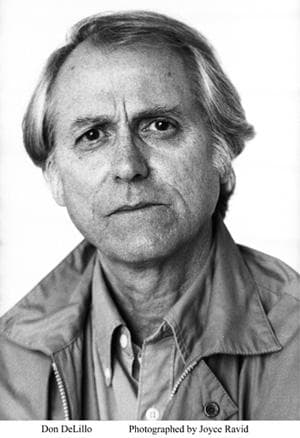
Don DeLillo

Donald Richard DeLillo is an American novelist, short story writer, playwright, screenwriter and essayist. His works have covered subjects as diverse as television, nuclear war, the complexities of language, art, mathematics, politics, economics, and baseball.