“Why, I'm not a little girl any more. I'm Elizabeth Ann!”
— Betsy declares her newfound independence and identity after moving to her relatives' farm.

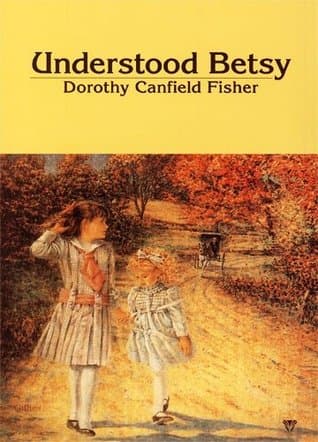
Dorothy Canfield Fisher (1917)
Genre
Children's / Historical Fiction / Young Adult
Reading Time
180 min
Key Themes
See below
Sign in to track this book
A sheltered city girl transforms into the resilient, self-sufficient Betsy amidst the rugged charm and unexpected freedoms of her Vermont farm relatives.
Nine-year-old Elizabeth Ann lives a highly structured and over-protected life in a city apartment with her Aunt Frances and Uncle Henry. Aunt Frances, a nervous and doting woman, shields Elizabeth Ann from all perceived dangers, dictating her every move, from her play to her diet, and creating a deep sense of helplessness. Elizabeth Ann is a timid, anxious child, constantly worried about doing things 'the right way' according to her aunt's strictures. One day, Aunt Frances falls ill with a serious case of pneumonia, requiring hospitalization. With no other immediate family in the city, the decision is made to send Elizabeth Ann to live with her 'horrid Putney cousins' in Vermont, a prospect Aunt Frances has always spoken of with dread and disapproval, filling Elizabeth Ann with terror.
The journey to Vermont is a terrifying ordeal for Elizabeth Ann. Aunt Frances, before her illness, had always handled all travel arrangements, leaving Elizabeth Ann utterly dependent. Now, she is put on a train alone, with only a tag around her neck and strict instructions from a well-meaning but brusque neighbor. The train ride is a blur of anxiety and new experiences, from the sights out the window to the confusing process of changing trains. She arrives in a small, busy country station, overwhelmed by the noise and activity, feeling utterly lost and helpless. There, she is met by Cousin Ann, a large, calm woman with a kind smile, who is nothing like the 'horrid' image Aunt Frances had painted. The ride in the buggy to the farm is equally bewildering, filled with new sights, sounds, and the fresh, open air.
Upon arriving at the Putney farm, Elizabeth Ann is immediately struck by the stark contrast to her orderly city life. The farmhouse is large, old, and full of activity, with children and animals moving freely, a stark difference from her quiet, spotless apartment. She meets Cousin Ann, Cousin Caleb, and their children, the boisterous Molly and the quiet Daniel. The house seems chaotic and a little dirty by her standards, and she is particularly horrified to see a cat on the kitchen table and a dog sleeping by the stove. The family's direct and practical manner is a shock to her, especially when she is asked to perform simple tasks or make small decisions, something she has never been allowed to do. She feels utterly out of place and deeply uncomfortable, longing for the familiar routines and restrictions of her old life.
The morning after her arrival, Elizabeth Ann is introduced to 'chores,' a foreign idea to her. Cousin Ann, with gentle firmness, assigns her the task of feeding the chickens. Elizabeth Ann is initially terrified, having never interacted with farm animals, but Cousin Ann simply explains what needs to be done and trusts her to do it. This simple act marks the beginning of her forced independence. She fumbles through the task, feeling a sense of both fear and a strange, nascent satisfaction. Later, she is given other small responsibilities, like helping with the dishes or fetching water. Each task, no matter how small, requires her to think for herself, make decisions, and experience the direct consequences of her actions, slowly chipping away at her ingrained helplessness.
Life on the Putney farm is a constant lesson in practical understanding. Elizabeth Ann, now often called 'Betsy' by the family, learns that tasks aren't done out of arbitrary rules, but for logical, understandable reasons. She observes Molly and Daniel effortlessly managing their responsibilities and asking 'why' things are done in certain ways. Cousin Caleb, a man of few words but deep wisdom, often explains the mechanics of the farm, from how a pump works to the importance of weather patterns for crops. Betsy begins to see how things connect and the purpose behind every action. This newfound comprehension, in contrast to the blind obedience expected by Aunt Frances, empowers her, making the world less frightening and more manageable. She starts to understand that knowing 'why' makes any task easier and less daunting.
Betsy's experience at the one-room schoolhouse in Putney is another significant departure from her city life. Accustomed to a rigid curriculum and formal instruction, she finds the country school initially chaotic and bewildering. Children of all ages are taught together by a single teacher, Miss Lovell. The teaching methods are less about memorization and more about practical application and understanding. Betsy, despite her prior 'good' education, struggles with some of the practical arithmetic and spelling that the country children find easy. However, the individualized attention and the emphasis on truly grasping concepts, rather than just reciting them, slowly begin to resonate with her. She also starts to form friendships with other children, especially with the kind and patient Molly, who helps her navigate the social dynamics and academic challenges of the new environment.
As Betsy becomes more skilled at her chores and more comfortable with the rhythms of farm life, her confidence grows. She learns to milk the cow, gather eggs, and even help in the garden, tasks that once seemed impossible. The other children at school, initially wary of the 'city girl,' begin to accept her as she participates in games and proves herself capable. Her friendship with Molly deepens, and she also forms a bond with the quiet Daniel. These relationships teach her about give-and-take, cooperation, and the joy of shared experiences. She starts to appreciate the simple pleasures of rural life – playing in the fields, listening to the sounds of nature, and feeling the warmth of genuine affection from her new family. Her timid, anxious demeanor slowly gives way to a more assertive and joyful personality.
One day, Cousin Ann and Cousin Caleb have to leave the farm for an unexpected trip, entrusting Betsy and Molly with the responsibility of running the household and caring for Daniel. A minor crisis arises when a storm threatens the crops, and a critical piece of farm equipment breaks. Instead of panicking, Betsy, drawing on her observations and newly acquired 'understanding,' works with Molly to devise a solution. She helps fix the equipment, showing a practical ingenuity she never knew she possessed. This experience is a turning point, proving to herself and to her cousins that she is no longer the helpless Elizabeth Ann. She feels a deep sense of accomplishment and pride in her ability to contribute meaningfully and solve problems independently, solidifying her transformation.
After nearly a year, a letter arrives from Aunt Frances, announcing her full recovery and her impending return to take Elizabeth Ann back to the city. The news brings mixed emotions for Betsy. While a part of her remembers the comfort of her old life, she also feels a strong pull to the independence and freedom she has found on the farm. When Aunt Frances finally arrives, she is shocked by the transformation in her niece. The timid, pale Elizabeth Ann is gone, replaced by a healthy, tan, and self-assured 'Betsy' who moves with purpose and speaks with confidence. Aunt Frances struggles to reconcile this child with the delicate girl she sent away, finding her new nickname 'Betsy' particularly unsettling.
Aunt Frances, still clinging to her old ways, attempts to reassert her control over Betsy, trying to dictate her clothes, her food, and her activities. However, Betsy, now 'understood' and understanding, gently but firmly resists. She states her desire to stay on the farm, explaining how she has learned to do things for herself and how much she loves her new life and family. Cousin Ann and Cousin Caleb support Betsy's wishes, explaining to Aunt Frances the positive changes they have witnessed. Faced with a confident, articulate niece and the undeniable evidence of her well-being, Aunt Frances reluctantly agrees to let Betsy stay. The book concludes with Betsy joyfully embracing her life on the farm, looking forward to her future as a capable and independent young woman, forever changed from the helpless Elizabeth Ann.
The Protagonist
From a helpless, fearful child, Elizabeth Ann transforms into 'Betsy,' a confident, independent, and self-reliant girl who understands the world around her.
The Supporting
Initially resistant to Betsy's independence, she eventually, albeit reluctantly, accepts her niece's transformation and desire to stay on the farm.
The Supporting
Remains a steady, wise figure, guiding Betsy's development without changing her own character.
The Supporting
A consistent source of practical wisdom and calm guidance, integral to Betsy's learning.
The Supporting
Remains a steadfast and supportive friend, witnessing and encouraging Betsy's growth.
The Supporting
Remains a consistent, observing presence in Betsy's new life, for whom she learns to care.
The Supporting
A consistent and positive influence, facilitating Betsy's academic and social integration.
The Mentioned
Remains a static character, a background figure in Elizabeth Ann's initial life.
The core theme of the book is Elizabeth Ann's journey from total dependence to robust self-reliance. Under Aunt Frances, she is forbidden to make decisions or perform tasks, creating helplessness. On the Putney farm, she is gently but firmly forced to take responsibility for chores like feeding chickens, milking cows, and helping with household tasks. These experiences teach her competence and build her confidence, culminating in her ability to manage the farm during a crisis. Her transformation into 'Betsy' is a direct result of her newfound independence, showing that true growth comes from facing challenges and solving problems for oneself.
“"What a girl needs is to be given a chance to understand things for herself, and to do things for herself."”
The novel contrasts two educational philosophies. Elizabeth Ann's city education emphasizes memorization and adherence to rules without understanding. Her experience on the farm and at the one-room schoolhouse, however, shows the importance of practical knowledge and understanding the 'why' behind actions. Cousin Caleb explains the mechanics of the farm, and Cousin Ann encourages Betsy to figure things out for herself. Miss Lovell's teaching methods at the country school also prioritize comprehension over rote learning. This shift in education allows Betsy to truly grasp concepts, making her adaptable, capable, and genuinely intelligent, rather than just well-schooled.
“"The important thing is not what you know, but what you understand."”
The book strongly argues that environment plays a role in shaping a child's character. Elizabeth Ann, raised in a sterile, overprotective city environment, becomes timid, anxious, and helpless. When placed in the demanding and nurturing rural environment of the Putney farm, she quickly sheds her inhibitions and develops into a confident, capable, and happy child. The contrast between her pale, nervous city self and her healthy, self-assured country self (Betsy) illustrates how a child's surroundings and the expectations placed upon them can fundamentally alter their personality and capabilities. The farm provides the 'chance' for her true self to emerge.
“"It was as though the country air, the country food, and above all, the country life, had begun to work a miracle."”
Initially feeling like an unwanted burden, Elizabeth Ann gradually finds a true sense of belonging and family with her Putney cousins. Her relationship with Aunt Frances, though loving, is stifling and based on fear. With Cousin Ann, Cousin Caleb, Molly, and Daniel, Betsy experiences unconditional acceptance, trust, and the joy of contributing to a communal effort. She learns that family is not just about blood, but about shared experiences, mutual support, and the freedom to be oneself. Her ultimate choice to stay on the farm signifies her embrace of this new, more authentic family unit where she feels truly 'understood.'
“"She had never known before what it was to feel that she belonged, truly belonged, to a family."”
Elizabeth Ann's initial state is one of childhood anxiety, stemming from her inability to understand the world and her constant fear of displeasing Aunt Frances. She is afraid of making mistakes, of animals, of open spaces, and of any deviation from her strict routines. The book details how gaining understanding and practical skills systematically removes these anxieties. Each chore she masters, each 'why' she comprehends, and each decision she makes independently empowers her. This empowerment allows her to overcome her fears and develop a resilient, joyful spirit, showing a path from anxiety to confident self-possession.
“"It was a wonderful thing, Elizabeth Ann thought, to understand about things. It made them so much less scary."”
A symbolic renaming representing Elizabeth Ann's transformation and new identity.
The shift from 'Elizabeth Ann' to 'Betsy' is a powerful symbol of the protagonist's transformation. Elizabeth Ann represents her former timid, helpless, and overly-protected self, bound by Aunt Frances's rules. 'Betsy,' a name given casually by her Putney cousins, signifies her embrace of independence, practicality, and confidence. It marks her acceptance into the country family and her shedding of her old anxieties. When Aunt Frances returns and struggles to use the new name, it highlights the profound change in her niece and the irreconcilability of her old self with her new, empowered identity. The name change is not just a label; it's an embodiment of her personal growth and self-discovery.
A literal and metaphorical journey into self-discovery and a new way of life.
Elizabeth Ann's train journey to the Putney farm serves as both a literal plot device and a powerful metaphor. Literally, it transports her from her old, stifling environment to a new one. Metaphorically, it represents her transition from childhood dependence to burgeoning independence. The initial terror and confusion of navigating the journey alone force her first steps towards self-reliance. The train itself is a vehicle of change, taking her to a place where she will be forced to grow. The unfamiliar landscape flashing by symbolizes the new world she is entering and the vast, unknown possibilities awaiting her beyond her sheltered existence.
A central literary device highlighting the benefits of practical, independent living over overprotection.
The stark contrast between Elizabeth Ann's life with Aunt Frances in the city and her life on the Putney farm is a foundational plot device. The city life is portrayed as sterile, overly regulated, and stifling, fostering anxiety and helplessness. The country life, conversely, is depicted as vibrant, practical, and liberating, encouraging independence and understanding. This contrast is shown through details like the cleanliness of the city apartment versus the bustling farm, the emphasis on appearances versus utility, and the different approaches to child-rearing and education. This juxtaposition serves to underscore the novel's central message about the importance of practical experience and self-reliance in a child's development.
A pedagogical approach integrated into the narrative to demonstrate character growth.
The concept of 'learning by doing' is a pervasive plot device throughout the story. Elizabeth Ann's growth is not achieved through lectures or books, but through direct, hands-on experience. Whether it's feeding chickens, milking cows, helping with dishes, or solving a farm crisis, each task requires her to engage actively, make decisions, and learn from the consequences. This practical engagement, guided by the gentle wisdom of Cousin Ann and Cousin Caleb, is what transforms her. The narrative demonstrates that true understanding and competence come from active participation and solving real-world problems, rather than passive reception of information or adherence to arbitrary rules.
“Why, I'm not a little girl any more. I'm Elizabeth Ann!”
— Betsy declares her newfound independence and identity after moving to her relatives' farm.
“You can't learn to do things without making mistakes.”
— Aunt Abigail encourages Betsy after a cooking mishap, teaching her about growth.
“It's a great thing to be able to do something for yourself.”
— Betsy reflects on her increasing self-reliance while living on the farm.
“The world isn't such a dreadful place after all.”
— Betsy's perspective shifts from fear to optimism as she adapts to her new life.
“People are kind, if you give them a chance.”
— Betsy learns to trust others after initial shyness with her new community.
“Work isn't a punishment; it's a way to make things better.”
— Uncle Henry explains the value of chores and contribution on the farm.
“Sometimes the hardest things turn out to be the best.”
— Betsy muses on how her challenging move led to personal growth.
“You don't have to be afraid of new things.”
— Aunt Abigail reassures Betsy as she faces unfamiliar tasks.
“Home isn't just a place; it's where you feel you belong.”
— Betsy realizes her true sense of home with her relatives.
“Learning comes from doing, not just from books.”
— Betsy experiences hands-on education in farm life versus formal schooling.
“It's good to have someone to depend on, but better to depend on yourself.”
— Betsy balances reliance on others with growing self-sufficiency.
“Happiness is often found in simple things.”
— Betsy discovers joy in everyday farm activities and nature.
“Fear shrinks when you face it.”
— Betsy overcomes her anxieties through gradual exposure and support.
“Every child needs a chance to blossom in their own way.”
— The narrative highlights Betsy's transformation in a nurturing environment.
Ready to see how well you understood this book? Take our interactive quiz with 10 questions.
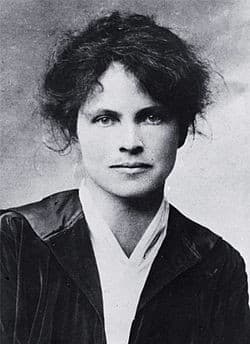
Dorothy Canfield Fisher was a prominent American educator and novelist. She is best known for her children's novel 'Understood Betsy,' which explored progressive education and child psychology. Fisher was a significant figure in the literary and educational circles of the early 20th century, advocating for child-centered learning.

Dan Gemeinhart
4.5

Kate O'Hearn
4.4

Jeanne Birdsall
4.4

Jen Wang
4.4

Wendelin Van Draanen
4.3

John Marsden
4.3

Chris Van Allsburg
4.3

Jennifer A. Nielsen
4.2