“The world, as they say, is a stage, and I, it seems, am a particularly ill-suited extra.”
— Lucien's self-deprecating reflection on his position in life.

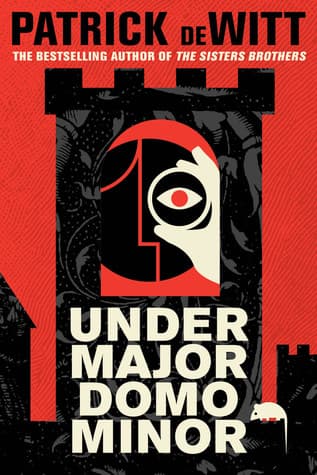
Patrick dewitt (2015)
Genre
Literary Fiction / Fantasy / Mystery
Reading Time
700 min
Key Themes
See below
Sign in to track this book
A compulsive liar and weakling gets caught in a dark, funny story of theft, heartbreak, and murder while working in a strange, isolated castle where love is dangerous.
Lucy Minor is an eccentric, sickly young man living in the remote village of Bury. Unlike the strong, hardworking men there, Lucy is a compulsive liar who often makes up stories to entertain or trick people. One day, a strange letter arrives, offering him a job as Undermajordomo at the distant Castle Von Aux. Lucy is curious about escaping his boring life and the idea of a new identity. Despite his mother's pleas and the villagers' worry, he decides to take the offer, packs his few things, and begins a long, hard journey to the isolated castle.
After a difficult journey through empty lands, Lucy reaches Castle Von Aux, a large, old building that looks both grand and disturbing. He immediately notices its worn beauty and the strong sense of mystery around it. Inside, he meets the Majordomo, a stern, imposing man who is very precise and seems very tired. The Majordomo quickly explains Lucy's duties, which are vague and unusual, involving keeping up an empty, echoing castle and following unwritten rules. Lucy gets a small, uncomfortable room, and his first days are filled with quiet and the unsettling feeling of being watched.
As Lucy settles into his role, he starts to notice the many strange customs and hidden quirks of Castle Von Aux. The castle is a maze of secret passages, locked rooms, and odd items. The Majordomo is a rigid and secretive man, offering few explanations for the castle's oddities or Lucy's specific duties. Most notably, Lucy learns that the castle's owner, Baron Von Aux, is missing. His rooms are kept clean, and his meals are made daily, but he is nowhere to be found. The Majordomo only gives cryptic comments about the Baron's 'condition' and 'temporary absence,' making Lucy more curious and uneasy about what is really happening in the castle.
The quiet routine of Castle Von Aux breaks with the arrival of a varied group of guests. These people are as strange as the castle itself, each with their own habits and unclear reasons for being there. Among them are the elderly and often confused Mrs. Holt, the loud and always hungry Mr. Bixby, and the mysterious young woman, Klara. Their presence changes the castle's mood, bringing some chaos and conversation to the previously silent halls. Lucy finds himself torn between his duties and his growing interest in these new residents, especially Klara, whose quiet beauty and mysterious manner immediately catch his attention.
Lucy quickly falls for Klara, a beautiful and sad young woman among the guests. He is drawn to her quiet strength and the sadness around her. He tries to win her over with his usual made-up stories and awkward actions, but his attempts are often clumsy. However, Lucy is not Klara's only admirer. Adolphus, a handsome, smooth, and cynical fellow guest, also likes her. Adolphus is everything Lucy is not — confident, worldly, and charming. A quiet rivalry quickly develops between the two men, with Klara at the center, causing tension and heartbreak for Lucy as he deals with his first real love.
The mystery of Baron Von Aux's absence ends when he dramatically returns to the castle, showing himself to be a flamboyant and eccentric figure. He explains that his 'absence' was part of an elaborate, ongoing game where he periodically 'disappears' and then 'returns' to watch his staff and guests. The Baron's return brings more absurdity and chaos to the castle, as he arranges strange contests and demands odd services. He reveals that the entire castle works on a system of polite theft and strategic trickery, where residents constantly move, hide, and 'borrow' objects, adding to the playful disorder.
The love triangle between Lucy, Klara, and Adolphus reaches its painful end. Despite Lucy's persistent, if clumsy, attempts to win her, Klara chooses Adolphus. She is drawn to Adolphus's confidence, wit, and cynical charm, which Lucy, in his insecurity, cannot match. This rejection deeply hurts Lucy, breaking his fragile self-esteem and leaving him heartbroken. His despair is worse because he truly believed he had found a real connection and love with Klara. The castle, which once offered him escape and adventure, now feels like a prison of his unrequited desires, and he withdraws into deep sadness and isolation, his lies offering little comfort.
Overwhelmed by heartbreak and a feeling of complete failure, Lucy tries to kill himself. His suicide attempt is clumsy and fails, but it gets the Majordomo's attention. For the first time, the Majordomo shows real concern and drops his rigid manner. He reveals a deeper, more unsettling truth about Castle Von Aux: it is a place made to entertain and distract the Baron, who suffers from a deep, unnamed sadness. The Majordomo suggests that the Baron's 'games' and the castle's oddities are all part of a desperate effort to keep him busy and stop him from falling into depression, and that Lucy, in his own way, has become part of this complex, sad act.
Lucy, having survived his suicide attempt, starts to see the Baron and the Majordomo differently. He understands that the Baron's showy and often cruel 'games' are a way to cope with deep mental illness, a desperate attempt to create distraction and meaning in his otherwise bleak life. He also sees the huge burden the Majordomo carries, having dedicated his life to serving and protecting the Baron, enduring years of his master's erratic behavior and the castle's strange demands. This realization creates a strange empathy in Lucy, as he sees his own struggles with identity and purpose reflected, though exaggerated, in the lives of his employers.
The castle's delicate balance shatters when a guest is found murdered. This gruesome event throws Castle Von Aux into chaos, turning its playful disorder into real fear and suspicion. The Majordomo, usually calm, is clearly distressed, while the Baron, surprisingly, treats the murder as just another elaborate game. Lucy, despite his usual shyness, gets caught in the clumsy and often absurd investigation. The remaining guests, already eccentric, become even more paranoid and accusatory, each suspecting the other. The murder shows the darker side of the castle, revealing that its whimsical oddities can quickly turn sinister, and that the stakes are now deadly serious.
Driven by fear and a new sense of purpose, Lucy uses his observation skills to put together clues about the murder. He eventually confronts the killer, who turns out to be one of the seemingly harmless guests. The confrontation is tense and dangerous. The killer, cornered, confesses to the crime, revealing a motive rooted in old grudges or a twisted sense of justice related to the castle's strange ways. The confession is followed by a violent struggle, during which Lucy, despite his physical weakness, must find unexpected courage and wit to survive and ensure justice, or at least a form of it, is served.
After the murder and its solution, the castle slowly starts to return to some version of its strange order. The Baron, though still eccentric, seems briefly quieted by the grim reality that broke into his fantasy world. Lucy, having faced death and confronted a killer, is deeply changed. He no longer sees himself as just the sickly, lying boy from Bury. His experiences at Castle Von Aux, especially his heartbreak and his part in solving the murder, have given him new resilience and a clearer sense of self. He has learned that honesty, even painful honesty, can be more powerful than his elaborate lies, and he is on the verge of a more authentic life.
Lucy's future is uncertain. The castle, with its strange people and dark secrets, has been a place of change for him. He has faced love, loss, danger, and self-discovery within its walls. While Klara's rejection still hurts, it no longer defines him. He has matured, gaining a deeper understanding of human nature, including his own. Whether he stays at Castle Von Aux, now forever changed by what happened, or returns to Bury as a different man, is left open. What is clear is that Lucy Minor is no longer the same boy who left his village, and he is ready to face the world with a new, though still complex, sense of identity and purpose.
The Protagonist
Lucy transforms from a naive, insecure liar into a more self-aware and resilient individual, learning to confront harsh realities and find strength within himself.
The Supporting
His stoic facade is briefly cracked, revealing his deep devotion and the heavy burden he carries, but he largely remains a steadfast, unchanging presence.
The Supporting
His character remains largely static in his eccentric melancholy, though his games are briefly disrupted by genuine tragedy.
The Supporting
She remains somewhat enigmatic, serving primarily as a catalyst for Lucy's emotional development through his unrequited love.
The Supporting
He serves as a romantic rival, embodying a sophisticated worldliness that Lucy initially envies but ultimately moves beyond.
The Supporting
Her character remains largely static, serving as a quirky background element.
The Supporting
His character remains static, providing comic relief and contributing to the castle's eccentric atmosphere.
Lucy Minor's main trait is his compulsive lying, which he uses to create a more interesting, confident version of himself. This theme explores the masks people wear and the difficulty of knowing one's true self from the public persona. Lucy's time at Castle Von Aux forces him to see that his lies are not enough, especially when facing real feelings like love and heartbreak, or real danger like murder. The castle itself, with its made-up games and secrets, reflects Lucy's own internal world of deception, making it a fitting place for his self-discovery. His heartbreak over Klara, for example, is a truth he cannot lie his way out of, forcing him to deal with his real feelings.
“He often lied, not out of malice, but from a profound and aching desire to be a different, better, more interesting person.”
At its heart, the novel is a love story, though a sad one. Lucy's deep love for Klara and the pain of her choosing Adolphus forms the emotional core of his journey. This theme explores the intensity of first love, the agony of unrequited affection, and how heartbreak can change a person. Lucy's despair is so deep it leads to a suicide attempt, showing how violent and consuming love can be. His experience of loss makes him grow, moving past his childish lies and facing the raw, honest emotions that come with true connection and rejection. The castle's strange setting becomes a backdrop for this very human and universal experience of emotional pain.
“Love, he had learned, was a violent thing, capable of both exquisite joy and devastating ruin.”
The entire world of Castle Von Aux, with its eccentric Baron, unusual staff, and bizarre customs, shows a pervasive sense of the absurd. The Baron's elaborate 'games' and the castle's system of 'polite theft' are ultimately revealed as desperate attempts to avoid deep sadness. This theme explores how people cope with the meaninglessness or emptiness of their lives, often through elaborate rituals, distractions, or self-created realities. The whimsical and often funny facade of the castle hides a deeper sadness and a search for purpose. Lucy, too, initially seeks escape from his boring life, only to find himself in a place where absurdity and sorrow are mixed, forcing him to confront the sad undertones of life.
“The castle was a stage, and they were all merely players in the Baron's ceaseless, melancholy drama.”
Castle Von Aux is an interesting study of the conflict between strict order and widespread chaos. The Majordomo carefully maintains routines and enforces rules, yet the Baron actively encourages 'polite theft' and unpredictable 'games.' This theme examines how established structures can exist alongside, or even be weakened by, inherent disorder and human unpredictability. The arrival of the eccentric guests and, most dramatically, the murder, break any illusion of complete control, showing how fragile order is. Lucy, as Undermajordomo, is caught between these forces, trying to create structure while constantly facing the unpredictable nature of the castle and its people, ultimately learning to navigate this inherent tension.
“Here, order was a suggestion, a polite fiction, easily undone by the caprice of its master or the whims of its guests.”
A remote, gothic setting that heightens mystery and fosters eccentricity.
Castle Von Aux serves as more than just a setting; it is a character in itself. Its remote location, labyrinthine architecture, and gothic atmosphere contribute to the novel's sense of mystery and foreboding. The isolation allows the bizarre customs and the Baron's eccentricities to flourish unchecked, creating a world unto itself where normal societal rules are suspended. This device amplifies the feeling of being trapped, both physically and psychologically, for Lucy and the other characters, intensifying their interactions and personal transformations.
A quirky, unsettling custom of the castle that blurs lines between ownership and borrowing.
The Baron's system of 'polite theft' is a unique plot device that establishes the castle's peculiar moral landscape. Objects are constantly moved, hidden, and 'borrowed' without explicit permission, creating a playful yet unsettling atmosphere where nothing is truly secure. This device highlights the Baron's whimsical cruelty and the Majordomo's long-suffering maintenance of the system. It also serves to disorient Lucy and the reader, blurring the lines of ownership and conventional behavior, preparing them for the more significant breaches of order, such as the murder, that occur later.
An underlying, unnamed sadness that drives the Baron's eccentric behavior.
The Baron's profound, unnamed melancholy is a crucial plot device that explains the bizarre nature of Castle Von Aux and its inhabitants. His elaborate 'games,' the constant need for diversion, and the Majordomo's tireless efforts are all revealed to be coping mechanisms for this deep-seated sadness. This device shifts the perception of the Baron from merely eccentric to tragically complex, adding depth to his character and the castle's purpose. It also allows the Majordomo to reveal a more empathetic side, explaining his unwavering loyalty and the true burden of his duties.
Lucy's compulsive lying makes his perceptions and accounts of events questionable.
Lucy Minor's inherent tendency to lie and embellish stories serves as a subtle yet significant plot device. While the novel is not explicitly first-person, the reader experiences much of the world through Lucy's perspective. His past behavior and internal monologues suggest that his interpretation of events, and even his memory, might be colored by his desire for a more exciting or flattering reality. This creates a layer of ambiguity and invites the reader to question the absolute truth of what is presented, mirroring Lucy's own struggle with identity and self-deception throughout the narrative.
“The world, as they say, is a stage, and I, it seems, am a particularly ill-suited extra.”
— Lucien's self-deprecating reflection on his position in life.
“There are some things, you see, that are best left unexamined, like the contents of certain people's pockets, or the true intentions of a man who offers you a job in a castle you've never heard of.”
— Lucien's early musings on the strange circumstances of his employment.
“Loneliness, I have learned, is not the absence of people, but the absence of connection.”
— Lucien reflecting on his isolation at the castle, despite being surrounded by others.
“Love, it seems, is a peculiar beast, prone to sudden fevers and equally sudden chills.”
— Lucien's observation on the unpredictable nature of romantic affection.
“The truth, like a particularly stubborn stain, has a way of revealing itself, no matter how much you try to scrub it away.”
— Lucien's realization about the inevitable exposure of secrets.
“One must be careful with pity; it is a powerful drug, and easily mistaken for other, more dangerous things.”
— A character's warning about the deceptive nature of pity.
“The past, they say, is another country. And I, it seems, am perpetually a tourist without a map.”
— Lucien's sense of being adrift in his own history and circumstances.
“Happiness, like a well-fed cat, is often content to simply exist, without much fuss or fanfare.”
— Lucien's simple observation on the nature of contentment.
“There is a certain freedom in being utterly unimportant, a quiet joy in being overlooked.”
— Lucien finding solace in his perceived insignificance.
“Every man, I suppose, has his own particular brand of madness. Mine, it seems, is a quiet sort, full of longing and ill-advised optimism.”
— Lucien's self-diagnosis of his own eccentricities.
“To be truly seen, I think, is a terrifying thing. And yet, it is also what we crave most.”
— Lucien's contemplation on vulnerability and desire for recognition.
“The world is full of small, absurd cruelties, and it is often in our response to them that we truly reveal ourselves.”
— A philosophical observation on human nature and adversity.
“Hope, like a persistent weed, can grow in the most unlikely of places.”
— Lucien finding glimmers of optimism amidst his peculiar circumstances.
“A good story, I've found, is not always about what happens, but how you choose to tell it.”
— Lucien's reflection on the art of narrative and perception.
Ready to see how well you understood this book? Take our interactive quiz with 10 questions.







