“Slavery is not a blot on our history. Slavery is our history.”
— Victor's internal reflection on the enduring nature of slavery in his alternate America.

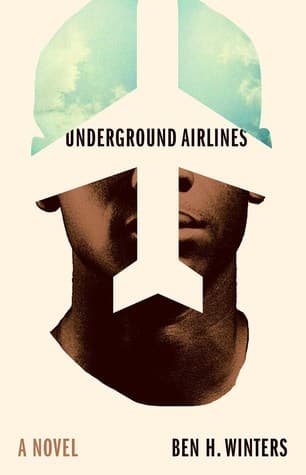
Ben H. Winters (2016)
Genre
Thriller / Fantasy / Historical Fiction / Mystery / Science Fiction
Reading Time
7-8 hours
Key Themes
See below
Sign in to track this book
In an America where slavery still exists, a black bounty hunter tracking a high-stakes runaway uncovers a conspiracy that threatens his world.
Victor, living under an assumed identity, is a 'Tracker' for the US Marshals. He apprehends runaway slaves from the Hard Four states. He arrives in Indianapolis, Indiana, pretending to be a 'fixer' for a meat packing company. This cover lets him move freely and question people without raising suspicion. His current target is Jackdaw, a young black man whose file is unusually brief and whose capture Agent Bridge, Victor's handler, says is very important. Victor's first questions lead him to a network of abolitionists, the 'Underground Airlines,' operating in the city. This suggests Jackdaw is well-connected and protected. Victor feels a familiar unease, sensing this case is different from his past assignments.
Victor begins to infiltrate the local abolitionist network, using his cover to pretend sympathy and offer help. He meets Martha, a kind older woman who runs a safe house, and eventually earns the trust of others in the Underground Airlines, including Mrs. Riese, a white woman who seems to be a key organizer. He learns about the system of safe houses, codes, and signals used to transport runaways to freedom. While gathering information on Jackdaw's location, Victor faces the moral implications of his work, seeing the courage and desperation of those fighting for freedom. He regularly reports to Agent Bridge, sharing network details but subtly holding back information that might harm the truly innocent.
During his investigation, Victor meets Sarah, a young black woman, and her son, Little. Sarah is connected to the abolitionist network and seems to know more about Jackdaw. Victor feels drawn to Sarah, and their talks bring back memories of his own past and lost family. He develops a protective instinct towards her and Little, making his mission even more morally difficult. He struggles to maintain his cover while dealing with his growing feelings and the danger Sarah and her son are in. He realizes his commitment to his own freedom is being tested by the chance for genuine human connection he finds with them.
Victor's investigation leads him to a medical office where he believes Jackdaw sought treatment. Through careful questions and observation, he finds a hidden room and medical records. He learns that Jackdaw is not just a runaway, but a subject of unethical genetic experimentation by the Hard Four states, specifically a project called 'Project Clover.' This discovery deeply disturbs Victor, exposing a darker, more sinister part of the Hard Four's slavery system than he had imagined. The stakes of the case increase dramatically, and Victor realizes that capturing Jackdaw is not just about returning a runaway, but about suppressing a dangerous secret.
Agent Bridge, Victor's handler, becomes more demanding and secretive, pushing Victor to speed up Jackdaw's capture. Bridge hints at the extreme sensitivity of Project Clover and the government's interest in keeping it hidden. Victor begins to suspect that Bridge and the US Marshals are not just enforcing the law, but are actively involved in covering up the Hard Four's cruelties. His internal conflict grows as he weighs his hard-won freedom against the injustice he is uncovering. He starts to question the true nature of his deal with the government and the cost of his liberty.
Victor, now fully aware of the government's true intentions regarding Jackdaw, makes a dangerous decision. He subtly manipulates the information he gives to Bridge, while also working more closely with the abolitionists. He helps Mrs. Riese and Martha create a diversion, making it seem as though Jackdaw is moving towards a different escape route. This elaborate plan aims to buy Jackdaw more time and mislead the Marshals. Victor finds himself walking a dangerous line, risking exposure and the loss of his own freedom for Jackdaw and the larger cause of justice.
The trap is set, but not as Victor planned. In a tense confrontation, the Marshals close in on a location where they believe Jackdaw to be. Victor must make a split-second decision with severe consequences. He is caught between protecting the abolitionists, ensuring Jackdaw's escape, and maintaining his own cover. The resulting chaos leads to tragic loss of life, and Victor grapples with his actions and the moral compromises he has made. He realizes that the path to freedom, for himself and others, involves unimaginable sacrifices.
After the confrontation, Victor learns the full, horrifying truth about Project Clover. Jackdaw is not merely a runaway; he is a 'Perfect Negro,' a genetically engineered individual designed to be the ideal slave—strong, docile, and resistant to disease. His escape is a huge threat to the Hard Four's economic system and the government's delicate balance of power. Victor understands that Jackdaw's existence, if revealed, could unravel this alternate America. This knowledge strengthens Victor's resolve to protect Jackdaw and expose the truth, even if it means sacrificing everything.
With the shocking revelations about Project Clover and the tragic events, Victor sheds his 'Tracker' identity and fully commits to the Underground Airlines. He understands that his personal freedom, gained through a corrupt deal, is meaningless without fighting for the freedom of all. He uses his skills and knowledge of the system to become an asset to the abolitionist movement. He embraces his true identity, no longer a pawn of the government, but an advocate for justice, dedicating himself to dismantling the oppressive system from within.
Victor plans a daring final escape for Jackdaw and Sarah, using all his cunning and the Underground Airlines' resources. He navigates dangerous checkpoints, government surveillance, and the constant threat of capture. The escape is full of tension and close calls, but Victor's determination and the abolitionist network's support ultimately succeed. Jackdaw and Sarah reach Canada, a place of true freedom, marking a symbolic victory against the Hard Four and Project Clover. Victor stays behind, a committed member of the Underground Airlines, continuing the fight for a more just world.
The Protagonist
Victor transforms from a self-serving individual seeking personal freedom to a committed abolitionist, sacrificing his safety for the greater good.
The Supporting
Jackdaw remains largely a symbol, his arc defined by his journey to freedom and the exposure of the horrific Project Clover.
The Antagonist
Bridge remains a static antagonist, consistently embodying the oppressive forces Victor opposes.
The Supporting
Sarah's arc is tied to her escape to freedom with Jackdaw and Little, representing the success of the abolitionist movement.
The Supporting
Martha remains a steadfast figure, representing the enduring spirit of resistance.
The Supporting
Mrs. Riese continues her work as a vital part of the Underground Airlines, a constant force for good.
The Supporting
Little's arc is tied to his escape to freedom, representing the hope for a future free from slavery.
The Mentioned
Mr. Grooms exists primarily in Victor's memory, a static representation of the past.
The novel explores what it means to be free, comparing Victor's conditional liberty with the absolute freedom sought by runaways. Victor initially believes his deal with the government has given him freedom, but he lives under a false identity, constantly monitored, and forced to participate in the system he hates. This superficial freedom is contrasted with the profound, though dangerous, freedom that runaways and abolitionists risk everything for. The story examines the psychological and emotional costs of compromised freedom, showing how true liberation requires moral integrity and the fight for collective justice. For example, Victor's growing discomfort with his 'freedom' as he observes the courage of Martha and Sarah highlights this theme.
“Freedom ain't free, boy. Not for you, not for me. Not for nobody who looks like us.”
Victor's journey is a look at the complexities of moral compromise. He has made a deal with the devil, working for the system that enslaved him, believing it's the only way to survive. The novel details the psychological cost of this involvement, showing how Victor rationalizes his actions while his conscience slowly erodes. His internal struggle grows as he uncovers the horrors of Project Clover, forcing him to confront his role in a morally wrong system. His choice to finally betray Agent Bridge and join the Underground Airlines shows his rejection of complicity and his embrace of moral courage.
“Every day, a choice. Every choice, a piece of yourself, given away.”
The story is driven by the revelation and concealment of secrets, especially Project Clover. The government's entire operation, including the US Marshals and Victor's mission, aims to control information and prevent the truth about genetically engineered slaves from becoming public. Jackdaw's brief file, Agent Bridge's evasiveness, and the extreme measures taken to capture Jackdaw all point to the power of this secret. The novel shows how information, or its absence, can be used as a tool of oppression, maintaining the status quo and preventing societal change. Victor's gradual discovery of the truth is a central plot device.
“The truth, Victor, is a dangerous thing. Some truths can shatter nations.”
Victor lives under an assumed identity, a 'ghost' in a world that denies his true self. His journey is about shedding this false persona and rediscovering his moral core. His interactions with Sarah, Little, and the abolitionists force him to confront who he truly is and what he stands for. The novel explores how identity is shaped not just by personal history, but by the choices made in the face of injustice. Victor's transformation from a 'Tracker' to a committed member of the Underground Airlines represents his reclaiming his authentic self and his true purpose. He moves from a nameless operative to a man defined by his courage and conviction.
“He was Victor, but he was also something else. Something older, something truer.”
The novel portrays a terrifying alternate America where slavery is legally maintained in four states, showing how deeply ingrained systemic injustice can become. The Hard Four, the federal government's involvement, and the horrific Project Clover all illustrate how normalized oppression can be. Against this backdrop, the Underground Airlines represents the spirit of resistance. The network of abolitionists, from Martha's safe house to Mrs. Riese's strategic planning, demonstrates the power of collective action and defiance in the face of overwhelming odds. The novel ultimately argues for the necessity of resistance, even when the system seems unbeatable.
“The law ain't always right. And sometimes, breaking it is the only way to find justice.”
A reimagined America where slavery persists in four Southern states.
The novel's most striking plot device is its alternate history setting. By positing a modern America where slavery legally exists in 'the Hard Four' states, the author creates a chillingly plausible backdrop that magnifies contemporary issues of race, justice, and systemic oppression. This setting immediately establishes high stakes and a pervasive sense of injustice, forcing readers to confront uncomfortable parallels with real-world history and ongoing social inequalities. It allows for the exploration of themes like moral compromise and resistance in a tangible, yet fantastical, context, making the story both familiar and deeply unsettling.
Victor's morally ambiguous job as a bounty hunter for the federal government.
Victor's role as a 'Tracker' for the US Marshals is a crucial plot device. It immediately establishes his internal conflict and moral ambiguity, positioning him as both a victim of the system and a participant in its perpetuation. This role allows the author to explore the nuances of complicity and survival, as Victor grapples with the ethical implications of hunting down those who seek the very freedom he ostensibly possesses. It also provides a unique vantage point from which to infiltrate the Underground Airlines and uncover the deeper secrets of the Hard Four, driving the plot forward through his conflicted investigations.
A secret government project involving genetically engineered slaves.
Project Clover is the central mystery and a powerful plot device that elevates the novel beyond a simple thriller. The revelation of genetically engineered 'Perfect Negroes' adds a horrifying layer of scientific racism and extreme dehumanization to the Hard Four's system of slavery. This secret raises the stakes exponentially, explaining why Jackdaw's capture is so vital and why the government is willing to go to such lengths to suppress the truth. It serves as the ultimate symbol of systemic evil and provides a compelling motivation for Victor to abandon his neutrality and fully commit to the abolitionist cause, transforming the narrative into a fight against a truly monstrous injustice.
A clandestine network of abolitionists aiding runaway slaves.
The Underground Airlines serves as both a plot device and a symbol of resistance. As a device, it provides Victor with the means to gather intelligence, infiltrate the abolitionist movement, and ultimately, to make his own choice about where his loyalties lie. It offers a contrasting moral framework to the government's oppressive system, showcasing acts of courage, compassion, and defiance. The intricate details of the network – safe houses, codes, and dedicated operatives like Martha and Mrs. Riese – not only advance the plot but also highlight the collective power of individuals working together against systemic injustice, offering hope in a grim world.
“Slavery is not a blot on our history. Slavery is our history.”
— Victor's internal reflection on the enduring nature of slavery in his alternate America.
“The past isn't dead. It isn't even past. It's just a different kind of present.”
— Victor's musings on how the historical institution of slavery continues to shape his reality.
“There are no good choices, only less terrible ones.”
— Victor contemplating the difficult moral decisions he faces in his work for the US Marshals.
“Freedom is a luxury, and most of us can't afford it.”
— A character's cynical view on the true cost and availability of freedom in their society.
“The truth is a weapon, and it cuts both ways.”
— Victor reflecting on the dangerous implications of uncovering hidden information.
“Sometimes you have to burn down the house to save the family.”
— A character justifying extreme measures taken for a perceived greater good.
“Every secret comes with a price, and the longer you keep it, the higher the interest.”
— Victor's thoughts on the burden and eventual cost of maintaining his undercover identity.
“Hope is a dangerous thing. It can keep you alive, or it can kill you.”
— A character discussing the double-edged nature of hope in desperate circumstances.
“You can't escape what you are, no matter how far you run.”
— Victor's internal struggle with his past and his role in the system.
“The system isn't broken. It was built this way.”
— A character's realization about the inherent injustice of their society.
“Silence is not always consent. Sometimes it's just the sound of a scream that can't get out.”
— Victor pondering the unspoken suffering of those around him.
“To be free, truly free, you have to be willing to lose everything.”
— A radical perspective on the ultimate sacrifice required for genuine liberation.
“The past is never really past, it just changes its clothes.”
— A powerful statement on the persistence of historical injustices in new forms.
“Every lie you tell makes the next one easier, until you don't even know where the truth ends and the fiction begins.”
— Victor's internal monologue about the corrosive effect of his undercover life.
Ready to see how well you understood this book? Take our interactive quiz with 10 questions.

Ben H. Winters is an American author known for his genre-bending fiction. His notable works include the critically acclaimed 'The Last Policeman' trilogy, a dystopian mystery, and the speculative thriller 'Underground Airlines.' Winters' writing often explores societal themes through engaging narrative structures and unique premises.







