“I waited for you, under the hawthorn tree, for a lifetime.”
— Jingqiu's reflection on her enduring love and waiting for Old Third.

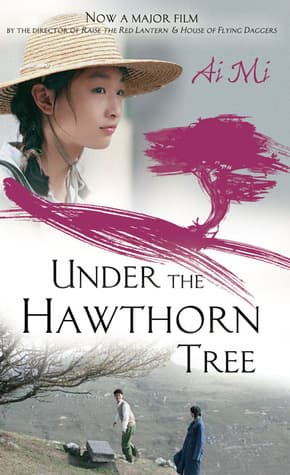
Ai Mi (2010)
Genre
Historical Fiction / Romance
Reading Time
6-8 hours
Key Themes
See below
Sign in to track this book
During Mao's re-education movement, a high-school girl with a 'capitalist' mother and a geology student with a 'rightist' past fall in love under a hawthorn tree, their romance ending tragically.
Jingqiu, a high school student from Yichang, is sent to Xiping Village in the Three Gorges region as part of Chairman Mao's re-education program for urban youth. Her family's political status is difficult; her father is a political prisoner, and her mother, a former teacher, is now a street sweeper. This makes Jingqiu very careful to maintain a good political record. She is assigned to compile a new textbook and meets Jianxin, known as 'Old Three,' a geology student working on a geological survey team. Old Three, despite his high-ranking military officer father, also has a political shadow because his mother died by suicide after being called a 'rightist.' Their first meetings are formal, but Jingqiu is drawn to Old Three's quiet intensity and kindness, especially after he helps her with a problem involving a local official's son.
Jingqiu's re-education work involves living with local villagers and doing manual labor, along with her textbook compilation. Old Three often visits Xiping Village for his geological work, creating chances for them to interact. He often brings her small gifts, like a pen or a notebook, which are valuable in their environment. Their conversations, though often brief and careful because of the political climate, show a growing mutual respect and attraction. Jingqiu constantly worries about how things look, fearing that any sign of a romantic relationship could hurt her family's already unstable position and ruin her chances of returning to the city for college. Old Three, however, is more direct in his affection, subtly showing his care and concern, especially when Jingqiu gets sick.
Their relationship changes when Old Three tells Jingqiu his feelings. He often waits for her by the hawthorn tree, known for its red blossoms, which becomes their meeting spot. During one of these meetings, he tells her he loves her, a bold and dangerous statement in their political era. Jingqiu, despite her deep feelings for him, at first resists, mentioning her family's situation and the risks. She is torn between her heart's desire and her duty to her family. Old Three, however, is persistent and gentle, assuring her of his sincerity and willingness to wait for her, promising to keep their relationship a secret to protect her and her family.
As Jingqiu's time in Xiping Village continues, she and Old Three begin to meet secretly. Their meetings are often brief, taking place during walks, by the river, or under the hawthorn tree, away from others. These stolen moments are filled with simple gestures of affection: holding hands, sharing stories, and offering quiet support. Old Three is thoughtful, often bringing her food or supplies, knowing her family's financial struggles. He even helps her with her work, showing his commitment to her well-being. Jingqiu, at first hesitant, slowly allows herself to return his love, finding comfort and happiness in their shared intimacy, despite the constant fear of discovery.
Jingqiu finishes her re-education assignment and returns to Yichang, where she resumes her studies and helps her family. The separation from Old Three is hard, but their connection remains strong. Old Three, showing his devotion, often travels to Yichang to see her. He brings gifts for Jingqiu and also helps her struggling family, often anonymously leaving supplies or money. He helps her younger brother with his studies and shows respect to her mother, earning their quiet approval. These visits are the highlights of Jingqiu's life, helping her through the hardships and political pressure she faces at school and home.
As time passes, Old Three's health begins to decline. He starts to cough and feel tired, symptoms he tries to hide from Jingqiu. He dismisses her concerns, saying his condition is due to overwork or a cold. However, his visits become less frequent, and when he does visit, Jingqiu notices he looks paler and weaker. Despite his worsening condition, he continues to put Jingqiu's well-being first, often making sacrifices to ensure her comfort or success. Jingqiu, though worried, remains hopeful, believing that his illness is temporary and that their future together is still possible once he recovers.
The truth about Old Three's condition is revealed: he has leukemia, a terminal illness. This news comes through his relatives and friends, who know how serious his condition is. Jingqiu is heartbroken and in disbelief, unable to connect the loving man she knows with the grim diagnosis. She wants to be by his side, but because of the political climate and their secret relationship, direct access is difficult. She struggles with the unfairness of their fate, feeling robbed of their future together. The news brings her deep sadness and a strong desire to spend every possible moment with him.
When Jingqiu learns of Old Three's critical condition, she decides to see him. She faces many obstacles because his family wants to protect him from more emotional distress and keep their relationship quiet. She makes sacrifices, selling her blood and some belongings, to get money for travel and to pay hospital staff for access. Her mother, sensing her daughter's pain and love, quietly supports her efforts, despite the family's difficult situation. Jingqiu's trip to the hospital is filled with anxiety and desperation, each step showing her deep love.
After much effort, Jingqiu finally reaches Old Three's hospital room. He is weak, barely conscious, but recognizes her. Their final moments are tender and sad, filled with unspoken words and love. Jingqiu holds his hand, crying, as he tries to communicate his affection. He can only say a few words, urging her to live well and remember him. The scene is one of great sorrow, as Jingqiu deals with losing the man who has become her world. She promises to always remember him, sealing their love in that tragic, final embrace.
Old Three dies shortly after Jingqiu's visit. The loss leaves a lasting emptiness in Jingqiu's life. Despite the grief, she finds strength in his memory and the purity of their love. She continues to honor his wishes, living a life of integrity and hard work. The hawthorn tree, their special meeting place, becomes a symbol of their lasting love and a place of remembrance for Jingqiu. She carries their story, a reminder of a love that defied political boundaries and social expectations, a love that ended too soon but was never forgotten, shaping her identity for the rest of her life.
The Protagonist
Jingqiu transforms from a fearful and politically cautious girl into a woman who embraces profound love, ultimately learning to live with devastating loss while cherishing the memory of her beloved.
The Love Interest / Supporting
Old Three's arc is one of unwavering devotion and self-sacrifice, culminating in a tragic end that solidifies his profound impact on Jingqiu's life.
The Supporting
She maintains her quiet strength and provides a stable, if politically cautious, foundation for her children, demonstrating enduring maternal love and resilience.
The Supporting
He remains a symbol of innocence and the future, subtly benefiting from Old Three's generosity.
The Mentioned
Her arc is not detailed, but she represents Jingqiu's motivation for familial responsibility.
The Supporting
His initial antagonistic role serves to highlight Old Three's protective nature and Jingqiu's vulnerability, then fades from the narrative.
The Mentioned
His character's influence is primarily contextual, representing the political power structure.
The Supporting
They serve as narrative facilitators or obstacles during Old Three's decline, reflecting societal norms and individual kindness.
The main theme of the novel is the tragic love between Jingqiu and Old Three, which is 'forbidden' by the political and social rules of 1970s China. Their relationship is an act of defiance, requiring secrecy and personal sacrifice. Jingqiu risks her family's political standing and her future, while Old Three dedicates himself to her well-being. Their love grows despite challenges, showing the human need for connection and intimacy even with oppressive outside forces. Old Three's sacrifice, his hidden illness, shows the tragic nature of their bond.
““I will wait for you for one year, two years, three years... until you are twenty-five. I will wait for you my whole life.””
The Cultural Revolution and its effects are the background of the story, deeply affecting every part of the characters' lives. Jingqiu's family suffers from political persecution, making her very aware of the need for political purity. Old Three's family also carries the scars of political labels. The constant fear of being called a 'rightist' or 'capitalist' controls their actions, limits their freedoms, and forces their love into secrecy. The novel shows how ideological campaigns can crush individual hopes, separate families, and lead to tragic ends, showing the human cost of political extremism.
““In that era, a person's fate was tied to their family's political background, like a shadow that could never be shaken off.””
Despite the harsh political climate and personal difficulties, the characters, especially Jingqiu and her mother, show resilience. Jingqiu works to maintain her political innocence and support her family, while her mother endures humiliation and poverty with dignity. Their love story, though tragic, is also an act of hope—a belief in the possibility of real connection and happiness even when external circumstances are bad. Jingqiu's ability to carry Old Three's memory and live a fulfilling life after his death shows the human spirit's power to find meaning and continue.
““Life was hard, but as long as we had hope, we could carry on.””
After Old Three's death, memory and remembrance become central. Jingqiu's commitment to never forgetting him, and her carrying their love story throughout her life, shows this. The hawthorn tree itself is a symbol of their shared past and Jingqiu's lasting memory. The story often shows how past events, especially traumatic ones and deep loves, continue to shape individuals long after they happen. The story itself is a retelling of these memories, ensuring that Old Three's love and sacrifice are not forgotten.
““The hawthorn tree was a witness to our love, and it would always be there, just like my memory of him.””
A symbolic meeting place that represents their forbidden love, purity, and enduring memory.
The hawthorn tree serves as a central symbol and a recurring motif throughout the novel. It is the clandestine meeting spot for Jingqiu and Old Three, becoming synonymous with their budding romance and stolen moments of intimacy. Its white (or famously red) blossoms represent purity, beauty, and the fragile nature of their love. After Old Three's death, the tree transforms into a powerful symbol of memory and remembrance, a sacred place where Jingqiu can connect with his spirit and reflect on their enduring bond, making it a tangible link to their shared past.
Jingqiu's story is told from her older, reflective perspective, adding layers of nostalgia and tragedy.
The novel is primarily narrated in the first person by an older Jingqiu, looking back on her youth and her relationship with Old Three. This retrospective viewpoint allows for a profound sense of nostalgia, longing, and tragic irony. The narrator's mature voice provides insights and emotional depth that a younger Jingqiu could not have, coloring the events with the knowledge of Old Three's ultimate fate. This narrative choice enhances the emotional impact, as the reader experiences the story through the lens of a love that was cherished and lost, making the impending tragedy more poignant.
The oppressive political climate of the Cultural Revolution functions as the primary antagonist, creating obstacles for the lovers.
Rather than a single human antagonist, the oppressive political environment of 1970s China acts as the main force preventing Jingqiu and Old Three from openly pursuing their love. The constant fear of political denunciation, the 're-education' programs, the categorization of families based on political purity, and the strict societal norms all create insurmountable barriers for their relationship. This device highlights how systemic forces can profoundly impact individual lives and relationships, making their love an act of quiet rebellion against an omnipresent, unseen enemy.
Objects used to bridge distance, express affection, and provide practical support in a restrictive environment.
Letters and small gifts, such as pens, notebooks, and food items, serve as crucial plot devices in Jingqiu and Old Three's relationship. In an era where open displays of affection were forbidden and communication was often restricted, these tangible items become powerful expressions of love, care, and commitment. They bridge the physical distance when the couple is apart, provide practical support for Jingqiu's struggling family, and symbolize Old Three's unwavering devotion. These objects are imbued with deep emotional significance, making their exchanges poignant and memorable.
“I waited for you, under the hawthorn tree, for a lifetime.”
— Jingqiu's reflection on her enduring love and waiting for Old Third.
“In that era, love was a luxury we couldn't afford.”
— Narrator commenting on the constraints of the Cultural Revolution on personal relationships.
“He said he would come back when the hawthorn tree bloomed.”
— Old Third's promise to Jingqiu before leaving.
“We were like two stars in the sky, destined to meet but never to stay together.”
— Jingqiu's poetic lament about their star-crossed romance.
“The hawthorn tree witnessed our love, silent and eternal.”
— Description of the tree as a symbol of their enduring bond.
“In a world of chaos, your smile was my only solace.”
— Jingqiu finding comfort in Old Third during the turbulent times.
“Love is not about possession, but about letting go.”
— Old Third's philosophical view on love and sacrifice.
“The red of the hawthorn berries reminded me of the blood we shed for our ideals.”
— Symbolic connection between the tree and the political struggles of the era.
“We wrote our love in letters, hidden from the world.”
— Reference to their secret correspondence during the Cultural Revolution.
“Time may pass, but true love leaves a mark on the soul.”
— Narrator's reflection on the lasting impact of their relationship.
“In the silence of the countryside, our hearts spoke the loudest.”
— Description of their intimate moments away from societal scrutiny.
“The hawthorn tree stood through storms, just as our love endured hardships.”
— Metaphor comparing the tree's resilience to their relationship.
“We were prisoners of our time, but love set us free.”
— Comment on how their romance transcended historical constraints.
“Every blossom on that tree held a memory of us.”
— Jingqiu's nostalgic view of the hawthorn tree's flowers.
Ready to see how well you understood this book? Take our interactive quiz with 10 questions.







