“The greatest pleasure of life is love.”
— A general reflection on life's joys.

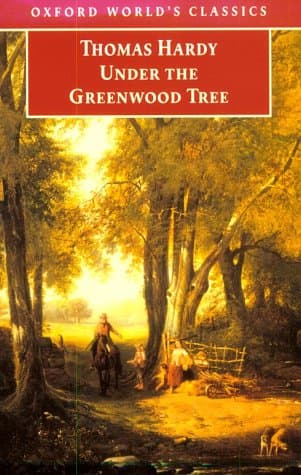
Thomas Hardy (2017)
Genre
Historical Fiction / Romance
Reading Time
360 min
Key Themes
See below
Sign in to track this book
In a Victorian village, a church musician's simple life changes when a charming schoolmistress arrives, threatening tradition and starting a complicated love.
On Christmas Eve, the Mellstock Quire, village musicians led by Reuben Dewey and including his son Dick, carol annually. They visit houses, including Farmer Shiner's, where they are welcomed. Their last stop is the school-house, where the new schoolmistress, Fancy Day, lives. As they play 'Hark the Glad Sound!', Fancy opens her window, showing her beauty to Dick Dewey, who likes her immediately. She offers them a drink, and Dick is taken by her charm and elegance. The quire disperses, with Dick thinking of Fancy.
After Christmas Eve, Dick Dewey, a young carpenter, is drawn to Fancy Day. He visits the school, offering to help with repairs or walking by to see her. He watches her teaching, confirming his admiration for her intelligence and manners. Fancy notices his attention and is flattered but reserved, aware of their social differences and her own goals. Dick tells his family, especially his father, Reuben, who at first is doubtful but later supports Dick's pursuit, seeing his deep feelings.
A change affects Mellstock Church with the new vicar, Mr. Maybold. Young and modern, Mr. Maybold wants to update church services. He suggests replacing the traditional Mellstock Quire, which has provided music for generations, with a harmonium played by Fancy Day. This news upsets the quire members, especially older musicians like Reuben Dewey and Thomas Leaf, who see it as an insult to their tradition. They argue their case, but Mr. Maybold is firm, believing it will bring a more refined sound to the church. Fancy feels conflicted but agrees to play the harmonium.
Fancy Day's beauty attracts other eligible men in Mellstock. Farmer Shiner, a wealthy man, courts her with gifts, intending to marry her. Mr. Maybold also develops feelings for Fancy. He admires her intelligence, musical talent, and demeanor, seeing her as a suitable wife for his position. Fancy, while liking Dick, is also tempted by the social advancement and money marriage to Shiner or Maybold would offer. She enjoys the attention and the chance to improve her status, causing internal conflict.
The Sunday arrives for the Mellstock Quire's last performance before being replaced. The quire members, though sad, play with dignity. Their performance is met with respect. After their final hymn, Fancy Day plays the harmonium. Her playing is good, but it lacks the charm and community spirit of the old quire. The change is clear, showing the conflict between tradition and modernity in the story. Dick watches Fancy, torn between his love for her and his loyalty to his family's musical heritage.
Despite Farmer Shiner and Mr. Maybold's attention, Fancy Day is drawn to Dick Dewey. She knows she loves Dick, valuing his affection and honesty over the social benefits offered by the others. However, her ambition and desire for a more comfortable life make her hesitate. She considers becoming a vicar's wife, which would raise her social standing. She keeps her true feelings for Dick somewhat hidden, enjoying the power her beauty gives her over her suitors, and struggling to balance her heart's desire with her worldly goals.
After thinking it over, Mr. Maybold, the vicar, proposes marriage to Fancy Day. He expresses his love for her, promising her a life of comfort and respect as his wife. Fancy considers her options and accepts his proposal. She sees it as a practical choice, offering the social standing and financial security she wants, even if her deepest affection is with Dick Dewey. She believes marrying the vicar will fulfill her ambitions and provide a stable future. The acceptance seems to seal her fate away from the carpenter.
Fancy Day, after accepting Mr. Maybold's proposal, seeks out Dick Dewey. She tearfully confesses she is engaged to the vicar but loves Dick. This devastates Dick but also gives him hope. Overwhelmed by her feelings for Dick and realizing she cannot marry a man she does not love, Fancy decides to break off her engagement with Mr. Maybold. She writes to him, explaining her change of heart, a difficult decision for her.
Mr. Maybold is hurt by Fancy's letter. However, he is a good man and understands that Fancy's happiness matters most. Knowing her heart belongs to Dick Dewey, he releases her from their engagement, putting her well-being before his own desires. He accepts her decision gracefully, wishing her happiness with Dick. This shows his character as an understanding figure, allowing Fancy to follow her true feelings without guilt, even though it is a personal loss for him.
With no more obstacles, Fancy Day and Dick Dewey are free to marry. The wedding takes place in Mellstock, with their families and friends. It is a simple, rustic event, reflecting their status and the village setting. The Mellstock Quire, despite their earlier removal from the church, plays at the wedding feast, celebrating the union. Fancy, who briefly thought of a grander life, finds happiness in marrying the man she loves. The wedding is a joyful end, showing love over social ambition, and the spirit of the Mellstock community.
The Protagonist
Dick matures from a smitten youth into a patient and understanding lover, ultimately winning Fancy's heart despite social obstacles.
The Protagonist
Fancy navigates her ambitions and desires, ultimately choosing true love over social status and finding contentment.
The Supporting
Reuben faces the challenge of tradition versus modernity, ultimately accepting change while maintaining his core values.
The Supporting
Mr. Maybold experiences romantic disappointment but demonstrates integrity and benevolence in his acceptance of Fancy's true feelings.
The Supporting
Farmer Shiner attempts to win Fancy through material means but is ultimately unsuccessful, highlighting the limitations of wealth in matters of the heart.
The Supporting
Grandfather William embodies the unchanging spirit of tradition despite witnessing the decline of the Mellstock Quire.
The Supporting
Thomas Leaf remains a steadfast and endearing figure, unaffected by the changing times, symbolizing the enduring simplicity of village life.
The Supporting
Geoffrey Day supports his daughter's pursuit of a good match, eventually accepting her choice for love over status.
The Supporting
Susan provides unwavering support to her family, adapting to changes while maintaining her nurturing role.
This theme is clear in the conflict between the Mellstock Quire and the new vicar's desire to replace them with a harmonium played by Fancy Day. The quire represents old, communal village life, rooted in custom. The harmonium, and Fancy's role, symbolize progress and a more formalized approach. Hardy explores the bittersweet nature of this transition, noting the loss of rustic charm while acknowledging change. The quire's displacement brings a sense of nostalgia for a fading way of life.
“''And there's a good many of us have been in the quire, man and boy, for fifty year!''”
The novel explores the complexities of love intertwined with social class and ambition. Fancy Day, a schoolmistress with goals, is torn between her affection for the carpenter Dick Dewey and the allure of social advancement offered by Farmer Shiner and Mr. Maybold. Her struggle shows the societal pressures on women to 'marry well' for security and status, even if it means sacrificing true love. Dick, though of lower social standing, represents authenticity and deep emotional connection, proving more compelling than money.
“''How can I like a man who is not a gentleman?''”
Hardy paints a vivid picture of rural life in Mellstock. The novel appreciates nature's rhythms, the close-knit community, and the simple pleasures of village life. Descriptions of the countryside, the caroling rounds, and daily lives evoke a pastoral ideal. However, this ideal is fragile, threatened by external changes (like the new vicar) and internal desires for social climbing. The book celebrates this world's charm while subtly acknowledging its vulnerability.
“''The green trees, the road, the walls, the church, the people, were all in a somnolent, yet kindly, glow.''”
This theme is clear in Fancy Day's character. She likes the appearances of refinement and status that Mr. Maybold and Farmer Shiner represent. However, her true feelings and happiness are found in Dick Dewey's more authentic love. The novel suggests that genuine connection and inner contentment are more valuable than superficial achievements or social standing. The Mellstock Quire, with its rustic music, also shows authenticity compared to the more polished but less soulful harmonium.
“''Ah, Fancy, you are a pretty girl, and you've got a pretty way with you; but you are not a girl to be trusted too far.''”
The Mellstock community, especially the Quire, is a strong theme. The shared tradition of music-making creates a sense of belonging and identity among its members. The threat to the quire is not just about music, but about the erosion of community bonds and shared heritage. Dick's connection to his family and the village is important, and Fancy's integration into this community, despite her initial detachment, shows her choice for belonging and love over individual ambition.
“''We be the Mellstock Quire, and we've been a-singing in Mellstock Church for a hundred and fifty year, and never had no fault found with us till now.''”
A symbol of tradition, community, and the fading rural past.
The Mellstock Quire functions as a central symbol in the novel. It represents the deeply ingrained traditions, communal spirit, and authentic folk culture of rural England. Their music is not just entertainment but an integral part of the villagers' identity and history. The quire's eventual displacement by the harmonium symbolizes the broader societal shift from traditional, communal ways to modern, more formalized, and individualistic approaches, highlighting the theme of tradition versus modernity. Their presence and eventual absence frame the narrative's exploration of change.
A symbol of modernity, refinement, and the displacement of tradition.
The harmonium serves as a direct counterpoint to the Mellstock Quire. It represents modernity, progress, and a more 'refined' form of church music, championed by the new vicar, Mr. Maybold. Its introduction into the church signifies the encroachment of external, urban values upon the traditional rural community. Played by Fancy Day, it also links to her own aspirations for social elevation and her more sophisticated tastes, contrasting with the rustic simplicity of Dick Dewey and the quire. It's a key device for illustrating the central conflict of the novel.
A subtle symbol of vanity, self-awareness, and her preoccupation with appearance.
Fancy Day's mirror, though not a prominent object, subtly appears in scenes where she is contemplating her appearance or her suitors. It symbolizes her vanity, her self-awareness, and her concern with how she is perceived by others, particularly in the context of her social ambitions. Her frequent glances into it reflect her internal struggle between her genuine feelings and her desire to present a refined, advantageous image. It highlights the theme of authenticity versus appearance, suggesting her initial focus on external validation.
An overarching symbol of nature, rustic love, and a simpler, idyllic past.
The 'Greenwood Tree' of the title, derived from a traditional folk song, functions as an overarching symbol for nature, rustic courtship, and an idealized, simpler past. It evokes a pastoral setting where love can flourish unhindered by social complexities. While not a specific physical tree in the narrative, it represents the natural, uncorrupted world of the village, contrasting with the artificiality of societal expectations. It frames the story as a celebration of genuine, natural affection that ultimately triumphs, despite Fancy's initial worldly temptations.
“The greatest pleasure of life is love.”
— A general reflection on life's joys.
“The only way to get rid of a temptation is to yield to it.”
— A somewhat cynical, yet playful, observation about human nature.
“It is better to have loved and lost than never to have loved at all.”
— A classic sentiment about the value of love despite potential heartbreak.
“Time changes everything, and everything changes in time.”
— A reflection on the inevitability of change.
“Happiness is a myth we all believe in.”
— A slightly pessimistic view on the pursuit of happiness.
“Love is a game that two can play and both can win.”
— An optimistic take on the nature of love as a shared victory.
“The heart has its reasons, which reason knows nothing of.”
— Exploring the irrationality and depth of emotional experience.
“Life is a journey, not a destination.”
— Emphasizing the importance of the process over the outcome.
“The past is never dead. It's not even past.”
— Highlighting the enduring influence of past events on the present.
“We are all in the gutter, but some of us are looking at the stars.”
— A well-known quote about finding hope and beauty in difficult circumstances.
“To be yourself in a world that is constantly trying to make you something else is the greatest accomplishment.”
— A powerful statement about individuality and authenticity.
“The future belongs to those who believe in the beauty of their dreams.”
— An inspiring quote about the power of dreams and belief.
“Every man has his secret sorrows which the world knows not; and oftentimes we call a man cold when he is only sad.”
— A poignant observation about hidden emotional pain and misjudgment.
“It is only with the heart that one can see rightly; what is essential is invisible to the eye.”
— Emphasizing the importance of intuition and inner perception over superficial appearance.
Ready to see how well you understood this book? Take our interactive quiz with 10 questions.
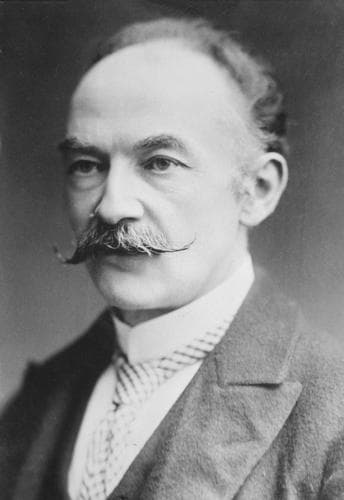
Thomas Hardy was an English novelist and poet. A Victorian realist in the tradition of George Eliot, he was influenced both in his novels and in his poetry by Romanticism, including the poetry of William Wordsworth. He was highly critical of much in Victorian society, especially on the declining status of rural people in Britain, such as those from his native South West England.







