“Perhaps that was the only way to find yourself. To get lost in someone else.”
— After Sarah changes her identity to William and begins working with Leon.

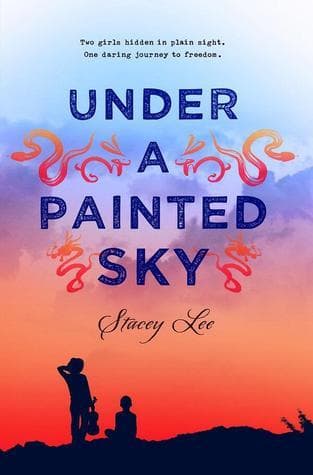
Stacey Lee (2015)
Genre
Historical Fiction / Young Adult / Romance
Reading Time
7-8 hours
Key Themes
See below
Sign in to track this book
Disguised as boys, a Chinese-American musician and a runaway slave form a strong bond on the treacherous Oregon Trail of 1849, risking everything to escape their pasts and find freedom amidst the California gold rush.
In Independence, Missouri, 1849, sixteen-year-old Samantha 'Sam' Houston, a talented Chinese-American violinist, dreams of studying music in New York. Her life with her widowed father, a Chinese immigrant shopkeeper, is stable, though marked by racial prejudice. One evening, while her father is away, a wealthy, aggressive patron named Mr. Bell tries to force himself on Samantha. In the struggle, Mr. Bell falls, hitting his head and dying. Fearing she will be blamed for his death, especially as a Chinese girl in a prejudiced town, Samantha knows she must flee. She quickly gathers what she can, her violin being her most prized possession, and prepares to leave before the authorities discover the body.
As Samantha prepares to escape, she meets Annamae, a young runaway slave also hiding in her father's barn. Annamae, who has endured brutal treatment and seeks freedom, recognizes Samantha's plight and offers to help. Realizing they both face severe danger – Samantha for murder, Annamae for escaping slavery – they decide to travel together. They understand that two lone girls, especially one Chinese and one Black, will be vulnerable on the frontier. To protect themselves, they cut their hair, don men's clothing, and pose as 'Sammy' and 'Andy,' two boys heading for the California gold rush.
Sammy and Andy join a wagon train heading west, quickly learning the harsh realities of frontier life. They struggle with the physical demands of travel, the constant fear of discovery, and the need to maintain their masculine personas. Samantha, as Sammy, tries to hide her musical talent, while Annamae, as Andy, uses her resourcefulness and knowledge of the land. They face scrutiny from other travelers, especially a suspicious wagon master, and must constantly be on guard to prevent their true identities from being revealed. Their bond deepens as they rely on each other for survival and emotional support amidst the vast, unforgiving landscape.
While traveling, Sammy and Andy meet a trio of cowboys: the charming Frisco, the quiet Caymus, and the protective Peety. Initially wary, the girls are drawn to the cowboys' camaraderie and offer of companionship. Frisco, in particular, seems to see beyond their disguise, creating an unspoken tension for Samantha. Despite their initial reservations, the cowboys prove to be kind and helpful, sharing food, protection, and a sense of belonging that the girls haven't experienced since leaving home. This new dynamic adds complexity, as the girls must navigate their growing feelings while maintaining their secret identities.
Word of Mr. Bell's death and a description of Samantha has spread, and bounty hunters and lawmen are on the trail. The girls, traveling with the cowboys, have a harrowing encounter when they spot a poster with Samantha's face. The cowboys, sensing trouble but not knowing the full truth, help them evade the authorities. This incident forces Sammy and Andy to be even more cautious and highlights the constant threat hanging over Samantha. Annamae's quick thinking and the cowboys' unwitting assistance prove important in their escape, reinforcing the idea that their survival depends on their ability to trust and adapt.
As they continue their journey, Annamae begins to open up about her past, revealing the brutal realities of slavery and her search for her mother, who was sold away. Samantha, in turn, finds herself increasingly drawn to Frisco, who shows her kindness and understanding. She struggles with the impossibility of a relationship while maintaining her disguise and the guilt of her secret. The emotional strain of their double lives intensifies, as they both yearn for genuine connection but are bound by their circumstances. The vastness of the trail reflects the internal landscapes of their hopes and fears.
A series of events, including a river crossing and an illness, puts pressure on Sammy and Andy's disguise. Frisco's growing affection for 'Sammy' becomes more apparent, making Samantha uncomfortable and fearful of exposure. Annamae, ever watchful, notices the subtle shifts and warns Samantha to be careful. The girls realize that their secret cannot be kept indefinitely, especially with the cowboys' increasing closeness. They must decide how much to trust their new friends, knowing that revealing their true identities could put them, and potentially the cowboys, in danger.
During a moment of crisis, perhaps an injury or an accidental slip, Samantha and Annamae's true identities are revealed to Frisco, Caymus, and Peety. The initial shock and confusion quickly turn to understanding and concern, especially from Frisco, who had already suspected something. Instead of abandoning them, the cowboys offer their continued protection and support. This revelation is a turning point, shifting the dynamics of their relationships from guarded friendship to a deeper, more trusting alliance. It means the girls no longer have to bear the burden of their secrets alone.
With the cowboys' help, the group diverts their course to follow a lead regarding Annamae's mother. Their journey takes them to a plantation where Annamae believes her mother might be. The tension is clear as they approach the dangerous territory. They orchestrate a risky plan to investigate, leading to a tense confrontation with slave owners and overseers. Annamae shows great bravery and determination, facing her past directly. This mission is full of peril, testing the loyalty and courage of every member of their makeshift family, especially the cowboys who risk their own safety for Annamae.
While Annamae doesn't find her mother alive, she uncovers evidence of her mother's strength and resilience, providing her with a sense of closure and purpose. The group continues west, with Samantha and Frisco's relationship blossoming openly. Samantha, no longer burdened by her disguise or the immediate threat of capture, begins to play her violin again, embracing her musical talent. Annamae, empowered by her journey, looks towards a future of true freedom and self-determination. They reach California, having not just survived the trail, but having formed strong bonds and discovered their true selves amidst the challenges.
The Protagonist
Samantha transforms from a sheltered girl with artistic dreams to a resilient survivor who finds love and embraces her identity, both as a woman and a musician, despite adversity.
The Protagonist/Supporting
Annamae evolves from a guarded runaway slave focused solely on survival to a woman who finds a chosen family and gains a sense of closure and hope regarding her past.
The Supporting
Frisco helps Samantha embrace her true self and provides her with love and security, evolving from a friendly stranger to a trusted confidante and partner.
The Supporting
Caymus remains a steadfast and loyal friend, accepting Samantha and Annamae for who they are and supporting them in their journey.
The Supporting
Peety's loyalty and protective nature are unwavering, evolving to include Samantha and Annamae as part of his chosen family.
The Antagonist/Mentioned
Mr. Bell's role is primarily as a catalyst, his death initiating Samantha's flight and subsequent transformation.
The Mentioned
Mr. Houston's character serves as Samantha's initial anchor and inspiration, his values guiding her even in his absence.
The novel explores identity, especially through Samantha and Annamae's disguises as 'Sammy' and 'Andy.' They are forced to shed their given identities and societal roles, allowing them to explore aspects of themselves they might not have otherwise. Samantha struggles with suppressing her femininity and musical talent, while Annamae finds strength and agency in her 'masculine' persona. The journey on the Oregon Trail becomes a place where they learn who they truly are, not just who society expects them to be, ending with them embracing their authentic selves. This is clear when Samantha finally plays her violin again after her identity is revealed, showing her reclaiming her true self.
““The trail taught me that the person I was, the person I thought I had to be, wasn't the only person I could be.””
The bond between Samantha and Annamae is the heart of the story, showing the power of friendship as a survival tool and a source of emotional support. They are two marginalized girls from different backgrounds who form a strong sisterhood, relying on each other completely for physical safety and emotional resilience. This theme extends to their relationship with the cowboys, who, despite initial suspicion, become their chosen family, offering protection and acceptance. The story emphasizes that in a harsh world, these deep connections are essential for survival and growth, as seen when the cowboys risk their own safety to help Annamae search for her mother.
““We were two halves of a whole, each needing the other to survive.””
The novel portrays the widespread prejudice and discrimination faced by various marginalized groups in 1849 America. Samantha, as a Chinese-American girl, experiences racism, leading to her fear of an unfair trial after Mr. Bell's death. Annamae's story highlights the brutal realities of slavery and the systemic dehumanization of Black people. Both girls' decision to disguise themselves as boys is a direct response to the dangers posed by their race and gender. The story consistently reminds the reader of the constant threat and injustice they face, from suspicious stares on the trail to the real danger of recapture for Annamae, showing the hostile environment for anyone outside the dominant white male culture.
““Being a girl was trouble enough. Being a Chinese girl was worse. Being a runaway Chinese girl accused of murder? That was a death sentence.””
Samantha and Annamae's journey shows human resilience and perseverance in the face of great odds. From the initial trauma that forces them to flee, to the daily hardships of the Oregon Trail – hunger, illness, harsh weather, and the constant threat of discovery – they continually push through adversity. Their ability to adapt, to learn new skills, and to maintain hope despite setbacks is central to their survival. This theme is embodied in their determination to reach their goals – freedom and a new life – even when circumstances seem dire, showing their inner strength.
““The trail didn't care who you were, only what you could do. And what you could endure.””
Samantha and Annamae adopt male identities to survive the journey.
The central plot device is the girls' disguise as 'Sammy' and 'Andy.' This allows them to navigate the dangerous frontier as 'boys,' granting them a degree of safety and freedom that would be impossible for two unchaperoned girls, especially one Chinese and one Black. The disguise creates constant tension, as they must maintain their male personas, avoid suspicion, and suppress their true selves. It also serves as a catalyst for their self-discovery, forcing them to explore masculine traits and skills, while simultaneously highlighting the societal limitations placed on women.
The arduous journey west serves as the primary setting and crucible for character development.
The Oregon Trail functions as more than just a setting; it is a character in itself, a harsh and unforgiving crucible that tests the protagonists' physical and emotional limits. Its vastness symbolizes the characters' journey into the unknown, while its dangers (weather, illness, rough terrain, human threats) drive the plot and force the characters to adapt and grow. The trail strips away societal conventions, forcing Samantha and Annamae to rely on their wits and each other, accelerating their bond and self-discovery. It represents both a path to freedom and a gauntlet of survival.
Annamae's search for her mother drives a significant portion of the plot.
Annamae's desperate search for her mother, from whom she was forcibly separated, serves as a powerful MacGuffin. While finding her mother is a deeply personal and emotional goal for Annamae, it also provides a clear objective that propels the narrative forward, dictating the group's movements and leading to key conflicts and character interactions. It provides a tangible purpose for their journey beyond mere survival, allowing for exploration of themes of family, loss, and the enduring impact of slavery, culminating in a resolution that brings Annamae closure even if her mother is not found alive.
“Perhaps that was the only way to find yourself. To get lost in someone else.”
— After Sarah changes her identity to William and begins working with Leon.
“Art wasn't just about what you saw, but what you felt, and what you made others feel.”
— Sarah reflects on the power and purpose of painting.
“Sometimes the only way to be free was to pretend to be someone else.”
— Sarah's justification for adopting her male disguise, William.
“The world was a stage, and we were all just players, some with better costumes than others.”
— A reflection on the different roles people play in society, especially during their travels.
“It was amazing how much you could learn about a person from their hands.”
— Sarah's observation of Leon's musician hands, revealing his character.
“A lie was only a lie if someone found out. Otherwise, it was just a secret.”
— Sarah grappling with her deception and the risks involved.
“True beauty wasn't in the face, but in the heart that beat beneath it.”
— Sarah's evolving understanding of love and attraction.
“You can't paint the world without getting a little paint on yourself.”
— A metaphor for engaging with life and its challenges.
“Hope was a dangerous thing, but it was also the only thing that kept you going.”
— Sarah and Leon facing hardship and uncertainty on their journey.
“Music was the language of the soul, and Leon spoke it fluently.”
— Sarah's admiration for Leon's musical talent and passion.
“To be truly seen was both a blessing and a terror.”
— Sarah's fear of her true identity being discovered, alongside a longing for acceptance.
“The greatest masterpieces were often born from the greatest struggles.”
— Reflecting on how adversity can fuel creativity and achievement.
“Home wasn't a place, but a feeling. A feeling of belonging.”
— Sarah's realization about where she truly belongs after her journey.
“Sometimes the only way to find your voice was to listen to someone else's.”
— Sarah learning from Leon's experiences and perspective.
Ready to see how well you understood this book? Take our interactive quiz with 10 questions.







