“Is it right, in the sight of God, that you should keep souls out of heaven?”
— Mrs. Shelby questions her husband's decision to sell Tom.

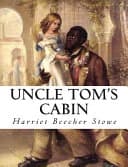
Harriet Beecher Stowe (2015)
Genre
Historical Fiction
Reading Time
Varies significantly by reader, but expect a substantial commitment for a 19th-century novel.
Key Themes
See below
Sign in to track this book
Harriet Beecher Stowe's novel follows the painful journey of Uncle Tom, an enslaved man, to expose slavery's cruelty and challenge the nation to embrace Christian love.
On the Shelby plantation in Kentucky, Mr. Shelby, a kind but financially irresponsible owner, must sell two of his enslaved people to a cruel trader, Mr. Haley, to pay his debts. He chooses Uncle Tom, a religious and loyal man, and Harry, the young son of Eliza, Mrs. Shelby's maid. Eliza hears this news and decides to save her child. Mrs. Shelby, though benevolent, feels she cannot intervene, showing how slavery trapped even 'good' masters. This scene immediately shows the insecurity of enslaved life and sets the stage for the dramatic escapes and sales that follow.
Learning of Harry's upcoming sale, Eliza bravely takes Harry and flees the Shelby plantation at night. She makes a desperate run for freedom, pursued by Mr. Haley and his men. Her escape ends with a dramatic crossing of the half-frozen Ohio River. She leaps from ice floe to ice floe with her child, a feat seen by sympathetic onlookers on the Ohio side. This heroic act of a mother protecting her child against huge odds is one of the novel's most iconic and emotional scenes. It shows the lengths enslaved people would go to escape bondage.
Uncle Tom, having willingly gone with Mr. Haley to protect the remaining enslaved people on the Shelby plantation from further sales, is transported downriver. During the journey, he meets the St. Clare family: Augustine St. Clare, a kind but cynical planter, his delicate and religious daughter, Eva, and his aristocratic, often complaining wife, Marie. When Eva accidentally falls overboard, Tom bravely saves her. This act immediately makes Eva fond of him. Augustine St. Clare, impressed by Tom's character, decides to buy him, bringing Tom into a new, though still enslaved, life in New Orleans.
At the St. Clare plantation in New Orleans, Tom finds a period of relative comfort compared to his past. He becomes Eva's devoted caretaker and friend. Eva, with her strong Christian faith and innocent love, sees the good in everyone, regardless of race or status. She greatly influences Tom and challenges the common views on slavery within her household. Augustine St. Clare, while seeing the evils of slavery, struggles with the moral inaction and societal pressures that stop him from acting. Tom's time here involves spiritual talks with Eva and his continued strong faith.
Little Eva, already weak, becomes very ill. As her condition worsens, she expresses her deep love for everyone, especially the enslaved people, and questions the injustice of their bondage. On her deathbed, she asks her father to free them. She gives locks of her hair to the enslaved household members as a sign of her affection and shared humanity. Eva's death is a key emotional moment in the novel, deeply affecting Augustine St. Clare and inspiring the enslaved people with her strong faith and compassion. Her innocence and purity highlight slavery's moral corruption.
Deeply moved by Eva's death and her dying wish, Augustine St. Clare finally decides to act against slavery. He begins to arrange for Tom's freedom, recognizing Tom's inherent goodness and his daughter's strong influence. However, before he can complete the legal documents for Tom's freedom, St. Clare is tragically killed in a tavern brawl. His death leaves Tom's fate uncertain again and shows how easily good intentions could be stopped by unforeseen events and the legal complexities of slavery.
After Augustine St. Clare's death, his wife Marie, who lacks his compassion and does not care about Eva's dying wish, decides to sell all the enslaved people to settle the estate. Tom is put up for auction and bought by Simon Legree, a notoriously cruel and brutal plantation owner from Louisiana. This sale marks a dramatic and terrifying change in Tom's life, as he is taken to Legree's desolate and violent cotton plantation. The difference between the St. Clare household and Legree's plantation shows a descent from a relatively mild form of slavery to its most extreme and dehumanizing depths.
On Simon Legree's plantation, Uncle Tom experiences the full horror and cruelty of chattel slavery. Legree is a sadist who enjoys tormenting his enslaved workers, driving them with whips and denying them basic human dignity. Tom firmly refuses to give in to despair or to compromise his Christian faith, even under intense pressure and physical abuse. He tries to comfort and uplift his fellow sufferers, including Cassy and Emmeline, two women also enslaved by Legree. Legree, angered by Tom's strong spirit and refusal to whip another enslaved person, vows to break him.
Meanwhile, Eliza, having successfully crossed the Ohio River, reunites with her husband, George Harris, who had also escaped his cruel master. They find safety with the Quakers, a community known for their abolitionist views and their help to runaway enslaved people. With the help of the Underground Railroad, Eliza, George, and Harry continue their dangerous journey north, facing constant danger and uncertainty. Their resolve to achieve freedom and build a new life as a family provides a contrasting story of hope and successful resistance against Tom's suffering.
Legree's cruelty increases, especially toward Tom, who continues to refuse to betray Cassy and Emmeline when they escape. Legree, with his overseers Sambo and Quimbo, brutally beats Tom, intending to kill him. Despite the horrific torture, Tom keeps his faith, forgiving his tormentors with his dying breath. His death is presented as a martyrdom, a sacrifice that reveals slavery's ultimate depravity and the triumph of spiritual strength over physical brutality. His final moments are witnessed by George Shelby, who arrives too late to save him.
Cassy, a strong and resourceful woman, and young Emmeline, whom Legree had bought for his own desires, manage to escape Legree's plantation. They cleverly hide in the attic of the plantation house, making Legree believe they are ghosts, thus preventing pursuit. They eventually make their way to a steamboat, where they meet Madame de Thoux, who turns out to be Eliza's long-lost sister. Through a series of coincidences, they are eventually reunited with Eliza, George, and Harry in Canada, showing how family connections, broken by slavery, can be miraculously restored.
Young George Shelby, having tracked Tom to buy him back, arrives at Legree's plantation only to find Tom dying. Deeply affected by Tom's death and the horrors he witnessed, George returns to Kentucky. Inspired by Tom's strong faith and sacrifice, and recognizing slavery's evil, George keeps his father's unfulfilled promise. He gathers all the enslaved people on his family's plantation and formally grants them their freedom. He then dedicates his life to working for the abolitionist cause, urging them to remember Tom's sacrifice and to live lives worthy of their freedom.
Eliza, George, and Harry, along with Cassy, Emmeline, and Madame de Thoux, successfully build a new life in Canada. George Harris dedicates himself to education and intellectual pursuits, eventually moving his family to Liberia, Africa, a colony for freed American enslaved people. There, he becomes a respected leader, advocating for his people's rights and dignity. The novel ends with the image of a thriving, free community, sharply contrasting with Tom's suffering, and offering a vision of hope and self-determination for Black people in a world free from slavery.
The Protagonist
Tom's journey is one of increasing suffering and spiritual refinement, culminating in his martyrdom, where his faith remains unbroken despite extreme brutality.
The Supporting
Eliza transforms from a fearful mother to a determined escapee, successfully achieving freedom for herself and her family.
The Supporting
George evolves from an oppressed and angry enslaved man to a respected leader and intellectual in a free society.
The Supporting
Eva's brief life is a testament to innocent goodness and moral influence, culminating in a Christ-like death that inspires moral awakening in others.
The Supporting
St. Clare struggles with his conscience, eventually resolving to free Tom, but his tragic death prevents him from fulfilling this promise, showing the fragility of good intentions.
The Antagonist
Legree remains static in his evil, serving as the ultimate antagonist whose brutality leads to Tom's martyrdom, but ultimately to his own downfall and isolation.
The Supporting
Cassy moves from deep despair and a desire for revenge to finding redemption and a path to freedom and family.
The Supporting
Marie remains unchanged in her selfishness and prejudice, serving as a static representation of the moral failings of the slaveholding class, ultimately selling Tom after her husband's death.
The Supporting
George develops from an innocent boy into a morally conscious man who repudiates slavery and dedicates himself to abolition, freeing his family's enslaved people.
The novel clearly shows slavery's moral corruption. It portrays slavery as an institution that harms both the enslaved and the enslavers. It shows how slavery takes away people's humanity, breaks up families, and denies basic rights and dignity. Scenes like Tom's brutal treatment on Legree's plantation, the forced sales, and the constant fear of separation clearly show the systemic cruelty. Even 'kind' slaveholders like Mr. Shelby and Augustine St. Clare are shown to be part of a system that causes great suffering. This shows that the institution itself, not just individual cruelty, is the problem.
“''What a world!'' said Miss Ophelia, lifting up her hands. ''And these things go on, day after day, right in sight of us!''”
Christianity is a strong force for morality and a direct challenge to slavery. Uncle Tom's strong faith, even to his death, is a moral guide. It shows that true Christian love and forgiveness can overcome earthly suffering and reveal slavery's un-Christian nature. Characters like Eva, who embodies pure Christian love, and the Quakers, who help runaway enslaved people, highlight how real faith should inspire abolitionist action and compassion. The novel contrasts this with the corrupted Christianity of slaveholders like Legree, who reject it, or those who twist scripture to justify their actions.
“''I'm a poor, helpless creature,'' said Tom, ''but I know in whom I trust.''”
The novel strongly emphasizes the unbreakable bonds of family, especially maternal love, as a driving force against slavery. Eliza's desperate escape across the frozen Ohio River with her son Harry is a prime example. It shows how far a mother will go to protect her child from being sold away. The constant threat of family separation, a core horror of slavery, is highlighted throughout the story, from Tom's initial sale away from his family to Cassy's traumatic loss of her own children. The reunions of Eliza's family and Cassy's discovery of her sister show the deep human need for family connection and slavery's devastating impact on these bonds.
“''I have lost my mother, and my children, and I've seen them sold, one after another, till I ha'n't got a soul in this wide world that cares for me, or that I care for!''”
Stowe criticizes the hypocrisy of white Southerners who consider themselves good while participating in or benefiting from slavery. Characters like Mr. Shelby and Augustine St. Clare, though personally kind to their enslaved people, ultimately fail to challenge the system. Shelby sells Tom due to debt, and St. Clare, despite his moral doubts, delays freeing his enslaved people until it is too late. This theme argues that individual kindness within a cruel system is not enough. True good requires active opposition to the institution itself. It also highlights how societal pressures and economic self-interest often override moral beliefs.
“''You ought to be ashamed, Augustine!'' said Miss Ophelia. ''What do you mean by owning all these people, and letting them go to destruction for want of teaching?''”
The novel implicitly and explicitly champions the role of women in the abolitionist movement. From Eliza's heroic actions to save her son, to Mrs. Shelby's quiet but deep moral distress, to Miss Ophelia's direct confrontation of slavery's immorality and her efforts to educate Topsy, women are important agents of moral change. Eva's spiritual influence is also central. Stowe, herself a woman, uses these characters to suggest that women, with their inherent compassion and moral sense, have a unique and powerful ability to challenge and ultimately dismantle slavery.
“''I would not own a slave, no, not for a kingdom!''”
Appealing to readers' emotions to evoke sympathy and moral outrage.
Stowe frequently employs sentimentalism, a literary technique that aims to elicit strong emotional responses from the reader. This is evident in scenes like Eliza's dramatic escape across the ice floes with Harry, Eva's angelic death, and Tom's brutal martyrdom. By focusing on the suffering of sympathetic characters and emphasizing their pure motives and deep affections (especially familial love), Stowe intended to break down readers' indifference to slavery and cultivate a sense of moral outrage, compelling them to action against the institution. The emotional intensity serves to personalize the abstract political issue of slavery.
Portraying Uncle Tom's death as a Christ-like sacrifice for his faith and fellow humans.
Uncle Tom's death is presented as a Christian martyrdom, where he endures extreme suffering and ultimately dies for his faith and his refusal to betray others. His forgiveness of his tormentors, Simon Legree, Sambo, and Quimbo, with his dying breath, directly parallels the crucifixion of Jesus Christ. This device serves to elevate Tom's suffering to a sacred level, making his death a powerful moral indictment of slavery and inspiring readers with his unwavering spiritual fortitude. It aims to shock readers into recognizing the profound moral evil of a system that could produce such a 'sacrifice'.
Utilizing prevailing racial stereotypes to evoke sympathy and critique slavery.
While challenging slavery, Stowe sometimes employed and adapted existing racial stereotypes, such as the 'noble savage' (seen in George Harris's intelligence and dignity) and the 'tragic mulatto' (represented by characters like Eliza and Cassy, whose lighter skin and education often make their suffering more relatable to white audiences). These portrayals, while problematic by modern standards, were used by Stowe to highlight the humanity of enslaved people and to argue that race should not determine one's fate or rights. The 'tragic mulatto' specifically aimed to show how slavery cruelly impacted individuals who could otherwise 'pass' for white, blurring racial lines and exposing the absurdity of racial hierarchies.
Employing improbable plot twists and fortunate encounters to advance the narrative.
The novel frequently relies on significant coincidences and instances of 'deus ex machina' (god from the machine) to resolve plot points or facilitate reunions. Examples include Eliza encountering her long-lost sister Cassy on a steamboat, and George Shelby's arrival at Legree's plantation just as Tom is dying. While sometimes criticized for being unrealistic, these devices serve a thematic purpose: they emphasize the hand of divine providence guiding events, particularly for the righteous, and allow for the emotional impact of character reunions and dramatic turns, underscoring the novel's Christian message of ultimate justice and hope, even amidst despair.
“Is it right, in the sight of God, that you should keep souls out of heaven?”
— Mrs. Shelby questions her husband's decision to sell Tom.
“I have lost my husband, and now I'm going to lose my boy. It's too much!”
— Eliza laments her impending separation from Harry.
“I'm going to run away, I am, if I die for it!”
— Eliza declares her intention to escape with Harry.
“But who, sir, makes slaves of men? Was it God? or man?”
— Augustine St. Clare challenges a minister on the divine justification of slavery.
“If I have to be a slave, I'd rather be a slave to a good master.”
— Uncle Tom's resigned acceptance of his fate early in the novel.
“He's a Christian, and he'll be true to his word.”
— Mrs. Shelby's initial trust in her husband's promise to redeem Tom.
“I'm a poor, helpless creature; but I know what I want, and I know what I'll do.”
— Topsy describes herself and her defiant spirit.
“No! no! no! my soul ain't yours, Mas'r! You haven't bought it, — you can't buy it! It's been bought and paid for by a good Master up in heaven!”
— Uncle Tom's defiant declaration to Legree, refusing to betray others.
“If ever I get free, I'll buy my wife and children.”
— George Harris's determination to reunite his family.
“The bitterest tears shed over graves are for words left unsaid and deeds left undone.”
— St. Clare reflects on his past and his relationship with his mother.
“It's a great thing to be a woman; but it's a greater thing to be a mother.”
— Aunt Chloe expresses her maternal pride and love.
“I'm not a bad man, Tom; I'm only a man of the world.”
— Augustine St. Clare tries to justify his inaction regarding slavery to Tom.
“What do you suppose is the reason we are to love our enemies?”
— Eva asks Tom about the Christian teaching of loving one's enemies.
“I have been a slave, and I know what a slave feels.”
— George Harris speaks about his personal experience with slavery.
Ready to see how well you understood this book? Take our interactive quiz with 10 questions.
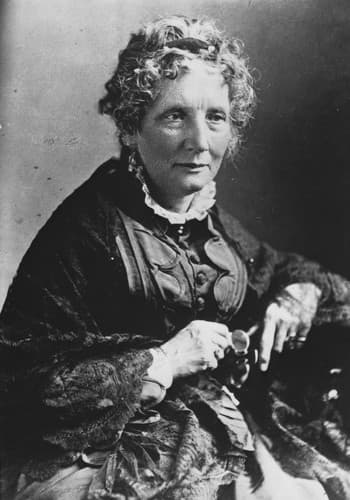
Harriet Elisabeth Beecher Stowe was an American author and abolitionist. She came from the religious Beecher family and became best known for her novel Uncle Tom's Cabin (1852), which depicts the harsh conditions experienced by enslaved African Americans. The book reached an audience of millions as a novel and play, and became influential in the United States and in Great Britain, energizing anti-slavery forces in the American North, while provoking widespread anger in the South. Stowe wrote 30 books, including novels, three travel memoirs, and collections of articles and letters. She was influential both for her writings as well as for her public stances and debates on social issues of the day.







