“‘They’re not the same, the two of them. Not at all.’”
— Rosie reflecting on the differences between her parents.

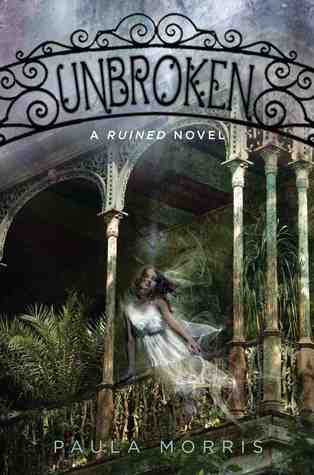
Paula Morris (2013)
Genre
Historical Fiction / Young Adult / Romance
Reading Time
300 min
Key Themes
See below
Sign in to track this book
A year after a near-fatal encounter, Rebecca returns to jazz-filled New Orleans and is drawn into a century-old murder mystery by a ghost, forcing her to confront trust, danger, and the city's spectral secrets.
A year after her scary experience with Lisette's ghost, Rebecca Brown returns to New Orleans for the summer. She stays with her aunt and uncle, looking forward to seeing Anton Grey again, the boy she connected with supernaturally during her last visit. Almost immediately, Rebecca meets a new ghost named Alain. Alain is a young man from the late 1800s who says he was murdered and that only Rebecca can help him find the truth and peace. He is persistent and desperate, pulling Rebecca into a new mystery before she even settles back into the city or properly reunites with Anton.
Alain's ghost is constant and demanding, interrupting Rebecca's attempts to enjoy her summer and restart her relationship with Anton. He gives vague hints about his past, mentioning a fire, a factory, and a rival. Meanwhile, Anton returns from his summer away, and they quickly fall back into their easy friendship, though Rebecca finds it hard to tell him everything about Alain. Anton, still dealing with his own family's history of spirits, is careful about Rebecca getting involved in another dangerous supernatural investigation. Their reunion is marked by the unspoken tension of Rebecca's new ghostly problem.
Driven by Alain's pleas, Rebecca starts researching late 19th-century New Orleans, focusing on fires and industrial accidents. She visits libraries and archives, trying to piece together Alain's story. Alain is often there, offering broken memories, but his account seems incomplete or even contradictory. Rebecca learns that Alain worked in a cigar factory owned by a prominent family, and his death was officially ruled an accident during a factory fire. However, Alain strongly denies this, claiming he was murdered. Her investigation begins to uncover rumors of rivalries and hidden plans among the city's wealthy families of that era.
Rebecca's research leads her to discover an old rivalry between Alain's family, the Dubois, and another powerful New Orleans family, the St. Clairs. She learns that the St. Clairs also owned a rival cigar factory. Historical records suggest a time of intense competition and even sabotage between the two businesses. As Rebecca digs deeper, she finds a pattern of suspicious deaths and misfortunes affecting both families, especially around the time Alain died. She begins to suspect that Alain's death was not a single event but part of a larger, darker conflict hidden by time and influence.
Anton grows more concerned about Rebecca's deep involvement in Alain's mystery. He reminds her of the dangers they faced with Lisette and warns her not to trust every spirit. Despite his worries, Anton supports Rebecca by helping her research. Their investigation leads them to an old Creole medium who was active in the late 1800s. Rebecca believes this medium might have known Alain or had information about his death. She arranges a seance, hoping for direct communication and clearer answers, much to Anton's fear about the risks of such an event.
During the seance, the medium channels a powerful spirit that is not Alain, but one connected to the St. Clair family. This spirit reveals important information, suggesting that Alain was not the innocent victim he claimed to be. It hints at Alain's own involvement in dishonest dealings and possibly contributing to others' misfortunes. The revelations paint a more complex and morally unclear picture of Alain, challenging Rebecca's first idea of him as a purely wronged spirit. The seance also suggests that the St. Clairs were not just villains but also victims of the ongoing feud, blurring who was at fault.
With the medium's revelations, Rebecca confronts Alain. His behavior changes, becoming defensive and evasive, eventually showing a more cunning and manipulative side. He admits to some of his past wrongdoings, including industrial spying and contributing to rivals' downfalls, though he still insists he was ultimately murdered. Rebecca realizes that Alain had selectively shared information, presenting himself as a pure victim to get her sympathy and help. This discovery shakes Rebecca's trust in him and makes her question the true nature of his death and his reasons for seeking her help.
As Rebecca continues to investigate, she finds a living descendant of the St. Clair family, an elderly woman named Genevieve. Genevieve St. Clair is a private but sharp woman who deeply understands her family's history and the long feud with the Dubois. Through Genevieve, Rebecca learns the full extent of the rivalry, the tragedies suffered by both families, and the complex events that led to Alain's death. Genevieve has old journals and letters that reveal a hidden truth, a secret kept for over a century.
Genevieve St. Clair reveals that Alain was murdered, but not by a St. Clair. He was killed by a close associate, a Dubois family member, who betrayed him during the factory fire. The associate had been working with the St. Clairs to end the destructive rivalry, but Alain's ambition and double-dealing threatened to expose their plans. His death was then covered up by both families, who, tired of the feuding and scandal, agreed to call it an accident to protect their reputations and finally end the hostilities. The truth is much more complex and tragic than simple good versus evil.
With the full truth finally uncovered, Rebecca confronts Alain one last time, telling him the complete story of his death and the cover-up. The revelation, though painful, allows Alain to finally understand how he died and the roles everyone played. He accepts his fate, and finding the peace he sought, his spirit finally moves on. Rebecca, tired but relieved, thinks about the complexities of history, the blurry lines of morality, and the lasting power of secrets. Her experience deepens her bond with Anton, who supported her throughout the ordeal.
The Protagonist
Rebecca grows from a somewhat reluctant medium to a more confident and discerning investigator, learning to trust her instincts and navigate the moral ambiguities of the past.
The Supporting
Anton deepens his understanding of his family's legacy and his role in Rebecca's life, becoming more accepting of the supernatural world while remaining grounded.
The Antagonist/Supporting (initially appears as a victim)
Alain transitions from a seemingly innocent victim to a more morally complex figure, eventually finding peace once the full, unvarnished truth of his life and death is revealed.
The Supporting
Genevieve moves from a silent guardian of family secrets to a truth-teller, finally sharing the burden of the past to allow for resolution.
The Supporting
N/A (functions as a plot device)
The Mentioned
N/A (functions as a past experience/reference point)
The novel constantly explores how truth, especially historical truth, is subjective, incomplete, and often changed. Alain's first story as a pure victim is slowly broken down, showing his own moral flaws and involvement in the conflicts he blamed others for. Rebecca learns that even spirits can lie or leave out details, and that 'justice' is rarely simple. The hidden journals and the descendant's testimony ultimately reveal a truth that is much more complex and involves a cover-up by multiple parties, showing that history is often written by winners or those trying to keep peace, rather than by objective facts.
“History is not a simple story, Rebecca. It's a tapestry woven with threads of truth and lies, and sometimes, the lies are easier to believe.”
The past in New Orleans is not just history; it is a living presence that still affects the present. The old feud between the Dubois and St. Clair families, even a century later, casts a shadow over their descendants and the city itself. Alain's inability to move on is a direct result of the unresolved wrongs and secrets of his time. Rebecca and Anton, through their interactions with spirits, are always involved in these past burdens, tasked with bringing resolution. The novel suggests that until these past wrongs are acknowledged and understood, their echoes will continue to haunt the living.
“Some wounds never truly heal, Rebecca. Not for the living, and certainly not for the dead.”
The characters, both living and dead, are rarely purely good or evil. Alain, first shown as a victim, is revealed to have been part of the schemes that led to his downfall. The St. Clairs, first appearing as bad guys, are shown to have also been victims of the rivalry and to have wanted the conflict to end. Rebecca's journey forces her to see these gray areas, understanding that actions have complex reasons and results. The novel implies that true peace for the dead comes not from simple revenge, but from accepting the full, often messy, truth of their lives.
“It's never just one side that's to blame when a feud runs that deep.”
Rebecca's ability to talk to ghosts naturally puts her in a situation where trust is vital, yet also risky. Alain's initial deception shows the danger of blindly trusting a spirit's story, especially when their memories or motives are unclear. Rebecca must learn to tell truth from manipulation, even from those who seem helpless victims. This theme extends to her relationship with Anton, where open communication and shared understanding are essential for safely navigating the supernatural world. The novel emphasizes the importance of critical thinking and seeking different viewpoints when uncovering hidden truths.
“Just because they're dead doesn't mean they're saints, Rebecca. Or that they tell the whole truth.”
Rebecca's unique ability to see and communicate with ghosts.
This is the central plot device, enabling Rebecca to interact with the supernatural world and drive the mystery forward. Her 'gift' is both a blessing and a curse, allowing her to uncover hidden truths but also placing her in danger and drawing her into complex historical conflicts. It serves as the primary catalyst for the plot, as Alain specifically seeks her out because of her ability. The gift also provides a unique perspective on New Orleans, where the past is always present through its spectral inhabitants.
Journals, letters, and public records used to uncover past events.
Rebecca's investigation heavily relies on traditional research methods, such as poring over old newspaper clippings, census records, and family archives. These documents provide the factual backbone for the supernatural mystery, grounding the ghostly encounters in tangible history. They serve as crucial tools for cross-referencing Alain's fragmented memories and for uncovering the inconsistencies in his story, ultimately leading to the full revelation of the truth through Genevieve St. Clair's hidden family papers.
The city itself functions as a character and a catalyst for supernatural events.
New Orleans is more than just a setting; its rich history, distinct atmosphere, and reputation for being a city of spirits are integral to the plot. The old houses, cemeteries, and cultural traditions provide a fertile ground for ghostly activity and historical mysteries. The city's unique blend of beauty and decay, its vibrant jazz and lingering shadows, mirrors the complex and often tragic truths Rebecca uncovers. It acts as a magnet for the supernatural, drawing Rebecca back and providing the perfect backdrop for stories of unresolved pasts.
Spiritual gatherings used to communicate with the dead.
The séances serve as a direct means of communication with the spirit world beyond Rebecca's personal interactions. They are pivotal in advancing the plot by introducing new, often contradictory, information about Alain's past. The séance with the Creole medium is a turning point, as it reveals truths that Alain had withheld, forcing Rebecca to re-evaluate her understanding of the mystery. This device highlights the varied ways in which the living can interact with the dead and the different levels of truth that can be accessed.
“‘They’re not the same, the two of them. Not at all.’”
— Rosie reflecting on the differences between her parents.
“‘You can’t just walk away from things, Rosie. Not when they matter.’”
— Rosie's mother giving her advice about commitment.
“‘History isn’t just about dates and battles, it’s about people.’”
— Rosie's history teacher explaining the human element of the past.
“‘Sometimes the bravest thing you can do is admit you’re scared.’”
— A friend comforting Rosie during a difficult time.
“‘The past isn’t gone; it’s just waiting for you to find it.’”
— Rosie considering the lingering impact of historical events.
“‘Love isn’t always easy, but it’s always worth fighting for.’”
— A character's reflection on the challenges of romantic love.
“‘There’s a difference between remembering and living in the past.’”
— Rosie learning to move forward while still acknowledging history.
“‘Some stories need to be told, even if they’re difficult.’”
— The importance of sharing difficult historical narratives.
“‘You can’t change what happened, but you can change how you react to it.’”
— Rosie's personal growth in dealing with past events.
“‘The quiet moments are often the ones that speak the loudest.’”
— Rosie observing the subtle but significant interactions between people.
“‘It’s never too late to learn something new about yourself.’”
— Rosie discovering new aspects of her identity and heritage.
“‘Sometimes you have to break a few rules to do what’s right.’”
— A character making a difficult moral decision.
“‘The future is built on the foundations of the past.’”
— Rosie understanding the interconnectedness of time.
“‘Even in the darkest times, there’s always a glimmer of hope.’”
— A message of optimism amidst historical hardship.
Ready to see how well you understood this book? Take our interactive quiz with 10 questions.

Biography coming soon.







