“I was born with a secret, a power that could change the world—or destroy me.”
— The protagonist, Alison, reflecting on her unique abilities and the danger they pose.

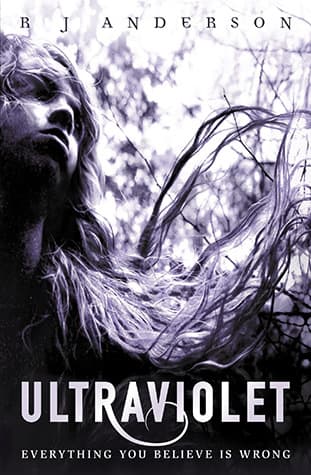
R.J. Anderson (2011)
Genre
Fantasy / Mystery / Science Fiction / Young Adult / Romance
Reading Time
10-12 hours
Key Themes
See below
Sign in to track this book
Confined to a mental institute for a murder without a body, a sixteen-year-old girl grapples with the impossible truth that her victim disintegrated into thin air, only to find a mysterious psychologist believes her story and holds the key to an extraordinary, hidden world.
Sixteen-year-old Alison wakes up in the 'Institute,' a mental facility for teenagers, with no memory of how she got there. Dr. Stone and other staff tell her she is accused of murdering Tori Beaugrand, the most popular girl at her school, but no body was found. Alison remembers a heated argument with Tori in the school's art room, followed by Tori's sudden disintegration into dust. This impossible event leads everyone, including Alison, to believe she is suffering from a severe delusion. She struggles to understand what truly happened, feeling isolated and desperate.
A new visiting psychologist, Dr. Faraday, arrives at the Institute. Unlike the other staff, he listens to Alison's account of Tori's disappearance without judgment. He encourages her to describe every detail, focusing on her sensory experiences during the event. Alison feels an immediate connection to him, a sense of being truly seen for the first time since her incarceration. Faraday's belief in her story, even the parts that sound insane, gives Alison hope, making her question if she is mad or if there's another explanation.
As Alison continues her sessions with Dr. Faraday, she starts to notice strange things: colors appear unusually bright, she can sense emotions from others, and she experiences moments of intense clarity. Faraday begins to subtly guide her, hinting at a reality beyond human perception. He reveals that she can perceive the 'ultraviolet' spectrum, which allows her to see the true form of certain beings. He explains that Tori was not human and that Alison's 'murder' was self-defense against a dangerous entity, though he doesn't fully explain what Tori was.
Dr. Faraday explains that he and Tori are part of a hidden race known as the Fae. He reveals that the Fae live among humans, often unseen, and have various abilities. He tells Alison that she is also Fae, a rare 'Ultraviolet' Fae, capable of perceiving the true essence of others and, in extreme cases, disintegrating them. He clarifies that Tori was a 'Grey' Fae, a predatory type that feeds on human emotions and life force. This revelation changes Alison's understanding of herself and the world, transforming her perceived madness into a unique and powerful identity.
With Faraday's help, Alison escapes the Institute. He uses his Fae abilities to manipulate the staff and security, making their departure seem like a planned transfer. Outside, Alison is overwhelmed by sensory input, now perceiving the world through her Ultraviolet senses. Faraday takes her to a secluded, hidden community of benevolent Fae, where she learns more about her heritage and abilities. This community offers Alison a sense of belonging she has never known, while also exposing her to the dangers of her new reality.
In the Fae community, Alison is mentored by Faraday and other Fae, learning to control her Ultraviolet abilities. She practices seeing the true forms of Fae and humans, discerning their emotional auras, and, most importantly, suppressing her disintegration power. She discovers that her ability is linked to her emotional state, especially anger and fear. Faraday teaches her about the different Fae courts, their politics, and the dangers posed by the predatory 'Grey' Fae. Alison also learns about the 'Veil,' the barrier that separates the human and Fae worlds, and the balance that must be maintained.
Alison learns that the Grey Fae, like Tori, are hunting Fae with unique abilities, especially those who are newly awakened or vulnerable. She realizes that her 'murder' of Tori was self-preservation, but it also marked her as a powerful target. The benevolent Fae community is constantly watching for Grey attacks. Alison begins to understand the deeper implications of her powers and the constant threat she now faces, realizing her life is about survival and protecting others.
As Alison spends more time with Dr. Faraday, their initial connection deepens into a romantic attraction. Faraday, despite his older appearance, is revealed to be a much older Fae, adding an element of forbidden romance. He is protective and patient, guiding her through her new reality. Alison is drawn to his wisdom, strength, and their undeniable bond, which goes beyond a typical human-teenager dynamic. Their developing feelings become a source of comfort and strength for Alison, but also a potential vulnerability in the dangerous Fae world.
Alison and Faraday discover that the Grey Fae are not just randomly attacking individuals but are planning a larger scheme. They are manipulating humans, often those in positions of power, to unknowingly serve their agenda, which involves weakening the Veil and increasing their access to human energy. Alison's unique ability to see the true nature of both Fae and humans is important in uncovering these hidden manipulations. She realizes the Greys' influence extends further than previously imagined, threatening both the Fae and human worlds.
Alison, alongside Faraday and other Fae allies, confronts the leader of the Grey Fae, who is orchestrating the scheme. During the intense confrontation, Alison is forced to use her Ultraviolet ability in a way she never intended, facing the ethical dilemma of destroying another sentient being, even one so malevolent. The battle is dangerous, and sacrifices are made. Alison's power is put to the ultimate test, forcing her to make difficult choices that define her as a protector and solidify her understanding of her unique place in the world.
After the confrontation, the Grey threat is temporarily stopped, but the Fae world remains dangerous. Alison has survived, but she is changed by her experiences. She fully embraces her Fae identity and her Ultraviolet powers, understanding the responsibility that comes with them. Her relationship with Faraday is solidified, though its complexities remain. The human world, and her past life within it, now feels distant. Alison is left to navigate her new reality, knowing that while one battle is over, the ongoing struggle to protect both Fae and humans will continue, with her at its heart.
The Protagonist
Alison transforms from a bewildered, institutionalized teenager to a powerful, self-aware Fae who accepts her unique identity and responsibilities.
The Supporting/Love Interest
Faraday transitions from a detached observer to an active participant in Alison's life, forming a deep emotional and romantic bond with her.
The Antagonist/Catalyst
Tori serves primarily as a catalyst, revealing the existence of the Fae world and Alison's powers through her demise.
The Supporting/Antagonist (initial)
Dr. Stone remains largely unchanged, serving as a representation of the human world's perspective on Alison's 'illness'.
The Antagonist
The Grey Fae Leader is a static antagonist, serving as the ultimate threat Alison must overcome.
The Supporting
These characters provide a stable, supportive environment for Alison's development.
The central theme is about what is perceived as real versus the actual hidden reality. Alison's initial experience in the Institute shows this, as her 'impossible' memories are dismissed as delusions by human doctors. Her unique 'Ultraviolet' vision allows her to perceive the true forms of Fae and the energy flows of the world, revealing a hidden, magical reality that coexists with the mundane. This theme asks the reader to question assumptions about what is truly possible and what lies beyond ordinary human senses, as seen when Alison struggles to reconcile her 'madness' with Faraday's explanations.
“What if madness is just seeing what other people can't?”
Alison's journey explores identity. Initially, she is an alienated teenager, further isolated by her perceived mental illness. Discovering her Fae heritage and her unique Ultraviolet abilities forces her to shed her old identity and embrace a new, powerful, but also dangerous one. Her search for belonging leads her from the sterile Institute to the hidden Fae community, where she finds acceptance and understanding among those who share her true nature. This theme highlights the need to find a place where one is truly understood and valued for who they are, powers and all, as opposed to being labeled 'mad'.
“I wasn't broken. I was just different. And there were others like me.”
Alison's Ultraviolet ability to disintegrate beings is immense and terrifying. The novel explores the ethical implications of such power, forcing Alison to confront the destructive potential within her. She grapples with the responsibility of using such a dangerous gift, understanding that it can be used for both destruction and protection. Faraday's guidance emphasizes control and the moral choices associated with her abilities. This theme explores the idea that true power is not just having an ability, but in the wisdom and restraint used in its application, especially when facing malevolent forces like the Grey Fae.
“Power isn't just what you can do, Alison. It's what you choose not to do.”
The developing romantic relationship between Alison and Dr. Faraday explores love that crosses traditional age, species, and societal boundaries. Faraday, an ancient Fae, and Alison, a newly awakened teenager, form a deep, undeniable bond based on mutual understanding and shared destiny. Their love is complicated by their different life experiences and the dangers of the Fae world. This theme suggests that true connection can defy conventional expectations and flourish even in extraordinary circumstances, offering Alison a vital source of strength and emotional grounding amidst the chaos of her new life.
“He saw me, truly saw me, in a way no one ever had before.”
Alison's unique ability to perceive the true nature of Fae and energy.
This is Alison's central Fae ability, allowing her to see beyond the human 'Veil' and perceive the true forms of Fae, their energy auras, and the emotional states of others. It acts as a primary exposition device, revealing the hidden Fae world and differentiating Fae from humans. It also serves as a plot driver, allowing Alison to identify threats (like the Grey Fae) and understand the intricacies of Fae magic and intentions. Her 'murder' of Tori is a manifestation of this sight, allowing her to destroy what she truly perceives.
A mental institution that initially confines Alison and masks the supernatural reality.
The Institute serves as a metaphorical prison and a physical barrier between Alison's past human life and her emerging Fae identity. It represents the human world's inability to comprehend the supernatural, as her powers are misdiagnosed as psychosis. The setting builds initial suspense and mystery, questioning Alison's sanity. It also provides a clear contrast to the freedom and truth she finds in the Fae world, highlighting her transformation from patient to powerful Fae.
A magical barrier separating the human and Fae worlds.
The Veil is a magical construct that keeps the Fae world hidden from human perception, maintaining a delicate balance. It explains why humans are unaware of the Fae's existence and why Alison's abilities are so disorienting. The weakening or manipulation of the Veil becomes a crucial element of the Grey Fae's plot, making it a source of conflict and a measure of the escalating threat. Alison's Ultraviolet sight allows her to see through aspects of the Veil, making her essential to its protection.
Alison's ability to turn beings into dust, linked to her emotional state.
This destructive power is the most dangerous aspect of Alison's Ultraviolet abilities. It is introduced dramatically with Tori's 'murder' and becomes a source of both fear and immense potential. It serves as a constant internal conflict for Alison, who struggles with the moral implications of using it. The power's link to her emotional state (anger, fear) makes emotional control a critical part of her training and character development, and its ultimate use against the Grey Fae leader is a climactic moment.
“I was born with a secret, a power that could change the world—or destroy me.”
— The protagonist, Alison, reflecting on her unique abilities and the danger they pose.
“Sometimes the greatest mysteries aren't in the stars, but in the people right beside you.”
— Alison pondering the true nature of the mysteries she faces, relating to human connections.
“Trust is a fragile thing, easily broken, and almost impossible to fully repair.”
— Alison's internal thoughts after a betrayal or misunderstanding with a close friend.
“The truth is rarely simple, and often, it's far more complicated than any lie.”
— A character discussing the complexities of uncovering secrets and the consequences.
“We are all made of stardust, but some of us remember it more clearly than others.”
— A philosophical reflection on the origins of the protagonist's powers and unique nature.
“Fear can be a powerful motivator, but hope is the only one that truly lasts.”
— A moment of encouragement or resolve when facing overwhelming odds.
“Even in the darkest places, there is always a flicker of light, if you know where to look.”
— Alison finding optimism or a solution in a seemingly hopeless situation.
“Love isn't about finding someone perfect, it's about seeing the imperfections and loving them anyway.”
— A romantic reflection on the developing relationship between Alison and a love interest.
“Sometimes, the greatest strength is knowing when to ask for help.”
— Alison overcoming her reluctance to rely on others.
“The universe has a way of balancing things, even if it takes a while to see it.”
— A character's observation about cosmic justice or fate.
“What you can't see can hurt you, but what you refuse to see can destroy you.”
— A warning about ignorance or willful blindness to impending danger.
“Every choice we make ripples outwards, changing not just our own path, but the paths of those around us.”
— Alison contemplating the consequences of a major decision.
“It's not about being fearless, it's about facing your fears, even when your knees are shaking.”
— A moment of courage and bravery in the face of a terrifying challenge.
“The past isn't just something that happened; it's a part of who you are, shaping every step you take.”
— Alison reflecting on how her history and family secrets influence her present.
Ready to see how well you understood this book? Take our interactive quiz with 10 questions.

Biography coming soon.







