“The greater the human frame, the more it is capable of agony.”
— Spoken by Swithin St Cleeve, reflecting on the vastness of the universe and human insignificance.

Thomas Hardy (1882)
Genre
Historical Fiction / Romance
Reading Time
6-7 hours
Key Themes
See below
Sign in to track this book
In a Victorian story of forbidden love and cosmic ambition, a high-born lady and her astronomer lover defy society by sweeping the heavens together, only for their romance to crash amid earthly pressures of class, ambition, and scandal.
Lady Viviette Constantine, feeling neglected by her absent and much older husband, Sir Blount Constantine, goes to the old tower on their estate, Welland House, one night. She finds a young man, Swithin St Cleeve, using the tower as an observatory for his astronomy studies. Swithin, a brilliant but poor youth from a lower social class, is surprised and embarrassed by her presence. Viviette is drawn to his passion and the celestial world he shows her, finding a sense of wonder she had been missing. This first meeting establishes their unusual relationship, bridging social divides and introducing the central idea of looking at the sky.
Over several months, Viviette and Swithin spend more time together in the tower, with Swithin teaching her about astronomy. Their shared interest in the stars grows into deep affection. During this time, Viviette hears that her husband, Sir Blount, has died abroad. However, due to complex legal matters about his death and a possible heir, she is told to keep his death a secret for a time to secure her financial future. Despite this, Viviette and Swithin, deeply in love, decide to marry secretly. This quick decision, made out of passion and circumstance, sets the stage for future problems and moral choices.
Viviette and Swithin are secretly married by a sympathetic clergyman, Mr. Torkingham. Soon after their marriage, a surprising fact comes out: Sir Blount Constantine had made a new will just before his death, leaving his entire estate to Viviette, but only if she remained a widow. If she remarries, the estate goes to his distant cousin, Louis Gifford. This news throws their secret marriage into disarray, as Viviette would lose everything, including the money to support Swithin's astronomical work, if their union were discovered. They decide to keep their marriage a secret indefinitely, a decision that weighs heavily on both, especially Viviette.
Louis Gifford, Sir Blount's cousin and the next in line for the estate, arrives at Welland House. He is a charming and persistent man who quickly becomes interested in Viviette. His presence creates great tension for the secretly married couple. Viviette feels forced to appear as a widow, leading to uncomfortable interactions with Gifford. Swithin, meanwhile, is torn between his love for Viviette and his wish not to risk her financial security, which is important for his scientific pursuits. Gifford's suspicions about Viviette's true marital status begin to grow, adding another threat to their unstable situation.
Swithin receives a scholarship to study astronomy at a university, a dream opportunity that promises to start his scientific career. However, accepting it means leaving Viviette for a long time. Despite their deep love and secret marriage, Viviette insists he must go. She recognizes the importance of his ambition and fears her presence might hinder his progress. Their separation is a sad moment, showing the conflict between personal desire and professional goals. Viviette, always sacrificing, encourages him, even as she faces loneliness and the ongoing threat of Gifford's advances alone.
With Swithin away, Louis Gifford pursues Viviette more intensely. He is relentless, and the social pressure on Viviette to consider remarriage, along with the instability of her secret, becomes unbearable. In desperation, hoping to ward off Gifford and protect Swithin's future, Viviette confesses to Gifford that she is already married. However, she leaves out Swithin's name, letting Gifford assume her husband is a lower-class man who is conveniently absent. This partial truth temporarily stops Gifford but creates a new web of lies that will eventually unravel.
Swithin, having made good progress in his studies, returns to Welland House, eager to be with Viviette again. His return, however, happens as Viviette's carefully built secret falls apart. Louis Gifford, still suspicious, eventually uncovers the truth of Viviette and Swithin's marriage. The revelation causes a scandal, especially due to the ten-year age gap and Swithin's lower social status. Viviette loses her inheritance, and Swithin's reputation is threatened. The consequences of their secret union and Viviette's desperate attempt to protect him now fully appear, forcing them to face society's reactions.
Despite the social rejection and financial ruin, Viviette and Swithin's love remains strong. They decide to remarry openly, hoping to legitimize their union and start fresh. However, a cruel twist of fate occurs: it is discovered that Sir Blount Constantine was not legally dead when Viviette and Swithin first married. This makes their first ceremony invalid and, shockingly, means Viviette was technically still married to Sir Blount, making her marriage to Swithin bigamous. This devastating news shatters their plans and casts a shadow of illegitimacy over their relationship, adding to their misery.
Faced with the immense problems and the damage to Swithin's growing scientific career, Viviette makes the ultimate sacrifice. She decides to leave his life, believing that her association only brings him ruin and stops him from achieving his potential. She accepts a marriage offer from the well-meaning but unexciting Bishop Helmsdale, an old admirer, believing this will free Swithin to pursue his ambitions without the stigma of their past. This decision, driven by deep love and selflessness, leads to a tragic end, as Viviette's spirit is broken by the loss of Swithin and her forced acceptance of societal norms.
Years later, Swithin St Cleeve returns to England, having gained recognition as an astronomer. He seeks out Viviette, still deeply in love with her, only to find her married to Bishop Helmsdale and very ill. The shock of seeing Swithin, combined with the suppressed grief and longing from their past, is too much for Viviette. She collapses and dies shortly after their reunion, her heart broken by the sacrifices she made and the unfulfilled promise of their love. Swithin is left devastated, realizing the full extent of her suffering and the irreparable loss.
After Viviette's death, Swithin St Cleeve dedicates his life entirely to his astronomy studies. He gains international fame for his discoveries and contributions to science, fulfilling the ambition Viviette had so passionately supported. However, his success is tinged with deep sadness and a sense of constant loss. He never marries, remaining devoted to Viviette's memory and their time together under the stars in the old tower. The tower itself becomes a symbol of their tragic love, a place where their spirits once soared together, now a sad reminder of what could have been.
The Protagonist
Viviette transforms from a neglected wife seeking intellectual companionship into a woman who makes profound personal sacrifices for the man she loves, ultimately dying of a broken heart.
The Protagonist
Swithin grows from an innocent, solitary scholar into a renowned astronomer, forever marked by the tragic loss of his first and only love, Viviette.
The Antagonist/Supporting
Gifford serves primarily as a catalyst for conflict, his presence and actions consistently threatening the protagonists' secret and happiness.
The Supporting
Bishop Helmsdale remains a consistent, benevolent presence, offering Viviette a path of societal redemption at a great personal cost to her.
The Supporting
Mr. Torkingham's initial act of kindness leads to later moral and legal distress for him as the complexities of the lovers' situation unfold.
The Mentioned
Tabitha remains a minor character, a brief, conventional romantic interest that highlights Swithin's devotion to Viviette.
The Mentioned
Sir Blount's influence is posthumous, his will acting as a major plot device and source of conflict throughout the novel.
The novel sharply contrasts Victorian society's rigid social classes and customs with the strong, unusual love between Viviette and Swithin. Viviette, an aristocrat, falls for Swithin, a brilliant but poor youth, defying her class's expectations. Their secret marriage is driven by passion but constantly threatened by the legal and social effects of their unequal status. Viviette's final sacrifice, marrying Bishop Helmsdale, is a surrender to these societal pressures. She prioritizes Swithin's career over her own happiness and shows how class barriers destroy individual fulfillment. The tower, a neutral space, becomes a refuge from these societal judgments, allowing their love to grow for a time.
“''It was a time when to be a lady was to be a lady indeed, and to have a mind of her own meant ruin.'”
Swithin's dedication to astronomy shows the pursuit of objective truth and intellectual ambition. This often conflicts with the complexities of human relationships and emotions. While Viviette first finds wonder in his scientific world, his career's demands eventually separate them and contribute to her tragic end. Swithin's ambition, though noble, sometimes makes him unaware of Viviette's emotional suffering and the sacrifices she makes. The stars, initially a symbol of their shared passion and endless possibility, become a metaphor for the vast, impersonal forces that ultimately overshadow their earthly love. This suggests that human happiness is often made small by grander, more indifferent pursuits.
“'The world of human emotions seemed to shrink to a mere spot in the great stellar scheme.'”
Sacrifice is a main theme, especially seen in Lady Viviette. She repeatedly sacrifices her happiness, reputation, and eventually her life for Swithin and his scientific career. Her secret marriage, her decision to let Swithin go, and her final marriage to Bishop Helmsdale are all acts of deep selflessness. However, the novel suggests that such great sacrifice, while noble, often leads to tragic and unfulfilling outcomes. Viviette's sacrifices do not bring her joy or lasting peace, but rather isolation and a broken spirit. This highlights the often-futile nature of self-sacrifice against insurmountable societal odds.
“'She had sacrificed all to him, and he had gained nothing but a temporary advantage for his studies.'”
Hardy's use of fate and coincidence plays a big role in the plot's tragic unfolding. The timing of Sir Blount's death, the specifics of his will, the discovery that he was not legally dead when Viviette and Swithin first married – these are all seemingly random events that conspire against the lovers. These plot points create seemingly impossible obstacles, suggesting that human actions are often powerless against destiny and bad timing. The lovers' attempts to navigate these circumstances only seem to entangle them further, showing a pessimistic view of their ability to control their own lives.
“'Such is the fate of all who venture beyond the narrow path of the commonplace.'”
An astronomical observatory symbolizing escape, ambition, and tragic love.
The tower serves as a central symbol and plot device. Initially, it is a sanctuary where Viviette and Swithin's love and intellectual passion can flourish, away from the prying eyes of society. It represents their shared ambition, their pursuit of knowledge, and their connection to something larger than themselves (the cosmos). As the story progresses, it becomes a poignant symbol of their lost love and unfulfilled dreams, a place of both profound connection and ultimate separation. It also highlights the contrast between the vastness of the universe and the constricting nature of human society.
A legal document that dictates Viviette's financial and social fate.
Sir Blount's will is a crucial plot device that directly drives the central conflict. By disinheriting Viviette if she remarries, it forces her and Swithin into a secret marriage, creating a web of deceit and social pressure. The will represents the oppressive legal and economic structures of Victorian society that controlled women's lives and choices. Its terms are arbitrary and cruel, directly responsible for Viviette's sacrifices and the tragic trajectory of her relationship with Swithin, highlighting the power of posthumous control.
A sudden revelation of legal invalidity that devastates the protagonists' plans.
The discovery that Sir Blount Constantine was not legally dead at the time of Viviette and Swithin's first marriage is a major plot twist and a classic Hardy device. It invalidates their marriage, effectively making Viviette a bigamist and Swithin a partner in a legally void union. This revelation serves to escalate the tragedy, making any legitimate union between them seem impossible and pushing Viviette towards her ultimate, fatal sacrifice. It underscores the theme of fate and the seemingly arbitrary nature of legal complications that thwart human happiness.
The study of stars symbolizing ambition, perspective, and the impersonal universe.
Astronomy is a pervasive motif throughout the novel. It represents Swithin's intellectual ambition and passion, which initially draws Viviette to him. It provides a contrast to the petty concerns of human society, offering a perspective of vastness and indifference. While it initially unites the lovers, it also ultimately separates them, as Swithin's pursuit of scientific glory takes him away from Viviette. The stars, though beautiful, are ultimately cold and impersonal, mirroring the indifferent forces of fate and society that crush the lovers' hopes.
“The greater the human frame, the more it is capable of agony.”
— Spoken by Swithin St Cleeve, reflecting on the vastness of the universe and human insignificance.
“The poetry of a place is its power of making you think.”
— Narrator's observation on the influence of the rural setting.
“A man's worth is estimated by what he doesn't do, as much as by what he does.”
— Lord Luxellian's cynical view on reputation and societal judgment.
“We are but a part of a system, and not the whole of it.”
— Swithin's realization about the cosmic order and his place within it.
“Happiness is but a chance, and sorrow is a certainty.”
— Lady Viviette Constantine's melancholic reflection on her life.
“There are some things which, if they are not done at once, are never done at all.”
— Viviette's urgency regarding her marriage to Swithin.
“The universe is a place where there are no exceptions to law.”
— Swithin's scientific perspective on the natural world.
“Love is a thing of the heart, not of the circumstances.”
— Viviette's assertion of her feelings for Swithin despite their differing social statuses.
“The world is a stage, and all the men and women merely players.”
— A common literary allusion used by the narrator to describe the characters' roles.
“One cannot be always looking up at the sky; one must sometimes look down at the earth.”
— A practical reminder to Swithin, who is often lost in his astronomical studies.
“Time is a great healer, but a poor comforter.”
— Narrator's reflection on the passage of time and its effects on grief.
“The greatest tragedy in life is not death, but life without a purpose.”
— Swithin's philosophical thought during a period of despair.
“We are puppets in the hands of some unknown force.”
— Viviette's feeling of being controlled by fate and circumstances.
“The stars are not so far away as we think, but our eyes are weak.”
— Swithin's hopeful yet melancholic reflection on the limitations of human perception.
Ready to see how well you understood this book? Take our interactive quiz with 10 questions.
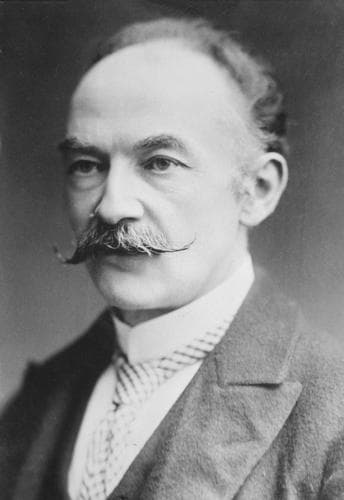
Thomas Hardy was an English novelist and poet. A Victorian realist in the tradition of George Eliot, he was influenced both in his novels and in his poetry by Romanticism, including the poetry of William Wordsworth. He was highly critical of much in Victorian society, especially on the declining status of rural people in Britain, such as those from his native South West England.







