“Everybody counts, or nobody counts.”
— Harry Bosch's personal motto, reflecting his dedication to justice for all victims.


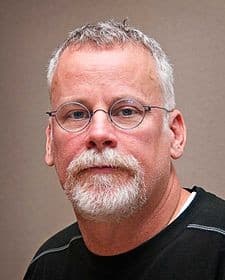
Michael Connelly (2017)
Genre
Thriller / Mystery
Reading Time
9-10 hours
Key Themes
See below
Sign in to track this book
Haunted by a wrongful conviction claim from his past and caught in the deadly world of prescription drug abuse, Harry Bosch races to uncover two very different truths before they destroy him.
Harry Bosch, a volunteer cold case detective for the San Fernando Police Department, gets called to a crime scene at the Oak Tree Pharmacy. The victim is Daniel Olivas, a young pharmacist, found shot in the back room. Early evidence points to a robbery, but no drugs or money were stolen, raising questions. Bosch works with Detectives Bella Lourdes and John Chance, the department's only other investigators. The local police chief, Rudy Tafero, wants the case solved quickly. Bosch immediately notices odd details, like the killer knowing the pharmacy layout and the unusual way the victim was killed for a simple robbery. The investigation begins to suggest a more complex reason than just theft.
While investigating the Olivas murder, Bosch receives a surprising summons. Preston Borders, a convicted murderer Bosch put away 30 years ago, has filed a petition, claiming he is innocent and that Bosch planted evidence to convict him. Borders, a known serial rapist and killer, is represented by pro bono lawyers from the Innocence Project. The news shocks Bosch's former LAPD colleagues, many of whom still resent his departure. Bosch knows Borders is guilty and sees this as an attack on his reputation and the justice system. He realizes he must defend himself against these serious claims, which could ruin his career.
The investigation into Daniel Olivas's murder changes direction when Bosch and Lourdes find that Olivas had been flagging suspicious prescriptions for high-dose oxycodone. This leads them to a network of 'pill mills' — illegal pain clinics that distribute large amounts of opioids, often controlled by organized crime. They identify a doctor, Dr. Arlen Heywood, whose prescriptions Olivas often flagged. The team realizes Olivas was not just a robbery victim but was likely silenced for interfering with a profitable drug operation. This discovery turns the case from a local murder into a dangerous encounter with a powerful criminal group, putting Bosch and his new colleagues in danger.
Bosch attends the hearing for Preston Borders. The Innocence Project lawyers, led by Christina Portia, present new 'evidence' — a supposed confession from another man, Vincent LaRusso, who died in prison, claiming he committed the murder Borders was convicted of. Portia systematically attacks Bosch's integrity, suggesting he was an overly ambitious detective who took shortcuts and made up evidence. Bosch, without official LAPD support, feels alone and defensive, forced to recall details of a decades-old case from memory. The emotional impact is huge as his life's work is questioned publicly, threatening to undo all his past achievements.
Skeptical of LaRusso's deathbed confession, Bosch begins his own unofficial investigation. He learns that LaRusso had a history of mental instability and was known to confess to crimes he didn't commit. More importantly, Bosch discovers that LaRusso and Borders were in the same prison at the same time, suggesting possible collaboration. Bosch suspects Borders manipulated LaRusso into giving the false confession. He also investigates LaRusso's former cellmate, Jesse Degroodt, hoping to find inconsistencies or proof of a planned effort between Borders and his legal team. Bosch realizes he needs to prove LaRusso was forced or lying to save his own name.
Following the trail of suspicious prescriptions, Bosch, Lourdes, and Chance confront Dr. Arlen Heywood. At first, Heywood is evasive and defensive, but under pressure, he admits to being involved in the pill mill operation, forced by a dangerous criminal organization. He reveals that Olivas had been a problem, threatening to expose the illegal activities. Heywood provides key information about the organization's structure and the enforcers involved. This breakthrough gives the San Fernando team a clear way to identify Olivas's killer and break up a major drug ring, but also puts them in greater danger as they target the top levels of the criminal group.
With information from Dr. Heywood, the San Fernando team, with Bosch's guidance, plans a sting operation to catch the killer responsible for Daniel Olivas's murder. They identify a key enforcer, Luis Peña, who collected payments and ensured the pill mill ran smoothly. The plan involves using Heywood as bait, setting up a controlled delivery of prescription pads. The tension is high as they prepare for the dangerous encounter. Bosch, using his LAPD experience, carefully plans the surveillance and takedown, knowing that one wrong move could cost lives and let the killer escape.
The judge in the Preston Borders hearing delivers his ruling. Despite Bosch's strong efforts to discredit LaRusso's confession and expose Borders's manipulation, the judge rules in favor of Borders, granting him a new trial. This decision is a devastating blow to Bosch, effectively invalidating his original investigation and casting doubt on his entire career. The LAPD, still keeping its distance, offers no support. Bosch is left to deal with the major implications of this ruling, which suggests that a proven killer might go free and that his own integrity as a detective has been damaged, creating a deep personal crisis.
The sting operation to catch Luis Peña begins. After a tense period of surveillance, Peña arrives to meet Heywood. The San Fernando police move in, and a violent confrontation follows. Bosch, despite his age, actively participates, helping to subdue Peña. Peña is arrested, and his capture leads to the identification of the leaders in the opioid distribution network, including a powerful criminal named Elias Pena (no relation). The Olivas murder is solved, and the dangerous pill mill operation is stopped. This success, though overshadowed by the Borders ruling, gives Bosch a sense of accomplishment and confirms his continued work in law enforcement.
Undeterred by the court's decision, Bosch refuses to accept that Borders is innocent or that his original case was flawed. He is sure that Borders and his legal team planned the false confession. Bosch reviews the original case files, looking for any overlooked detail or new angle that could prove Borders's guilt and expose the conspiracy. He takes a risk, contacting the original prosecutor, now retired, and even reaching out to his estranged daughter, Maddie, for help with legal research. Bosch is driven by a strong need to uphold justice and clear his name, even if it means working outside official channels and risking further criticism.
Through determined investigation, Bosch focuses on the details surrounding Vincent LaRusso's death and his supposed confession. He finds irregularities in the prison records and a subtle but important piece of evidence: a coded message or reference within LaRusso's 'confession' that only Borders would recognize. This suggests that Borders dictated or heavily influenced the confession, making it a deliberate lie. Bosch also re-examines the original crime scene photos and testimony, finding a small detail about the victim's rings that LaRusso's confession got wrong, but Borders's original statement correctly described. This gives Bosch the undeniable proof he needs.
With his new evidence, Bosch confronts Christina Portia and the Innocence Project team. He presents his findings, showing that LaRusso's confession was a carefully built deception, planned by Borders from prison. The evidence is undeniable, exposing Borders's clever manipulation and the legal team's unwitting involvement. Faced with this clear proof, the Innocence Project withdraws from Borders's case, and the district attorney's office, now convinced of Bosch's integrity, moves to reinstate Borders's original conviction. Bosch's name is cleared, and Borders remains in prison, confirming the lasting power of truth.
With both cases resolved, Bosch thinks about the journey. The Olivas murder presented a clear criminal truth, quickly solved through diligent police work. The Borders case, however, revealed a more complex, hidden truth — one obscured by manipulation, legal tactics, and a desire for personal vindication. Bosch recognizes that 'truth' is not always simple; there is the factual truth of what happened, and then there is the perceived or legally argued truth, which can be twisted. He realizes the importance of relentlessly pursuing the factual truth, no matter how hard, to ensure real justice is served. The experience strengthens his commitment to the work, despite the personal costs.
The Protagonist
Bosch faces a crisis of professional identity and personal integrity, ultimately reaffirming his dedication to true justice and clearing his name.
The Supporting
Lourdes grows in confidence and investigative skill under Bosch's mentorship, proving her capability as a detective.
The Antagonist
Borders attempts to manipulate the justice system to gain freedom, but his deceit is ultimately exposed, solidifying his guilt.
The Supporting
Portia initially challenges Bosch's past work but eventually recognizes the true nature of her client's deception.
The Mentioned
Olivas's character is revealed posthumously, showing his moral courage in standing up to a criminal enterprise.
The Supporting
Heywood moves from complicity to reluctantly aiding law enforcement, driven by fear and a desire to escape the criminal enterprise.
The Antagonist
Peña's reign of terror as a hitman is ended by Bosch and the San Fernando police.
The Supporting
Tafero learns to trust Bosch's methods and leadership, ultimately supporting his unconventional approach.
The novel explores the many sides of truth, separating factual truth from manipulated, legal, or perceived truth. Bosch directly deals with this in the Borders case, where a fake confession threatens to overturn a fair conviction, challenging his career's very foundation. The 'two kinds of truth' refer to the truth that frees you (Bosch's constant search for objective facts) and the kind that traps you (the made-up stories and lies, like Borders's, designed to hide justice). This theme is central to Bosch's internal struggle and his determined pursuit of what truly happened, rather than what can be proven or disproven in court.
““There are two kinds of truth. The kind that sets you free and the kind that leaves you buried in darkness.””
A recurring theme in Connelly's work, this novel highlights the conflict between achieving real justice and working within the legal system's limits and manipulations. Bosch often finds himself at odds with official procedures and bureaucracy, especially when his former LAPD colleagues offer no support during the Borders appeal. The Innocence Project, while well-intentioned, is shown to be open to manipulation, showing how even good systems can be exploited. Bosch’s solo pursuit of Borders's true guilt, outside official channels, emphasizes his belief that justice sometimes requires going beyond the system's rules.
““The system was a blunt instrument. It often missed. It often hit the wrong target. And sometimes, when it did hit the right target, it was because someone like him had bent the rules to make it happen.””
Bosch's return to police work as a volunteer and his fight to clear his name in the Borders case are closely tied to his desire for redemption and to protect his reputation. He sees the Olivas murder as a chance to continue making a difference, while the Borders appeal is a direct attack on his life's work. The possibility of Borders going free and Bosch's reputation being damaged threatens to negate decades of dedicated service. His determined investigation into Borders's deception is not just about proving guilt, but about affirming his own integrity and ensuring that the 'truth' of his past cases lasts.
““He had put his life on the line for the truth. He had put his career on the line for the truth. He would not let it be stolen from him now.””
The Olivas murder case shows the devastating impact of the opioid crisis, specifically through 'pill mills' and illegal drug distribution. The novel exposes the dangerous network of doctors, enforcers, and organized crime exploiting vulnerable people for profit. Daniel Olivas's death is a direct result of his attempt to fight this crisis. The San Fernando investigation highlights the grim reality of prescription drug abuse and the difficulty law enforcement faces in stopping these profitable, often violent, operations. It connects the novel to a current societal issue, adding urgency and relevance to the police work.
““It was a plague, a shadow spreading across the country. And Daniel Olivas had tried to stand in its way.””
Two seemingly unrelated cases unfold simultaneously, converging thematically.
The novel masterfully employs parallel investigations, with Harry Bosch working on the fresh murder of Daniel Olivas in San Fernando while simultaneously battling to clear his name in the decades-old Preston Borders case. These two plotlines, though distinct in their specifics, are intricately woven together through Bosch's personal journey and the overarching theme of 'two kinds of truth.' The contrast between the straightforward, active police work in San Fernando and the complex, emotionally charged legal battle of the Borders case highlights different facets of Bosch's character and the challenges of justice. This structure builds suspense and allows for a deeper exploration of the novel's core themes.
A real-world legal organization used to challenge a past conviction, creating a personal crisis for the protagonist.
The inclusion of the Innocence Project as the legal entity challenging Borders's conviction serves as a powerful plot device. It grounds the fictional narrative in a recognizable, real-world context, lending credibility to the legal challenge Bosch faces. By having a respected organization, rather than a less credible defense attorney, dispute his past work, the stakes are significantly raised for Bosch. This device creates a profound personal crisis, forcing Bosch to confront the possibility that his life's work could be undone and his integrity questioned by a system designed to correct injustices, even if, in this case, it's being manipulated.
Bosch's role as a volunteer cold case detective provides a unique entry point for the narrative.
Bosch's position as a volunteer cold case detective in a small police department is a crucial plot device. It allows him to operate with a degree of autonomy, free from the direct bureaucratic constraints of the LAPD, while still engaging in active police work. This setup explains his presence in San Fernando and provides a plausible reason for him to be involved in a new murder investigation despite his semi-retired status. It also contrasts sharply with the official, institutional challenges he faces in the Borders case, highlighting his independence and his unwavering commitment to justice regardless of his official capacity.
A manipulated confession designed to overturn a conviction, creating a central mystery.
The purported deathbed confession of Vincent LaRusso, claiming responsibility for the murder Preston Borders was convicted of, is a pivotal plot device. It provides the legal 'evidence' needed to trigger Borders's habeas corpus petition and directly challenges Bosch's original investigation. This false confession forces Bosch into a desperate search for the truth, unraveling not just the lie itself, but the intricate manipulation behind it. It serves as the primary obstacle Bosch must overcome to clear his name and keep a dangerous killer imprisoned, embodying the 'darkness' of manipulated truth.
“Everybody counts, or nobody counts.”
— Harry Bosch's personal motto, reflecting his dedication to justice for all victims.
“The past was a road and he had driven it many times, but never backward. He could only see what was behind him in the rearview mirror.”
— Bosch reflecting on his past cases and life choices.
“There were two kinds of truth. The one that was documented and verifiable. And the one that was felt in the gut, the one that was often truer than the facts.”
— Bosch pondering the nature of truth in his investigation.
“He knew that the truth was always out there, waiting to be found. It just required patience and a willingness to look where others didn’t.”
— Bosch's persistence in uncovering facts.
“The law was a blunt instrument, sometimes, but it was the only one they had.”
— Bosch considering the limitations and necessity of the legal system.
“He was a man who lived in the gray, a place where the lines between right and wrong were always blurred.”
— Description of Bosch's moral compass and methods.
“Every case was a puzzle, and he was driven to put the pieces together, no matter how long it took.”
— Bosch's dedication to solving mysteries.
“He understood that sometimes, the only way to get to the truth was to break a few rules.”
— Bosch's pragmatic approach to justice.
“The dead couldn't speak, so he had to speak for them.”
— Bosch's motivation to seek justice for victims.
“Hope was a dangerous thing, but he couldn't live without it.”
— Bosch's internal struggle with optimism and cynicism.
“He had learned long ago that the most dangerous lies were the ones you told yourself.”
— Bosch's self-awareness and honesty.
“The city was a beast, always hungry, always demanding.”
— Bosch's view of Los Angeles and its relentless nature.
“There was a rhythm to the hunt, a slow, methodical pursuit that he knew by heart.”
— Bosch's experience and skill in detective work.
“Justice was not about winning; it was about doing what was right.”
— Bosch's core principle in his work.
Ready to see how well you understood this book? Take our interactive quiz with 10 questions.
Biography coming soon.







