“We are all brothers, but some are more brotherly than others.”
— Reflecting on the complexities of family bonds and loyalty during the rise of Nazism.

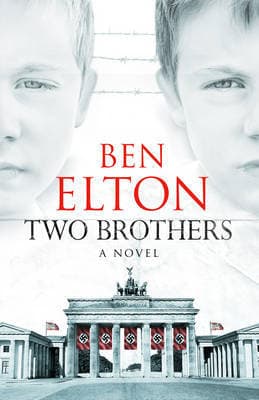
Ben Elton (2012)
Genre
Historical Fiction
Reading Time
900 min
Key Themes
See below
Sign in to track this book
In Nazi Germany, the bond between an adopted Aryan and his Jewish brother faces extreme tests, forcing them into heartbreaking choices that define their humanity.
The novel starts in Berlin in 1920 with the birth of Paulus, a Jewish baby adopted by the wealthy German couple, Friedrich and Elisabeth Lehmann. Three months later, they adopt another baby, Otto, an Aryan infant whose mother died in childbirth. The boys are raised as brothers, with love and similar upbringings, celebrating both Christian and Jewish holidays. They spend their happy childhood playing in their garden, cared for by their housekeeper, Frau Schmidt. As they become teenagers in the early 1930s, Germany's political situation worsens. Adolf Hitler and the Nazi Party begin to affect their lives, first as small changes in public opinion and school propaganda, which the innocent boys do not fully understand.
As the 1930s continue, Nazi propaganda becomes common in Berlin. At school, teachers teach racist ideas, and Paulus, as a Jew, is increasingly targeted. Otto, at first confused and protective of Paulus, feels conflicted between his brother and the pressure to follow the dominant ideas. Their childhood friend, Wolfgang, a strong supporter of the Nazi youth movement, starts to distance himself from Paulus and openly expresses antisemitic views, creating a painful break in their friendship. The Lehmanns try to protect their sons, but the outside world's hatred starts to enter their home, making everyday life more tense and dangerous for Paulus.
The Nuremberg Laws in 1935 change things, taking away Jewish citizens' rights and jobs. Paulus is expelled from school, and the family's business faces boycotts. The Lehmanns see the increasing persecution and become desperate to save Paulus. They look for ways for him to leave Germany, including seeking visas to other countries, but find it hard to get help. Friedrich, a respected lawyer, uses his connections to try and get safe passage, but bureaucracy and the world's indifference make it almost impossible. The family faces increasing threats and harassment, solidifying their fear for Paulus's life.
Kristallnacht, the Night of Broken Glass, in November 1938, ends any remaining hope of safety for Jewish people in Germany. Synagogues are burned, Jewish businesses are destroyed, and men are rounded up for concentration camps. Friedrich Lehmann is arrested and briefly held in Sachsenhausen, released because he was a war hero. This event convinces the Lehmanns that Paulus's life is in immediate danger. They get him a place on a Kindertransport to England, a heartbreaking choice that separates the brothers. Otto, despite his sadness, understands it is necessary and promises to look after their parents, making a silent agreement with Paulus.
Paulus arrives in England, at first living with a kind but distant foster family. He struggles with the language, cultural differences, and constant worry for his family in Germany. He changes his name to Paul and tries to fit in, finding comfort in his studies and later becoming a doctor. Despite his new life, he feels guilt for surviving and a strong sense of responsibility for his family's fate. Letters from his parents become less frequent and censored, increasing his anxiety. He often thinks of Otto, wondering what his brother is going through and if he is safe, a constant pain in his heart.
Back in Germany, Otto is drafted into the Wehrmacht and sent to the Eastern Front, fighting the Soviet Union. He experiences the harsh realities of war: the cold, hunger, senseless violence, and cruelty to civilians. While he first tries to keep his morals, constant pressure to conform, fear of disobedience, and the dehumanizing war conditions slowly weaken his resolve. He is forced to take part in atrocities, seeing mass killings and executions, which leaves him deeply scarred and questioning his humanity. He holds onto the memory of Paulus as a link to his former self.
Paul continues to write to his parents, but the letters stop completely after 1941. Desperate for news, he eventually receives a final, coded letter from Elisabeth, smuggled out by an acquaintance. In its seemingly harmless lines about 'visiting relatives in the East,' Paul understands the truth: his parents have been sent to a concentration camp, likely Auschwitz. The news devastates him, confirming his worst fears and leaving him with unbearable grief and renewed guilt. He is now truly alone, the last surviving member of his immediate family, with no knowledge of Otto's whereabouts or survival.
Driven by grief and a desire for justice, Paul, now a qualified doctor, joins the British Army Medical Corps. He serves on the front lines, treating wounded soldiers, and later helps liberate concentration camps. Seeing the emaciated survivors and the horrific evidence of Nazi cruelties confirms his resolve and deepens his understanding of the evil that took his family. He quietly hopes that Otto might have survived, but the scale of the destruction makes such a reunion seem unlikely. His war experiences harden him but also strengthen his dedication to humanity.
As the war turns against Germany, Otto, increasingly disgusted by the Nazi regime's brutality, decides to desert the Wehrmacht. He becomes a fugitive, hiding from both Allied and German forces, surviving by his wits and the help of strangers. After the war ends, he is captured by the Soviets and spends time in a POW camp, where he thinks about his involvement and the choices he made. After his release, he returns to a ruined Berlin, a broken man haunted by his past. He dedicates himself to finding any trace of his family, especially Paulus, and to making amends for his part in the war.
After the war, Paul, now a British citizen, returns to Berlin as part of a humanitarian mission, needing to find answers about his family. He visits the ruins of his childhood home and asks through official channels. Meanwhile, Otto, having returned to Berlin, also searches for his brother. Through chance encounters and persistent questions, their paths finally meet in the desolate, bombed-out city. Their reunion is not joyful, but one of deep sorrow and tentative hope. Both men are changed by their war experiences, bearing the scars of their separate journeys. They recognize each other, not just as brothers, but as survivors carrying heavy burdens.
Paul and Otto deal with their shared history and different paths. Paul struggles to reconcile the loving brother he remembered with the uniform Otto wore and the cruelties of the regime he served. Otto, feeling guilt and shame, tries to explain his choices, his survival, and his efforts to resist. Their conversations are filled with pain, unspoken accusations, and the overwhelming weight of their parents' loss. Slowly, with effort, they begin to close the gap that grew between them, finding common ground in their shared grief and their lasting love for each other, showing the strength of family bonds even after great trauma.
The Protagonist
From an innocent child, he becomes a traumatized survivor who rebuilds his life and eventually confronts his past, seeking reconciliation with his brother.
The Protagonist
From a protective brother, he descends into the horrors of war and moral compromise, eventually seeking redemption and reconciliation.
The Supporting
From a respected figure, he becomes a man fighting a losing battle against an evil regime, ultimately sacrificing his life.
The Supporting
From a nurturing mother, she becomes a figure of tragic sacrifice, fighting to protect her family until the end.
The Supporting
From a childhood friend, he transforms into an antagonist who fully embraces and promotes Nazi ideology.
The Supporting
Remains a steadfast and loyal figure, witnessing the family's decline and ultimate destruction.
The Mentioned
A static character representing the pervasive and oppressive nature of the Nazi regime.
The Supporting
Provide temporary shelter and a new beginning for Paulus, without fully grasping his profound loss.
The novel shows how extremist ideology, specifically Nazism, can corrupt a society and break human bonds. Wolfgang's change from a friend to an antisemitic follower, and the pressure on Otto to conform, show how propaganda can twist individual morality. The Lehmann family's happy life is destroyed by the spread of hatred through political ideas, separating brothers and leading to the parents' deaths in concentration camps.
“Slowly, imperceptibly at first, then with increasing speed and ferocity, the cancer of Nazism began to eat away at the heart of their city, their country, and their lives.”
At its heart, 'Two Brothers' explores the strong but strained bond between Paulus and Otto. Their shared upbringing initially goes beyond their different backgrounds, symbolizing pure love. However, the pressures of Nazi Germany force a tragic separation and a kind of 'betrayal' (Otto's conscription and Paul's survivor's guilt). The novel looks at the complexities of loyalty when faced with impossible choices, ending with a poignant reunion where they must confront the distance between them, ultimately showing that their love, though scarred, lasts.
“They were brothers. Not by blood, but by every other measure that counted.”
Both Paulus and Otto survive, but their survival comes with a high psychological cost. Paulus deals with deep survivor's guilt, always wondering why he lived while his parents died. Otto carries the burden of his involvement, his actions on the Eastern Front, and the choices he made to stay alive. The novel examines how memory, both personal and shared, shapes their post-war lives. They are haunted by the past, and their reconciliation depends on acknowledging and processing the trauma they each experienced, showing that survival brings its own deep wounds.
“The weight of what he had seen, what he had done, what he had become, was a stone in his gut.”
The story begins after WWI, showing the fragile peace that quickly falls apart with the rise of Nazism. The Lehmanns' initial trust in German law and order is systematically broken as justice is twisted to serve a hateful ideology. The novel shows how quickly democratic norms can disappear and how easily a society can become cruel. It emphasizes the constant need to protect peace and human rights, and the devastating results when they fail.
“Justice, Friedrich had once believed, was an immutable force. Now he saw it was a weapon, easily twisted and turned against the innocent.”
Alternating perspectives of the two brothers' experiences during the war.
The novel employs a parallel narrative structure, following Paulus's life in England and Otto's experiences in Germany and on the Eastern Front. This device allows the author to present a comprehensive view of the war's impact from two distinct perspectives: the victim of persecution and the perpetrator caught in the system. It creates dramatic irony, as the reader knows what each brother is enduring while the characters remain ignorant of each other's fate, building tension towards their eventual reunion. This contrast highlights the divergent paths forced upon individuals by the same historical events.
A symbol of innocence, security, and later, loss and memory.
The Lehmann family home in Berlin serves as a powerful symbol throughout the novel. Initially, it represents a sanctuary of love, security, and the harmonious blending of cultures for Paulus and Otto. As the political climate darkens, it becomes a place under siege, its walls no longer able to fully protect its inhabitants. After the war, its ruins symbolize the devastation of Berlin and the irreparable loss suffered by the family. For the returning brothers, it is a focal point of their memories and their shared past, representing both what was lost and the enduring spirit of their family.
A means of maintaining connection and conveying hidden truths amidst censorship.
Letters play a crucial role in maintaining the fragile connection between Paulus and his family in Germany. Initially, they are a source of comfort, but as censorship tightens, they become increasingly sparse and guarded. The final, coded letter from Elisabeth, describing 'visiting relatives in the East,' is a pivotal plot device. It conveys the devastating truth of the Lehmanns' deportation to a concentration camp without explicitly stating it, showcasing the desperation and ingenuity people used to communicate under totalitarian regimes. It underscores the immense risks and the heartbreaking reality of communication during wartime.
A historical event serving as a pivotal plot point for Paulus's escape.
The Kindertransport, a real-life rescue effort that brought thousands of Jewish refugee children from Nazi Germany to Great Britain, serves as the critical plot device for Paulus's escape. It is the mechanism by which he is saved from the Holocaust, but also the catalyst for his separation from his family and his subsequent survivor's guilt. Its inclusion grounds the personal story in historical reality, highlighting both the humanitarian efforts of the time and the painful choices families were forced to make to save their children, often at great personal cost.
“We are all brothers, but some are more brotherly than others.”
— Reflecting on the complexities of family bonds and loyalty during the rise of Nazism.
“In Germany, the only thing more dangerous than being a Jew was being a German who refused to hate them.”
— Describing the perilous social climate for non-Jewish Germans who opposed anti-Semitism.
“The heart has its own geography, and it does not always align with the maps drawn by men.”
— Commenting on how personal emotions and relationships transcend political boundaries.
“A nation that forgets its past is doomed to repeat it, but a nation that remembers too vividly is doomed to live in it forever.”
— Philosophizing about Germany's struggle with historical memory and guilt.
“Silence is not neutrality; it is complicity.”
— Criticizing those who remained passive during the Nazi regime's atrocities.
“The greatest tragedy is not the evil that men do, but the good men who do nothing to stop it.”
— Echoing a common theme about bystander inaction during the Holocaust.
“Love in a time of hate is the most revolutionary act of all.”
— Highlighting the power of personal connections amidst widespread bigotry.
“They painted the world in black and white, but we lived in the grey.”
— Describing the moral ambiguities faced by ordinary people under totalitarianism.
“A brother's betrayal cuts deeper than any enemy's sword.”
— Expressing the pain of familial disloyalty during political upheaval.
“The price of safety is often the loss of one's soul.”
— Reflecting on the compromises people made to survive under Nazi rule.
“We built our cages with our own hands, then wondered why we could not fly.”
— Metaphor for how societal norms and fears constrained personal freedom.
“In the end, it is not the loudest voices that history remembers, but the quietest acts of defiance.”
— Emphasizing the impact of small, courageous actions against oppression.
“The war divided countries, but it was the peace that divided families.”
— Commenting on the lasting personal rifts caused by post-war reckonings.
Ready to see how well you understood this book? Take our interactive quiz with 10 questions.

Ben Elton is a renowned British comedian, author, playwright, and screenwriter. He is celebrated for his satirical wit and socially conscious storytelling, evident in novels like 'Two Brothers,' 'Popcorn,' and 'Time and Time Again.' Elton's work often tackles contemporary issues with sharp humor and a distinctive narrative voice.







