BookBrief
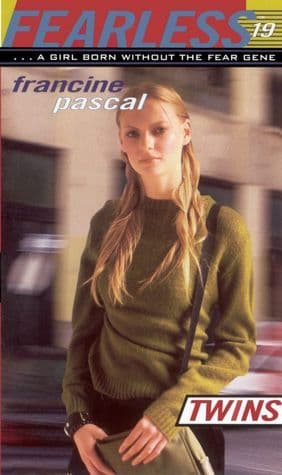
Twins cover
Archivist's Choice

Twins

Francine Pascal (1998)

Genre

Fantasy / Children's / Science Fiction / Young Adult

Reading Time

217 min

Key Themes

See below

Track Your Reading

Sign in to track this book

Identical twin brothers, once distinct but now a single, dark force, relentlessly target their own family in a chilling tale of fractured bonds and malevolent ambition.

Synopsis

Twelve-year-old Eleanor lives a quiet life with her distant father, always reminded of her deceased mother's 'curse.' Her only comfort comes from a glowing locket and visits from her kind Uncle Edward. When strange events begin as her father acts more erratically, Eleanor questions everything. She learns her father and uncle are identical twins, but more surprisingly, they are not human. They are ancient, powerful beings with a dark past linked to her mother and her own unique abilities. Eleanor discovers her mother, also a powerful being, sacrificed herself to protect Eleanor from her father, who wants to use Eleanor's growing power for his own destructive goals. Uncle Edward, while seemingly protective, has his own complex motives, torn between loyalty to his brother and honoring Eleanor's mother's last wish. Eleanor must face her heritage, master her new powers, and navigate the manipulations of both her father and uncle to protect herself and the world from their old conflict. She must make a choice that will decide her own future and break their destructive cycle.
Reading time
217 min
Difficulty
Easy
Pacing
Moderate
Mood
Mysterious, Suspenseful, Intriguing, Empowering
✓ Read this if...
You enjoy classic YA fantasy with a focus on hidden powers, family secrets, and a young protagonist discovering their true heritage.
✗ Skip this if...
You prefer complex world-building over character-driven mystery or are looking for a more modern, fast-paced fantasy style.

Plot Summary

A Life of Secrecy and Neglect

Molly Maxwell lives a secluded life with her father, Professor Henry Maxwell, in a large, isolated house. Her father, a brilliant but emotionally distant scientist, works in a hidden laboratory. Molly's only companion is their housekeeper, Mrs. Peterson, who offers some warmth but knows little about the family's true circumstances. Molly's mother, Dr. Eleanor Maxwell, is a constant, painful absence, having disappeared years ago under mysterious circumstances. Molly often feels neglected and longs for a normal life, a desire intensified by her father's erratic behavior and the unsettling atmosphere of their home. She frequently overhears hushed conversations and glimpses strange equipment, hinting at a secret her father tries to keep from her.

The Arrival of Uncle Edward

A new tension enters Molly's life with the unexpected arrival of her Uncle Edward. To Molly's shock, Edward is the spitting image of her father, Henry, a fact that both fascinates and disturbs her. Edward is charming and attentive, a stark contrast to Henry's often cold demeanor, and Molly quickly feels drawn to him. However, his presence also brings unease. Her father reacts with extreme hostility and suspicion towards Edward, intensifying the already strong tension in the house. Molly tries to understand the animosity between the identical brothers, but neither man offers a clear explanation, only veiled warnings and cryptic remarks that deepen her confusion.

Whispers of the Past

Driven by growing suspicion and curiosity, Molly investigates her family's past. She uncovers a hidden compartment containing old journals, research notes, and photographs belonging to her mother, Eleanor. These documents reveal that both her parents were brilliant geneticists involved in groundbreaking, ethically questionable research. The journals hint at a project focused on human cloning and a 'twin' experiment, causing Molly to question the true nature of her father and uncle's relationship. She learns of a catastrophic accident during their research, which led to her mother's disappearance and a deep rift between the brothers. The more she reads, the more she realizes the danger her mother was in, and potentially, the danger she herself now faces.

A Confession and a Revelation

Overwhelmed by her discoveries, Molly confronts Mrs. Peterson, who, seeing Molly's distress, finally breaks her silence. Mrs. Peterson, who has been with the family for years, shares fragmented but crucial details about the 'twin' experiment. She confirms that Henry and Edward are not just brothers, but products of an advanced cloning project, with one being the original and the other a clone. She hints at the profound psychological and ethical dilemmas that arose from their creation and the devastating impact it had on Eleanor. Mrs. Peterson’s confession, though incomplete, solidifies Molly’s growing dread and confirms that her family's secrets are far more sinister than she ever imagined, directly linking to her own existence.

The Trap Unveiled

Molly's investigation ends with a shocking discovery in her father's hidden laboratory. She finds detailed genetic blueprints and a hidden chamber containing equipment identical to what her mother described in her journals. Here, the full, horrifying truth is revealed: Molly is not the biological daughter of Henry and Eleanor, but a clone of Eleanor, meticulously created by her father, Henry. His intention was to recreate his lost love, believing he could bring Eleanor back through Molly. This revelation shatters Molly's identity and understanding of her entire life, exposing her father's twisted obsession and the profound ethical violation at the core of her existence. She realizes she is a replacement, not a child.

The Brothers' Conflicting Motives

The truth about Molly's origins forces both Henry and Edward to reveal their full motivations. Henry, driven by desperate grief and a desire to correct his past mistakes, admits to cloning Eleanor, using Molly as his 'second chance.' He sees Molly not as an individual, but as a vessel to perfect his work and bring back his beloved. Edward, however, explains that he has returned to protect Molly and prevent Henry from repeating his egregious errors. He believes Henry's experiments are dangerous and unethical, and he wants to save Molly from becoming another victim of his brother's scientific hubris. The brothers are locked in a battle of wills, each claiming to act in Molly's best interest, but with very different methods and goals.

Eleanor's Legacy

In a hidden compartment of her mother's old desk, Molly finds a final, desperate message from Eleanor. The message, recorded before her disappearance, reveals that Eleanor had discovered Henry's cloning project and his intention to clone her. She was horrified by the ethical implications and tried to stop him. The 'accident' was not an accident, but Henry's attempt to silence her and continue his work. Eleanor warns Molly about the dangers of unchecked scientific ambition and urges her to never let anyone control her identity or destiny. This message gives Molly a deep connection to her true mother and strengthens her resolve to fight for her own autonomy against her father's manipulative intentions.

The Confrontation and the Choice

Armed with all the truths she has uncovered, Molly confronts both her father and uncle in the laboratory. She exposes their secrets, her mother's fate, and her own identity as Eleanor's clone. She refuses to be a pawn in their scientific rivalry or her father's grief-stricken obsession. Molly passionately asserts her right to exist as an independent person, demanding that they see her as Molly, not as a replacement for Eleanor or an experimental subject. Her powerful declaration forces both men to momentarily step back from their own agendas and confront the profound ethical implications of their actions and the emotional toll they have taken on her.

The Unraveling of Control

In a decisive act of defiance and self-preservation, Molly takes matters into her own hands. She systematically destroys the cloning equipment, the research data, and all remnants of her father's project, ensuring that no one else can be subjected to such a fate and that her own existence cannot be replicated or controlled. This act is not just about destroying the physical tools of her father's obsession, but about symbolically breaking free from his manipulative grasp and reclaiming her own identity. Her actions shock both Henry and Edward, showing her strength and resolve to forge her own future, independent of their scientific ambitions and past grievances.

A New Beginning, A Lingering Shadow

Molly ultimately chooses to leave her father and the house that has been a prison of secrets and scientific obsession. She decides to go with Edward, who, despite his own complicity, offers her a chance at a different life and some protection. While she finds a degree of freedom and the possibility of a normal existence, the revelations about her origins leave a lasting mark. She carries the weight of being a clone, the legacy of her mother's tragic fate, and the trauma of her father's actions. Molly's journey is one of survival and self-discovery, but the shadows of her past will always linger, shaping her understanding of identity, family, and the ethical boundaries of science.

Principal Figures

Molly Maxwell

The Protagonist

Molly evolves from a sheltered, confused child into a self-aware and empowered individual who reclaims her identity and destiny.

Professor Henry Maxwell

The Antagonist

Henry remains largely static in his obsession, unable to move past his grief, ultimately losing his 'daughter' due to his own actions.

Dr. Eleanor Maxwell

The Supporting/Mentioned

Eleanor's arc is largely in the past, her legacy serving as a posthumous guide for Molly.

Uncle Edward

The Supporting

Edward attempts to atone for his past involvement in the cloning project by protecting Molly and exposing his brother's actions.

Mrs. Peterson

The Supporting

Mrs. Peterson moves from a silent observer to a reluctant confidante, driven by her affection for Molly.

Themes & Insights

Identity and Self-Discovery

The central theme is Molly's journey to understand who she is after discovering she is a clone. She grapples with the question of whether she is a unique individual or simply a copy of her mother. This theme is explored through her internal struggles, her rejection of being a 'replacement,' and her fight to define her own destiny. This is seen when she confronts her father and destroys the cloning equipment, asserting her individuality. Her journey is about forming an identity separate from her origins.

“I am Molly. Not Eleanor. Not a replacement. I am me.”

Molly Maxwell

The Ethics of Scientific Advancement

The novel examines the moral limits of science, especially human cloning. Professor Henry Maxwell's ambition to recreate his deceased wife leads him to ignore ethical considerations, showing the dangers of unchecked scientific pride. Dr. Eleanor Maxwell's journals and warnings offer a counterpoint, emphasizing the profound and potentially devastating consequences of 'playing God.' The story questions whether scientific progress should always be pursued, regardless of the human cost, and illustrates the ethical dilemmas in manipulating life itself.

“There are some doors science should never open, Henry. Some lines that must never be crossed.”

Dr. Eleanor Maxwell (from her journal)

Grief, Obsession, and Control

Henry Maxwell's actions are driven by overwhelming grief for his lost wife, Eleanor. This grief turns into a dangerous obsession, leading him to clone her and try to control Molly's life to recreate his past. His inability to let go shows as a desire for absolute control over Molly's identity and future. This theme is clear in his manipulative behavior, his isolation of Molly, and his scientific project, all stemming from his refusal to accept loss and his desperate attempt to regain what he's lost, ultimately at the expense of his daughter's autonomy.

“You were meant to be her. To bring her back to me.”

Professor Henry Maxwell

Family Secrets and Betrayal

The Maxwell household is built on deep, unsettling secrets. Molly's entire life is a carefully constructed lie, orchestrated by her father. The animosity between Henry and Edward, Eleanor's disappearance, and Molly's own origins are all hidden truths that slowly unravel. This theme explores the destructive power of secrets within a family, leading to mistrust, emotional distance, and profound betrayal. Molly's discovery of these secrets, particularly her father's betrayal in cloning her, shatters her understanding of family and forces her to question the loyalty and intentions of those closest to her.

“Every day was a lie. Every memory, a carefully crafted deception.”

Molly Maxwell (internal monologue)

Plot Devices & Literary Techniques

The Hidden Laboratory

A secret scientific workspace symbolizing forbidden knowledge and control.

The hidden laboratory is Professor Henry Maxwell's sanctum, a place where he conducts his unethical cloning experiments. It represents the secretive, dangerous aspect of his scientific ambition and his desire to control life. For Molly, it is initially a place of mystery and forbidden curiosity, but ultimately becomes the site of her most horrifying discovery – her own origin. The lab acts as a physical manifestation of the family's dark secrets, housing the tools and data that reveal Henry's obsession and Eleanor's fate. Its destruction by Molly symbolizes her breaking free from her father's control and the legacy of his scientific hubris.

Dr. Eleanor Maxwell's Journals

Posthumous writings providing crucial exposition and ethical warnings.

Eleanor's journals serve as a critical plot device, providing Molly with the necessary exposition to understand her family's past and her own origins. They function as a posthumous voice for Eleanor, revealing the details of the cloning project, Henry's descent into obsession, and Eleanor's own ethical struggles and warnings. The journals are not just a source of information; they establish a profound connection between Molly and her biological mother, guiding Molly's actions and strengthening her resolve against her father. They represent truth emerging from the past, empowering Molly to confront her present.

The Identical Twins (Henry and Edward)

Mirror images that complicate identity and create moral ambiguity.

The physical identicality of Henry and Edward is a central plot device that initially confuses Molly and highlights the theme of identity. Their shared appearance makes it difficult for Molly to distinguish between them, symbolically reflecting her own struggle with being a clone. More importantly, their identical faces but vastly different moral stances create a powerful dynamic, showcasing how even genetically identical individuals can diverge completely in character and ethics. This duality forces Molly, and the reader, to look beyond surface appearances and discern true intentions, emphasizing that identity is more than just genetics.

The 'Accident' Lie

A deceptive narrative used to conceal a darker truth about Eleanor's disappearance.

The 'accident' that supposedly led to Eleanor's disappearance is a recurring lie perpetuated by Henry to conceal the true, sinister events. This lie creates a veil of mystery and grief that initially prevents Molly from understanding her mother's fate. As Molly investigates, the unraveling of this lie exposes Henry's manipulative nature and his willingness to commit grave acts to protect his secrets and continue his experiments. The eventual revelation that Eleanor's 'accident' was a deliberate act of silencing by Henry underscores the depth of his obsession and the betrayal at the heart of the family.

Critical analysis

Notable Quotes

Jessica and Elizabeth Wakefield were identical twins. They had the same long, blonde hair, the same sparkling blue-green eyes, and the same dimple in their left cheek. But that's where the similarity ended.

Opening lines introducing the core premise of identical twins with different personalities.

Elizabeth was always thinking, always planning, always looking for a new adventure. Jessica was always acting, always doing, always looking for a new way to have fun.

Contrasting the personalities of Elizabeth and Jessica early in the series.

It was hard to be the 'good' twin when the 'bad' twin was having all the fun.

Elizabeth's internal struggle with her sister's more rebellious nature.

Sometimes it felt like being a twin meant being half of a whole, instead of two whole people.

A moment of reflection on the challenges of twin identity.

Jessica always knew how to make an entrance. Elizabeth always knew how to make a friend.

Highlighting their distinct social approaches.

Even though they were identical, they could always tell each other apart. It was a twin thing.

Emphasizing the unique bond and understanding between the twins.

The greatest adventure was often just around the corner, especially when you had a twin to share it with.

A recurring theme about shared experiences and the joy of adventure.

Being twins didn't mean you always agreed, but it did mean you always had someone on your side, even when you were wrong.

Illustrating the unconditional support inherent in their twin relationship.

Jessica's motto: 'Why walk when you can run, and why be boring when you can be fabulous?'

A summary of Jessica's energetic and attention-seeking personality.

Elizabeth's motto: 'A good book and a quiet place are all you need for a perfect afternoon.'

A summary of Elizabeth's more introverted and thoughtful personality.

Sometimes, the biggest secrets were the ones they kept from each other, even when they shared everything else.

Exploring the complexities of their relationship and the occasional need for personal space.

They might have looked the same, but their hearts beat to completely different rhythms.

A poetic description of their fundamental differences despite physical identicality.

No matter what crazy scheme Jessica cooked up, Elizabeth was usually there to help, or at least to bail her out.

Highlighting Elizabeth's role as the responsible twin who supports Jessica.

Sweet Valley was more than just a town; it was their playground, their school, and the backdrop to all their adventures.

Establishing Sweet Valley as a central and beloved setting for the series.

They were two halves of a perfect whole, each making the other shine brighter.

A concluding sentiment about the complementary nature of their twin bond.

Quiz

Test Your Knowledge

Ready to see how well you understood this book? Take our interactive quiz with 10 questions.

10
Questions
~5
Minutes
?
Best Score

Key Questions (FAQ)

'Twins' centers on a young protagonist who discovers that their seemingly identical uncle and father are, in fact, the same malevolent entity, both intent on destroying them. The story explores the chilling realization that familiar figures have been replaced or merged into a singular threat, creating a profound sense of betrayal and danger for the unnamed narrator.

About the author