“Every time you save someone from hunger, you save someone from loneliness too.”
— Marius reflects on the importance of sharing food.

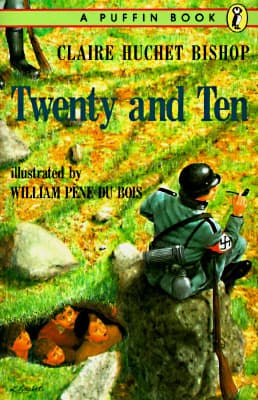
Claire Huchet Bishop (1952)
Genre
Children's / Historical Fiction / Young Adult
Reading Time
60 min
Key Themes
See below
Sign in to track this book
At a secluded French boarding school, twenty children risk everything to hide ten Jewish refugees from Nazi soldiers, showing that even small voices can defy great threats.
In a remote French mountain school during World War II, twenty French children live under Sister Gabriel's care. One day, Sister Gabriel announces that ten more children will join them. These new children are Jewish and are being hidden from the Nazis. She explains the serious danger they are all in and asks the twenty French children if they will share their meager rations and risk their safety to protect the newcomers. The French children agree, understanding the need to keep their presence secret from anyone outside the school, especially German soldiers patrolling the area. The ten Jewish children, shy and tired, are welcomed into the group.
The twenty French children, led by Janet and Jean-Pierre, quickly include the ten Jewish children in their daily lives. They teach them the school's routines, share their limited food, and help them feel safe. The Jewish children, at first timid and traumatized, slowly start to open up and join games and lessons. Sister Gabriel stresses the need for absolute secrecy. The children practice their cover stories, learning to call the Jewish children by new, non-Jewish names. The bond between the two groups of children grows stronger as they face the shared threat and the need for watchfulness.
The children's fragile sense of safety breaks when a German army truck unexpectedly arrives at the school. Sister Gabriel, staying calm, greets the soldiers at the door. The German officer says they are looking for Jewish children known to be hiding in the area. He demands to search the school. Both French and Jewish children are terrified, but Sister Gabriel has prepared them. She tells the French children to stay calm and stick to their rehearsed story, while the Jewish children hide.
As the German soldiers begin their search, the twenty French children carry out their plan to hide the ten Jewish children. They lead their friends, one by one, up to the attic, a cramped and dusty space rarely used. The children huddle in the darkness, told to be completely silent, no matter what. The French children then return to their classrooms, trying to act normal, doing their lessons and chores under the German soldiers' watchful eyes as they systematically search every room, including dormitories and common areas.
The German officer, suspicious of the school's isolated location and the number of children, begins questioning the French children individually. He asks about their names, families, and if there are other children in the school besides the twenty he sees. Janet, a brave and quick-witted girl, is one of the first questioned. She stands firm, repeating her rehearsed answers, even when the officer tries to intimidate her with a stern voice and gaze. The other French children also face intense questioning, each steadily keeping up the deception to protect their hidden friends.
Frustrated by the children's consistent answers, the German officer tries a trick. He gathers all twenty visible children and asks them to count themselves, one by one, out loud. He wants to see if they will accidentally count more than twenty, revealing the hidden children. The children, however, are clever and united. As each child counts, they skip one number in the sequence, making sure the final count still totals twenty. This collective act of defiance and cunning strengthens their bond and shows their commitment to protecting their friends in the attic.
Despite the children's efforts, the German soldiers continue their thorough search of the school. They move through the building, opening cupboards, looking under beds, and checking every corner. The hidden children in the attic can hear the soldiers' heavy boots below them, and the sounds of their search get closer. The tension is almost unbearable, for both the hidden children and their French protectors downstairs. Sister Gabriel tries to distract the soldiers with polite conversation and offers of hospitality, but their resolve to find any hidden Jews is clear.
At one point, a German soldier begins to climb the stairs to the attic. The hidden children hold their breath, knowing discovery is near. Downstairs, one of the French children, perhaps Jean-Pierre or another quick-witted boy, deliberately trips and causes a commotion, drawing the soldier's attention away from the attic entrance. The soldier, annoyed, turns his attention back to the French children, giving the hidden group a moment of relief. This near-miss shows the constant danger and the children's resourcefulness.
After what seems like a long time, the German officer, apparently satisfied that there are no more than twenty children in the school, and finding no evidence of Jewish children, decides to end the search. Frustrated by his lack of success and perhaps convinced by the children's consistent story and Sister Gabriel's calm manner, he orders his soldiers to leave. The German truck eventually drives away, leaving a deep silence and a great sense of relief among the children and Sister Gabriel. The immediate danger has passed, but the experience leaves a lasting impression on everyone.
Once the German soldiers are confirmed gone, Sister Gabriel calls the ten Jewish children down from the attic. They emerge, pale and shaken but safe. The French children rush to embrace them, tears of relief and joy flowing. The school is filled with triumph and gratitude. Sister Gabriel praises the children for their bravery, quick thinking, and loyalty. Though the immediate threat is over, the children understand that the war continues and their mission to protect their friends is far from over. They reaffirm their commitment to each other, knowing they have faced a serious danger and succeeded through unity and courage.
The Supporting
She begins as a resolute protector and ends as a proud witness to the children's collective bravery, her resolve strengthened.
The Protagonist
Janet grows from a playful child into a courageous and steadfast protector, demonstrating remarkable maturity under duress.
The Supporting
He evolves from a participant in the plan to an active and quick-thinking agent in its success, showcasing his reliability.
The Antagonist
He arrives with authority and suspicion, and departs frustrated and deceived, failing in his objective.
The Supporting
They begin as fearful refugees and end as safely hidden, though still in danger, due to the kindness of strangers.
The Protagonist
They transform from a group of ordinary students into a united, resourceful, and courageous collective of protectors.
The main theme is the courage shown by ordinary children in difficult times. The twenty French children, despite being young, willingly face great danger by agreeing to hide their Jewish friends. Their bravery shows in their calm behavior during interrogation, their quick thinking to create diversions, and their commitment to secrecy. Sister Gabriel also shows courage in her decision to defy the Nazi regime. This theme highlights the strength of individual and group resistance against oppression.
“"We are going to have ten new children... And they are Jewish... If the Germans find them here, it will be very bad for them, and very bad for us... Are you willing to share your food... and take the risk?"”
The story shows the deep compassion the French children have for their Jewish peers. Even with little themselves, they readily share their food and risk their safety. This act of unity goes beyond religious or ethnic differences, focusing instead on shared humanity. The two groups of children mixing, their friendships growing, and their joint effort to protect each other show that empathy and mutual support are strong forces against hatred and persecution. The children's unity is their greatest strength.
“"We have enough food for all. We'll eat a little less if we have to, but we'll share."”
The story explores the moral complexities of deception when used for a good reason. Sister Gabriel and the children carefully plan and carry out a deception to protect innocent lives. They lie to the German soldiers, create diversions, and keep up a false story, all actions usually seen as negative. However, during the Holocaust, these acts of deception become heroic, showing that against evil, bending usual morality can be a necessary act of goodness and resistance. The counting 'game' is a clear example of this theme.
“"When they ask you, you must tell them that you are twenty children, no more, no less."”
The book shows children not as helpless, but as strong and capable. Despite the terrifying conditions of war and persecution, the children adapt, learn, and actively help in their own survival and the protection of others. Their ability to stay calm under interrogation, to play their parts well, and to find moments of friendship even amid danger speaks to the strength of the human spirit, especially in youth. Their innocence, rather than making them weak, makes their bravery even more noticeable.
“"The twenty children began to count, one by one. And as each child counted, he skipped a number, so that when the last child had counted, the number was still twenty."”
A physical space symbolizing refuge and hidden vulnerability.
The attic serves as the primary hiding place for the ten Jewish children. As a plot device, it creates intense suspense as the German soldiers search the school, coming dangerously close to discovering the hidden children. Symbolically, it represents a place of refuge and safety from the harsh realities of the outside world, but also a place of extreme vulnerability and confinement. The children's time in the attic highlights their fear and dependence on their protectors, while the act of hiding them there underscores the bravery of the French children and Sister Gabriel.
A clever deception that showcases the children's unity and quick thinking.
This specific scene is a crucial plot device. When the German officer asks the children to count themselves to expose any hidden individuals, the children collectively and intentionally skip numbers to ensure the total remains twenty. This 'game' is a brilliant display of their pre-planning, unity, and quick-wittedness under pressure. It functions as a moment of high tension and then triumph, demonstrating their ability to outsmart the antagonist. It is a concrete example of their collective resistance and ingenuity, and a pivotal moment in averting discovery.
Focuses on the children's experience to amplify emotional impact.
The story is told largely from the perspective of the children, particularly the French children. This limited perspective is a plot device that allows the reader to experience the fear, tension, and eventual triumph through their eyes. It emphasizes their vulnerability and courage, making their actions more impactful. By focusing on their immediate experiences and reactions, the author makes the abstract horrors of war concrete and personal, highlighting how even young individuals can contribute to acts of resistance and humanity.
An external antagonist representing the immediate threat and danger.
The German patrol, led by the stern officer, functions as the direct antagonist and the embodiment of the external threat. Their arrival and subsequent search drive the main conflict of the story. They represent the ever-present danger of the Nazi occupation and the persecution of Jewish people. Their presence creates intense suspense and forces the protagonists to act with courage and cunning. Their eventual departure signifies a temporary victory for the children, but also a reminder of the ongoing war.
“Every time you save someone from hunger, you save someone from loneliness too.”
— Marius reflects on the importance of sharing food.
“It is not enough to be good. One must do good.”
— The Sister Superior emphasizes active kindness to the children.
“We are twenty and they are ten. We must protect them.”
— Marius, as the oldest, asserts the children's duty to the Jewish refugees.
“A secret is not a secret if one person knows it.”
— The children are instructed on the critical need for absolute secrecy.
“The greatest courage is not to fight, but to hide. To wait. To be silent.”
— One of the children understands the passive courage required.
“Even a small lie can destroy a big truth.”
— The Sister Superior warns against any deviation from the agreed story.
“When you have nothing left but hope, that is when you are truly rich.”
— One of the hidden Jewish children expresses resilience.
“Fear is a cold blanket that tries to smother your heart.”
— A child describes the feeling of being afraid.
“Sometimes, doing nothing is the hardest thing to do.”
— The children struggle with the inactivity required to stay hidden.
“A good deed is like a tiny seed. You plant it, and it grows into something wonderful.”
— The Sister Superior encourages the children to be kind.
“The darkness outside makes the light inside shine brighter.”
— The children find comfort and strength within their small community.
“Laughter is a weapon against sadness, even when things are difficult.”
— The children try to maintain spirits amidst danger.
“Remember, the world is bigger than one country, and kindness is bigger than one war.”
— The Sister Superior reminds the children of universal values.
“They came with empty hands, but full hearts.”
— Marius describes the arrival of the refugee children.
Ready to see how well you understood this book? Take our interactive quiz with 10 questions.

Claire Huchet Bishop was a celebrated author of children's literature, best known for her historical novel "Twenty and Ten." Originally from France, her work often drew upon European settings and themes. Bishop's writing was characterized by its engaging narratives and ability to bring history to life for young readers.

Dan Gemeinhart
4.5

Kate O'Hearn
4.4

Jeanne Birdsall
4.4

Jen Wang
4.4

Wendelin Van Draanen
4.3

John Marsden
4.3

Chris Van Allsburg
4.3
Jennifer A. Nielsen
4.2