“I was twelve, and I was going to be an astronaut. Or a rock star. Or maybe a famous artist.”
— Opening lines, establishing the protagonist's age and youthful dreams.

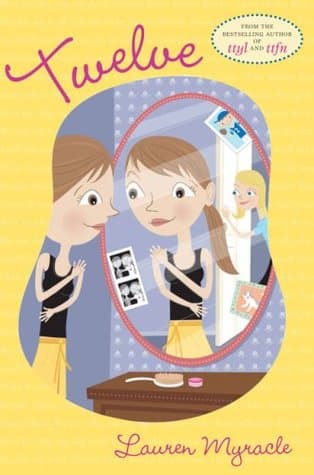
Lauren Myracle (2007)
Genre
Children's / Young Adult / Romance
Reading Time
120 min
Key Themes
See below
Sign in to track this book
Winnie Perry navigates the hilarious and mortifying gauntlet of turning twelve, from shifting friendships and junior high pressures to the ultimate pre-teen trial: bra shopping with Mom.
Winnie Perry celebrates her twelfth birthday, a milestone that brings both excitement and worry. She is leaving elementary school for junior high. Her best friend, Amanda, seems to be drifting away, more interested in boys and 'cooler' activities, leaving Winnie feeling left out. This new phase also introduces Dinah, a quirky and artistic new friend who challenges Winnie's views and helps her explore her own identity. Winnie deals with changing friendships, the pressure to fit in, and the general awkwardness of pre-teen life, all while trying to understand her older sister, Zoe, who has her own teenage dramas.
The problems in Winnie's friendship with Amanda become clearer. Amanda is increasingly focused on boys and popularity, often making Winnie feel like a second choice. Winnie finds comfort and connection with Dinah, who shares her love for creative projects and cares less about social status. A sleepover at Dinah's house is a turning point, where Winnie feels truly accepted and understood. They engage in imaginative play and deep conversations, strengthening their bond. This contrasts with Winnie's growing discomfort around Amanda's new interests, showing how their paths diverge and Winnie's evolving idea of true friendship.
One of the most mortifying experiences for Winnie is bra shopping with her mother. The thought of being measured and trying on bras in public fills her with dread. Her mother, while trying to be supportive, often says the wrong thing, making Winnie even more self-conscious. This scene captures the awkwardness of physical development during pre-adolescence and the uncomfortable conversations that often come with it. It is a rite of passage Winnie would rather avoid, but she endures it, a small step towards accepting her changing body and the journey into womanhood, even with much internal cringing.
Winnie's older sister, Zoe, is deep in her teenage years, complete with drama, mood swings, and boy troubles. Winnie often finds herself an unwilling observer or minor participant in Zoe's emotional rollercoasters. Zoe's relationships, arguments with their parents, and general teenage angst give Winnie a glimpse into what lies ahead, both thrilling and terrifying. While Winnie sometimes finds Zoe's behavior exasperating, she also looks up to her sister and tries to understand her, showing the complexities of sibling relationships and the challenges of adolescence from an older perspective.
As summer ends, Winnie's worries about starting junior high grow. The move from elementary school to a larger, more complex social environment is a major concern. She fears getting lost, not knowing anyone, and navigating the unspoken rules of a new school. Her concerns are amplified by the changing dynamic with Amanda, who seems to embrace the new phase with more confidence, leaving Winnie feeling more insecure. This period shows Winnie's internal thoughts about the pressures of fitting in, finding her place, and maintaining her identity among new faces and expectations.
Dinah, with her artistic spirit and independent nature, influences Winnie significantly. She encourages Winnie to embrace her own interests and not to feel pressured to conform to what the popular crowd considers 'cool.' Dinah's perspective helps Winnie see the value in being different and finding joy in her own creative pursuits, like writing. This mentorship from Dinah helps Winnie navigate the social pressures of junior high, offering an alternative to the superficiality that sometimes comes with pre-teen friendships. Dinah helps Winnie build confidence in her identity and resist the urge to blend in at the expense of her true self.
Throughout the year, Winnie consistently uses her journal and creative writing to express her emotions and observations. She writes stories, poems, and entries about her daily life, friendships, family, and anxieties. This act of writing helps her process the complex changes happening around and within her. It is a private space where she can be completely honest and explore her thoughts without judgment. Winnie's writing becomes a core part of her identity, a way for her to make sense of the world and to express her unique voice, solidifying her creative spirit.
The first day of junior high is a whirlwind of emotions for Winnie. She experiences the initial shock of the large school, confusing hallways, and a sea of new faces. She feels lost and overwhelmed but also finds moments of connection and small triumphs. She sees Amanda, reinforcing the distance between them, but also finds comfort in seeing Dinah. Winnie’s ability to navigate the new environment, even with its anxieties, shows her growing resilience. This day is a significant step in her journey, marking the true beginning of her junior high experience and her adaptation to a more independent academic and social life.
Junior high introduces Winnie to a more defined social hierarchy than she knew in elementary school. She observes the different cliques, the popular kids, and the outcasts, and tries to understand where she fits in. This period shows her attempts to navigate these unspoken rules, sometimes feeling pressure to conform, other times resisting it. She sees how Amanda embraces the popular crowd, further distancing herself from Winnie. Winnie learns to observe and interpret social cues, making choices about who she wants to be friends with and what kind of person she wants to be in this new, more complex social world.
Winnie's family remains a central part of her life, providing both comfort and occasional frustration. Her parents, while sometimes embarrassing or overprotective, offer a stable foundation. Her older sister, Zoe, continues to be a source of both annoyance and fascination, as Winnie watches her navigate the more intense dramas of teenage life. Despite typical sibling squabbles and parental misunderstandings, Winnie knows her family loves and supports her. These interactions show the importance of family bonds during a period of significant personal change, shaping Winnie's emotional development and providing a safe space to return to amidst external pressures.
By the end of the year, Winnie has made strides in embracing her individuality. Her friendship with Dinah has strengthened her confidence in being herself, and her commitment to writing has given her a strong sense of identity. While the pressures of junior high and changing friendships still exist, Winnie is better equipped to handle them. She understands that it is okay for friendships to evolve and that staying true to herself is more important than fitting in with a crowd that might not truly appreciate her. This marks significant growth in her self-esteem and her ability to navigate the complexities of her world with greater authenticity.
The Protagonist
Winnie grows from an anxious, slightly insecure pre-teen worried about fitting in to a more confident individual who embraces her unique personality and values authentic friendships.
The Supporting
Dinah remains a consistent and positive force, solidifying her role as Winnie's genuine best friend and a catalyst for Winnie's self-acceptance.
The Supporting
Amanda's arc demonstrates the natural drifting apart of childhood friends as their interests and priorities change, leading to a less central role in Winnie's life.
The Supporting
Zoe's arc remains largely consistent as she navigates typical teenage dramas, providing a backdrop for Winnie's observations about growing up.
The Supporting
Mom's character remains a consistent source of parental support and occasional embarrassment, adapting her parenting style as Winnie grows more independent.
The Supporting
Dad's character remains a consistent, supportive, and grounding presence for Winnie and the family.
The novel captures the awkward and exciting transition from being eleven to turning twelve, marking the entry into pre-teen years and the shadow of junior high. Winnie deals with physical changes, new social expectations, and the loss of childhood innocence. This theme appears in scenes like the bra shopping experience, the worries about starting junior high, and the changing dynamics of her friendships. It explores the universal experience of growing up, with its mix of fear, excitement, and self-discovery, highlighting the challenges of finding one's identity during rapid change.
“Turning twelve was supposed to be amazing. A whole new year, a whole new me. But mostly it felt like a whole new set of worries.”
A central theme is the changing nature of friendships during the pre-teen years. Winnie experiences the painful process of growing apart from her childhood best friend, Amanda, whose interests turn towards popularity and boys. At the same time, she forms a new, deeper connection with Dinah, who encourages her individuality. This theme explores how friendships evolve, sometimes ending and sometimes forming anew, and the importance of finding friends who truly understand and support one's authentic self. It is a portrayal of the give-and-take in relationships and the courage it takes to seek genuine connection.
“Maybe some friendships are just meant for certain stages of your life. And then you grow out of them, like old shoes.”
Winnie continually battles the pressure to conform to popular trends and social expectations, especially as she enters junior high. Her friendship with Dinah, who is unique and artistic, helps Winnie resist these pressures and embrace her own quirks and interests. This theme appears through Winnie's internal thoughts about fitting in, her observations of cliques, and her eventual realization that staying true to herself is more fulfilling. It champions the idea that being different is a strength, not a weakness, and encourages young readers to value their authentic selves over superficial popularity.
“It's harder to be yourself than to be someone else, sometimes. But it feels better, in the end.”
Winnie's love for writing and consistent journaling helps her express her emotions, observations, and anxieties. This theme shows the importance of self-expression, whether through writing, art, or other creative means, as a way to process experiences, understand oneself, and find one's voice. Winnie's journal entries are integral to her character development, showing how she makes sense of the complex world around her and solidifies her identity. It shows the therapeutic and empowering nature of creative outlets during formative years.
“Sometimes, when I write things down, they don't seem so scary anymore. Like I've put them in a cage.”
The story is told through Winnie's personal journal entries, offering direct insight into her thoughts and feelings.
The novel is presented entirely through Winnie Perry's first-person perspective, primarily in the form of journal entries. This device allows readers direct access to Winnie's unfiltered thoughts, anxieties, observations, and humorous internal monologues. It creates an intimate and relatable connection with the protagonist, making her experiences feel immediate and authentic. The journal entries also serve as a chronological record of her year, emphasizing her growth and the evolving nature of her perceptions, and highlighting her passion for writing as a form of self-expression.
Winnie's journey follows the classic arc of a young protagonist transitioning into adolescence.
The entire narrative aligns with the coming-of-age archetype, focusing on Winnie's psychological and moral growth from childhood to adolescence. Her experiences—turning twelve, navigating junior high, shifting friendships, and grappling with her changing body—are all hallmarks of this literary device. The story emphasizes her journey of self-discovery, learning to cope with new challenges, and forming her identity. This archetype resonates with young readers by reflecting their own transitional experiences and offering a relatable model for navigating the complexities of growing up.
Amanda and Dinah serve as contrasting friends, highlighting Winnie's choices and growth.
Amanda and Dinah function as foil characters to Winnie, each representing different paths and influences. Amanda, with her focus on popularity and fitting in, highlights the societal pressures Winnie faces and the potential for losing oneself in conformity. Dinah, conversely, with her artistic and independent spirit, serves as a positive foil, encouraging Winnie to embrace her individuality and creative passions. These contrasting friendships illuminate Winnie's internal struggles and ultimately guide her towards a stronger sense of self, emphasizing the importance of choosing authentic connections.
“I was twelve, and I was going to be an astronaut. Or a rock star. Or maybe a famous artist.”
— Opening lines, establishing the protagonist's age and youthful dreams.
“It was the kind of secret that felt heavy and sparkly all at once.”
— Describing the feeling of having a crush and a budding secret romance.
“Sometimes being brave meant being quiet, even when you wanted to scream.”
— Reflecting on facing difficult emotions or situations without outward display.
“The world was suddenly bigger, and I was suddenly smaller, but in a good way.”
— Experiencing a new perspective or realization about life and her place in it.
“It’s funny how you can know someone your whole life and still not really know them.”
— Thinking about a friend or family member and a sudden revelation about them.
“Butterflies in my stomach felt more like a stampede of elephants.”
— Exaggerating the intense nervousness and excitement of a romantic moment.
“Growing up felt like a race I hadn’t signed up for, but was running anyway.”
— Contemplating the inevitable and sometimes overwhelming process of aging.
“A promise whispered in the dark felt stronger than one shouted in the light.”
— Referring to a shared secret or a bond formed in a private, intimate moment.
“My heart was a bouncy ball, always threatening to escape my chest.”
— Describing the overwhelming feeling of a crush and the physical sensation of excitement.
“Sometimes the biggest adventures happen right in your own backyard.”
— Realizing that excitement and discovery don't always require grand journeys.
“It wasn't just a crush; it was like my whole world had tilted.”
— Emphasizing the profound impact of her feelings for another person.
“The hardest part about telling a lie wasn't the telling, it was the remembering.”
— Reflecting on the burden and complexity of maintaining a falsehood.
“Being twelve was like standing on a diving board, not sure if you should jump or climb back down.”
— A metaphor for the uncertainty and transitional nature of being twelve years old.
“Even the quietest moments could hold the biggest secrets.”
— Highlighting the hidden depths and unspoken truths that can exist.
Ready to see how well you understood this book? Take our interactive quiz with 10 questions.

Biography coming soon.

Dan Gemeinhart
4.5

Kate O'Hearn
4.4
Jeanne Birdsall
4.4

Jen Wang
4.4
Wendelin Van Draanen
4.3

John Marsden
4.3

Chris Van Allsburg
4.3
Jennifer A. Nielsen
4.2