
Biography coming soon.

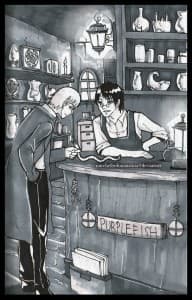
Sara's Girl (2013)
Genre
Fantasy / Romance
Reading Time
12 Minutes
Key Themes
See below
Sign in to track this book
Harry Potter finds himself entangled in forbidden affections and unexpected alliances, forcing him to choose between the life he knows and a future he never imagined.
Six months after the Battle of Hogwarts, Harry Potter is a shell of his former self, haunted by the war and the deaths he witnessed. He lives at Grimmauld Place, struggling with PTSD and public expectation. Kingsley Shacklebolt, now Minister for Magic, informs Harry and Ginny Weasley that a centuries-old pureblood law, 'The Sacred Twenty-Eight Edict,' has been reinstated to stabilize the magical population after the war. This law mandates that surviving members of ancient lines marry to ensure their heritage continues. As the last Potter and a prominent Weasley, Harry and Ginny are betrothed, much to their surprise and the dismay of their friends, especially Ron and Hermione, who are already struggling with their own relationship. Harry feels trapped and resents the forced union, while Ginny, though initially shocked, seems more practical about the situation.
Draco Malfoy, cleared of most charges due to his mother's testimony and his reluctant aid to Harry during the war, returns to a ruined Malfoy Manor. He finds his family's reputation in tatters and their fortune significantly diminished. The Ministry, under Kingsley, offers Draco a choice: Azkaban or a probationary period of service, specifically working on a project to rebuild magical infrastructure and integrate former Death Eaters into society. This project is overseen by Hermione Granger, now a rising figure in the Ministry. Draco, desperate to restore his family's name and avoid prison, grudgingly accepts, leading to an immediate, tense working relationship with Hermione. He is bitter and arrogant, yet beneath the surface, he struggles with his past actions and the loss of his privileged status.
As Harry and Ginny's betrothal progresses, Harry becomes increasingly uncomfortable. He feels no romantic connection to Ginny, and their relationship becomes strained. Meanwhile, Hermione, working closely with Draco on Ministry projects, uncovers anomalies in the historical records for 'The Sacred Twenty-Eight Edict.' She suspects the law is not merely about population control but has a deeper, more sinister political agenda, potentially orchestrated by factions within the Ministry seeking to consolidate power. Draco, with his pureblood knowledge and access to old family archives, grudgingly assists Hermione in her research; their professional animosity slowly evolves into a grudging respect. They discover that the law has been reinterpreted and manipulated, with certain clauses selectively emphasized to benefit specific families.
Recognizing Harry's deteriorating mental state, Kingsley arranges for him to see a Mind Healer, Andromeda Tonks. During their sessions, Harry begins to unpack the trauma of the war, his survivor's guilt, and his feelings of isolation. He reveals his emotional numbness regarding Ginny and his sense of responsibility for the magical world. Andromeda encourages him to explore his true desires and to question the path laid out for him. Concurrently, Harry finds himself increasingly drawn to Draco Malfoy, who, despite their history, seems to understand Harry's burdens in a way others don't. Their initial hostile encounters morph into a series of charged, unspoken moments, particularly when they must interact during Ministry functions or investigations related to the Edict. Harry starts to question his own identity and his predetermined future.
Hermione and Draco's joint investigation intensifies, leading them to uncover a powerful faction within the Wizengamot, led by several prominent pureblood families who survived the war by playing both sides. These families, including the Notts and the Rowles, are manipulating the Edict to consolidate their power and re-establish a pureblood-dominated society, using post-war recovery as a guise. They are strategically pairing off influential individuals like Harry and Ginny to control key bloodlines and political alliances. Draco's knowledge of pureblood politics and Hermione's research prove to be a formidable combination. Their discovery puts them in danger, as the conspirators are ruthless and well-connected. They realize they need more evidence and allies to expose the truth.
Empowered by his therapy and his growing self-awareness, Harry decides to break off his engagement to Ginny. This causes a significant rift with the Weasleys, particularly Ron, who feels betrayed. Ginny, though hurt, eventually admits she also felt the pressure and was not truly in love with Harry. This opens the door for her to explore a connection with Blaise Zabini, who has been surprisingly supportive and understanding during the upheaval. Simultaneously, Hermione and Draco present their findings to Kingsley, who, shocked by the extent of the conspiracy, agrees to help them. This act solidifies their fragile alliance and begins to mend some of the deep-seated prejudices within the Ministry. Harry, now free from the betrothal, finds himself drawn even closer to Draco.
Armed with evidence gathered by Hermione and Draco, and supported by Harry's testimony, Kingsley calls for an emergency session of the Wizengamot. The trial is tense and dramatic, with the conspirators fiercely denying the accusations. Harry, Ginny, and Blaise provide insights into the manipulative nature of the Edict and its impact on their lives. Draco, against all expectations, delivers a powerful testimony, detailing the historical precedents and the specific ways the law was twisted, exposing the Notts and Rowles as the masterminds. His testimony, coming from a former Death Eater, shocks the magical community and sways public opinion. The truth is revealed, leading to the arrest and conviction of the conspirators, and the permanent repeal of the manipulated Edict.
After the trial, the magical world slowly begins to heal. Ron and Hermione, whose relationship was strained by the betrothal and Hermione's work with Draco, begin to reconcile, recognizing the pressures they were under. Ginny and Blaise's relationship blossoms into a genuine romance, free from the constraints of pureblood expectations. Draco, having played a role in exposing the conspiracy, begins the process of rehabilitating his family's name, not through force, but through genuine contribution to the magical community. He finds himself unexpectedly respected by many, even some former enemies. Harry, finally free from the burdens of prophecy and forced marriage, begins to truly live for himself, exploring his own desires and finding peace.
Throughout the investigation and trial, the unspoken tension between Harry and Draco becomes clear. Their shared experiences, vulnerabilities, and the unlikely partnership forged in adversity create a powerful, undeniable pull. Harry finds himself increasingly captivated by Draco's intelligence, his unexpected moments of vulnerability, and the hidden depths beneath his arrogant exterior. Draco, in turn, is drawn to Harry's sense of justice, his quiet strength, and his compassion. Their interactions are filled with charged glances, lingering touches, and a growing understanding that transcends their past rivalry. They both struggle with the implications of these feelings, given their history and the societal expectations placed upon them, particularly Harry as the 'Golden Boy.'
After the dust settles from the trial, Harry and Draco gravitate towards each other with increasing frequency. Their conversations deepen, moving beyond shared trauma and political intrigue to personal reflections and desires. The emotional intimacy they developed during the investigation culminates in a moment of raw honesty, where they confess their mutual attraction and growing feelings. They acknowledge the immense challenges they will face, given their history, their public personas, and the ingrained prejudices of the magical world. Despite the risks, they decide to pursue a relationship, initially in secret, choosing to prioritize their own happiness and connection over societal expectations. This marks a turning point for both characters, symbolizing their complete break from their past selves and the expectations placed upon them.
As Harry and Draco's relationship grows stronger, maintaining secrecy becomes increasingly difficult. They are spotted together in public, their interactions too intimate to be purely professional. Rumors begin to circulate, quickly escalating into a full-blown scandal when the Daily Prophet publishes an exposé, complete with blurry photos. The revelation sends shockwaves through the magical community. Reactions are polarized: some are outraged, seeing it as a betrayal of Harry's legacy and a travesty of justice; others are cautiously intrigued, or even supportive, recognizing love and forgiveness. Harry and Draco face immense scrutiny, public backlash, and even threats, but they stand firm, choosing to face the world together. This public unveiling tests the strength of their bond, forcing them to confront prejudices head-on.
In the face of public scrutiny, Harry and Draco lean on each other, their relationship solidifying under pressure. They find unexpected allies in Andromeda Tonks, Kingsley Shacklebolt, and even some of their former classmates who have witnessed their growth. Harry continues his work as an Auror, but with a renewed sense of purpose, while Draco dedicates himself to rebuilding the Malfoy legacy through ethical and progressive means, often working alongside Hermione on Ministry initiatives. They slowly, painstakingly, carve out a space for themselves in the magical world, demonstrating that love can transcend old rivalries and societal expectations. Their relationship becomes a symbol of hope and change, challenging rigid pureblood traditions and fostering a more inclusive future for the magical community, proving that even the most unlikely people can find happiness together.
The Protagonist
Harry transforms from a traumatized, passive figure burdened by expectation into an assertive individual who claims his own happiness and identity, embracing a love he never anticipated.
The Protagonist
Draco evolves from a resentful, isolated former villain into a man actively seeking redemption, challenging his own prejudices, and forging a new, honorable identity through his actions and love.
The Supporting
Hermione grows to challenge her own biases, collaborating effectively with a former enemy to expose injustice, and finding a more stable footing in her personal relationship.
The Supporting
Ginny transitions from passively accepting a predetermined future to actively pursuing her own happiness and finding a fulfilling romantic relationship that is truly her choice.
The Supporting
Ron grapples with his emotional immaturity and prejudice, eventually learning to accept the evolving relationships of his friends and reconcile with Hermione.
The Supporting
Blaise transforms from a quiet observer into a supportive partner, finding genuine love and demonstrating that his house allegiance doesn't define his character.
The Supporting
Kingsley shifts from a leader who inadvertently enacted a flawed law to one who actively dismantles corruption within his own government, demonstrating adaptability and a commitment to true justice.
The Supporting
Andromeda provides crucial guidance and therapy, enabling Harry's emotional recovery and self-discovery, thus facilitating his journey towards personal happiness.
The novel explores the psychological aftermath of war, particularly through Harry's struggle with PTSD, survivor's guilt, and emotional numbness. It emphasizes the importance of confronting trauma and therapy (through Andromeda Tonks) for healing. Beyond physical recovery, the theme shows characters shedding imposed identities (Harry as 'the Chosen One,' Draco as 'the Malfoy heir') to discover their authentic selves and desires. This often involves challenging societal expectations and forging new paths independent of their pasts.
“The war might be over, but the battle within him was just beginning. He was Harry Potter, but who was Harry Potter without a prophecy to fulfill?”
This theme is primarily shown through Draco Malfoy's journey towards redemption. It questions whether individuals, particularly those on the 'wrong' side of a conflict, can truly change and be forgiven. Draco's forced service, his collaboration with Hermione, and his eventual testimony are central to this. The theme also extends to characters like Harry, who must learn to forgive, not just Draco, but also himself for perceived failures. It suggests that true redemption comes from actions and genuine change, and that forgiveness is a powerful catalyst for moving forward.
“It wasn't enough to simply survive; he had to prove he was worth saving, not just to the world, but to himself.”
The novel critiques the rigid social structures and ingrained prejudices of the magical world, particularly through the manipulation of 'The Sacred Twenty-Eight Edict' and the backlash against Harry and Draco's relationship. It highlights how traditions can be twisted for power and how historical animosities (e.g., Gryffindor vs. Slytherin, light vs. dark) continue to shape perceptions. The characters' decisions to defy these norms, whether by breaking betrothals or pursuing unconventional relationships, make a statement against prejudice and for individual freedom and self-determination. It champions a more inclusive and accepting future.
“The old world was dying, and perhaps it was time for it to go. Love, it seemed, cared little for ancient feuds or house colors.”
This theme explores different facets of love: the pressure of duty-bound love (Harry/Ginny), the slow-burn of unexpected connection (Ginny/Blaise), and the transformative power of forbidden love (Harry/Draco). It contrasts the idea of love as a societal obligation with love as a freely chosen, deeply personal bond. The characters' struggles to define and pursue their own romantic destinies highlight the importance of choice and authenticity in relationships. It argues that true love transcends past rivalries, societal expectations, and even personal fears, ultimately leading to greater fulfillment.
“He had fought for the world's freedom, but now he had to fight for his own heart's. And this battle, he realized, was far more terrifying.”
An ancient pureblood law used to force marriages and consolidate power.
This ancient pureblood law is the central inciting incident of the plot, initially presented as a Ministry initiative to stabilize the magical population post-war. It forces Harry and Ginny into a betrothal, creating immediate conflict. However, it quickly evolves into a key plot device for uncovering a deeper political conspiracy. Hermione and Draco's investigation into its origins and manipulation drives much of the narrative, revealing how tradition and law can be twisted for nefarious purposes. Its eventual repeal signifies a triumph over corruption and a step towards a more progressive magical society.
The psychological impact of the war on key characters, particularly Harry.
This device establishes the emotional landscape of the story, particularly for Harry, who suffers from severe PTSD and emotional detachment. It provides a compelling reason for his initial passivity and his need for therapy. It also subtly affects other characters like Draco, whose bitterness stems from his wartime experiences and their consequences. The shared experience of trauma, and the individual ways characters cope and heal, becomes a powerful bonding agent, particularly between Harry and Draco, allowing them to connect on a deeper, more empathetic level.
The Ministry reflects the broader societal struggles of rebuilding and corruption.
The Ministry serves as more than just a setting; it's a dynamic plot device that mirrors the larger challenges of the post-war magical world. Its initial attempts at recovery (like the Edict) are well-intentioned but flawed, leading to unintended consequences. It becomes the battleground for political intrigue and the fight against corruption. Hermione and Draco's work within the Ministry forces them to confront its flaws and ultimately instigate change from within. Kingsley Shacklebolt's role as Minister represents the potential for good governance, while the conspirators highlight the lingering darkness.
Therapy sessions that facilitate Harry's emotional growth and self-discovery.
These sessions are a crucial plot device for Harry's character development. They provide a safe space for him to articulate his trauma, fears, and suppressed desires, which he cannot do with his friends. Andromeda's guidance encourages him to question his forced betrothal and to explore his true feelings, ultimately empowering him to make choices for his own happiness. Without these sessions, Harry would likely remain trapped in his numbness and the expectations placed upon him, thus directly impacting the trajectory of his relationship with Draco and his overall journey of self-discovery.
Ready to see how well you understood this book? Take our interactive quiz with 10 questions.
Biography coming soon.







